Italian Dog Breeds: The Science of Sighthound Speed and Instinct
Explore the canine science behind Italian dog breeds like the Greyhound and Bracco Italiano — from sighthound speed physiology to scent-tracking instincts.

If you've ever watched an Italian Greyhound explode off the couch to chase a squirrel, or seen a Bracco Italiano lock onto a scent with laser focus, you've witnessed thousands of years of selective breeding layered on top of ancient canine biology. Italian dog breeds are uniquely shaped by both evolution and human-directed selection, resulting in distinct physiological and behavioral traits — from the deep-chested sprinting anatomy of sighthounds to the scent-processing superpowers of Italian pointing breeds. Understanding the science behind these traits helps owners meet their dogs' needs and appreciate the biology at work.
The Quick Answer
Italian dog breeds fall into two major behavioral-physiological categories: sighthounds (like the Italian Greyhound and Cirneco dell'Etna), which rely on vision and explosive speed to pursue prey, and scent hounds/pointing breeds (like the Bracco Italiano and Segugio Italiano), which use their olfactory system to track and locate game. These differences are rooted in measurable variations in brain structure, muscle fiber composition, and sensory processing — not just "personality."
Why Do Italian Sighthounds Chase Everything That Moves?
The Italian Greyhound (Piccolo Levriero Italiano) is a miniature sighthound, and like all sighthounds, it possesses what canine behaviorists call a high prey drive triggered by motion. This isn't disobedience or poor training — it's neurobiology.
The Visual-Motor Pathway in Sighthounds
Sighthounds have eyes positioned more laterally than mesocephalic breeds (like Labrador Retrievers), giving them a field of vision of up to 270 degrees compared to roughly 240 degrees in average dogs and about 180 degrees in humans. Their retinas contain a higher proportion of rod cells relative to cone cells, making them exquisitely sensitive to motion detection — even in low light conditions.
When a sighthound detects rapid movement in its peripheral vision, the signal travels through the superior colliculus (a midbrain structure involved in orienting responses) and triggers a near-instantaneous motor response. Research published in the Applied Animal Behaviour Science journal has documented that sighthound breeds show significantly faster reaction times to moving stimuli compared to scent-oriented breeds, with response latencies averaging under 200 milliseconds.
For Italian Greyhound owners, this means a reliable recall in unfenced areas is extraordinarily difficult to achieve — not because the dog is ignoring you, but because its brain has prioritized the chase stimulus over auditory processing. This is why the AKC breed standard notes that Italian Greyhounds should only be allowed off-leash in securely fenced areas.
The Evolutionary Basis: From Wolf Pack Hunting to Italian Breed Specialization
How Ancient Canine Hunting Strategies Split Into Two Paths
Wolves are persistence hunters that combine scent tracking, visual scanning, and endurance running to exhaust prey over long distances. When humans began selectively breeding dogs for specific hunting roles across the Italian peninsula, they essentially amplified one half of the wolf's toolkit in each breed type:
- Sighthounds (Italian Greyhound, Cirneco dell'Etna): Amplified the visual pursuit and sprint-speed component. The Cirneco dell'Etna, native to Sicily, has been depicted on ancient Greek and Roman coins dating back to the 6th century BCE, suggesting these dogs have been refined for Mediterranean rabbit hunting for over 2,500 years.
- Scent hounds and pointing breeds (Segugio Italiano, Bracco Italiano): Amplified the olfactory tracking and cooperative signaling component. The Bracco Italiano, one of Europe's oldest pointing breeds, was used by Italian nobility as early as the Middle Ages for bird hunting with nets.
This evolutionary divergence explains why an Italian Greyhound and a Bracco Italiano, despite both being "Italian dogs," respond to entirely different environmental cues. The Greyhound's brain prioritizes visual motion; the Bracco's brain prioritizes airborne scent molecules.
Physiology of Speed: What Makes Italian Sighthounds So Fast?
The Italian Greyhound can reach speeds of 25 mph (40 km/h) over short distances — remarkable for a dog weighing only 7-14 lb (3-6 kg). This performance is powered by specific physiological adaptations:
| Parameter | Italian Greyhound | Average Mesocephalic Dog (e.g., Beagle) | Human Sprinter |
|---|---|---|---|
| Top Speed | 25 mph (40 km/h) | 15-18 mph (24-29 km/h) | 27 mph (43 km/h) — elite |
| Fast-Twitch Muscle Fiber % | ~70-80% (estimated based on sighthound studies) | ~50-60% | ~50-60% (trained) |
| Heart-to-Body Weight Ratio | ~1.18% (sighthound average) | ~0.77% | ~0.55% |
| Resting Heart Rate | 100-140 bpm | 70-120 bpm | 40-60 bpm |
| Spinal Flexion During Gallop | Extreme (double suspension gallop) | Moderate | N/A (bipedal) |
The double suspension gallop — where all four feet leave the ground twice per stride cycle — is a gait shared with cheetahs and is made possible by the sighthound's highly flexible lumbar spine. A study in the Journal of the Royal Society Interface demonstrated that spinal flexion in sighthounds contributes up to 30% of stride length, making their gallop fundamentally different from the trotting gait of most working breeds.
Their deep, narrow chest cavity accommodates an oversized heart and large lung capacity relative to body mass. The Merck Veterinary Manual notes that sighthounds' cardiac physiology is so distinct that their baseline echocardiogram measurements differ from non-sighthound breeds — a critical point for veterinarians evaluating cardiac health.
How Italian Scent Hounds Process Smell: The Bracco Italiano's Olfactory Engine
On the other end of the Italian dog spectrum, the Bracco Italiano and Segugio Italiano rely on an olfactory system that dwarfs human capabilities by several orders of magnitude.
Dogs possess approximately 300 million olfactory receptors (compared to our 6 million), and the olfactory bulb — the brain region dedicated to processing scent — occupies roughly 40 times more relative brain volume in dogs than in humans. However, not all dogs are created equal in this regard.
Pointing breeds like the Bracco Italiano have been selected for the ability to detect airborne scent cones — invisible plumes of odor molecules drifting from hidden game. When a Bracco catches a scent, it performs a characteristic "freeze" or pointing stance. This isn't trained behavior alone; it's an inhibited prey sequence. The dog has detected prey, initiated the stalk phase, and suppressed the final chase/bite phases through centuries of selective breeding for cooperative hunting.
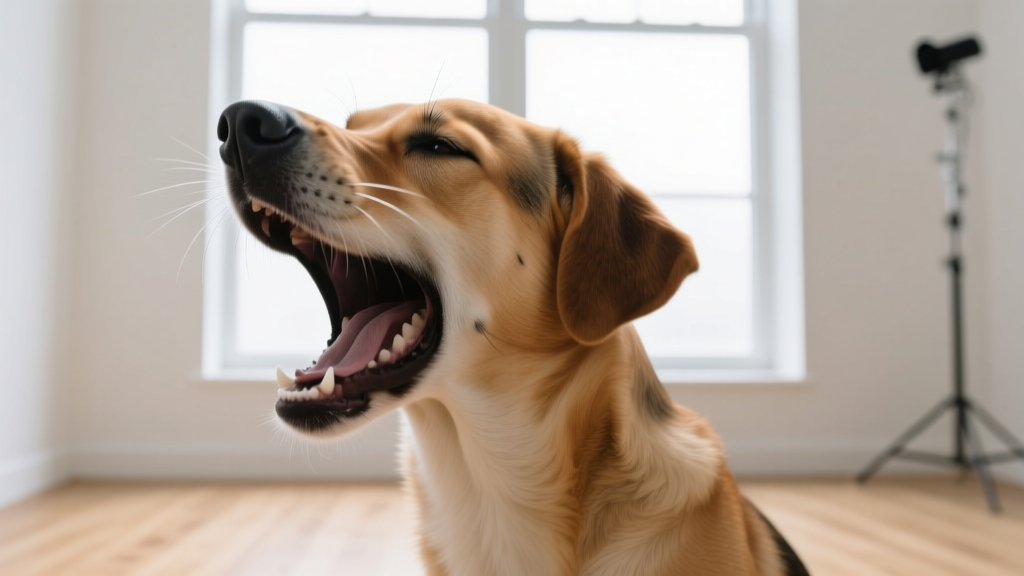
The Segugio Italiano, a scent hound used for hare and boar tracking, works differently. Rather than freezing, it vocalizes continuously while following a ground-level scent trail, alerting hunters to its position and the direction of pursuit. This vocalization during tracking is a breed-specific behavior that owners sometimes mistake for nuisance barking — but it's actually the dog performing its intended working function.
Practical Implications for Italian Dog Owners
What This Science Means for Your Daily Life
- Fencing requirements: Italian Greyhounds can jump 4-5 feet from a standstill and squeeze through gaps as narrow as 4 inches. Minimum fence height should be 6 feet with no more than 2-inch gap spacing. Expect to spend $2,500-$5,000 for a professionally installed fence suitable for sighthounds.
- Exercise needs by breed type: Italian Greyhounds need 30-45 minutes of daily exercise including at least one high-intensity sprint session in a secure area. Bracco Italianos need 60-90 minutes including scent-work activities that engage their olfactory system. A tired sighthound is physically exercised; a tired Bracco is mentally exercised through nose work.
- Recall training expectations: With Italian Greyhounds, plan for a reliable recall rate of 70-80% in low-distraction environments, dropping significantly when prey-drive stimuli are present. Use positive reinforcement with high-value treats (freeze-dried liver, real chicken) and never punish a dog that does return — this erodes the recall behavior. Consider a long-line (30-foot training lead, $20-$35) for safe outdoor practice.
- Temperature sensitivity: Italian Greyhounds have less than 1% body fat and thin coats. Below 50°F (10°C), they need a fitted coat for outdoor activity. Budget $30-$60 per coat, and expect to own 2-3 for rotation and washing.
- Enrichment for scent breeds: Bracco Italianos and Segugio Italianos benefit from structured nose-work games. Start with treat hides in the home ($0 cost), progress to scent-discrimination kits ($25-$45), and consider enrolling in AKC Scent Work trials (entry fees ~$25-$35 per trial) for advanced mental stimulation.
Common Misconceptions About Italian Dog Breeds
| Myth | Scientific Fact |
|---|---|
| "Italian Greyhounds are hyperactive and can't settle." | Italian Greyhounds are sprinters, not endurance athletes. After 20-30 minutes of intense exercise, they typically sleep or lounge for hours. Their resting metabolic rate is not higher than comparable small breeds. What owners interpret as "hyperactivity" is often unmet sprint-drive — the dog hasn't had an opportunity for full-speed running. |
| "My Italian Greyhound ignores me because it's stubborn." | During a chase sequence, the sighthound brain undergoes auditory suppression — the dog literally cannot process verbal commands while in pursuit mode. This is a neurological phenomenon, not defiance. Training should focus on prevention (leashes, fencing) and building recall in low-distraction settings. |
| "Bracco Italianos are lazy because they're large." | Bracco Italianos (55-88 lb / 25-40 kg) are athletic pointing dogs requiring substantial daily activity. Their calm indoor demeanor masks a need for 60-90 minutes of structured exercise including scent work. Without mental stimulation, they develop destructive behaviors rooted in frustration, not laziness. |
| "Small Italian dogs don't need real exercise." | The Italian Greyhound's musculoskeletal system is built for explosive power. Without regular sprint opportunities, these dogs develop muscle atrophy and joint stiffness. Short leash walks do not satisfy their exercise physiology — they need full gallop in safe, enclosed spaces at least 3-4 times per week. |
When Italian Dog Behaviors Signal a Medical Problem
While many breed-typical behaviors are normal, certain changes warrant veterinary attention:
- Italian Greyhounds: Reluctance to jump, climb stairs, or run may indicate patellar luxation (prevalence estimated at 5-8% in toy sighthounds) or early-onset progressive retinal atrophy (PRA). If your previously athletic Greyhound suddenly avoids sprinting, consult your veterinarian for orthopedic and ophthalmologic evaluation. Diagnostic costs: orthopedic exam $80-$150, PRA genetic test $150-$250.
- Bracco Italianos: Excessive drooling, head shaking, or reluctance to point may signal ear infections (otitis externa), which are common in drop-eared breeds. Italian pointing breeds also have a documented predisposition to hip dysplasia (estimated 15-20% prevalence based on OFA database screening). Annual hip evaluation is recommended for breeding stock, and owners should watch for rear-leg lameness or "bunny-hopping" gait.
- Cirneco dell'Etna: This ancient Sicilian breed is generally robust, but sudden loss of prey-drive interest combined with lethargy may indicate hypothyroidism or anemia. A complete thyroid panel costs $80-$150 at most veterinary practices.
- Segugio Italiano: If a normally vocal tracking dog becomes silent during scent work, check for nasal foreign bodies (grass awns, foxtails) — a common issue in field-working dogs in Mediterranean climates. Removal under sedation typically costs $300-$600.
Always consult your veterinarian if you notice sudden behavioral changes in your Italian dog. Breed-typical behavior should be consistent — deviations often have underlying medical causes.
Related Behaviors and Cross-References
Understanding Italian dog science connects to several broader canine science topics:
- Prey drive sequence: All dogs exhibit some version of the predatory sequence (orient → eye → stalk → chase → grab → kill → dissect → consume). Italian sighthounds have an exaggerated chase phase; Italian pointing breeds have an exaggerated stalk phase with inhibited chase. Understanding where your dog falls on this spectrum helps predict behavior.
- Separation anxiety in sighthounds: Italian Greyhounds show higher-than-average rates of separation-related behaviors (estimated 20-30% prevalence in owner surveys). This may be linked to their strong pair-bonding tendency, a trait selected for during centuries as companion-hunters living closely with Italian families.
- Leash reactivity vs. prey drive: Sighthounds that bark and lunge at moving objects while leashed are often displaying frustrated prey drive, not true aggression. Counter-conditioning and desensitization using positive reinforcement methods are the recommended approach — never use aversive tools like shock or prong collars, which can suppress the warning behavior without addressing the underlying emotional state.
Frequently Asked Questions
Can Italian Greyhounds be trained off-leash reliably?
Most Italian Greyhounds cannot achieve 100% reliable off-leash recall in open environments due to their neurologically hardwired prey-drive response. Even extensively trained individuals may break recall when a high-speed stimulus appears. The safest approach is to restrict off-leash activity to fully enclosed areas with 6-foot fencing and no gaps wider than 2 inches. For open-area exercise, use a long-line training lead.
Why does my Bracco Italiano freeze in the yard?
Your Bracco is performing an innate pointing behavior. When it detects an interesting scent — a bird, a rodent, even an unfamiliar animal that passed through hours earlier — its breeding triggers the freeze response. This is completely normal and indicates a healthy, well-functioning pointing instinct. You can channel this into structured nose-work activities or AKC Scent Work trials for enrichment.
Is it normal for my Italian Greyhound to sleep under blankets?
Yes. Italian Greyhounds have extremely low body fat (often under 5% compared to 15-25% in most breeds) and minimal coat insulation. Seeking warmth under blankets is a thermoregulatory behavior, not anxiety. Provide a dedicated burrow bed ($40-$80) and allow blanket access. In cold weather, supplement with a fitted fleece or insulated coat for any outdoor time exceeding 10 minutes.
How is an Italian Greyhound's vision different from a human's?
Italian Greyhounds, like all sighthounds, have a visual streak — a horizontal band of high-density photoreceptors across the retina that provides exceptional sensitivity to horizontal motion. Where humans have a fovea (a single point of high acuity for detailed, color-rich vision), sighthounds sacrifice color detail and fine resolution in exchange for wide-field motion detection. They see the world in muted blues and yellows but detect movement at distances and speeds that human vision simply cannot match.
What does it mean when my Segugio Italiano howls?
The Segugio Italiano's vocalization during scent tracking is a working behavior bred over centuries to keep hunters informed of the dog's location and the direction of pursuit. In a home setting, howling may be triggered by distant sirens, other dogs vocalizing, or strong scents carried on the wind. It's not distress — it's the dog's instinct to communicate during what it perceives as a "hunt." If howling becomes excessive in the home, increase daily scent-work enrichment to satisfy the breed's olfactory drive.
Sources consulted: American Kennel Club — Italian Greyhound, Merck Veterinary Manual, and peer-reviewed research from the Journal of the Royal Society Interface and Applied Animal Behaviour Science. For breed-specific health screening, consult the Orthopedic Foundation for Animals (OFA).
Priya Sutaria
All our authors care for dogs every day — read more of their work on the authors page.