The Fattest Dog on Earth: Canine Obesity Science Explained
Explore the science behind the fattest dog on earth record, canine obesity physiology, evolutionary fat storage, and what extreme weight means for your dog's health.

The fattest dog on earth ever officially recorded was a Cairn Terrier named Katy, who weighed 97 pounds (44 kg) at her peak — more than four times her ideal body weight of approximately 20-22 lb (9-10 kg). She was reported from Samara, Russia, in 2013 after her owners fed her a constant diet of burgers and pizza. While no official Guinness World Record for "heaviest dog" has been awarded (the category was retired to avoid encouraging overfeeding), Katy remains the most widely documented case of extreme canine obesity in veterinary literature. As of 2026, the Association for Pet Obesity Prevention estimates that 59% of dogs in the United States are overweight or obese.
Why Do Dogs Store Fat So Readily? The Evolutionary Context
To understand how a dog can reach the extreme weights seen in cases like Katy's, we need to look at canine evolutionary biology. Dogs descended from wolves (Canis lupus), animals that evolved in feast-or-famine environments where the ability to rapidly store fat after a successful hunt was a survival advantage, not a health liability.
Ancestral Fat Storage Mechanism
Wild canids experience irregular food availability. A wolf pack might consume 15-20% of their body weight in a single feeding after a successful kill, then go days without eating. This selected for:
- Rapid lipid storage: White adipose tissue that quickly converts excess calories into triglycerides
- Efficient metabolic downregulation: The ability to slow basal metabolic rate during food scarcity (a trait that persists in modern dogs)
- Appetite signaling tuned for scarcity: Ghrelin (hunger hormone) and leptin (satiety hormone) pathways calibrated for environments where the next meal was never guaranteed
In a domestic environment with twice-daily feeding and kibble available on a schedule, these same mechanisms become maladaptive — driving overconsumption in an environment of constant caloric surplus.
Research published in the Journal of Veterinary Internal Medicine has demonstrated that dogs, unlike cats, possess a metabolic flexibility that allows them to store fat more aggressively relative to their lean mass. This is partly explained by their omnivorous digestive adaptation following domestication — a process that selected for dogs that could thrive on starch-rich diets provided by humans (see Axelsson et al., 2013, Nature).
The Physiology of Extreme Canine Obesity
Understanding how a dog reaches the weight of the fattest dog on earth requires examining the physiological cascade that occurs during progressive weight gain.
Adipose Tissue Is Not Inert Storage
One of the most significant discoveries in veterinary endocrinology over the past two decades is that adipose (fat) tissue is not simply a passive energy reservoir. It is an active endocrine organ that secretes hormones and inflammatory mediators, collectively called adipokines. In obese dogs, excess adipose tissue produces:
- Leptin — in excess, leading to leptin resistance (the brain stops responding to satiety signals, so the dog continues to feel hungry)
- Adiponectin — levels decrease with obesity, reducing insulin sensitivity
- TNF-alpha and IL-6 — pro-inflammatory cytokines that create chronic low-grade inflammation throughout the body
- Cortisol metabolites — fat tissue can locally regenerate cortisol, amplifying stress-related metabolic effects
The Leptin Resistance Cycle
In a lean dog, leptin produced by fat cells signals the hypothalamus to reduce appetite and increase energy expenditure. In an obese dog, chronically elevated leptin causes leptin receptor downregulation — the brain becomes "deaf" to the signal. The result: a dog carrying 60+ pounds of excess fat still behaves as though it is starving. This is not a failure of willpower (on the owner's part or the dog's); it is a documented neuroendocrine feedback loop described in the Merck Veterinary Manual.
Organ System Impact at Extreme Weights
| Organ System | Effect of Extreme Obesity | Clinical Consequence |
|---|---|---|
| Respiratory | Chest wall fat restricts lung expansion; upper airway soft tissue increases | Exercise intolerance, heat stroke risk, obstructive sleep apnea |
| Cardiovascular | Increased blood volume, cardiac output demand, left ventricular hypertrophy | Heart failure, hypertension, pulmonary edema |
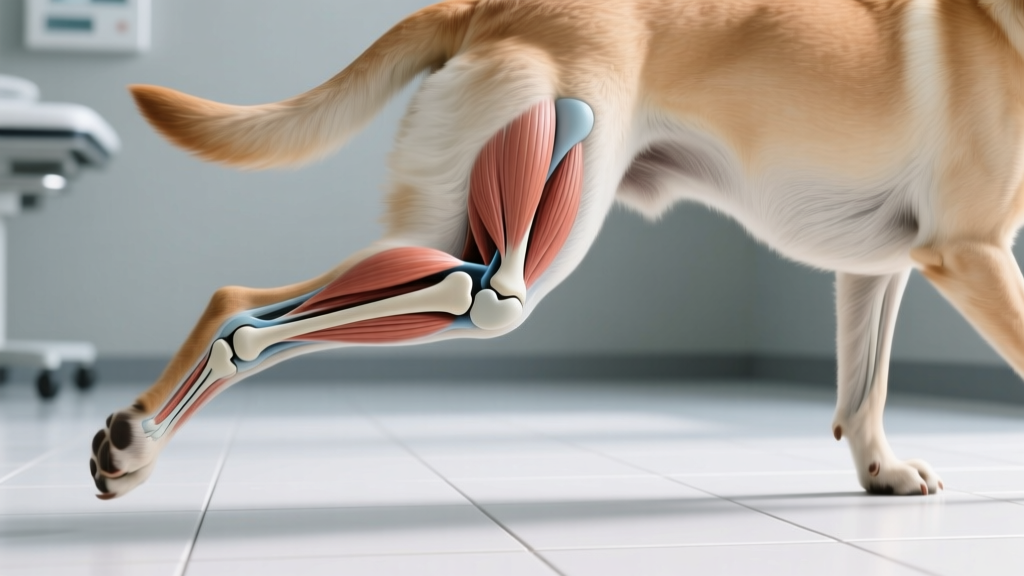
| Musculoskeletal | Excess mechanical load on joints, particularly stifles and hips | Cranial cruciate ligament rupture, osteoarthritis acceleration, IVDD risk |
| Hepatic | Triglyceride accumulation in hepatocytes | Hepatic lipidosis, impaired drug metabolism |
| Endocrine | Insulin resistance, thyroid axis disruption | Type 2-like diabetes (rare in dogs but documented), hypothyroidism masking |
| Thermoregulatory | Subcutaneous fat acts as insulation; panting efficiency reduced | Hyperthermia risk even at moderate ambient temperatures (75°F/24°C+) |
How Is Canine Obesity Different from Human Obesity?
While the basic caloric imbalance equation is similar, dogs differ from humans in several clinically significant ways:
- Weight proportionality: A dog 20% over ideal weight carries a proportional burden equivalent to a 150 lb human carrying 30 extra pounds. At the extreme seen in "fattest dog" cases, a 97 lb Cairn Terrier is carrying the equivalent of a 150 lb human weighing over 600 lb.
- No voluntary dietary restriction: Dogs cannot independently choose to diet. Weight management is entirely owner-controlled, which introduces behavioral and emotional dynamics (guilt-feeding, misinterpreting begging as hunger) that don't apply to human weight loss.
- Shorter timeline to pathology: Because dogs have compressed lifespans, the cumulative damage from obesity (joint degeneration, cardiac strain) manifests within 2-4 years rather than the 10-30 year timelines seen in humans.
- Breed-specific ideal weights vary dramatically: A "normal" weight for a Greyhound (60-70 lb / 27-32 kg) would represent life-threatening obesity in a Beagle (20-25 lb / 9-11 kg). There is no universal BMI equivalent; veterinarians use the Body Condition Score (BCS) system, a 1-9 scale where 4-5 is ideal.
Breed Variations in Obesity Risk
Not all dogs are equally susceptible to reaching extreme weights. Research, including a large-scale genomic study published in Cell Metabolism (2016), identified a deletion in the POMC gene (pro-opiomelanocortin) that is strongly associated with obesity in Labrador Retrievers and Flat-Coated Retrievers. This mutation disrupts satiety signaling, causing these dogs to experience persistent hunger regardless of caloric intake.
| Obesity Risk Category | Breeds | Contributing Factors |
|---|---|---|
| Highest Risk | Labrador Retriever, Cairn Terrier, Cocker Spaniel, Basset Hound, Beagle | POMC gene mutation (Labs), strong food motivation, low baseline activity |
| Moderate Risk | Golden Retriever, Dachshund, Cavalier King Charles Spaniel, Pug | Food-seeking behavior, brachycephalic exercise limitations, owner perception bias |
| Lower Risk | Greyhound, Whippet, Belgian Malinois, Border Collie, Vizsla | High intrinsic activity drive, lean body conformation, selective appetite |
Small breeds like the Cairn Terrier are particularly vulnerable to reaching extreme proportional weights because their baseline caloric needs are very low (approximately 400-500 kcal/day for a 20 lb / 9 kg adult). An extra 200 kcal/day — roughly one slice of cheese — leads to approximately 1 lb of weight gain every 2-3 weeks, which over years produces dramatic results.
Common Misconceptions About Overweight Dogs
| Myth | Fact |
|---|---|
| "A chubby dog is a happy dog" | Studies consistently show obese dogs have reduced quality of life scores, lower energy, more pain from joint disease, and shorter lifespans (by an average of 2.5 years in Labrador Retrievers, per a 15-year Purina life-span study) |
| "My dog begs because they're hungry" | Begging is a learned operant behavior reinforced by receiving food. Leptin-resistant dogs may also experience genuine hunger signaling, but the solution is veterinary-guided caloric restriction, not feeding on demand |
| "I can just exercise the weight off" | Exercise alone is insufficient. A 40 lb (18 kg) dog would need to run approximately 18 miles to burn off 1 lb of fat. Dietary caloric restriction accounts for 80-90% of successful weight loss in dogs |
| "Grain-free or raw diets prevent obesity" | Caloric density matters more than ingredient sourcing. Many grain-free kibbles are higher in fat and calories than grain-inclusive options. AAFCO feeding guidelines should be starting points, adjusted downward by 10-20% for sedentary dogs |
| "Neutering makes dogs fat" | Spay/neuter reduces metabolic rate by approximately 20-30% and can alter appetite hormones. The solution is to reduce caloric intake by 20-30% post-surgery, not to avoid a medically recommended procedure |
When Extreme Weight Gain Signals a Medical Problem
While most canine obesity is driven by caloric excess, rapid or disproportionate weight gain can signal underlying endocrine disease. Your veterinarian should rule out the following conditions if your dog is gaining weight despite controlled feeding:
- Hypothyroidism: The most common endocrine cause of weight gain in dogs. Prevalence is estimated at 0.2-0.8% of the general dog population but is significantly higher in Golden Retrievers, Doberman Pinschers, and Irish Setters. Diagnosis requires a full thyroid panel (total T4, free T4, TSH). Treatment with levothyroxine (typical dose: 0.02 mg/kg twice daily) normalizes metabolism.
- Hyperadrenocorticism (Cushing's disease): Excess cortisol production causes a characteristic "pot-bellied" appearance, increased appetite, and fat redistribution to the trunk. Diagnosis involves ACTH stimulation testing or low-dose dexamethasone suppression testing (cost range: $200-$500 for diagnostic workup).
- Insulinoma: Rare pancreatic tumors that overproduce insulin, driving hypoglycemia and compensatory overeating. More common in older, large-breed dogs.
When to See Your Veterinarian About Weight Gain
Schedule an appointment if your dog:
- Gains more than 2% of body weight per week without dietary changes
- Shows a distended abdomen with visible ribcage fat loss (possible Cushing's)
- Has concurrent symptoms: hair loss, skin darkening, excessive thirst/urination
- Is a BCS 8-9/9 and you want to begin a weight loss protocol (veterinary therapeutic diets like Hill's Metabolic or Royal Canin Satiety require veterinary authorization)
- Has difficulty breathing, cannot groom themselves, or shows exercise intolerance below normal breed expectations
Always consult your veterinarian before beginning any weight loss program. Rapid caloric restriction in severely obese dogs can cause hepatic lipidosis and other metabolic complications. A safe rate of loss is 1-2% of body weight per week.
Practical Implications: Preventing and Managing Canine Obesity
Evidence-Based Weight Management Protocol
- Establish baseline BCS: Have your veterinarian score your dog on the 9-point Body Condition Scale. Ideal is 4-5. Each point above 5 represents approximately 10-15% excess body fat.
- Calculate Resting Energy Requirement (RER): Use the formula
RER = 70 × (body weight in kg)^0.75. For a 20 kg dog: 70 × (20)^0.75 = 70 × 9.46 = 662 kcal/day at rest. - Apply the weight loss multiplier: For weight loss, feed at 0.8 × RER (approximately 530 kcal/day for the example dog). This creates a 20% caloric deficit.
- Weigh food, don't scoop: Cup measurements vary by up to 20% depending on kibble size and packing density. Use a kitchen scale. A typical weight-loss kibble provides 280-320 kcal/cup.
- Account for treats: Treats should never exceed 10% of daily caloric intake. For a 530 kcal diet, that's 53 kcal — approximately 3 baby carrots or 2 small training treats.
- Reassess every 2-4 weeks: Adjust caloric intake downward by 5-10% if weight loss stalls. Plateaus are expected as metabolic rate adapts.
- Target 1-2% body weight loss per week: For a 40 kg obese dog, that's 0.4-0.8 kg (0.9-1.8 lb) per week. Faster loss risks muscle catabolism and hepatic complications.
Cost reference (2026): Veterinary therapeutic weight management diets (Hill's Metabolic, Purina OM, Royal Canin Satiety) typically cost $65-$95 per 27.5 lb bag. A 6-month weight loss program with biweekly vet weigh-ins may cost $300-$600 total including the initial exam, bloodwork, and follow-up appointments.
Related Canine Science: Cross-References
- Food motivation and operant conditioning: Dogs with POMC mutations show significantly higher food motivation, making them easier to train with food rewards but harder to manage around accessible food sources. Counter-conditioning and environmental management (locked pantries, no free-feeding) are essential.
- Brachycephalic breeds and weight: Pugs, Bulldogs, and French Bulldogs face compounded respiratory risk when overweight. Even a 10% excess body weight in a brachycephalic dog can shift them from "manageable BOAS" to "surgical candidate" for airway correction.
- Senior dogs and weight management: Older dogs (7+ years, breed-dependent) naturally lose lean muscle mass (sarcopenia). An older dog may maintain the same scale weight while body composition shifts toward higher fat percentage. BCS assessment becomes more important than scale weight in geriatric dogs.
Frequently Asked Questions
Is it normal for my dog to always seem hungry?
Persistent hunger (polyphagia) can be normal in food-motivated breeds like Labradors and Beagles, but it can also signal medical conditions including diabetes, Cushing's disease, exocrine pancreatic insufficiency (EPI), or intestinal malabsorption. If your dog eats a complete, AAFCO-approved diet at appropriate caloric levels and still acts ravenously hungry, a veterinary workup is warranted. Bloodwork including a CBC, chemistry panel, and urinalysis (typical cost: $150-$300) can rule out metabolic causes.
Can dogs develop eating disorders like humans?
Dogs do not develop anorexia nervosa or bulimia in the human sense, but they can develop abnormal eating behaviors: pica (eating non-food items), coprophagia (eating feces), and psychogenic polyphagia (compulsive overeating driven by anxiety or boredom rather than caloric need). These are managed through environmental enrichment, structured feeding routines, and in some cases, veterinary-prescribed behavioral medications like fluoxetine.
What does it mean when my dog guards their food?
Resource guarding around food is an evolutionarily normal behavior rooted in ancestral competition for limited resources. In a domestic setting, it signals insecurity about food availability, not aggression or dominance. Management involves: never approaching a dog while eating, trading up (offering higher-value food in exchange for the guarded item), and working with a certified positive-reinforcement trainer or veterinary behaviorist. Never punish resource guarding — this increases anxiety and escalates the behavior.
How is a dog's sense of hunger different from humans?
Dogs have fewer taste buds (~1,700 vs. ~9,000 in humans) and a less developed pleasure-eating neurocircuitry. However, their olfactory system (220 million scent receptors vs. our 5 million) makes food smell far more salient. This means a dog's "hunger" is driven more by scent-triggered appetite and hormonal signaling than by hedonic pleasure. This is why aromatic, warm food is more effective for appetite stimulation in sick dogs than flavor variety.
Is free-feeding (leaving food out all day) ever appropriate?
Free-feeding can work for a small minority of dogs — typically lean, high-activity breeds with good self-regulation (Greyhounds, some working breeds). For the majority of dogs, especially those in the "highest obesity risk" breed categories, free-feeding leads to overconsumption. Measured meals fed 2x daily are the AVMA-aligned recommendation for weight management. If you free-feed, monitor BCS weekly and be prepared to switch to measured feeding at the first sign of weight gain.
References
- Axelsson, E. et al. (2013). "The genomic signature of dog domestication reveals adaptation to a starch-rich diet." Nature, 495(7441), 360-364.
- Raffan, E. et al. (2016). "A Deletion in the Canine POMC Gene Is Associated with Weight and Food Seeking in Multiple Dog Breeds." Cell Metabolism, 23(5), 745-746.
- Kealy, R.D. et al. (2002). "Effects of diet restriction on life span and age-related changes in dogs." Journal of the American Veterinary Medical Association, 220(9), 1315-1320.
- Merck Veterinary Manual: Obesity in Dogs
Aaron Whyte
All our authors care for dogs every day — read more of their work on the authors page.