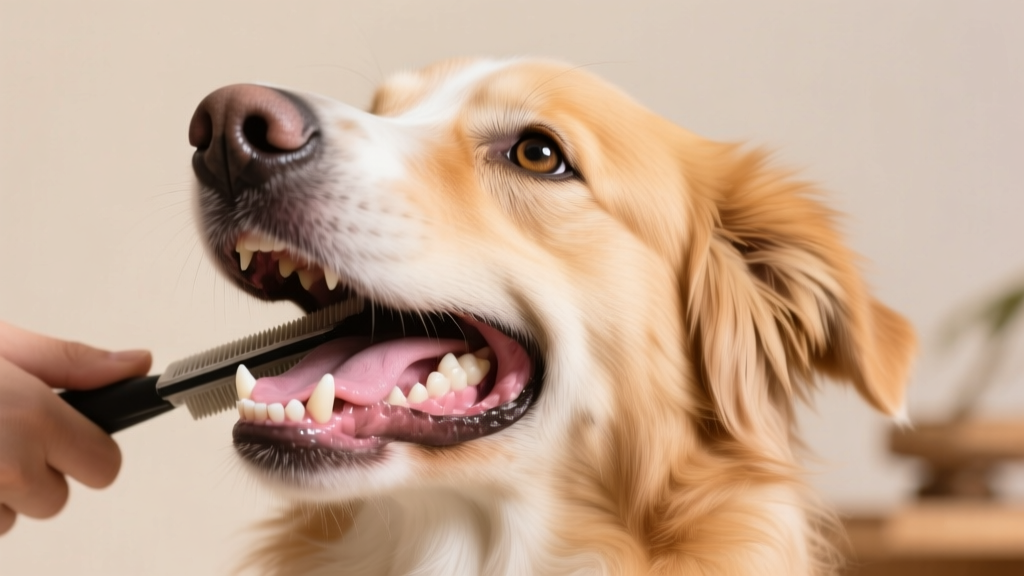
Dogs Labored Breathing
Understand the science behind dogs labored breathing, from normal panting physiology to respiratory distress red flags that need immediate veterinary attention.

If you've ever watched your dog breathe heavily after a run on a hot afternoon, you've witnessed one of the most remarkable physiological adaptations in the canine body. But there's a critical difference between a dog cooling down through panting and a dog struggling to oxygenate their blood. Understanding that difference — grounded in respiratory science and evolutionary biology — can literally save your dog's life.
This guide breaks down the physiology of canine respiration, explains why dogs evolved this particular breathing system, and gives you concrete thresholds for distinguishing normal panting from dogs labored breathing that signals a veterinary emergency.
The Physiology of Canine Breathing: How Dogs Move Air
How the Canine Respiratory System Works
Air enters through the nares (nostrils), passes through the nasal turbinates — intricate bony shelves that filter, warm, and humidify incoming air — then travels down the trachea, which branches into the left and right mainstem bronchi. From there, air moves through progressively smaller bronchioles until it reaches the alveoli, the tiny gas-exchange sacs where oxygen crosses into the bloodstream and carbon dioxide is released.
A healthy dog at rest takes 10–30 breaths per minute (called the resting respiratory rate, or RRR). Each breath involves coordinated contraction of the diaphragm and external intercostal muscles to expand the thoracic cavity, creating negative pressure that draws air inward. Exhalation is largely passive at rest — elastic recoil of the lungs pushes air out without active muscle contraction.
When breathing becomes labored, this elegant system is failing at one or more points. The veterinary term dyspnea describes subjective difficulty breathing; tachypnea means abnormally fast breathing; and orthopnea refers to difficulty breathing while lying down — a dog that insists on standing or sitting with elbows spread wide may be exhibiting orthopnea, a serious red flag.
According to the Merck Veterinary Manual, respiratory distress in dogs can originate from the upper airway (nose, pharynx, larynx, trachea), the lower airway (bronchi, bronchioles, alveoli), the pleural space (the area between the lungs and chest wall), or the chest wall and diaphragm itself. Pinpointing the location determines both urgency and treatment.
Why Dogs Pant: The Evolutionary Basis of Canine Thermoregulation
From Wolves to House Dogs: Why Panting Evolved
Wolves and early canids evolved as cursorial predators — animals built for endurance pursuit across open terrain. Unlike many mammals that rely on sweating to cool down during prolonged activity, canids developed panting as their primary heat-dissipation mechanism. This evolutionary choice was driven by two factors:
- Fur insulation: A thick double coat is essential for thermoregulation in cold climates, but it blocks evaporative cooling through the skin. Sweating would be ineffective under dense fur.
- Water conservation: Sweating requires significant fluid loss. Panting uses rapid, shallow breaths to evaporate moisture from the tongue, oral mucosa, and upper respiratory tract — a more water-efficient cooling strategy for animals that might not find water for hours during a hunt.
This adaptation carried over from Canis lupus to domestic dogs, though selective breeding has introduced significant variation. Brachycephalic breeds (short-nosed dogs like Bulldogs, Pugs, and Boston Terriers) have been artificially selected for shortened skulls, compressing the same respiratory anatomy into a smaller space and creating brachycephalic obstructive airway syndrome (BOAS).
During panting, a dog breathes at 300–400 breaths per minute — far above the normal resting rate. These breaths are shallow, moving air primarily over the tongue and upper airway surfaces rather than deep into the lungs. The evaporation of saliva and mucosal moisture absorbs heat, cooling the blood in the lingual and facial veins before it returns to the body core. Research published in the Journal of Experimental Biology confirmed that panting dogs oscillate their thorax at the resonant frequency of their chest cavity, minimizing the metabolic cost of this rapid breathing — an elegant biomechanical optimization that keeps panting from generating more heat than it dissipates.
How Dogs Labored Breathing Differs from Normal Panting
This distinction is where owners most often need clarity. The table below provides specific, observable differences you can check right now:
| Feature | Normal Panting | Labored Breathing (Dyspnea) |
|---|---|---|
| Breath rate | 300–400/min (panting) or 10–30/min (resting) | Over 40/min at rest, or irregular rhythm |
| Context | After exercise, in heat, during excitement/stress | At rest, in cool environments, no obvious trigger |
| Abdominal effort | Minimal — chest does most of the work | Visible abdominal push on exhalation ("abdominal breathing") |
| Noise | Soft, rhythmic huffing | Wheezing, stridor (high-pitched), crackles, or gurgling |
| Posture | Relaxed, may lie down comfortably | Elbows spread, neck extended, refuses to lie down (orthopnea) |
| Gum color | Normal pink | Blue/purple (cyanosis), pale, or brick-red |
| Response to rest | Slows and stops within 5–15 minutes | Persists or worsens despite rest and cooling |
The most critical single measurement you can learn is the resting respiratory rate (RRR). Count your dog's breaths per minute while they are fully asleep or deeply relaxed — one breath equals one chest rise and fall. Do this several times over a week to establish your dog's personal baseline. A consistent RRR above 30–35 breaths per minute during sleep warrants a veterinary check; above 40 is urgent.
Common Causes of Labored Breathing in Dogs
Labored breathing is a symptom, not a diagnosis. The underlying causes span multiple body systems, and the veterinary workup reflects this complexity. Here are the most common categories, with specific conditions and diagnostic approaches:
Upper Airway Obstruction
Conditions affecting the nose, pharynx, larynx, or trachea. These typically produce inspiratory stridor — a high-pitched noise on breathing in. Common causes include laryngeal paralysis (especially in older large breeds like Labrador Retrievers and Golden Retrievers), tracheal collapse (toy breeds like Yorkshire Terriers and Pomeranians), elongated soft palate in brachycephalic breeds, and foreign bodies.
Lower Airway and Lung Disease
Pneumonia (bacterial, aspiration, or fungal), pulmonary edema (fluid in the lungs, often secondary to heart failure), chronic bronchitis, and pulmonary fibrosis (particularly in West Highland White Terriers). These conditions impair gas exchange at the alveolar level, forcing the dog to breathe harder and faster to maintain adequate blood oxygen.
Cardiac Causes
Heart disease is one of the most common causes of labored breathing in dogs. Left-sided congestive heart failure causes fluid to back up into the lungs (pulmonary edema), while right-sided failure causes fluid accumulation in the abdomen (ascites) and chest cavity (pleural effusion). Breeds predisposed to dilated cardiomyopathy (DCM) include Doberman Pinschers, Great Danes, and Boxers. Cavalier King Charles Spaniels have extremely high rates of mitral valve disease — estimated at over 50% by age five.
Pleural Space Disease
When fluid, air, or pus accumulates between the lungs and chest wall, the lungs cannot fully expand. Pyothorax (pus in the chest), hemothorax (blood), chylothorax (lymphatic fluid), and pneumothorax (air) all cause rapid, shallow labored breathing. These are emergencies requiring immediate thoracocentesis — a needle inserted into the chest to drain the fluid or air.
🚨 Emergency Red Flags — Seek Veterinary Care Immediately
- Blue or purple gums/tongue (cyanosis) — indicates critically low blood oxygen
- Open-mouth breathing at rest in a non-panting context
- Refusal to lie down — dog stands or sits with elbows abducted
- Respiratory rate over 40/min at rest that doesn't decrease after 15 minutes of calm
- Audible wheezing, crackling, or gurgling with each breath
- Collapsed or fainting episodes associated with breathing difficulty
- Frothy or pink-tinged fluid from nose or mouth
Emergency veterinary visits for respiratory distress typically cost $150–$300 for the initial exam, with diagnostics (chest X-rays, blood work, echocardiogram) adding $300–$800. Oxygen therapy runs $100–$200 per hour. Do not delay — respiratory compromise can deteriorate rapidly.
Breed Variations: Which Dogs Are Most at Risk?
Not all dogs breathe the same way, and selective breeding has created significant respiratory vulnerabilities in certain breeds. Understanding your dog's breed-specific risk profile helps you recognize problems earlier.
| Breed/Type | Primary Respiratory Risk | Key Indicators to Monitor |
|---|---|---|
| Brachycephalic breeds (French Bulldogs, Pugs, English Bulldogs, Boston Terriers, Shih Tzus) | BOAS — stenotic nares, elongated soft palate, hypoplastic trachea, everted laryngeal saccules | Snoring while awake, exercise intolerance, gagging, heat sensitivity, sleep apnea |
| Toy breeds (Yorkshire Terriers, Pomeranians, Chihuahuas, Toy Poodles) | Tracheal collapse — weakening of tracheal cartilage rings | "Goose honk" cough, worsens with excitement or collar pressure |
| Large/Giant breeds (Labradors, Golden Retrievers, Saint Bernards, Newfoundlands) | Laryngeal paralysis, often part of geriatric onset laryngeal paralysis polyneuropathy (GOLPP) | Voice change, noisy breathing, coughing after eating/drinking, exercise intolerance in older dogs |
| Deep-chested breeds (Great Danes, Greyhounds, Dobermans) | Gastric dilatation-volvulus (bloat) compressing diaphragm; DCM causing pulmonary edema | Distended abdomen with labored breathing, restlessness, unproductive retching |
| West Highland White Terriers | Idiopathic pulmonary fibrosis ("Westie lung disease") | Progressive exercise intolerance, crackling lung sounds, dry cough in middle-aged to older dogs |
For brachycephalic breeds specifically, what many owners consider "normal" — snorting, snoring, exercise intolerance — is actually chronic respiratory distress. A 2023 study in the Journal of Veterinary Internal Medicine found that over 50% of brachycephalic dogs with moderate-to-severe BOAS had sleep-disordered breathing, including obstructive apneas. The American Kennel Club notes that surgical correction of stenotic nares and elongated soft palate, ideally performed before age two, significantly improves long-term outcomes.
How Labored Breathing Differs Between Dogs and Humans
One of the most common misconceptions is that dogs breathe like we do, just faster. The differences are substantial and clinically important:
- Thermoregulation: Humans sweat through eccrine glands across the body surface. Dogs have eccrine glands only on their paw pads — functionally useless for cooling. Panting is their primary heat-dissipation route, making respiratory distress doubly dangerous because the dog loses both oxygenation and cooling simultaneously.
- Nasal vs. oral breathing: Humans can breathe comfortably through either route. Dogs are obligate nasal breathers at rest; oral breathing in a resting dog is already abnormal and suggests nasal obstruction or respiratory compromise.
- Respiratory rate range: Humans at rest breathe 12–20 times per minute. Dogs have a much wider normal range (10–30 at rest, up to 400 while panting), making it harder for owners to identify the boundary between normal and abnormal.
- Thoracic compliance: Dogs have a more compliant (flexible) chest wall relative to body size, which makes them more susceptible to conditions that restrict chest expansion — obesity, pleural effusion, or abdominal distension all compromise canine breathing more rapidly than in humans.
Practical Takeaways: What This Means for Your Daily Life
Actionable Steps for Every Dog Owner
- Establish your dog's baseline RRR this week. Count breaths per minute during deep sleep, three separate nights. Record the numbers. A typical healthy dog will fall between 15–25 breaths per minute. This baseline is your most valuable early-warning tool — studies on canine heart failure show that a rising sleeping respiratory rate predicts decompensation days before clinical symptoms appear.
- Use a harness instead of a collar for brachycephalic breeds and toy breeds. Collar pressure on the trachea can worsen collapse and trigger coughing fits. A front-clip harness distributes force across the sternum.
- Monitor exercise in heat with a specific threshold. When the temperature-humidity index exceeds 103°F (calculated as: ambient temperature °F + relative humidity %), restrict outdoor activity for brachycephalic breeds, senior dogs, and overweight dogs entirely. For all dogs, carry water and watch for excessive panting that doesn't slow within 5 minutes of rest.
- Invest in a pet pulse oximeter ($25–$45 online) if your dog has a known cardiac or respiratory condition. Normal canine SpO2 is 95–100%. Readings below 93% warrant a vet call; below 90% is an emergency. Note: peripheral pulse oximeters are less reliable in dogs than humans due to fur and pigmentation — use on unpigmented areas like the inner lip or prepuce.
- Keep your dog at a lean body condition score (BCS 4–5 out of 9). Excess fat deposits around the chest wall and abdomen physically restrict lung expansion. A 2022 study found that overweight dogs had significantly higher resting respiratory rates and reduced tidal volume compared to lean dogs of the same breed.
- Record a 30-second video of your dog's breathing when you first notice labored breathing. This gives your veterinarian critical information about onset, posture, and effort level that may not be reproducible in the clinic.
Common Misconceptions About Dog Breathing
| Myth | Fact |
|---|---|
| "My Bulldog snores because he's relaxed — it's cute." | Snoring in brachycephalic breeds indicates upper airway obstruction. The soft palate vibrates because air cannot pass freely. Chronic vibration causes further tissue thickening, worsening the obstruction over time. |
| "If my dog's nose is wet, his breathing is fine." | Nose moisture has no reliable correlation with respiratory function. Dogs in severe respiratory distress can have perfectly moist noses. Rely on respiratory rate, effort, and gum color instead. |
| "Heavy panting always means the dog is hot." | Panting also occurs with pain, anxiety, fever, Cushing's disease, and certain medications (opioids, corticosteroids). Context matters — panting in a cool, calm environment is a medical signal. |
| "Small dogs naturally breathe faster, so high rates are normal." | While small breeds do have slightly higher resting heart rates, their respiratory rate should still fall within 15–30 breaths per minute at rest. Rates consistently above 35 during sleep warrant investigation regardless of breed size. |
| "Reverse sneezing is labored breathing." | Reverse sneezing (paroxysmal respiration) is a benign reflex involving rapid inhalation through the nose, producing a honking sound. It lasts seconds, the dog is otherwise normal, and it does not indicate respiratory disease. Labored breathing persists and worsens. |
What Your Veterinarian Will Do: The Diagnostic Workup
When you bring a dog in for labored breathing, the veterinary team follows a structured diagnostic protocol. Understanding this process helps you prepare and ask informed questions:
Step 1 — Stabilization first. If your dog is in active distress, the vet will administer supplemental oxygen (via flow-by, mask, or oxygen cage) before performing any diagnostics. Sedation may be given if anxiety is worsening the respiratory effort. Attempting X-rays on a dyspneic dog without oxygen support can be fatal — the stress of positioning can push a compromised dog into respiratory arrest.
Step 2 — Physical examination. The vet will auscultate (listen to) the heart and lungs with a stethoscope, checking for murmurs, arrhythmias, crackles, wheezes, or absent lung sounds. They'll assess gum color, capillary refill time, and tracheal sensitivity.
Step 3 — Diagnostics. Typical tests include:
- Thoracic radiographs (X-rays): $150–$350. Reveals heart enlargement, pulmonary edema patterns, masses, pleural effusion, tracheal collapse, and pneumonia.
- Complete blood count and chemistry panel: $100–$250. Identifies infection, anemia, organ dysfunction, and inflammatory markers.
- NT-proBNP cardiac biomarker: $80–$150. Distinguishes cardiac from non-cardiac causes of respiratory distress. Elevated levels strongly suggest heart disease as the underlying cause.
- Echocardiogram: $350–$600 (often performed by a veterinary cardiologist). Provides detailed assessment of heart chamber size, wall thickness, valve function, and contractility.
- Pulse oximetry and arterial blood gas: Measures blood oxygen and carbon dioxide levels directly, quantifying the severity of respiratory compromise.
Total diagnostic costs for a labored breathing workup typically range from $500 to $1,500, depending on which tests are needed and whether specialist referral is involved. Treatment costs vary enormously — from $50 for a course of antibiotics for bacterial pneumonia to $5,000+ for surgical correction of a complex airway obstruction or long-term heart failure management.
Frequently Asked Questions
Why do dogs pant instead of sweating?
Dogs have eccrine sweat glands only on their paw pads, which provide negligible cooling. Panting evolved as the primary thermoregulatory mechanism in canids because it works efficiently even with a thick coat and conserves more body water than sweating. The rapid shallow breaths evaporate moisture from the tongue and upper airway, cooling blood before it returns to the core. This is a shared trait across the Canidae family — wolves, foxes, and coyotes all pant using the same mechanism.
Can dogs breathe through their mouths normally?
At rest, dogs are obligate nasal breathers — their epiglottis sits above the soft palate, creating a sealed nasal airway. Open-mouth breathing at rest is abnormal and suggests nasal obstruction, pain, fever, or respiratory distress. During panting and exercise, dogs switch to oral breathing to increase airflow volume and maximize evaporative cooling. The key distinction is context: mouth breathing during activity or heat is normal; mouth breathing while resting in a cool room is not.
How do dogs process oxygen differently from humans?
The basic gas-exchange mechanism is identical — oxygen diffuses across the alveolar membrane into pulmonary capillaries, binding to hemoglobin in red blood cells. However, dogs have a higher metabolic rate relative to body size, a wider respiratory rate range, and a more compliant chest wall. Dogs also have a higher concentration of type II muscle fibers, which fatigue faster and produce more metabolic heat, increasing oxygen demand during exercise. Their hemoglobin has a slightly different oxygen-dissociation curve, optimized for rapid oxygen unloading to working muscles during sprint and pursuit activity.
What does it mean when my dog breathes heavily while sleeping?
Occasional heavy breathing during REM sleep (the dreaming phase) is normal — you may see twitching, vocalization, and irregular breathing patterns. However, consistently rapid or labored breathing during sleep (sleeping respiratory rate above 30 breaths per minute) is one of the earliest indicators of congestive heart failure. Veterinary cardiologists recommend that owners of at-risk breeds count sleeping respiratory rates weekly. A rising trend over days to weeks — even if the dog seems otherwise normal — warrants a cardiac evaluation.
Is reverse sneezing the same as labored breathing?
No. Reverse sneezing (paroxysmal respiration) is a brief, benign reflex where the dog rapidly inhales through the nose, producing a snorting or honking sound. Episodes last 5–30 seconds, the dog remains alert and comfortable between episodes, and there is no lasting respiratory compromise. Labored breathing, by contrast, involves sustained effort, abnormal posture, and often progressive worsening. If you're unsure which you're observing, record a video and show it to your veterinarian — visual evidence is far more diagnostic than verbal description.
Is labored breathing normal in brachycephalic breeds?
It is extremely common but absolutely not normal. The normalization of respiratory distress in flat-faced breeds is one of the most persistent and harmful misconceptions in dog ownership. Noisy breathing, exercise intolerance, and sleep apnea in brachycephalic dogs are signs of BOAS — a progressive, treatable condition. A Royal Veterinary College study found that 58% of brachycephalic dogs showed signs of BOAS, yet only a fraction of owners recognized it as a health problem. Surgical intervention (nares widening, soft palate resection, sacculectomy) can dramatically improve quality of life, especially when performed early.
Disclaimer: This article is for informational purposes only and does not replace professional veterinary advice. If your dog is showing signs of labored breathing, consult your veterinarian immediately. Respiratory distress can escalate rapidly and should never be managed at home without professional guidance. For suspected poisoning or toxic ingestion, contact the ASPCA Animal Poison Control Center at (888) 426-4435 (24/7, consultation fee applies).
Tom Renshaw
All our authors care for dogs every day — read more of their work on the authors page.