Why Is My Dog Coughing? The Science Behind Canine Cough Reflexes
Discover the science behind dogs coughing: evolutionary origins, physiological mechanisms, breed risks, and when a cough signals a serious health problem.

If you've spent any time around dogs, you've heard that unmistakable hacking, gagging, or honking sound and immediately wondered: is this nothing, or is this something? As someone who has fielded this exact question from worried dog owners hundreds of times, I can tell you that understanding the science behind why dogs cough transforms that anxiety into informed observation. You'll still need your veterinarian for diagnosis — but you'll walk into that appointment with far better information.
The Physiology of a Dog's Cough: How the Reflex Works
A cough is not a disease — it's a neuromuscular reflex arc designed to protect the lower respiratory tract. Here's exactly what happens inside your dog's body when they cough:
- Irritation detection: Specialized sensory nerve endings called rapidly adapting receptors (RARs) and C-fiber endings, located throughout the larynx, trachea, and bronchial tree, detect mechanical or chemical irritants. These receptors are innervated primarily by the vagus nerve (cranial nerve X).
- Signal transmission: Afferent signals travel via the vagus nerve to the nucleus tractus solitarius (NTS) in the brainstem's medulla oblongata — the cough control center.
- Motor response: Efferent signals are sent to the diaphragm, intercostal muscles, abdominal muscles, and laryngeal muscles in a precisely timed sequence.
- The cough itself unfolds in three phases:
- Inspiratory phase: The glottis opens wide and the dog inhales rapidly, drawing in a large volume of air.
- Compressive phase: The glottis slams shut. The expiratory muscles (abdominals and internal intercostals) contract forcefully against the closed glottis, building tremendous intrathoracic pressure — up to 300 mmHg in severe coughs.
- Expulsive phase: The glottis bursts open and air is expelled at velocities reaching 50–100 mph (80–160 km/h), shearing mucus, debris, or irritants off the airway walls and propelling them upward.
Source: Merck Veterinary Manual — Lung and Airway Disorders in Dogs
This reflex is remarkably similar between dogs and humans at the neurological level, but there are key anatomical differences that make dogs both more and less susceptible to certain types of coughing depending on their breed conformation. Dogs have a proportionally longer trachea relative to body size than humans, and their airways branch at different angles, which affects how particles deposit and how effectively a cough can clear them.
One critical difference: dogs cannot voluntarily suppress a cough the way humans can. The canine cough reflex is almost entirely involuntary and brainstem-mediated. When your dog coughs, they aren't choosing to — their nervous system has determined that something in the airway needs to be expelled, and it's executing a hardwired program.
The Evolutionary Purpose: Why Ancestral Canids Developed This Reflex
Evolutionary Context: The cough reflex predates the domestic dog by millions of years. It is present in virtually all terrestrial mammals with a tracheobronchial tree and serves a non-negotiable survival function: preventing aspiration pneumonia and maintaining gas exchange in the lungs.
For ancestral wolves, the cough reflex served several critical functions in their ecological niche:
- Dust and debris clearance: Wolves hunting across arid plains, digging at burrow entrances, or consuming dusty prey would regularly inhale particulate matter. The cough reflex mechanically cleared these irritants before they could reach the alveoli (gas-exchange surfaces deep in the lungs).
- Prey consumption protection: When wolves consume prey rapidly — including fur, bone fragments, and soil contamination — small particles can be aspirated into the airway. The cough reflex is the last line of defense before these particles enter the lungs.
- Water aspiration prevention: Wolves and early dogs drinking from streams, swimming, or retrieving from water needed a robust cough reflex to clear any aspirated water before it could cause drowning or secondary pneumonia.
- Pathogen clearance: The mucociliary escalator — the system of mucus-producing cells and hair-like cilia that sweep trapped particles upward — works in tandem with coughing. Coughing provides the high-velocity "blast" that the slower mucociliary system cannot generate alone.
The cough reflex is so evolutionarily essential that its absence would be lethal. Animals born without a functional cough reflex (due to neurological damage or congenital defects) develop recurrent aspiration pneumonia and typically do not survive without intensive medical intervention. This is why the reflex pathway is so deeply conserved across mammalian species — it is not a trait that evolution would ever "select out."
Why Do Dogs Cough? Decoding the Most Common Causes
Understanding that coughing is a reflex, not a disease, helps you think more clearly about what might be triggering it. Here is a framework for categorizing canine cough causes by mechanism:
| Cough Type | Sound Description | Common Causes | Urgency Level |
|---|---|---|---|
| Dry, hacking | Like something stuck in the throat; repeated, non-productive | Kennel cough (Bordetella), tracheal irritation, collapsing trachea, early heartworm | Moderate — vet visit within 48 hours |
| Moist, productive | Wet, gurgling; may produce mucus or foam | Pneumonia (bacterial, fungal, aspiration), pulmonary edema, chronic bronchitis | High — vet visit within 24 hours |
| Honking / goose-like | Distinctive "honk" sound, often triggered by excitement or leash pressure | Tracheal collapse (most common in toy breeds), reverse sneezing | Moderate to High — depends on frequency |
| Deep, chronic | Low-pitched, often worse at night or when lying down | Heart disease (mitral valve disease, dilated cardiomyopathy), heartworm disease | High — vet visit within 24-48 hours |
| Gagging / retching | Followed by white foam or clear liquid; looks like vomiting | Kennel cough, collapsed trachea, foreign body, laryngeal paralysis | Moderate — or Emergency if choking |
This table is a starting point, not a diagnostic tool. Multiple conditions can produce the same cough sound, and the same condition can produce different cough sounds at different stages. Your veterinarian will use thoracic radiographs (chest X-rays, typically $200–$450), auscultation (listening with a stethoscope), and sometimes advanced diagnostics like echocardiography ($350–$650) or bronchoscopy ($500–$1,200) to pinpoint the cause.
Is Dogs Coughing Normal? Separating Myth from Fact
There's a lot of misinformation circulating about canine coughing. Let's address the most persistent myths with scientific evidence:
| Myth | Fact |
|---|---|
| "If my dog is coughing, it's probably kennel cough." | Kennel cough (infectious tracheobronchitis) is one of dozens of causes. Heart disease, tracheal collapse, pneumonia, fungal infections, heartworm, and even certain cancers all cause coughing. Assuming kennel cough delays proper diagnosis of potentially life-threatening conditions. |
| "A coughing dog just needs cough syrup." | Most human cough suppressants (dextromethorphan, guaifenesin) are not approved for dogs and can be dangerous. Some contain xylitol or acetaminophen, which are toxic to dogs. Suppressing a productive cough can trap infected mucus in the lungs, worsening pneumonia. Always consult your veterinarian before giving any medication. |
| "Small dogs cough more because they're delicate." | Small breeds do cough more frequently, but not because they're "delicate." It's structural: toy breeds have proportionally narrower tracheas with weaker cartilage rings, making them genetically predisposed to tracheal collapse. It's an engineering problem, not a fragility problem. |
| "If my dog is still eating and playing, the cough isn't serious." | Dogs are stoic animals that mask illness — a survival instinct from their wolf ancestors. Dogs with early-stage heart disease or heartworm can cough for weeks while maintaining normal appetite and energy. By the time they show overt illness, the condition may be advanced and harder to treat. |
| "Reverse sneezing is the same as coughing." | Reverse sneezing (paroxysmal respiration) involves rapid, forceful inhalation through the nose, producing a snorting sound. Coughing involves forceful exhalation through the mouth. They involve different reflex pathways and have different clinical significance, though both warrant veterinary attention if new or frequent. |
Breed-Specific Cough Risks: What Your Dog's Anatomy Means
Not all dogs face the same coughing risks. Selective breeding has dramatically reshaped canine anatomy, and certain conformations create specific vulnerabilities:
Brachycephalic Breeds (Short-Nosed Dogs)
Breeds like Pugs, French Bulldogs, English Bulldogs, Boston Terriers, and Shih Tzus have compressed airway anatomy that predisposes them to brachycephalic obstructive airway syndrome (BOAS). Their elongated soft palates, stenotic nares (narrow nostrils), and hypoplastic tracheas create chronic airflow turbulence that irritates the airway lining and triggers coughing. Research published in the Journal of Veterinary Internal Medicine indicates that over 50% of brachycephalic dogs show clinical signs of airway obstruction by age 3.
Toy and Miniature Breeds
Yorkshire Terriers, Pomeranians, Chihuahuas, Toy Poodles, and Maltese dogs face disproportionately high rates of tracheal collapse — a condition where the C-shaped cartilage rings of the trachea weaken and flatten, causing the airway to narrow during breathing. Studies estimate that tracheal collapse affects up to 70% of Yorkshire Terriers at some point in their lives. The hallmark sign is a distinctive "goose honk" cough triggered by excitement, exercise, drinking water, or pressure on the neck from a collar.
Large and Giant Breeds
Great Danes, Doberman Pinschers, Irish Wolfhounds, and Boxers face elevated risk of dilated cardiomyopathy (DCM), a heart muscle disease that causes fluid to accumulate in the lungs (pulmonary edema). The resulting cough is typically deep, worse at night or when the dog lies down, and may be accompanied by exercise intolerance and a distended abdomen. Coughing in these breeds should always prompt cardiac evaluation.
Additionally, large-breed dogs like Labrador Retrievers, Golden Retrievers, and German Shepherds have higher rates of laryngeal paralysis, a condition where the muscles that open the larynx during breathing become weak or paralyzed. This causes a characteristic change in bark quality, noisy breathing, and coughing — especially during exercise or in hot weather.
Sporting and Hunting Breeds
Pointers, Setters, Retrievers, and Spaniels that work in fields or wetlands face higher exposure to fungal spores (Blastomyces, Histoplasma, Coccidioides) and aspiration risks from water retrieval. Fungal pneumonia in these dogs produces a chronic, moist cough that may not respond to standard antibiotics — it requires antifungal medications like itraconazole, typically administered for 60–90 days at a cost of $150–$400 per month depending on the dog's weight.
How Is Canine Coughing Different from Human Coughing?
While the neurological reflex arc is remarkably conserved between dogs and humans, several practical differences matter for dog owners to understand:
- Dogs cannot expectorate voluntarily. Humans can cough into a tissue and evaluate their sputum. Dogs typically swallow whatever mucus or material their cough brings up, which means you won't see what's being produced. If you notice your dog swallowing repeatedly after coughing, that's likely what's happening.
- Dogs don't get "post-nasal drip" coughs the way humans do. Human chronic cough is frequently caused by upper airway cough syndrome (post-nasal drip). Dogs have different nasal drainage anatomy, so this mechanism is less common — though nasal discharge draining into the pharynx can still trigger coughing in dogs with rhinitis or dental disease.
- Heart disease causes coughing differently in dogs. In humans, heart failure coughing is primarily due to pulmonary edema (fluid in the lungs). In dogs — especially small breeds with mitral valve disease — the enlarged left atrium physically compresses the mainstem bronchi, triggering a mechanical cough even before fluid accumulates. This is why a coughing small-breed senior dog needs both chest X-rays and an echocardiogram.
- Dogs are susceptible to infectious cough agents humans don't encounter. Bordetella bronchiseptica, canine influenza (H3N2, H3N8), canine respiratory coronavirus, and canine adenovirus type 2 are all species-specific pathogens that cause coughing in dogs but are not transmissible to humans (and vice versa).
When Coughing Signals a Problem: Red Flags and Emergency Criteria
🚨 Seek Emergency Veterinary Care Immediately If Your Dog:
- Is coughing up blood (hemoptysis) — even small amounts
- Has blue, gray, or pale gums (cyanosis — indicates oxygen deprivation)
- Is breathing with an open mouth at rest or showing abdominal effort to breathe
- Has collapsed or cannot stand
- Is coughing after potential ingestion of a foreign object (toys, sticks, bones)
- Has a cough that started suddenly and violently (possible choking or acute airway obstruction)
- Shows a distended abdomen with coughing (possible GDV or advanced heart failure)
Call ASPCA Animal Poison Control: (888) 426-4435 (24/7, consultation fee applies) if coughing began after ingestion of any unknown substance, plant, or human medication.
For non-emergency coughing — a mild, occasional cough that started recently and your dog is otherwise acting normal — schedule a veterinary appointment within 48–72 hours. Keep a log noting:
- When the cough started (exact date)
- How many episodes per day (count them)
- What triggers it (exercise, excitement, eating, lying down, collar pressure)
- What it sounds like (record a 30-second video on your phone — this is incredibly valuable for your vet)
- Any other symptoms: nasal discharge, exercise intolerance, weight loss, increased thirst
What Your Vet Will Do
A thorough cough workup typically includes:
- Physical exam and auscultation ($50–$100): Listening to heart and lung sounds, palpating the trachea to elicit a cough reflex, checking gum color and capillary refill time.
- Thoracic radiographs ($200–$450): Three-view chest X-rays to evaluate heart size, lung patterns (bronchial, interstitial, alveolar), tracheal diameter, and the presence of masses or fluid.
- Heartworm antigen test ($40–$75): A simple blood test that should be performed on any coughing dog not on year-round heartworm prevention.
- Complete blood count (CBC) and chemistry panel ($100–$200): Evaluates for infection, inflammation, organ function, and eosinophil levels (elevated in some parasitic and allergic airway diseases).
- Echocardiogram ($350–$650): Recommended if heart disease is suspected based on X-rays or auscultation findings.
Practical Implications: What This Science Means for Daily Life
Actionable Takeaways for Dog Owners:
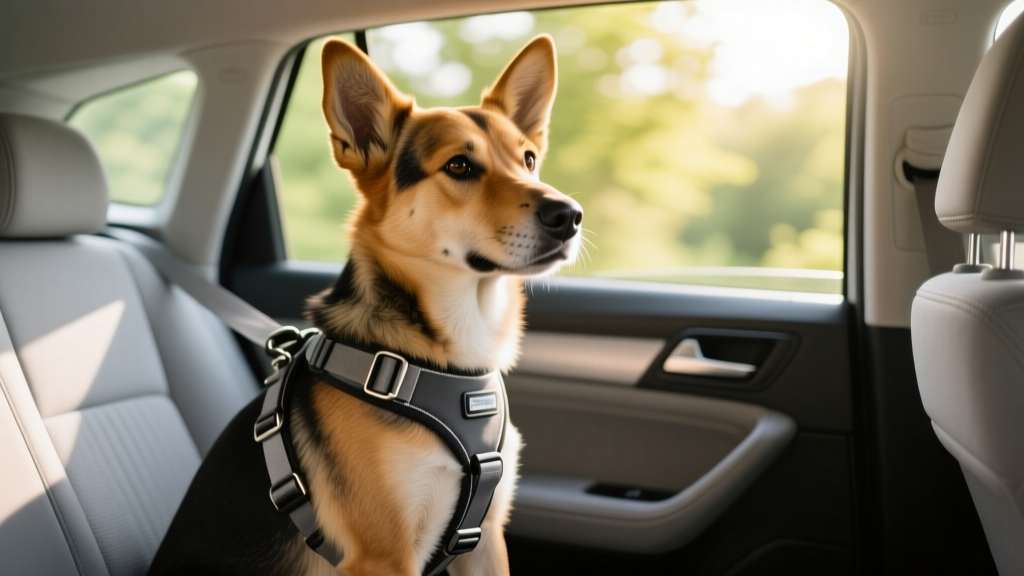
- Switch from a collar to a harness. If your dog — especially a toy breed, brachycephalic breed, or any dog with a known tracheal issue — coughs when pulling on leash, a front-clip or dual-clip harness (such as the Ruffwear Front Range, ~$40, or the 2 Hounds Design Freedom Harness, ~$36) eliminates tracheal pressure entirely. This single change can reduce coughing episodes by 50–80% in dogs with tracheal sensitivity.
- Use a humidifier during dry months. Indoor humidity below 30% dries the airway mucosa, making the cough reflex hypersensitive. A cool-mist humidifier in your dog's sleeping area (maintaining 40–50% humidity) soothes irritated airways. Clean the humidifier weekly with white vinegar to prevent mold growth.
- Reduce airborne irritants. Candles, air fresheners, aerosol cleaners, cigarette/vape smoke, and wood-burning stoves all trigger coughing in dogs. Their olfactory epithelium has approximately 300 million receptors (compared to our 6 million), making them far more sensitive to airborne chemicals. Switch to unscented, pet-safe cleaning products and avoid diffusing essential oils around dogs — many (tea tree, eucalyptus, citrus oils) are respiratory irritants or outright toxic.
- Keep your dog at a healthy body condition score (BCS). Excess weight compresses the diaphragm and reduces lung volume, making every cough less effective at clearing the airway. Dogs at ideal BCS (4–5 on a 9-point scale) have measurably better respiratory function. Even a 10% weight reduction in overweight dogs can produce a clinically significant improvement in coughing frequency.
- Stay current on respiratory vaccines. The Bordetella vaccine ($20–$40 per dose, typically required every 6–12 months for dogs in social settings) and the canine influenza vaccine ($30–$50 per dose, two-dose initial series) won't prevent all infectious coughing, but they significantly reduce severity and duration if your dog is exposed.
Frequently Asked Questions About Dogs Coughing
Why does my dog cough mostly at night?
Nighttime coughing in dogs has several possible explanations. When a dog lies down, fluid redistribution from the abdomen and hindquarters increases blood volume in the chest, which can worsen pulmonary congestion in dogs with heart disease. Lying flat also changes the angle of the trachea, which can trigger coughing in dogs with tracheal collapse. Additionally, the cooler, drier air at night can irritate already-sensitive airways. Nighttime-predominant coughing is a strong signal to have your dog's heart evaluated — especially in Cavalier King Charles Spaniels, Dachshunds, and other breeds predisposed to mitral valve disease.
Can dogs get asthma like humans?
Not exactly. While dogs can develop chronic inflammatory airway disease that resembles human asthma, the condition is clinically termed canine eosinophilic bronchopneumopathy or chronic bronchitis. True bronchoconstriction (the reversible airway narrowing that defines human asthma) is rare in dogs. Feline asthma is far more common and more similar to human asthma. In dogs, chronic bronchitis involves persistent airway inflammation with mucus hypersecretion, producing a daily cough lasting more than two months with no other identifiable cause. Treatment typically involves inhaled corticosteroids (fluticasone via an AeroDawg canine inhaler spacer, device cost ~$60–$80) and sometimes bronchodilators.
What does it mean when my dog coughs after drinking water?
Coughing after drinking is particularly common in toy breeds and dogs with tracheal collapse, where the act of swallowing and the cold water passing adjacent to the weakened trachea trigger a reflex spasm. It can also indicate laryngeal dysfunction — the epiglottis isn't closing properly during swallowing, allowing small amounts of water to enter the trachea. In older large-breed dogs, new-onset coughing after drinking should prompt evaluation for laryngeal paralysis. A practical workaround: offer water in smaller, more frequent amounts, or use a slow-flow water bowl to reduce gulping.
How do dogs process the urge to cough compared to humans?
The neurological pathway is nearly identical — vagal afferents to the brainstem cough center — but dogs lack the cortical (conscious) modulation that humans have. A human can often suppress a mild cough voluntarily by engaging higher brain centers. Dogs cannot. This means that when a dog coughs, the stimulus has reached a threshold that the brainstem considers non-negotiable. It also means that cough suppressant medications for dogs must work at the brainstem level (such as hydrocodone or butorphanol, both prescription-only), and they carry sedation risks that must be managed by your veterinarian.
Is coughing normal in senior dogs?
Coughing becomes more common in senior dogs, but it is never "normal" in the sense of being harmless. Senior dogs face a convergence of risk factors: age-related heart valve degeneration (especially mitral valve disease, affecting an estimated 75% of Cavalier King Charles Spaniels by age 7), weakened tracheal cartilage, decreased immune function increasing susceptibility to respiratory infections, and cumulative environmental damage to lung tissue. Any new cough in a dog over 7 years old warrants a veterinary workup including chest X-rays and cardiac evaluation. Early detection of heart disease, in particular, can extend a dog's life by 1–3 years with appropriate medications like pimobendan (Vetmedin), enalapril, and furosemide.
Research References
- Merck Veterinary Manual: Overview of Lung and Airway Disorders in Dogs
- American Kennel Club: Dog Coughing: Causes, Symptoms, and Treatment
- AVMA (American Veterinary Medical Association): Canine Influenza — Information for Pet Owners
- Journal of Veterinary Internal Medicine — multiple studies on tracheal collapse prevalence in toy breeds and brachycephalic obstructive airway syndrome (BOAS) prevalence data
Disclaimer: This article provides educational information about the science of canine coughing. It is not a substitute for professional veterinary diagnosis or treatment. Always consult your veterinarian if your dog develops a new or persistent cough.
Beth Carrasco
All our authors care for dogs every day — read more of their work on the authors page.