Dog Throwing Up Green: Science-Based Causes and When to Worry
Why is your dog throwing up green? Explore the science behind green vomit in dogs, from bile reflux to grass ingestion, and learn when it signals an emergency.
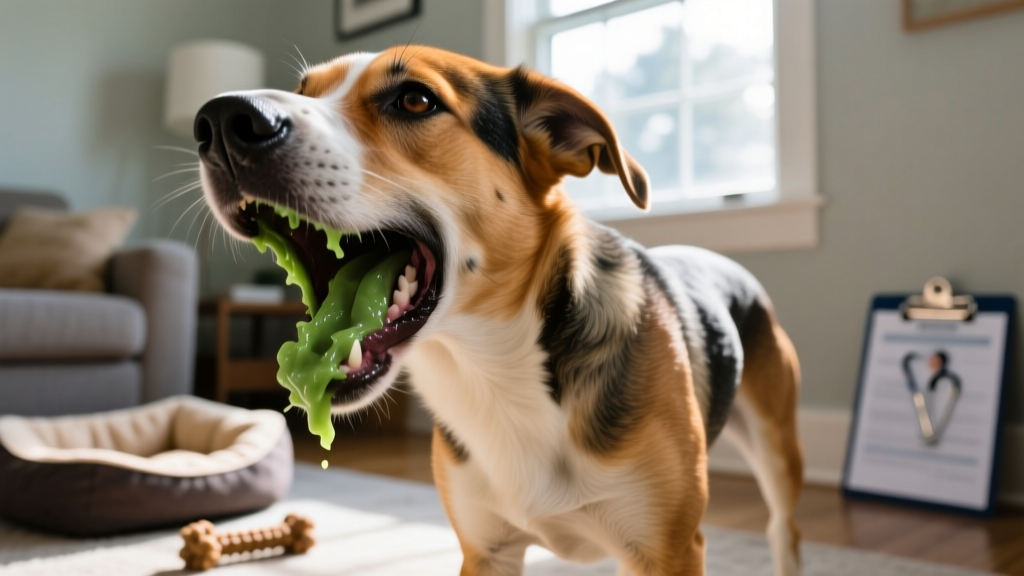
Seeing your dog throw up green material is alarming. Your mind races through possibilities: Did they eat something toxic? Is this an infection? Should you rush to the emergency vet? The color of canine vomit is a genuine diagnostic clue, and green specifically points to a narrow set of physiological mechanisms that veterinary science can explain clearly.
This article breaks down the biochemistry, evolutionary biology, and clinical significance behind green vomit in dogs—giving you the exact knowledge to assess whether you're dealing with a benign quirk or a genuine medical concern.
The Biochemistry of Green Vomit: What Makes It Green?
Green vomit in dogs traces back to a handful of specific pigments and compounds:
- Bile pigments (biliverdin and bilirubin): Bile is produced by the liver and stored in the gallbladder. It enters the duodenum (first section of the small intestine) to emulsify dietary fats. The primary bile pigment is biliverdin, a green tetrapyrrole compound. When bile flows backward from the duodenum into the stomach—a process called duodenogastric reflux—it tints stomach contents green or yellow-green.
- Chlorophyll: The green pigment in grass and leafy plants. Dogs lack the cellulase enzyme needed to break down plant cell walls, so ingested grass often returns largely intact and vividly green.
- Exogenous pigments: Green-colored foods (kibble with green dye), algae (particularly blue-green algae/cyanobacteria from ponds), fertilizers, and certain plants containing chlorophyll-based compounds.
The shade of green tells you something clinically useful. Dark forest-green vomit with recognizable leaf fragments almost always indicates grass or plant consumption. Bright yellow-green or olive-green liquid with a frothy consistency points to bile reflux. Neon or unnatural green raises suspicion for ingested dyes, chemicals, or algal toxins—and warrants an immediate call to your veterinarian or the ASPCA Animal Poison Control at (888) 426-4435.
Why Do Dogs Eat Grass and Then Throw It Up?
A 2008 study published in Applied Animal Behaviour Science by Sueda, Hart, and Hart surveyed dog owners and found that 68% of dogs consumed grass or plants on a daily or weekly basis, yet only 22% vomited afterward, and just 8% showed signs of illness before eating grass. This challenges the widespread assumption that dogs eat grass specifically to induce vomiting.
The researchers concluded that grass eating is a normal, innate behavior rather than a symptom of gastrointestinal distress. A follow-up hypothesis suggests this behavior is a vestigial trait inherited from wild canid ancestors who consumed the entire digestive tract of herbivorous prey—including the partially digested plant material in the stomach and cecum.
Bile Reflux Syndrome: The Physiological Mechanism
When a dog throws up green-yellow liquid without any visible plant material, the most likely culprit is bilious vomiting syndrome (BVS), sometimes called bile reflux gastritis. Here is the step-by-step physiology:
- Fasting state: When a dog's stomach remains empty for an extended period (typically 8+ hours, common overnight), gastric motility decreases.
- Pyloric sphincter relaxation: The pylorus is the muscular valve between the stomach and duodenum. During prolonged fasting, this sphincter may relax inappropriately, allowing duodenal contents to flow backward.
- Duodenogastric reflux: Bile, pancreatic enzymes, and intestinal secretions enter the stomach. These substances are alkaline (pH 7–8) and irritating to the acidic stomach lining (pH 1–2).
- Gastric mucosal irritation: Bile acids damage the protective mucus layer of the stomach, triggering inflammation (gastritis) and nausea.
- Emesis reflex: The vomiting center in the medulla oblongata receives signals via the vagus nerve and triggers contraction of the diaphragm and abdominal muscles, expelling the bile-tinged contents.
This pattern is most commonly seen in the early morning hours (between 3:00 AM and 7:00 AM), after the dog has gone 10–14 hours since their last meal. According to the Merck Veterinary Manual, BVS is particularly common in small breeds and dogs fed a single large meal per day.
Breed Predispositions for Bilious Vomiting
| Breed | Predisposition Factor | Notes |
|---|---|---|
| Yorkshire Terrier | Small stomach volume, fast gastric emptying | Especially prone to overnight bile reflux |
| Miniature Schnauzer | Predisposition to pancreatitis and GI sensitivity | Bile reflux may co-occur with pancreatitis |
| Silky Terrier | Documented breed predisposition to BVS | Often presents in young adults (1–3 years) |
| German Shepherd | Higher incidence of GI motility disorders | May also be linked to EPI or IBD |
| Brachycephalic breeds (Bulldogs, Pugs) | Altered GI anatomy and increased reflux risk | Hiatal hernias more common |
When Green Vomit Signals a Serious Problem
While grass-eating and occasional bile reflux are benign, green vomit can also be the first visible sign of conditions that require urgent veterinary intervention. Understanding the context around the vomiting episode is critical for distinguishing harmless from dangerous.
- Repeated vomiting (3+ episodes within 12 hours)
- Abdominal distension or a "prayer position" stance (front legs down, rear up) — possible bloat/GDV
- Blood in vomit (red streaks or coffee-ground appearance)
- Lethargy, collapse, or pale/white gums
- Known or suspected access to blue-green algae (pond scum), rodenticide, or antifreeze
- Diarrhea with blood or mucus
- Fever above 103.5°F (39.7°C)
- No appetite for 24+ hours
- Signs of dehydration: tacky gums, skin that doesn't snap back when pinched
For suspected toxin ingestion, contact ASPCA Animal Poison Control: (888) 426-4435 (24/7, consultation fee applies) or Pet Poison Helpline: (855) 764-7661.
Dangerous Causes of Green Vomit at a Glance
| Condition | Why Vomit Is Green | Onset Timeline | Urgency |
|---|---|---|---|
| Blue-green algae (cyanobacteria) poisoning | Ingested algae pigments; hepatotoxins cause bile disruption | 15 minutes to 4 hours | CRITICAL — often fatal within hours |
| Intestinal blockage (foreign body) | Bile builds up behind obstruction and refluxes | 6–24 hours post-ingestion | Emergency — surgery often required |
| Pancreatitis | Inflammation disrupts normal GI motility; bile reflux secondary | 1–3 days after high-fat meal | Urgent — same-day vet visit |
| Gastric dilatation-volvulus (bloat/GDV) | Stomach twists, trapping bile and preventing passage | Rapid — within 1–2 hours | CRITICAL — fatal without surgery |
| Rodenticide (some formulations) | Green-dyed bait visible in vomit; internal hemorrhage follows | 2–6 hours (bromethalin) or 2–5 days (anticoagulant) | Emergency |
How Is Canine Vomiting Different From Humans?
Dogs have a vomiting reflex that is significantly more accessible and easily triggered than in humans. The canine brainstem contains a well-developed chemoreceptor trigger zone (CTZ) in the area postrema, which sits outside the blood-brain barrier and can detect toxins circulating in the blood. Humans have a CTZ as well, but dogs have a lower threshold for activating the vomiting center.
Key physiological differences include:
- Gastric capacity and retention: A dog's stomach can expand to hold 0.5–8 liters depending on breed size, and dogs can retain food in the stomach for 4–12 hours before moving it to the intestines—longer than humans (2–4 hours). This extended gastric retention means bile reflux has a wider window to develop.
- Esophageal anatomy: Dogs have a longer, more muscular esophagus relative to body size, and the cardiac sphincter (between esophagus and stomach) is comparatively weaker, making regurgitation easier. This is also why dogs evolved the ability to vomit relatively easily as a protective mechanism against ingested toxins in the wild.
- Bile composition: Canine bile contains higher concentrations of taurocholic acid compared to human bile (which has more glycocholic acid). This difference affects the color intensity and mucosal irritation potential of refluxed bile.
Myths vs. Facts About Dogs Throwing Up Green
| Myth | Fact |
|---|---|
| "Dogs eat grass only when they feel sick." | Research shows most dogs eat grass without prior signs of illness. It is an innate foraging behavior, not a self-medication strategy in most cases. |
| "Green vomit always means poisoning." | The most common causes are benign: grass consumption and bile reflux from an empty stomach. Poisoning is possible but statistically less frequent. |
| "If my dog throws up, I should withhold food for 48 hours." | Current veterinary guidance recommends a shorter fasting period of 12–24 hours for adult dogs, followed by a bland diet (boiled chicken and white rice). Puppies and toy breeds should NOT be fasted due to hypoglycemia risk. Always consult your veterinarian for specific guidance. |
| "Feeding more fiber will stop green vomiting." | While fiber can help regulate GI motility, the root cause matters. Adding fiber won't address bile reflux, intestinal blockage, or pancreatitis. Diagnosis must come first. |
| "Grass eating means my dog's diet is deficient." | Dogs on complete, AAFCO-formulated diets still eat grass. The behavior is instinctual, not a sign of nutritional inadequacy. |
Practical Steps: What to Do When Your Dog Throws Up Green
Step-by-Step Assessment Protocol
- Examine the vomit (0–5 minutes): Note the color (bright green, yellow-green, dark green), consistency (liquid, foamy, chunky), and whether plant material is visible. Take a photo for your vet.
- Assess your dog's demeanor (5–15 minutes): Is your dog alert, wagging, and interested in food? Or lethargic, hunched, and reluctant to move? Behavior immediately after vomiting is a strong indicator of severity.
- Check for additional symptoms (15–60 minutes): Monitor for repeated vomiting, diarrhea, drooling, abdominal guarding (flinching when you touch their belly), or pacing.
- Review access history (last 24 hours): Did your dog have access to ponds, garden chemicals, houseplants, trash, or a neighbor's yard? This context is vital for your vet.
- Decide: monitor vs. vet visit:
- Monitor at home: Single episode, grass visible, dog acting normal, no other symptoms. Offer small amounts of water. Resume normal feeding at next scheduled meal.
- Call vet for advice: Two episodes within 12 hours, mild lethargy, or if your dog is a puppy, senior, or has a chronic condition.
- Emergency vet now: Any red-flag symptoms listed in the callout above.
Preventing Bile Reflux Vomiting at Home
If your veterinarian has diagnosed bilious vomiting syndrome and ruled out underlying disease, these management strategies are effective:
- Split meals: Feed 3 smaller meals instead of 1–2 large ones. The critical intervention is a late-night snack (around 10:00–11:00 PM) of ¼ to ½ cup of kibble (adjusted for dog size) to prevent the stomach from being empty for 10+ hours overnight.
- Elevated feeding: For breeds prone to reflux (brachycephalic dogs, large deep-chested breeds), a raised feeder positioned at elbow height can reduce gravitational reflux. Use a feeder that elevates bowls 6–12 inches depending on your dog's shoulder height.
- Prokinetic supplements: Under veterinary guidance, products containing slippery elm bark (approximately ¼ teaspoon per 20 lb body weight) or prescription prokinetics like metoclopramide may help regulate gastric emptying.
- Dietary fat adjustment: High-fat diets delay gastric emptying and worsen reflux. If your dog's current food has more than 15% fat (on a dry matter basis), discuss switching to a moderate-fat formula (8–12% fat) with your vet.
Frequently Asked Questions
Is it normal for a dog to throw up green occasionally?
Yes, occasional green vomit—particularly when you can see grass or plant fragments—is considered normal canine behavior. Studies show that the majority of dogs eat grass regularly, and a subset will vomit afterward without any underlying illness. If it happens once every few weeks and your dog is otherwise healthy, active, and eating well, it is not a cause for concern.
Can dogs get sick from eating grass treated with pesticides or fertilizer?
Absolutely. Lawn chemicals are a genuine risk. Many herbicides and fertilizers contain compounds that are toxic to dogs when ingested. If your dog eats grass from a treated lawn and vomits green, contact your vet and have the product label available. Wait at least 48–72 hours after lawn treatment before allowing your dog access to treated grass. Consider designating an untreated "dog-safe" patch of grass in your yard.
What does it mean when my dog throws up green foam?
Green foam is typically a mix of bile, gastric mucus, and swallowed air. The foamy texture comes from the churning action of the stomach mixing these fluids with air. This presentation most commonly indicates bile reflux gastritis, especially if it occurs in the early morning after an overnight fast. A late-night snack often resolves this pattern within 1–2 weeks.
How is green vomit different from yellow vomit in dogs?
Both green and yellow vomit often contain bile—the color difference reflects concentration and pH. Bright yellow vomit is usually dilute bile mixed with gastric acid. Green vomit contains more concentrated biliverdin or includes chlorophyll from plant material. From a clinical standpoint, the frequency and accompanying symptoms matter more than the exact shade. Both colors warrant a vet visit if they occur repeatedly or with other signs of illness.
Should I change my dog's diet if they keep throwing up green?
Not immediately. The first step is a veterinary examination to determine the cause. If the cause is bile reflux, a dietary change to a lower-fat, highly digestible formula may help. If the cause is grass eating, diet change won't address the behavior (though increasing dietary fiber with a small amount of steamed green beans—about 1 tablespoon per 20 lb body weight—may reduce the grass-eating impulse in some dogs). Never make major dietary changes without consulting your veterinarian, especially for dogs with active GI symptoms.
Can green vomit indicate a parasite infection?
It can, though it is not the most common presentation. Heavy intestinal parasite loads (roundworms, hookworms, giardia) can cause GI inflammation and motility disruption that leads to bile reflux. If your dog has green vomit along with chronic soft stools, weight loss, a pot-bellied appearance, or visible worms, a fecal flotation test at your vet's office (typically $40–$65) can identify parasites. Routine deworming and annual fecal exams are recommended by the AVMA for all dogs.
- Sueda, K.L., Hart, B.L., & Hart, L.A. (2008). "Characterisation of plant eating in dogs." Applied Animal Behaviour Science, 111(1-2), 120-132.
- Merck Veterinary Manual — Bilious Vomiting Syndrome in Dogs
- ASPCA Animal Poison Control Center
- AVMA — Internal Parasites in Pets
Disclaimer: This article is for educational purposes only and does not replace professional veterinary advice. If your dog is vomiting repeatedly, appears distressed, or you suspect toxin ingestion, contact your veterinarian or an emergency animal hospital immediately.
Dr. Hannah Wickes
All our authors care for dogs every day — read more of their work on the authors page.