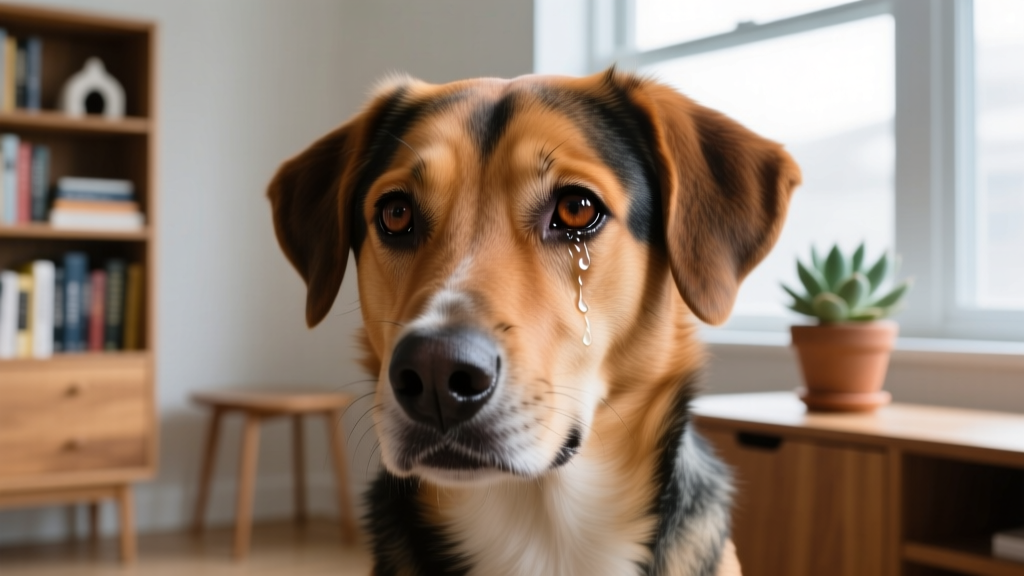
Dog Pacer: Why Some Dogs Pace and the Science Behind It
Is your dog a pacer? Learn the canine science behind pacing behavior, from evolutionary roots to medical red flags, and what it means for your dog's wellbeing.

Quick Answer: What is a dog pacer?
A dog pacer is a dog that walks or trots using a pacing gait — moving both legs on the same side of the body forward simultaneously (left front + left hind, then right front + right hind). This is one of several natural canine gaits. In most dogs, pacing is a normal, energy-efficient locomotion pattern. However, if your dog is pacing back and forth repetitively in a confined area (stereotypic pacing), this is a behavioral pattern that may signal anxiety, pain, or cognitive decline and warrants veterinary evaluation.
Search "dog pacer" and you'll find two very different conversations happening. Breed enthusiasts and canine sports competitors discuss the pacing gait — a specific way dogs move that's recognized (and sometimes penalized) in the conformation ring. Meanwhile, worried pet owners describe dogs who walk repetitive circuits around the living room at 2 a.m. Both are real phenomena with distinct scientific explanations. This guide covers the full picture.
The Pacing Gait: Biomechanics of a Lateral Walk
How the pacing gait works physiologically:
Normal canine locomotion includes several gaits: walk, amble, pace, trot, canter, and gallop. The pace is classified as a lateral gait, meaning the limbs on the same side of the body move in unison. When a dog paces:
- Left phase: Left forelimb and left hindlimb swing forward together
- Right phase: Right forelimb and right hindlimb swing forward together
- Weight transfer: The dog's center of mass shifts side-to-side rather than front-to-back
- Footfall pattern: Two feet are always on the ground (no suspension phase at moderate speeds)
According to gait analysis research published in the Journal of Experimental Biology, the pacing gait reduces vertical oscillation of the center of mass compared to a trot, which means the dog expends less energy fighting gravity. This makes pacing an energy-conserving strategy for covering moderate distances at speeds between 4–8 mph (6.5–13 km/h).
In the conformation ring, the American Kennel Club notes that pacing is acceptable in some breeds but considered a fault in others. Judges evaluating movement in breeds like the German Shepherd Dog or the Old English Sheepdog may see pacing without penalty, while a pacing Golden Retriever in the show ring would likely be faulted because the breed standard calls for a free-flowing trot.
Which Breeds Are Natural Pacers?
Some breeds have been selectively bred for the pacing gait over generations. The tendency varies significantly:
| Breed | Pacing Tendency | Breed Standard Position | Why It Developed |
|---|---|---|---|
| Old English Sheepdog | High — preferred gait | Accepted and encouraged | Cattle droving at steady speeds over long distances |
| German Shepherd Dog | Moderate | Accepted at slower speeds | Endurance trotting/patrolling herding work |
| Polish Lowland Sheepdog | High | Accepted | All-day herding on flat terrain |
| Standard Poodle | Low–Moderate | Faulted if persistent | N/A — trot preferred for retrieving |
| Golden Retriever | Low | Faulted | N/A — powerful trot evolved for field work |
Why Do Dogs Pace? The Evolutionary Context
Evolutionary basis: Gray wolves (Canis lupus) routinely use the pacing gait during long-distance travel across flat terrain. Studies of wild wolf locomotion show that packs moving between hunting territories often settle into a pace at speeds of 5–7 mph (8–11 km/h), which minimizes caloric expenditure. Since wolves may travel 20–30 miles (32–48 km) per day while patrolling territory, even small energy savings per stride compound into significant survival advantages. Domestic dogs inherited this gait pattern, and selective breeding either preserved it (in herding breeds that needed all-day endurance) or bred it out (in breeds where explosive speed or a floating trot was more valuable).
The pacing gait persists in domestic dogs for three biomechanical reasons:
- Energy economy: The lateral limb coupling reduces the muscular effort needed to stabilize the torso during each stride cycle. Research from the Royal Society's Interface journal demonstrates that quadrupeds naturally select gaits that minimize metabolic cost at a given speed.
- Body proportions: Dogs with longer backs relative to their leg length (higher body-length-to-height ratio) tend to pace more frequently. The lateral gait reduces spinal flexion demands, which is mechanically advantageous for long-backed breeds.
- Speed transition zone: The pace often appears as a transitional gait when a dog is moving faster than a walk but hasn't yet shifted into a trot. Some dogs prefer to stay in this zone rather than transitioning.
Stereotypic Pacing: When Your Dog Paces Back and Forth
The second meaning of "dog pacer" is far more concerning to pet owners. Stereotypic pacing describes a repetitive, seemingly purposeless behavior where a dog walks a fixed route — around a room, along a fence line, or in tight circles — without an obvious goal.
This is fundamentally different from the locomotion gait. Here, "pacing" refers to the pattern of movement through space, not the biomechanical footfall sequence.
Physiological Mechanism: What's Happening in the Brain
Stereotypic behaviors in dogs involve dysregulation of the basal ganglia-thalamocortical circuit. When a dog experiences chronic stress, under-stimulation, or neurological changes, the brain's dopamine pathways can create self-reinforcing motor loops. The pacing behavior triggers a small dopamine release, which reinforces the circuit, making the dog more likely to pace again in similar conditions. Over time, the behavior becomes "fixed" — performed even when the original trigger is no longer present.
Research published in Applied Animal Behaviour Science found that kennelled dogs exhibited stereotypic pacing at rates of 15–30% depending on housing conditions, with dogs in barren environments showing significantly higher rates than those with enrichment.
Common Causes of Stereotypic Pacing
- Separation anxiety: Pacing near doors or windows when the owner is absent or preparing to leave
- Cognitive dysfunction syndrome (CDS): Senior dogs (typically 10+ years) may pace, especially at night, due to age-related brain changes similar to Alzheimer's pathology in humans
- Pain or discomfort: Dogs with arthritis, abdominal pain, or dental disease may pace because lying down is uncomfortable
- Under-stimulation: Working breeds (Border Collies, Belgian Malinois, Australian Shepherds) kept without adequate mental and physical outlets
- Environmental stress: New home, new family member, construction noise, or nearby animals triggering territorial frustration
- Vestibular disease: Inner ear dysfunction can cause circling that owners may describe as pacing
Is Pacing Normal? Separating Concern from Context
| Myth | Fact |
|---|---|
| "If my dog paces when walking, there's something wrong with their hips." | The pacing gait is normal in many breeds and is not inherently a sign of hip dysplasia or joint disease. However, if a dog that previously trotted suddenly begins pacing exclusively, a veterinary orthopedic exam is warranted. |
| "My dog walks in circles at night — they're just restless." | Nighttime pacing in senior dogs is a hallmark sign of canine cognitive dysfunction (CDS). Studies estimate 14–35% of dogs over age 11 show CDS symptoms. Early intervention with veterinary guidance can slow progression. |
| "Pacing means my dog is bored — more exercise will fix it." | While under-stimulation can contribute, stereotypic pacing often has an anxiety component. Simply adding physical exercise without addressing the emotional trigger may not resolve the behavior. Mental enrichment (snuffle mats, training sessions, puzzle feeders) is often more effective than additional walks. |
| "Dogs pace the same way humans pace when they're nervous." | While there are parallels — both involve repetitive locomotion under stress — human pacing is largely a conscious coping mechanism, while canine stereotypic pacing can become neurologically fixed and involuntary, closer to a compulsive disorder. |
How Is Canine Pacing Different From Humans?
Humans are obligate bipeds with a single primary gait (walking) and a running transition. Dogs, as quadrupeds, have five to six distinct gaits depending on speed and breed. The pacing gait has no direct human equivalent — the closest analogy would be a person walking while swinging both arms on the same side forward simultaneously, which feels unnatural to us but is biomechanically efficient for a four-legged animal.
Neurologically, human anxiety-pacing involves the prefrontal cortex (conscious worry) driving motor output. Canine stereotypic pacing involves deeper brain structures — the basal ganglia and amygdala — with less cortical oversight. This is why dogs cannot simply "choose to stop" once a pacing habit is established, and why punishment-based training is both ineffective and harmful for addressing the behavior.
Practical Takeaways for Dog Owners
If your dog paces in the gait sense (lateral walking):
- No action needed if this has always been their gait and they show no signs of pain, lameness, or reluctance to exercise.
- Schedule a vet visit if the pacing gait is a new development, especially in dogs over 7 years old. Sudden gait changes can indicate hip dysplasia, degenerative myelopathy, or cruciate ligament injury.
- Record a video of your dog moving at various speeds on flat ground. Show your vet the footage — gait analysis from a short clip can reveal asymmetries invisible to the naked eye.
- Avoid forcing gait changes. You cannot train a dog out of a pacing gait, and attempting to do so with leash corrections or aversive tools will only cause stress.
If your dog paces repetitively (stereotypic behavior):
- Track the pattern: Note time of day, duration, triggers, and whether the dog can be interrupted. A pacing log over 7 days gives your vet or a certified behaviorist (IAABC or CAAB credentialed) actionable data.
- Rule out medical causes first: A full veterinary exam including bloodwork (CBC, chemistry panel, thyroid), orthopedic assessment, and — for senior dogs — a cognitive dysfunction screening should precede any behavioral intervention. Expect to spend $150–$400 on this initial workup depending on your region.
- Increase mental enrichment: Daily 15-minute scent work sessions, frozen Kongs, lick mats, and short training sessions (5 minutes, 2–3 times daily) using positive reinforcement reduce stereotypic pacing in many dogs within 2–4 weeks.
- Consider environmental modifications: White noise machines ($25–$60) for noise-sensitive dogs, blackout curtains for light-reactive night pacers, and consistent bedtime routines can reduce anxiety-driven pacing.
- Consult a veterinary behaviorist: For persistent pacing that doesn't respond to enrichment, a DACVB (Diplomate of the American College of Veterinary Behaviorists) can assess whether anti-anxiety medication (such as fluoxetine or clomipramine, typically $15–$50/month) is appropriate alongside a behavior modification plan.
When to call your veterinarian immediately:
- Pacing accompanied by disorientation, head pressing, or walking into walls
- Sudden onset of nighttime pacing in a previously settled senior dog
- Pacing with vocalization (whining, howling) that cannot be interrupted
- Pacing combined with loss of appetite, vomiting, or a distended abdomen (could indicate GDV/bloat — a life-threatening emergency)
- Any circling that consistently goes in one direction only (may indicate vestibular disease or a brain lesion)
Related Behaviors and Cross-References
Understanding the pacing gait and stereotypic pacing connects to several other canine science topics:
- The trot: The diagonal gait (left front + right hind move together) that is the preferred show gait for most breeds. Dogs that pace may simply not have been conditioned to trot on a leash.
- Canine compulsive disorder (CCD): Stereotypic pacing is one manifestation. Others include flank sucking, tail chasing, and fly snapping. CCD affects an estimated 2–8% of the general dog population.
- Canine cognitive dysfunction: Pacing, especially nocturnal pacing, appears in up to 40% of dogs diagnosed with CDS. Nutritional supplements containing medium-chain triglycerides (MCTs) and antioxidant blends may support cognitive health — consult your veterinarian before starting any supplement.
- Separation anxiety: Pacing is among the top three behavioral signs (alongside vocalization and destruction) used to diagnose separation-related distress.
Frequently Asked Questions
Why do dogs pace instead of trot?
Dogs pace when the pacing gait is more energy-efficient for their body proportions, speed, or breed-specific biomechanics. Long-backed, short-legged breeds and heavy-coated herding breeds pace more often than square-proportioned athletic breeds. Some individual dogs simply find the lateral gait more comfortable at certain speeds, much as some humans prefer a shuffle to a full stride.
Can dogs be trained to stop pacing?
If you're referring to the pacing gait, no — and you shouldn't try. It's a natural movement pattern. If you're referring to stereotypic pacing (repetitive walking in patterns), the behavior can be reduced through environmental enrichment, anxiety management, and in some cases medication — but it requires addressing the root cause, not suppressing the symptom. Force-free, positive reinforcement-based approaches are the only methods supported by veterinary behaviorists.
How do dogs choose which gait to use?
Gait selection is largely automatic, governed by the spinal cord's central pattern generators (CPGs) — neural circuits that produce rhythmic motor output without conscious brain involvement. As speed increases, sensory feedback from muscle spindles and Golgi tendon organs triggers gait transitions. The dog doesn't "decide" to pace; their nervous system selects the gait that minimizes energy cost at the current speed and terrain.
What does it mean when my dog suddenly starts pacing at night?
New-onset nighttime pacing, especially in dogs over 10 years old, is a primary indicator of canine cognitive dysfunction syndrome (CDS). Other possibilities include pain that worsens when lying down, hearing loss causing disorientation in the dark, or anxiety triggered by environmental changes. This warrants a veterinary appointment within 1–2 weeks (sooner if accompanied by other neurological signs).
Is the pacing gait normal in puppies?
Yes. Puppies often pace when their legs are long enough to interfere with each other during a trot (temporary disproportion during growth spurts) or when they're still developing coordination. Most puppies transition to a more consistent trot by 12–18 months as their proportions stabilize. Persistent pacing beyond maturity in a breed where trotting is expected should be discussed with your vet.
How is this different from humans?
Humans are bipedal with fundamentally different locomotion mechanics. We have no equivalent to the lateral pacing gait. When humans "pace" due to anxiety, it's a conscious (or semi-conscious) coping behavior mediated by the prefrontal cortex. Canine stereotypic pacing involves deeper brain circuits and can become involuntary — closer to a neurological compulsion than a stress-relief habit.
Sources & Further Reading
- Bertram, J.E.A. (2016). "Gait selection and energetics in quadrupeds." Journal of Experimental Biology. PubMed
- Protopopova, A. et al. (2014). "Stereotypic behaviour in shelter dogs." Applied Animal Behaviour Science. PubMed
- American Kennel Club — "Understanding Dog Gaits and Movement." AKC.org
- Merck Veterinary Manual — "Degenerative Myelopathy in Dogs." MerckVetManual.com
This article is for informational purposes only and does not replace professional veterinary advice. If your dog's pacing behavior is new, worsening, or accompanied by other symptoms, consult your veterinarian for a thorough evaluation.
Aaron Whyte
All our authors care for dogs every day — read more of their work on the authors page.