Can Dogs Cry? The Science Behind Canine Tears and Emotions
Can dogs cry tears of emotion? Explore the science of canine tear production, emotional expression, and what watery eyes really mean for your dog.
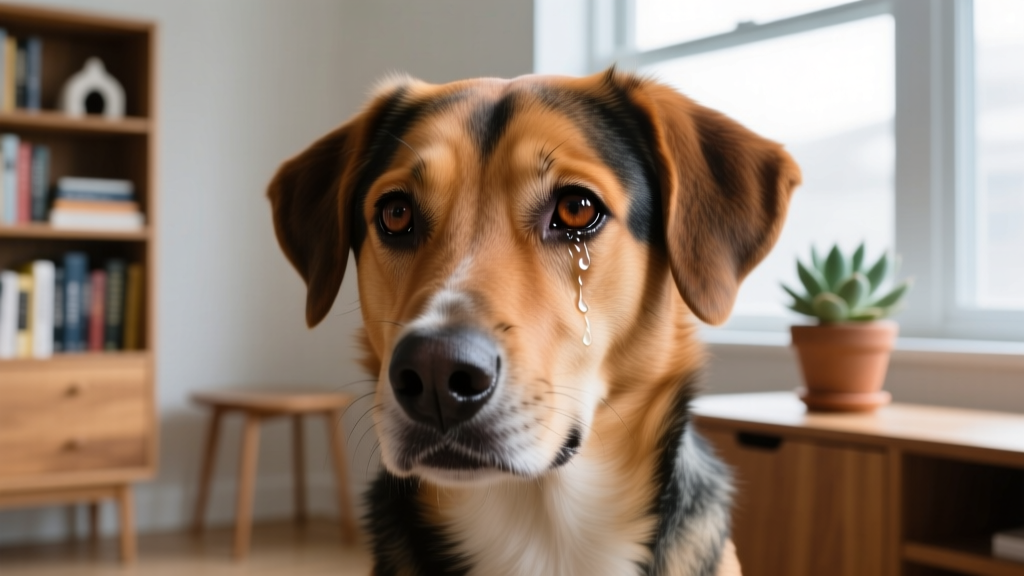
Quick Answer: Can Dogs Cry?
Yes and no — it depends on what you mean by "cry." Dogs produce tears continuously to lubricate their eyes, and they will tear up excessively in response to irritation, allergies, blocked ducts, or injury. However, dogs do not shed emotional tears in response to sadness, grief, or joy the way humans do. No peer-reviewed evidence supports the idea that canine tear production is triggered by feelings. When your dog's eyes are watering, there is almost always a physiological or medical explanation — not an emotional one. That said, dogs absolutely express distress through vocalizations (whining, whimpering, howling) and body language. They feel emotions deeply; they just don't cry tears about them.
The Physiology of Canine Tear Production
To understand whether dogs cry, you first need to understand how their eyes work. Dogs, like all mammals, have a lacrimal system — a network of glands and ducts responsible for producing and draining tears. The lacrimal gland, located above the outer corner of each eye, secretes the aqueous (watery) layer of the tear film. A secondary gland, the nictitans gland (associated with the third eyelid), contributes additional fluid. The meibomian glands along the eyelid margins produce the oily outer layer that prevents evaporation.
A healthy dog's tear film is a three-layer sandwich:
- Lipid layer (outer): Produced by meibomian glands; prevents evaporation
- Aqueous layer (middle): Produced by lacrimal and nictitans glands; provides moisture, oxygen, and nutrients to the cornea
- Mucin layer (inner): Produced by conjunctival goblet cells; helps tears adhere to the corneal surface
Under normal conditions, tears drain through two small openings called puncta (one on the upper lid, one on the lower lid) into the nasolacrimal duct, which empties into the nasal cavity. This is why your dog's nose is wet — partly thanks to tear drainage. When this system is disrupted at any point, you see overflow tearing, clinically called epiphora.
Basal vs. Reflex Tears: What's Happening
Dogs produce two functional types of tears:
- Basal tears: Constantly produced at a low rate (roughly 1–2 microliters per minute in dogs) to keep the cornea moist and nourished. These are always present, whether the dog is happy, sad, or asleep.
- Reflex tears: Produced in larger volumes in response to irritation — dust, wind, a hair poking the eye, allergens, or a corneal scratch. This is a protective mechanism, not an emotional one.
Humans uniquely produce a third type: psychic (emotional) tears, triggered by the limbic system's response to strong feelings. This third pathway involves the parasympathetic nervous system activating the lacrimal gland in response to neurotransmitters associated with grief, joy, or pain. There is currently no verified evidence that dogs possess this neural pathway connecting emotion centers to tear production.
The 2022 Japanese Study on Dog Tears and Reunion
In August 2022, a study published in Current Biology by Takefumi Kikusui and colleagues at Azabu University in Japan made international headlines. The researchers measured tear volume in 18 dogs using the Schirmer tear test (a standardized strip of filter paper placed inside the lower eyelid) before and after reuniting with their owners following a separation of 5–7 hours.
The key findings:
- Tear volume increased significantly when dogs reunited with their owners compared to reuniting with a familiar non-owner person
- The researchers linked this to oxytocin — applying oxytocin eye drops also increased tear production, while an oxytocin receptor antagonist reduced it
- The authors suggested this tear increase might facilitate emotional bonding, similar to how human emotional tears may serve a social-signaling function
What this does NOT prove: The study did not demonstrate that dogs cry from sadness, grief, or emotional pain. The tear increase was associated with a positive reunion context and specifically linked to oxytocin (the "bonding hormone"). It's more accurate to describe this as an oxytocin-mediated physiological response than as "crying." The sample size was small (18 dogs), the tears were measured via strip test (not visible streaming), and the study has not yet been widely replicated. It's a fascinating piece of science, but it doesn't confirm that dogs shed emotional tears the way people do.
Evolutionary Context: Why Dogs Don't Need Emotional Tears
In ancestral wolves, visible emotional signaling through tears would offer little survival advantage. Wolves communicate distress through vocalization (whimpering, howling), body posture (lowered head, tucked tail, pinned ears), and facial expressions (whale eye, lip licking). These signals are visible at a distance and in low light — tears are not. Domestication has selected for dogs that are highly expressive through facial movements (dogs evolved the levator anguli oculi medialis muscle, which creates the "puppy dog eyes" expression — a muscle wolves lack, as documented in a 2019 study published in PNAS). Dogs have so many other, more effective channels for emotional communication that evolving a tear-based emotional signal would be redundant.
Why Is My Dog's Eye Watering? Common Medical Causes
If you're seeing excessive tearing, the explanation is almost certainly physiological. Here are the most common causes, organized by frequency:
| Cause | Mechanism | Signs to Watch For | Typical Vet Visit Cost |
|---|---|---|---|
| Allergies (environmental) | Histamine response to pollen, dust, mold | Seasonal pattern, paw licking, sneezing | $80–$250 (exam + allergy meds) |
| Blocked nasolacrimal duct | Tears cannot drain into nasal cavity | Constant wetness below inner eye corner, tear staining | $100–$400 (flushing procedure) |
| Corneal ulcer/scratch | Surface damage triggers reflex tearing | Squinting, pawing at eye, redness, light sensitivity | $100–$300 (fluorescein stain + treatment) |
| Entropion/ectropion | Eyelid rolls inward (entropion) or outward (ectropion) | Chronic tearing, discharge, visible lid deformity | $300–$1,500 (surgical correction) |
| Conjunctivitis | Inflammation of conjunctival tissue | Red/pink eye tissue, yellow-green discharge, swelling | $80–$200 (exam + antibiotic drops) |
| Keratoconjunctivitis sicca (dry eye) | Immune-mediated destruction of lacrimal gland — paradoxically causes watery, mucoid discharge | Thick mucus, dull cornea, recurrent infections | $100–$250 (Schirmer test + cyclosporine/tacrolimus) |
| Foreign body | Grass seed, hair, debris trapped under lid | Sudden onset, one eye only, intense squinting | $80–$200 (removal + flush) |
If your dog's eyes are watering and you can't identify a clear, brief cause (like wind on a walk), consult your veterinarian. Corneal ulcers, in particular, can worsen rapidly and lead to permanent damage within 24–48 hours if untreated.
How Dogs Actually Express Emotion: What the Science Shows
Dogs are among the most emotionally expressive domestic animals — they just don't use tears to do it. Research from institutions like the Duke Canine Cognition Center and the Family Dog Project at Eötvös Loránd University in Budapest has mapped canine emotional expression across multiple channels:
Vocalizations
- Whimpering/whining: Associated with anxiety, frustration, pain, or anticipation. Puppies whimper to signal distress to the mother; adult dogs retain this behavior.
- Howling: Long-distance communication, often triggered by isolation or certain sounds (sirens, music).
- Growling: Context-dependent — can signal threat, resource guarding, or play (play growls have a distinctly different acoustic structure than aggressive growls, per a 2010 study in Animal Behaviour).
- Sighing: Often signals contentment when the dog is settling down, or resignation/disappointment when they don't get what they want.
Facial Expressions
A landmark 2017 study published in Scientific Reports found that dogs produce significantly more facial expressions when a human is paying attention to them — suggesting these expressions are communicative, not involuntary. The most documented expressions include:
- Raised inner eyebrows ("puppy dog eyes") — triggers a caregiving response in humans
- Lip licking and yawning — displacement behaviors signaling stress or uncertainty
- Relaxed, open mouth with soft eyes — contentment
- Whale eye (showing whites of eyes) — anxiety or discomfort
Body Language
- Tail position and wag direction (right-biased wag = positive emotion; left-biased = negative, per research by Giorgio Vallortigara)
- Play bows, zoomies, and relaxed full-body wiggles for joy
- Tucked tail, lowered body, flattened ears for fear
- Leaning into owner, seeking physical contact for comfort-seeking
Myth vs. Fact: Common Misconceptions About Dogs Crying
| Myth | Fact |
|---|---|
| "My dog cried when I left — they were sad." | Vocalizing (whining, howling) when you leave is a sign of separation distress, which is real. But the wetness around their eyes is likely unrelated — it could be normal basal tearing, mild irritation from rubbing, or breed-related anatomy. |
| "Dogs cry tears of joy when their owner comes home." | The 2022 Azabu study found increased tear volume at reunion, linked to oxytocin. But this was measured via Schirmer strip (absorbent paper), not visible streaming tears. It's a physiological response, not "joy crying" as humans experience it. |
| "If my dog's eyes are wet, they must be in pain." | Not necessarily. Some breeds (brachycephalic dogs, breeds with prominent eyes) simply have more visible tearing due to anatomy. However, sudden or one-sided tearing with squinting does warrant a vet visit to rule out injury. |
| "Dogs don't feel emotions, so they can't cry." | Dogs absolutely feel emotions — fMRI studies by Gregory Berns at Emory University have shown canine brain activation in regions analogous to human emotional centers. They feel joy, fear, attachment, and grief. They just express these feelings through channels other than tears. |
| "Tear stains mean my dog is crying a lot." | Tear stains (reddish-brown marks below the eyes) are caused by porphyrins — iron-containing molecules naturally present in tears, saliva, and urine. They indicate chronic moisture on the fur, not emotional crying. Common in breeds with shallow eye sockets or long facial hair. |
Breed Variations: Which Dogs Are More Prone to Visible Tearing?
Some breeds are genetically predisposed to epiphora (excessive tear overflow) due to skull shape, eye anatomy, or coat characteristics. This is purely structural — it has nothing to do with emotional sensitivity.
- Brachycephalic breeds (Pugs, French Bulldogs, English Bulldogs, Shih Tzus, Pekingese): Flat faces mean shallow eye sockets, prominent eyes, and often kinked or narrow nasolacrimal ducts. The tear drainage pathway is physically compromised.
- Breeds with loose facial skin (Bloodhounds, Cocker Spaniels, Basset Hounds): Ectropion (outward-rolling eyelids) is common, exposing more conjunctival surface and increasing tear production.
- Small breeds with prominent eyes (Chihuahuas, Pomeranians, Maltese): Large eyes relative to socket size mean more exposure and more reflex tearing.
- Breeds with long facial hair (Poodles, Maltese, Bichon Frisés, Lhasa Apsos): Hair wicks tears onto the face, creating visible staining even when tear production is normal.
- Specific genetic conditions: Poodles and Cocker Spaniels are predisposed to imperforate lacrimal puncta (the drainage holes never fully open), which is typically diagnosed in puppyhood and corrected surgically for $300–$800 per eye.
If you own one of these breeds, daily eye care is part of routine maintenance. Wipe the periocular area with a soft, damp cloth or a commercial eye wipe (like Eye Envy or Arava Pet Eye Wipes, typically $8–$15 per pack) to prevent tear stain buildup and secondary skin infections.
How Is Canine Crying Different From Human Crying?
This is where the comparative physiology gets interesting. Humans are the only species definitively known to produce emotional tears. Here's how the two systems compare:
| Feature | Humans | Dogs |
|---|---|---|
| Basal tears | Yes | Yes |
| Reflex tears (irritation) | Yes | Yes |
| Emotional/psychic tears | Yes — unique to humans | Not confirmed; oxytocin-linked increase found in one study |
| Primary emotional distress signal | Crying (tears + vocalization) | Vocalization (whining, howling) + body language |
| Tears contain stress hormones | Yes (ACTH, prolactin, leucine enkephalin found in emotional tears) | Not studied for emotional context |
| Social bonding function | Tears trigger empathy and caregiving | Puppy dog eyes and whining trigger human caregiving |
Practical Takeaways: What This Means for Dog Owners
What to Do When Your Dog's Eyes Are Watering
- Check for obvious irritants: Look for a hair, grass seed, or debris near the eye. Flush gently with sterile saline eye wash (available at any pharmacy for $3–$8) if you see something minor.
- Note the pattern: Is it one eye or both? Seasonal or constant? Triggered by outdoor time? This information helps your vet narrow the cause.
- Watch for red flags: Squinting, pawing at the eye, thick yellow/green discharge, redness of the sclera (white of the eye), or cloudiness of the cornea all warrant a vet visit within 24 hours.
- Don't assume it's emotional: If your dog is also whining or acting distressed, address the behavioral signs (separation anxiety, pain, fear) and the physical eye symptoms as two separate issues. Both may need attention.
- Maintain daily eye hygiene for predisposed breeds: Gently wipe below the eyes daily with a damp cloth or pet-safe eye wipe. Keep long facial hair trimmed short around the eyes.
When Excessive Tearing Signals a Bigger Problem
See your veterinarian promptly if you notice any of the following alongside watery eyes:
- Sudden behavioral changes (lethargy, loss of appetite, hiding)
- Squinting or holding one eye shut
- Visible third eyelid protrusion
- Cloudy or bluish cornea (could indicate glaucoma or corneal edema — both emergencies)
- Blood in or around the eye
- Swelling around the eye or face
- Tearing that persists more than 24–48 hours without a clear cause
For emergency after-hours concerns, the ASPCA Animal Poison Control hotline is available at (888) 426-4435 (24/7, consultation fee applies) if you suspect your dog's eye symptoms are related to toxic exposure (chemical splashes, toxic plant contact, etc.).
Related Canine Abilities and Behaviors
If you're interested in how dogs process and express emotions, these related topics offer more insight:
- Can dogs feel guilt? Research by Alexandra Horowitz (2009, Barnard College) found that the "guilty look" is actually a response to owner scolding, not an admission of wrongdoing. Dogs display appeasement behaviors when they sense human displeasure, regardless of whether they actually did something wrong.
- Do dogs grieve? Yes — behavioral changes after the loss of a companion animal or human family member are well-documented. Signs include decreased appetite, lethargy, increased clinginess, and searching behavior. The ASPCA reports that surviving dogs in a multi-dog household show behavioral changes in roughly 66% of cases after a housemate's death.
- Can dogs sense human emotions? fMRI and behavioral studies confirm dogs can read human facial expressions and emotional tone. A 2016 study in Biology Letters showed dogs form cross-modal emotional representations — they can combine a human's facial expression with their voice tone to assess emotional state.
- Why do dogs sigh? Context-dependent: a long sigh while settling into a bed typically signals contentment; a sigh while staring at you after you've stopped petting them signals mild frustration or an "ask" for more interaction.
Frequently Asked Questions
Is it normal for my dog's eyes to water every day?
For some breeds — especially brachycephalic dogs (Pugs, French Bulldogs, Shih Tzus) and small breeds with prominent eyes (Chihuahuas, Pomeranians) — mild daily tearing is anatomically normal. However, if the tearing is new, suddenly worse, only in one eye, or accompanied by discharge, redness, or squinting, it's not normal and should be evaluated by a veterinarian.
Can dogs cry from pain?
Dogs vocalize when in pain — yelping, whining, or growling — but they do not shed tears as a pain response. Reflex tearing can occur if the pain is in or around the eye itself (corneal injury, glaucoma), but this is a local physiological reaction, not an emotional one. If your dog is vocalizing and you suspect pain, seek veterinary care rather than focusing on eye moisture.
Do dogs cry when they're sad or lonely?
Dogs express sadness and loneliness through behavior, not tears. A lonely or sad dog may whine, pace, lose interest in food, become clingy, or exhibit destructive behavior. These are real emotional responses that deserve attention — addressing the underlying cause (separation anxiety, lack of stimulation, loss of a companion) is far more important than looking for tears.
Why does my dog "cry" at night?
Nighttime vocalizing (whining, whining, howling) is common in puppies adjusting to a new environment and in senior dogs experiencing canine cognitive dysfunction (CCD). It can also indicate pain that worsens when lying down (arthritis, spinal issues), the need to eliminate, or anxiety. Persistent nighttime crying warrants a veterinary evaluation to rule out medical causes before addressing it behaviorally.
Are tear stains harmful to my dog?
Tear stains themselves are cosmetic — the reddish-brown discoloration is caused by porphyrins in tears oxidizing on the fur. However, the chronic moisture that causes staining can lead to secondary bacterial or yeast infections on the skin below the eyes. Keep the area clean and dry, and have your vet check for underlying causes like blocked ducts, allergies, or dental disease (tooth root infections can affect tear drainage).
Jonas Cole
All our authors care for dogs every day — read more of their work on the authors page.


