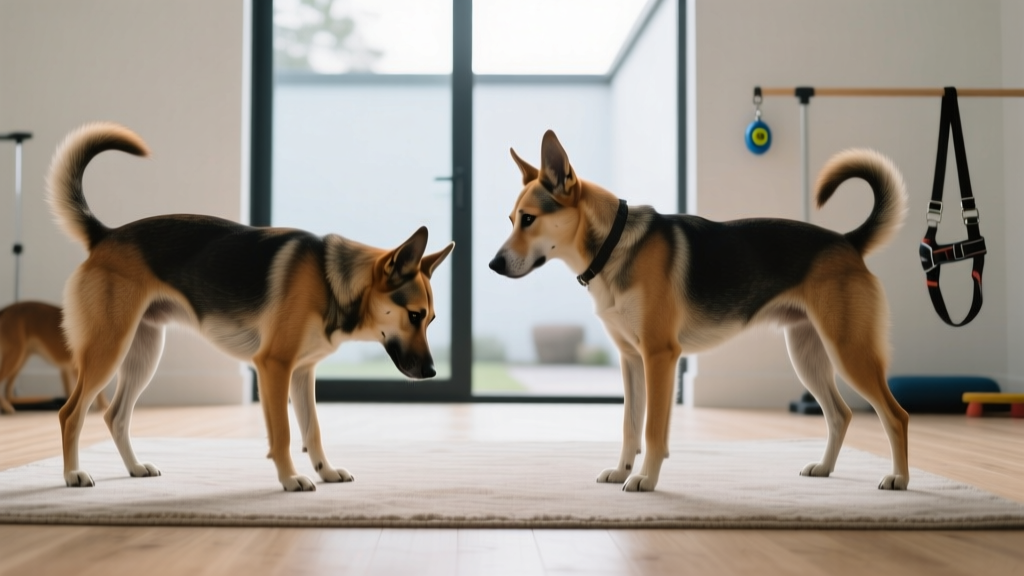
What Does It Mean When a Dog That Hasn't Barked Suddenly Does?
What does a dog that hasn't barked mean? Explore the science of canine silence, breed traits, medical causes, and when quiet behavior signals a problem.

Quick Answer: What Does a Dog That Hasn't Barked Mean?
A dog that hasn't barked — whether over days, weeks, or its entire life — can mean several things depending on context. Most commonly, it reflects breed disposition (some breeds like Basenjis and Shiba Inus are naturally quiet), individual temperament (a calm, confident dog with no perceived need to vocalize), or environmental comfort (a dog that feels secure has less reason to alarm-bark). However, a sudden cessation of barking in a previously vocal dog can signal laryngeal paralysis, respiratory illness, cognitive decline, or severe stress/shutdown. If your dog has never barked and seems otherwise healthy and happy, it's usually normal. If a formerly vocal dog stops barking abruptly, consult your veterinarian.
The Science of Canine Silence: Why Some Dogs Barely Bark
Barking is one of the most studied vocal behaviors in domestic dogs, yet silence — the absence of barking — receives far less scientific attention. Research published in the Applied Animal Behaviour Science journal has shown that barking frequency varies enormously between individual dogs and breeds, with some dogs vocalizing fewer than five times per week while others exceed 500 barks daily.
The domestic dog (Canis lupus familiaris) possesses the same laryngeal anatomy as its wolf ancestors, but domestication has dramatically altered vocalization patterns. A 2017 study from the Cell Reports genomics project on dog domestication identified specific genetic markers near the WBSCR17 and GTF2I genes associated with hypersociability in dogs — the same genes that influence vocal expression. Dogs with certain variants of these genes tend to be more vocal; dogs without them may be naturally quieter.
The Physiological Mechanism of Barking (and Not Barking)
Barking requires coordinated activity across several systems:
- Neurological trigger: The amygdala processes a stimulus (a stranger, a noise, excitement) and signals the hypothalamus to initiate a vocal response.
- Respiratory drive: The diaphragm and intercostal muscles generate a sharp expiratory burst — typically 200-500 mL of air forced through the glottis in under 0.3 seconds.
- Laryngeal vibration: The vocal folds within the larynx adduct (close) and vibrate at frequencies between 200-1,800 Hz depending on dog size and arousal level.
- Supralaryngeal filtering: The pharynx, oral cavity, and nasal passages shape the raw sound into the characteristic "bark" formant pattern.
When a dog doesn't bark, one or more of these stages is either not being triggered (neurological/temperamental silence) or is physically impaired (medical silence). Distinguishing between the two is critical.
Evolutionary Context: Wolves Don't Bark — They Howl
Ancestral perspective: Adult wolves rarely bark. Wolf vocalizations consist primarily of howls, growls, whines, and whimpering. Barking in wolves is typically limited to brief alarm calls by pups or startled adults — a sharp, single "woof" that serves as a warning before the animal retreats or escalates to a growl.
Domestic dogs, by contrast, bark prolifically — a trait scientists call neoteny (the retention of juvenile traits into adulthood). Dog barking is essentially an exaggerated puppy behavior. Wolves outgrow the bark; dogs don't. This means a dog that doesn't bark is, in evolutionary terms, displaying a more wolf-like (ancestral) communication pattern — not a defective one.
Research from Lord et al. (2013) demonstrated that dog barks contain more acoustic variability than wolf barks, suggesting that thousands of years of domestication amplified and diversified this vocal channel. Breeds selected for guarding, herding, or alerting (German Shepherds, Beagles, Terriers) were bred for high bark frequency. Breeds selected for silent hunting (sighthounds) or companionship without nuisance vocalization (Basenjis, Akitas) retained the ancestral quiet.
Breed Variations: Which Dogs Are Naturally Quiet?
Understanding breed predisposition is the first step in interpreting a quiet dog. Some breeds have been deliberately selected for minimal vocalization over centuries.
| Breed | Bark Tendency | Why They're Quiet | Alternative Vocalization |
|---|---|---|---|
| Basenji | Extremely low | Unique larynx shape; bred for silent African hunting | Yodel (barroo), howl |
| Shiba Inu | Low | Primitive breed; stoic temperament | "Shiba scream" (only under extreme distress) |
| Greyhound | Very low | Sighthound; bred for silent pursuit | Low whine, roo |
| Bernese Mountain Dog | Low to moderate | Calm working breed; barks only when needed | Deep, low "woof" |
| Bulldog (English) | Low | Brachycephalic anatomy limits bark force | Snorts, grunts, snoring |
| Akita | Low | Spitz-type; dignified, reserved temperament | Growl, low vocal rumble |
| Chinese Shar-Pei | Very low | Independent guardian; silent sentinel | Snort, occasional grunt |
If your dog belongs to one of these breeds and hasn't barked, it is almost certainly within normal behavioral range. According to the American Kennel Club, breed temperament standards explicitly note "quiet" or "seldom barks" for several of these breeds.
What Does It Mean When a Previously Vocal Dog Stops Barking?
This is where context matters enormously. A dog that has barked regularly for years and then goes silent may be experiencing a medical or psychological shift. Here's a clinical framework for interpretation:
Myth vs. Fact: Quiet Dogs
| Common Misconception | What the Science Says |
|---|---|
| "A quiet dog is a happy dog." | Not necessarily. Learned helplessness or shutdown from chronic stress can suppress vocalization. A dog in a shelter that stops barking after weeks of constant noise may be exhibiting behavioral despair, not contentment. |
| "If a dog doesn't bark, it's not a good watchdog." | Alert behavior doesn't require barking. Many silent breeds (Akitas, Shar-Peis) are exceptional guardians precisely because they assess threats silently before acting. |
| "A dog that doesn't bark must be sick." | Only if the silence is a sudden change. Lifelong quietness in a healthy, active, socially engaged dog is a temperament trait, not a symptom. |
| "You can teach any dog to bark on command." | While you can capture and reinforce barking with positive reinforcement, some dogs (especially Basenjis and certain sighthounds) have such low baseline drive to bark that training yields inconsistent results. Respecting individual variation is key. |
Medical Reasons a Dog May Stop Barking
If your dog was previously vocal and has gone silent, several medical conditions could be responsible. According to the Merck Veterinary Manual, laryngeal dysfunction is among the most common causes of sudden voice loss in dogs.
| Condition | How It Affects Barking | Other Symptoms | Typical Cost Range (US) |
|---|---|---|---|
| Laryngeal paralysis | Vocal folds can't adduct properly; bark becomes hoarse, weak, or disappears | Noisy breathing (stridor), exercise intolerance, coughing after drinking | $1,500–$4,000 (surgical tie-back) |
| Kennel cough (Bordetella/infectious tracheobronchitis) | Laryngeal inflammation causes temporary voice change or loss | Dry hacking cough, gagging, nasal discharge | $75–$300 (vet visit + antibiotics) |
| Laryngeal tumor or mass | Physical obstruction prevents normal vocal fold vibration | Progressive breathing difficulty, weight loss, dysphagia | $2,000–$8,000 (diagnosis + surgery) |
| Hypothyroidism | Can cause laryngeal neuropathy over time (linked to laryngeal paralysis) | Weight gain, lethargy, hair loss, cold intolerance | $50–$150 (bloodwork); $10–$25/month (medication) |
| Canine cognitive dysfunction (CCD) | Senior dogs may stop barking due to altered awareness and reduced environmental engagement | Disorientation, altered sleep-wake cycles, house soiling, staring at walls | $200–$600 (diagnosis); $40–$80/month (selegiline) |
| Severe anxiety / behavioral shutdown | Dog in learned helplessness stops all vocalization as a coping mechanism | Withdrawal, flattened body posture, avoidance of interaction, reduced appetite | $100–$300/session (certified behaviorist); $30–$80/month (anxiety medication) |
⚠️ When to Call the Vet
Contact your veterinarian promptly if your dog's silence is accompanied by any of these red flags:
- Sudden voice change or complete loss of bark within 24–72 hours
- Audible breathing noise (stridor) at rest — a high-pitched wheezing on inhalation
- Blue-tinged gums or tongue (cyanosis) — emergency, go immediately
- Collapse or extreme exercise intolerance
- Coughing fits that end in retching or gagging
- Difficulty swallowing food or water
- Noticeable swelling around the throat or neck
Always consult your veterinarian for diagnosis. This article provides educational information, not a substitute for professional veterinary care.
Practical Takeaways: Living With a Quiet Dog
What a Quiet Dog Means for Your Daily Life
1. Adjust your alert system. A quiet dog won't warn you about package deliveries, strangers at the door, or a smoke alarm at 3 AM. Install a smart doorbell camera (Ring, $49–$199) and ensure your smoke/CO detectors have strobe light alerts if you rely on your dog as an early-warning system.
2. Read body language more carefully. Quiet dogs still communicate — they just use their bodies instead of their voices. Learn to watch for:
- Alert ears + stiffened posture: Your dog has noticed something, even without a bark.
- Lip licking + whale eye (showing whites of eyes): Stress or discomfort signal.
- Tail position shifts: A tail that drops from neutral to tucked indicates fear; a tail that rises and stiffens suggests arousal or potential reactivity.
- "Checking in" behavior: A quiet dog that repeatedly looks at you and then at the door is asking to go out — they're just not barking about it.
3. Don't mistake quiet for low needs. Many quiet breeds (Greyhounds, Shibas) are physically athletic and mentally sharp. They need the same 30–60 minutes of daily exercise and enrichment as vocal breeds. Silence ≠ low energy.
4. Socialization still matters. Quiet puppies can be overlooked in group settings because they're not demanding attention. Make sure your quiet puppy gets equal exposure to novel people, surfaces, sounds, and other dogs during the critical socialization window (3–14 weeks). A quiet puppy that isn't socialized becomes a fearful adult — and fear in a silent dog is harder to detect.
5. Train an alternative alert behavior. If you want your quiet dog to notify you of visitors, teach a "go to mat" or "touch" (nose-to-hand target) behavior using positive reinforcement. Capture the moment your dog notices the door, reward heavily, and add a cue like "tell me." Many quiet dogs will learn to paw at you or sit at the door as their "alert" instead of barking.
How Is Canine Silence Different From Human Quietness?
Humans choose silence for complex social and emotional reasons — politeness, contemplation, passive aggression, cultural norms. Dogs do not have this cognitive overlay. A dog's silence is either:
- Absence of trigger: Nothing in the environment has crossed the dog's threshold for vocalization. This is the most common reason and indicates a well-adjusted dog in a comfortable environment.
- Breed-typical communication style: The dog uses other channels (body posture, scent marking, facial expression) as primary communication. This is analogous to how some human cultures are more physically expressive while others are more verbally expressive — but in dogs, it's genetically hardwired, not culturally learned.
- Physical inability: A medical condition prevents normal vocalization (see table above).
- Behavioral suppression: The dog has learned that vocalizing leads to negative outcomes (punishment, yelling, spray bottles) and has stopped. This is not "good manners" — it's suppression of natural behavior through aversive conditioning, which can lead to redirected anxiety or aggression.
Importantly, dogs do not use silence as a strategy the way humans do. A dog isn't "giving you the silent treatment." If your quiet dog seems disengaged, look for environmental or medical causes rather than attributing human social dynamics to the behavior.
Frequently Asked Questions
Why do some dogs never bark?
Genetics play the dominant role. Breeds like the Basenji have a uniquely shaped larynx that produces yodels instead of barks. Other breeds (Greyhounds, Akitas) were selected over generations for silent working styles. Individual variation within any breed also exists — some dogs simply have a higher threshold for vocalization, meaning it takes a more intense stimulus to trigger a bark.
Is it normal for a dog to never bark?
Yes, if the dog is otherwise healthy, eating well, exercising normally, and engaging socially with people and other animals. Normal is defined by the whole behavioral picture, not by any single trait. However, if a dog that previously barked regularly stops entirely, that change warrants a veterinary evaluation.
Can dogs be taught to bark if they don't naturally?
With positive reinforcement, you can capture and shape barking behavior — rewarding any small vocalization and gradually requiring more volume. However, success varies enormously by breed and individual. Basenjis and some primitive breeds may never develop a reliable bark, and that's okay. Force-free training respects the dog's natural communication style rather than trying to override it.
What does it mean when my dog suddenly stops barking?
A sudden cessation of barking in a previously vocal dog should be evaluated by a veterinarian. The most common medical causes include laryngeal paralysis (especially in large, older breeds like Labrador Retrievers and Golden Retrievers), respiratory infections, and laryngeal masses. Behavioral causes include severe stress, environmental changes, or cognitive decline in senior dogs. Diagnostic workup typically includes a laryngeal exam under light sedation ($150–$350) and possibly chest radiographs ($200–$500).
How do dogs communicate without barking?
Dogs have a rich non-vocal communication repertoire: tail position and movement, ear orientation, body posture, facial expressions (brow furrowing, lip position), scent marking, pawing, leaning, and eye contact. Research from the University of Lincoln found that dogs use at least 19 distinct referential gestures to communicate with humans — many of which don't involve any sound at all.
Are quiet dogs less intelligent or less bonded to their owners?
No. Vocalization frequency has no correlation with intelligence or attachment strength. A quiet Border Collie is still a genius; a silent Shiba Inu still forms deep pair-bonds with their handler. Barking is a communication tool, not a measure of cognitive ability or emotional depth.
Sources & Further Reading
- Lord, K. et al. (2013). "A comparison of puppy barking and adult wolf barking." Behavioural Processes. PubMed PMID: 24356606
- Merk Veterinary Manual: Laryngeal Paralysis in Dogs. merckvetmanual.com
- American Kennel Club: Quiet Dog Breeds. akc.org
Priya Sutaria
All our authors care for dogs every day — read more of their work on the authors page.