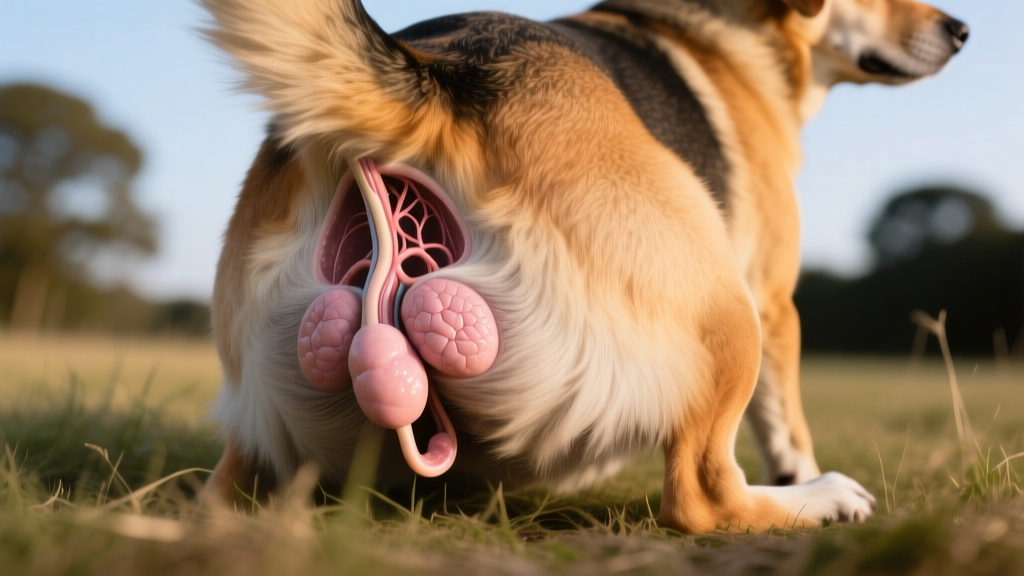
Dog Digestive Blockage: Canine Science of GI Obstructions Explained
Understanding dog digestive blockage through canine science — evolutionary causes, physiological mechanisms, symptoms, treatment costs.

What Is a Dog Digestive Blockage and Why Does It Happen?
A gastrointestinal (GI) obstruction in dogs occurs when the normal flow of ingesta through the digestive tract is interrupted. This can happen anywhere from the pylorus (the stomach's exit valve) through the small intestine to the colon. According to the Merck Veterinary Manual, foreign body ingestion is the single most common cause of intestinal obstruction in dogs, accounting for an estimated 80% of surgical GI cases in companion animals.
The objects dogs swallow that lead to blockages are remarkably varied: socks, underwear, corn cobs, peach pits, tennis balls, bones, string, rubber toys, rocks, and even coins. Linear foreign bodies — thread, yarn, string, or rope — are especially dangerous because they can bunch the intestine into accordion-like folds (plication), causing multiple perforation points simultaneously.
The tendency for dogs to ingest inappropriate objects — known as pica when it involves non-nutritive substances — has both behavioral and neurological underpinnings. Research published in Applied Animal Behaviour Science has linked pica in dogs to a combination of exploratory behavior, insufficient environmental enrichment, anxiety-related displacement activity, and in some cases, nutritional deficiencies. However, most foreign body ingestions in dogs are not driven by hunger — they are driven by the same oral exploration drive that made ancestral canids such effective scavengers and opportunistic feeders.
The Evolutionary Roots: Why Ancestral Dogs Became Indiscriminate Eaters
This evolutionary legacy means modern dogs retain a powerful impulse to investigate the world with their mouths. Puppies intensify this behavior during teething (typically 3–6 months of age), but many adult dogs continue to mouth, chew, and swallow objects throughout life. Breeds originally selected for retrieving or scavenging — Labrador Retrievers, Golden Retrievers, and spaniels — show statistically higher rates of foreign body ingestion.
A 2021 retrospective study published in the Journal of Small Animal Practice analyzed over 1,200 cases of canine intestinal foreign bodies and found that Labrador Retrievers were 2.3 times more likely to require surgical removal of a foreign body compared to the general dog population. Terrier breeds also showed elevated risk, likely due to their high prey drive and tendency to chase and consume small objects.
The Physiological Mechanism: What Happens Inside a Blocked Digestive Tract
Understanding the pathophysiology of a dog digestive blockage requires following the cascade of events that occurs once an object becomes lodged.
Phase 1: Mechanical Obstruction (Hours 0–12)
When an object becomes trapped — most commonly at the pyloric sphincter, the duodenal flexure, or the ileocecal junction (where the small intestine meets the large intestine) — it creates a physical barrier. Fluid, gas, and partially digested food accumulate proximal to (before) the blockage. The stomach and intestinal walls begin to distend. Peristalsis — the wave-like muscular contractions that move food through the GI tract — initially increases in intensity as the body attempts to push the object through.
Phase 2: Vascular Compromise (Hours 12–48)
As pressure builds inside the obstructed segment, blood flow to the intestinal wall becomes restricted. The veins, which operate at lower pressure than arteries, are compressed first. This leads to venous congestion: blood can enter the tissue but cannot drain. The intestinal wall becomes edematous (swollen with fluid), dark purple in color, and increasingly fragile. Arterial supply eventually becomes compromised as well, leading to ischemia (oxygen deprivation).
Phase 3: Necrosis and Perforation (Hours 48–72+)
Without blood flow, intestinal tissue begins to die. The mucosal barrier — the lining that normally keeps gut bacteria contained — breaks down. Bacteria and toxins leak into the abdominal cavity, causing peritonitis (inflammation and infection of the abdominal lining). Once perforation occurs, the condition becomes septic peritonitis, which carries a mortality rate of 30–68% even with aggressive surgical and medical treatment, according to data cited by the American Veterinary Medical Association.
| Timeframe | Physiological Events | Observable Symptoms |
|---|---|---|
| 0–6 hours | Object lodges; peristalsis increases; gastric distension begins | Restlessness, drooling, occasional vomiting |
| 6–24 hours | Fluid accumulates; dehydration starts; electrolyte imbalance | Repeated vomiting, anorexia, mild abdominal tenderness |
| 24–48 hours | Venous congestion; early ischemia; bacterial translocation begins | Lethargy, hunched posture, no stool, fever possible |
| 48–72 hours | Necrosis of intestinal wall; risk of perforation | Severe pain, collapse, septic shock signs (pale gums, rapid heart rate) |
| 72+ hours | Perforation; septic peritonitis; multi-organ failure | Critical condition; high mortality without emergency surgery |
Is a Dog Digestive Blockage Normal? Recognizing the Warning Signs
A digestive blockage is never normal and always constitutes a medical emergency. However, the early symptoms can mimic less serious conditions — an upset stomach, dietary indiscretion, or mild gastroenteritis — which is why owners often delay seeking care during the most treatable window.
The key distinguishing factor is persistence and progression. A dog who vomits once after eating grass but then acts normally is unlikely to have a blockage. A dog who vomits repeatedly, refuses food and water, and becomes progressively more lethargic over 12–24 hours should be evaluated immediately.
- Repeated vomiting (more than 2–3 episodes in 12 hours)
- Vomiting with nothing coming up (dry heaving or retching)
- Complete refusal to eat or drink for 24 hours
- Visible abdominal pain — hunched back, "prayer" position (front legs down, rear up), guarding the belly
- No bowel movement for 48+ hours, especially with straining
- Palpable firm mass in the abdomen
- Lethargy progressing to weakness or collapse
- Fever above 103°F (39.4°C) or hypothermia below 99°F (37.2°C)
How Is a Dog Digestive Blockage Diagnosed and Treated?
When you bring your dog to the veterinarian with suspected GI obstruction, the diagnostic process typically follows this sequence:
Diagnostic Workup
Physical examination: Your vet will palpate the abdomen, checking for pain, distension, and palpable foreign objects. Some objects (large bones, rocks) can be felt directly. Others cannot.
Abdominal radiographs (X-rays): Standard two-view X-rays can identify radiopaque objects (metal, bone, rock) and show gas/fluid patterns consistent with obstruction. Cost range: $150–$350.
Contrast imaging: If plain X-rays are inconclusive, a barium contrast study may be performed. The dog swallows barium, and sequential X-rays track its progress through the GI tract. A blockage will show barium stopping at a specific point. Cost range: $300–$600.
Abdominal ultrasound: Increasingly used as a first-line diagnostic tool, ultrasound can visualize both the foreign body and the condition of the intestinal wall (thickness, blood flow, fluid accumulation). Cost range: $300–$500.
Blood work: A complete blood count (CBC) and chemistry panel assess dehydration, electrolyte imbalances, organ function, and signs of infection. Cost range: $100–$250.
Treatment Options
| Treatment | When Used | Cost Range | Recovery Time | Success Rate |
|---|---|---|---|---|
| Endoscopic retrieval | Object in stomach, accessible via esophagus, no perforation | $800–$2,000 | 1–3 days | 85–95% for gastric objects |
| Inducing emesis | Known recent ingestion (<2 hrs), non-sharp object, under vet guidance only | $50–$150 | Same day | Variable; only appropriate in specific scenarios |
| Surgical enterotomy | Object in intestines, causing obstruction, no necrosis yet | $2,000–$5,000 | 10–14 days | 90–95% with timely intervention |
| Surgical resection and anastomosis | Intestinal tissue necrotic; dead segment removed, healthy ends reconnected | $3,500–$7,000+ | 14–21 days | 70–85% (higher complication rate) |
| Medical management (monitoring) | Small, smooth objects likely to pass; partial obstruction; stable patient | $500–$1,500 (monitoring + imaging) | 3–7 days | 50–70% for small objects |
For complete obstructions, surgery is almost always required. The veterinarian makes an incision in the intestinal wall (enterotomy), removes the object, and closes the incision. If tissue has died, a section of intestine must be removed (resection) and the healthy ends sewn together (anastomosis). Post-operative care includes IV fluids, pain management, antibiotics, and a gradual reintroduction of food.
Important: Never attempt to induce vomiting at home without explicit veterinary instruction. If the object is sharp (bone shards, glass) or caustic, vomiting can cause esophageal perforation. Hydrogen peroxide, sometimes recommended in older sources, can cause severe gastritis and is no longer recommended by most veterinary toxicologists for home use. Always consult your veterinarian before attempting any home treatment for a suspected blockage.
Myth vs. Fact: Common Misconceptions About Dog Digestive Blockages
| Myth | Fact |
|---|---|
| "If my dog ate something bad, it will just pass through." | While some small, smooth objects do pass uneventfully, many objects become lodged at natural narrowing points in the GI tract. Objects larger than roughly one-third the diameter of the intestine at any point are unlikely to pass without intervention. |
| "Feeding my dog bread or pumpkin will push the blockage through." | Adding bulk to an already obstructed intestine increases pressure proximal to the blockage, accelerating tissue damage and raising the risk of perforation. This is dangerous and should never be attempted. |
| "My dog has passed things before, so this one will pass too." | Past successful passage does not predict future outcomes. The size, shape, material, and location of the object — combined with your dog's individual GI anatomy — determine whether passage is possible. |
| "Raw bones are natural and safe — dogs have been eating them forever." | While ancestral canids did consume bones, they also suffered intestinal perforations and blockages from them. Cooked bones are even more dangerous, as they splinter into sharp shards. Raw bones carry blockage, fracture, and bacterial contamination risks. |
| "Only puppies eat things they shouldn't." | While puppies are at higher risk due to teething and exploratory behavior, adult dogs of any age can and do ingest foreign objects. Certain breeds (retrievers, terriers) maintain high oral exploration drives throughout life. |
Breed Variations and Risk Factors for GI Obstruction
Not all dogs face equal risk. Several factors significantly influence the likelihood of a dog digestive blockage:
- Breed: Labrador Retrievers, Golden Retrievers, Staffordshire Bull Terriers, Jack Russell Terriers, and mixed-breed dogs show the highest incidence rates in retrospective surgical studies. Brachycephalic breeds (Bulldogs, Pugs) may also be at elevated risk due to their tendency to gulp food and objects without adequate chewing.
- Age: Dogs aged 1–4 years represent the highest-risk group, combining peak physical activity and curiosity with incomplete behavioral maturity. However, senior dogs with dental disease may swallow large, unchewed pieces of food or treats, creating obstruction risk.
- Size: Small-breed dogs (under 20 lb / 9 kg) are at greater risk from proportionally smaller objects. A cherry pit that might pass through a Great Dane could completely obstruct a Chihuahua's duodenum.
- Behavioral history: Dogs with a history of pica, resource guarding of objects, or compulsive chewing are at chronically elevated risk.
- Environment: Multi-dog households, homes with children (whose small toys are accessible), and dogs with access to trash, laundry, or craft supplies face higher exposure.
Practical Prevention: What This Science Means for Your Daily Life
- Audit your home at dog-eye level. Crawl through your living spaces and identify accessible objects: socks under beds, rubber bands on counters, children's toys on the floor. The most commonly ingested household items are socks, underwear, and children's small toys.
- Use covered, dog-proof trash cans. Kitchen trash is a leading source of blockage-causing items (corn cobs, peach pits, cooked bones, plastic wrap). Invest in a trash can with a locking lid or keep it inside a latched cabinet.
- Size-appropriate toys only. Any toy your dog can fit entirely inside their mouth is a choking and blockage hazard. For aggressive chewers, use toys rated for "power chewers" — products like the Kong Extreme (black rubber) or Goughnuts Maxx are designed to resist destruction. Discard toys once they show signs of breaking apart.
- Supervise chew time. Rawhide, bully sticks, and antlers can break into large, indigestible chunks. Always supervise your dog with any chew and remove it once it becomes small enough to swallow whole. A general rule: discard any chew piece smaller than your dog's muzzle width.
- Train "drop it" and "leave it" using positive reinforcement. These cues can prevent ingestion in real-time. Train with high-value treat exchanges — never forcibly pry objects from your dog's mouth, which can trigger resource guarding.
- Consider pet insurance. Foreign body surgery costs $2,000–$7,000 depending on complexity. Pet insurance plans that cover illness and accidents typically reimburse 70–90% of these costs. For breeds at elevated risk, the annual premium ($400–$900/year depending on breed, age, and location) often pays for itself with a single claim.
How Is the Canine Digestive System Different From Humans?
Understanding why dogs are more prone to digestive blockages than humans requires examining several anatomical and physiological differences:
- Shorter GI transit time: Food passes through a dog's digestive tract in approximately 8–12 hours (compared to 24–72 hours in humans). This faster transit means the intestine has less time to break down and move objects gradually, and non-digestible items can become lodged more easily at narrowing points.
- More acidic stomach environment: Canine gastric pH typically ranges from 1–2, significantly more acidic than human gastric pH (1.5–3.5). This evolved to digest raw meat and bone, but it also means dogs are more likely to swallow items that their stomach acid partially but incompletely breaks down — creating sharp-edged fragments.
- Proportionally narrower intestinal diameter: Relative to the size of objects dogs attempt to ingest, the canine small intestine is narrow. The average medium-sized dog (40–60 lb / 18–27 kg) has a small intestinal diameter of approximately 1–2 cm — roughly the width of a AA battery.
- Oral exploration as primary investigation method: Unlike humans, who investigate new objects primarily with their hands and eyes, dogs rely heavily on their mouths. This means they are far more likely to accidentally or intentionally ingest objects during normal exploration.
- Less selective eating behavior: Humans have a highly developed disgust response that prevents ingestion of most non-food items. Dogs have a comparatively weak disgust response — an evolutionary adaptation that allowed their ancestors to exploit diverse food sources, including carrion and refuse.
When a Digestive Blockage Signals a Deeper Problem
While most canine GI obstructions result from a single accidental ingestion, recurrent blockages may signal an underlying behavioral or medical condition:
- Pica (compulsive non-food ingestion): If your dog repeatedly eats non-nutritive objects despite environmental management, this may indicate anxiety, compulsive disorder, or nutritional deficiency. A veterinary behaviorist can assess and develop a treatment plan that may include environmental enrichment, behavior modification using counter-conditioning and desensitization, and in some cases, anti-anxiety medication prescribed by your veterinarian.
- Intestinal tumors: In dogs over 7 years of age, a GI obstruction may be caused by a mass rather than a foreign body. Intestinal adenocarcinoma, lymphoma, and leiomyosarcoma can narrow the intestinal lumen and cause obstruction symptoms identical to foreign body blockage. Prognosis varies significantly by tumor type.
- Intussusception: This condition — where one segment of intestine telescopes into another — can cause obstruction and is sometimes triggered by parasitic infection, viral illness (parvovirus in puppies), or intestinal tumors. It is most common in puppies under 1 year of age.
- Intestinal strictures: Scar tissue from previous surgery, chronic inflammation, or trauma can narrow the intestine over time, creating a chronic partial obstruction that may eventually become complete.
Frequently Asked Questions
Can dogs pass a digestive blockage on their own?
Sometimes. Small, smooth objects (like a small piece of a rubber ball or a grape) may pass through the GI tract of a large dog within 24–72 hours. However, you should never assume an object will pass without veterinary guidance. Your vet will typically recommend monitoring with serial X-rays to confirm the object is progressing. If it fails to advance within 48 hours, or if symptoms worsen at any point, surgical intervention becomes necessary.
What does it mean when my dog vomits but still acts normal?
Occasional vomiting in an otherwise bright, alert, eating dog is usually not a sign of blockage. It may indicate dietary indiscretion, eating too fast, mild gastritis, or a food sensitivity. However, if vomiting becomes frequent (more than once weekly), contains blood, or is accompanied by weight loss, a veterinary evaluation is warranted to rule out partial obstruction, inflammatory bowel disease, or other GI conditions.
How do dogs process objects differently from humans?
Dogs cannot chew with the lateral grinding motion that humans use. Their teeth are designed for shearing and gripping, not grinding. This means they tend to swallow food and objects in larger pieces, increasing blockage risk. Additionally, a dog's esophagus can stretch to accommodate surprisingly large objects, which may then become stuck further down in the narrower small intestine.
Is it normal for my dog to eat grass, dirt, or feces?
Grass eating is extremely common (estimated 68% of dogs do it regularly) and is generally considered normal behavior, possibly linked to ancestral dietary fiber intake or mild GI upset. Dirt eating (geophagia) and feces eating (coprophagia) are more concerning and may signal nutritional deficiency, malabsorption disorders, or behavioral issues. If these behaviors are persistent, consult your veterinarian for evaluation.
How much does dog digestive blockage surgery cost in 2026?
Costs vary by region, clinic type, and case complexity. In the United States, expect to pay $2,000–$5,000 for a standard enterotomy (intestinal incision to remove an object) at a general practice, and $3,500–$7,000+ at an emergency or specialty hospital, especially if intestinal resection is required. Endoscopic retrieval, when possible, typically costs $800–$2,000. These figures include anesthesia, surgery, hospitalization, and post-operative medications but may not include pre-surgical blood work ($100–$250) or advanced imaging ($300–$600).
If your dog has ingested a potentially toxic substance in addition to a foreign object, contact the ASPCA Animal Poison Control Center at (888) 426-4435 (available 24/7, consultation fee applies) or the Pet Poison Helpline at (855) 764-7661. For life-threatening symptoms (collapse, seizures, difficulty breathing, severe abdominal pain), proceed immediately to the nearest emergency veterinary clinic.
Dr. Hannah Wickes
All our authors care for dogs every day — read more of their work on the authors page.