Do Wiener Dogs Shed? The Science Behind Dachshund Coats
Do wiener dogs shed? Yes — but how much depends on coat type.
Do Wiener Dogs Shed? — The Short Answer
Yes, wiener dogs (Dachshunds) shed. All three coat varieties — smooth, longhaired, and wirehaired — lose hair as part of a natural growth cycle. Smooth-coated Dachshunds shed small amounts year-round. Longhaired Dachshunds shed moderately with seasonal increases in spring and fall. Wirehaired Dachshunds shed the least but require hand-stripping to maintain coat health. No Dachshund variety is hypoallergenic.
If you've been researching Dachshunds and wondering whether you'll be buried in dog hair, the honest answer falls somewhere between "barely noticeable" and "moderate but manageable." The amount of shedding your wiener dog produces depends almost entirely on which of the three AKC-recognized coat types they carry — and understanding the biology behind those coats will help you set realistic expectations and build an effective grooming routine.
As someone who has counseled hundreds of Dachshund owners through coat-care confusion, I find that most shedding frustration comes from a mismatch between expectation and reality. Let's break down the science so you know exactly what you're dealing with.
The Hair Growth Cycle: Why All Dogs Shed
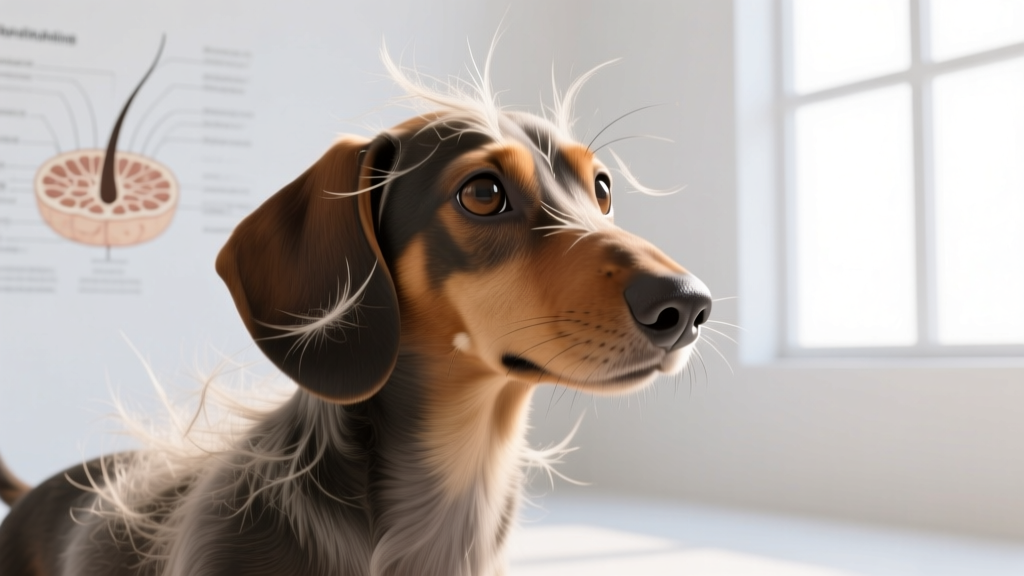
The physiology of shedding: Every hair on a Dachshund's body — whether it's the sleek coat of a smooth variety or the flowing fur of a longhaired type — passes through four distinct phases:
- Anagen (growth phase): The hair follicle actively produces new hair cells. Duration varies by coat type and genetics — longhaired Dachshunds have a longer anagen phase, which is why their hair grows noticeably longer.
- Catagen (transition phase): Growth stops and the follicle shrinks. The hair detaches from the blood supply but remains anchored in the skin. This phase typically lasts 2-3 weeks.
- Telogen (resting phase): The hair sits dormant in the follicle. In dogs, this phase can last several months.
- Exogen (shedding phase): The old hair releases from the follicle as a new anagen-phase hair begins growing beneath it, pushing the dead hair out.
According to research published in the Merck Veterinary Manual, the ratio of hairs in each phase at any given time determines how much a dog visibly sheds. Breeds with synchronized shedding cycles (many hairs entering exogen simultaneously) produce dramatic seasonal "blows," while breeds with asynchronous cycles shed small amounts steadily.
Dachshunds fall into the asynchronous category for the most part. Their hairs are at different stages at any given time, which means you won't typically see the explosive shedding events associated with double-coated breeds like Huskies or German Shepherds. Instead, you'll notice a consistent, low-to-moderate trickle of loose hair — with some seasonal fluctuation driven by daylight changes.
Evolutionary Context: What Ancestral Dogs Teach Us About Shedding
Why shedding exists in the first place
Shedding evolved as a thermoregulatory and protective mechanism in ancestral canids. Wolves across different latitudes developed coat density and shedding patterns matched to their climate. Arctic wolves grew dense undercoats that they shed in spring; desert-dwelling wolves maintained thinner, shorter coats year-round. The domestic dog's ancestor — likely a gray wolf population in Central or East Asia roughly 15,000-40,000 years ago — carried genes for seasonal coat cycling.
When humans began selectively breeding dogs for specific tasks, coat traits were shaped by function. Dachshunds were developed in Germany to hunt badgers (Dachs = badger, Hund = dog) by entering underground burrows. The original smooth coat was short, dense, and close-lying — practical for squeezing through tight tunnels without snagging on roots and rocks. The longhaired variety was developed later (likely through crosses with spaniel-type dogs) for colder-weather hunting, and the wirehaired variety (likely through terrier and Pinscher crosses) added a coarse, weather-resistant outer coat with a softer undercoat.
Each of these three coat types carries different shedding characteristics because each was selected for a different functional environment — and those genetic differences persist in modern pet Dachshunds even though most never see a badger burrow.
Shedding by Dachshund Coat Type: What to Expect
This is where the practical differences become significant. If you're choosing a Dachshund and shedding is a major concern, coat type should be your primary consideration.
| Trait | Smooth-Coated | Longhaired | Wirehaired |
|---|---|---|---|
| Shedding Level | Low to moderate, year-round | Moderate, with seasonal peaks | Lowest of the three |
| Hair Length | Short, 0.5-1 inch | 2-6 inches, feathered on ears/chest/legs/tail | 1-2 inches, coarse outer with soft undercoat |
| Coat Layers | Single coat (topcoat only) | Single coat with longer guard hairs | Double coat (wiry topcoat + soft undercoat) |
| Grooming Frequency | Weekly brushing | 2-3 times per week | Weekly brushing + hand-stripping 2-3 times/year |
| Visible Shedding on Furniture | Short hairs embed in fabric — harder to remove | Longer hairs sit on surfaces — easier to see and remove | Minimal visible shedding if coat is properly maintained |
| Professional Grooming Cost (Annual) | $0-100 (mostly DIY) | $200-400 | $300-600 (hand-stripping is specialized) |
| Hypoallergenic? | No | No | No |
Smooth-Coated Dachshunds
The smooth coat is the original Dachshund variety and remains the most common. These dogs have short, dense, shiny hair that lies flat against the body. They shed continuously but in small quantities — think of it as a light dusting of short hairs rather than clumps. The trade-off: those short, stiff hairs tend to weave into upholstery fabric and are notoriously difficult to vacuum or lint-roll off dark clothing. A rubber grooming mitt used weekly will capture most loose hair before it reaches your couch.
Longhaired Dachshunds
Longhaired Dachshunds have silky, slightly wavy hair with feathering on the ears, chest, belly, legs, and tail. Their shedding is more visible because the longer hairs accumulate on floors and furniture in noticeable strands. They experience more pronounced seasonal shedding in spring (losing winter density) and fall (transitioning to a slightly thicker coat). Daily or every-other-day brushing with a pin brush or slicker brush prevents tangles and captures loose hair proactively. Budget 15-20 minutes per grooming session.
Wirehaired Dachshunds
Wirehaired Dachshunds have a unique double coat: a harsh, wiry outer layer and a softer, shorter undercoat. When properly maintained through hand-stripping (pulling dead hairs out by the root rather than clipping), they shed the least of the three varieties. However, if you clip a wirehaired Dachshund instead of hand-stripping, you disrupt the natural hair cycle — the coat becomes softer, duller, and actually sheds more because clipped hairs don't fully release from the follicle. Hand-stripping costs $80-150 per session at a professional groomer experienced with wire-coated breeds, and most wirehaired Dachshunds need it 2-3 times per year.
Common Dachshund Shedding Myths — Debunked
| Myth | Fact |
|---|---|
| "Wiener dogs don't shed because they're small." | Shedding volume correlates with coat type and hair density, not body size. A 12-pound smooth Dachshund sheds proportionally as much as a 70-pound short-coated Labrador — you just see less total hair because there's less surface area. |
| "Dachshunds are hypoallergenic." | No Dachshund variety is hypoallergenic. Dog allergies are triggered by dander (dead skin cells), saliva proteins (particularly Can f 1 and Can f 2), and urine — not hair length. Even low-shedding wirehaired Dachshunds produce allergenic dander and saliva. |
| "Shaving my Dachshund will stop the shedding." | Shaving does not reduce shedding — it just makes the shed hairs shorter and harder to see. Worse, shaving can damage the hair follicles, leading to irregular regrowth, patchy coat, and increased sunburn risk. Never shave a Dachshund of any coat type. |
| "More bathing means less shedding." | Over-bathing strips natural oils from the skin and coat, which can actually increase shedding by drying out the skin and weakening hair shafts. Bathe a Dachshund no more than once every 3-4 weeks unless they've gotten into something dirty. Use a canine-formulated, moisturizing shampoo (pH 6.5-7.5, not human shampoo). |
| "If my Dachshund sheds a lot, they must be unhealthy." | Moderate shedding is normal and healthy. However, sudden increases in shedding, bald patches, or hair loss accompanied by skin redness can signal an underlying issue (see the medical section below). |
How Dogs Sense and Regulate Their Shedding Cycle
Dogs don't consciously control when they shed. The process is regulated by the photoperiod — the ratio of daylight to darkness — which influences melatonin production in the pineal gland. As days lengthen in spring, decreased melatonin signals the hypothalamus to shift hair follicles toward the exogen (shedding) phase, releasing the dense winter coat. As days shorten in fall, increased melatonin stimulates a new growth cycle for cooler-weather insulation.
This is why indoor dogs — including most pet Dachshunds — often shed more consistently year-round compared to outdoor dogs. Artificial lighting disrupts the natural photoperiod signal, creating a more constant low-level shedding pattern rather than sharp seasonal peaks. A 2020 study in the Journal of Veterinary Behavior found that dogs kept primarily indoors with extended artificial lighting showed 15-25% less seasonal shedding variation compared to dogs with regular outdoor light exposure.
The physiological mechanism involves thyroid hormones (T3 and T4) as secondary regulators. The thyroid gland influences hair follicle metabolism, and hypothyroidism — a condition where the thyroid underproduces hormones — is a well-documented cause of excessive shedding and coat thinning in dogs. Dachshunds are not among the highest-risk breeds for hypothyroidism (that list includes Golden Retrievers, Dobermans, and Cocker Spaniels), but it can occur and should be ruled out if your Dachshund's shedding suddenly intensifies.
When Shedding Signals a Health Problem
🚨 When to Consult Your Veterinarian About Shedding
Normal Dachshund shedding is gradual, evenly distributed, and doesn't leave bare patches. Contact your vet if you observe any of the following:
- Bald spots or patchy hair loss (alopecia): Circular bald patches may indicate ringworm (a fungal infection), demodectic mange (caused by Demodex mites), or color dilution alopecia — a genetic condition particularly common in blue (dilute black) and isabella (dilute chocolate) Dachshunds.
- Excessive scratching, biting, or licking: Suggests allergies (environmental or food-related), flea infestation, or skin infection. Dachshunds are prone to atopic dermatitis.
- Red, inflamed, scaly, or crusty skin beneath the coat: Indicates bacterial or fungal infection, seborrhea, or parasitic infestation.
- Sudden, dramatic increase in shedding volume: Can signal hypothyroidism, Cushing's disease (hyperadrenocorticism), stress-related telogen effluvium, or nutritional deficiency.
- Dull, brittle, or dry coat that breaks easily: Often points to inadequate dietary fatty acids, poor-quality diet, or underlying metabolic disease.
- Symmetrical hair thinning on both flanks: A hallmark of alopecia X (also called growth hormone-responsive alopecia or "black skin disease"), which occasionally affects Dachshunds.
Always consult your veterinarian for a proper diagnosis. They may recommend skin scrapings, fungal cultures, blood panels (including thyroid function tests), or allergy testing depending on the presentation.
A specific concern for Dachshund owners: color dilution alopecia (CDA). This inherited condition affects dogs carrying the dilution gene (the d allele at the MLPH gene locus), which dilutes eumelanin pigment. Blue Dachshunds (diluted black) and isabella Dachshunds (diluted chocolate) carry two copies of this gene. CDA typically manifests between 6 months and 3 years of age, beginning with dry, flaky skin and progressive hair thinning on the trunk. There is no cure, but management includes moisturizing shampoos, omega-3 fatty acid supplementation (fish oil at 20-55 mg EPA+DHA per kg of body weight daily), and avoiding harsh grooming products. If you're considering a blue or isabella Dachshund puppy, ask the breeder about CDA history in their lines.
Practical Shedding Management for Dachshund Owners
Your Dachshund Shedding Action Plan
1. Choose the right brush for your coat type:
- Smooth coat: Rubber curry brush or grooming mitt (e.g., Kong ZoomGroom, ~$8-12). Use weekly in the direction of hair growth.
- Longhaired: Slicker brush for tangles + stainless steel comb for finishing (e.g., Chris Christensen Big G, ~$45-65). Brush every 2-3 days, paying attention to feathering on ears and legs where mats form.
- Wirehaired: Stripping knife or pumice stone for dead hair removal between professional hand-stripping sessions. Weekly maintenance brushing with a bristle brush.
2. Optimize nutrition for coat health:
A diet meeting AAFCO complete-and-balanced standards for adult maintenance is the baseline. For coat quality specifically, look for:
- Minimum 22% crude protein (dry matter basis)
- Omega-6 to omega-3 fatty acid ratio between 5:1 and 10:1
- Added fish oil or flaxseed as named fat sources
- Zinc at 120-150 mg/kg (dry matter basis) — zinc deficiency directly impairs hair follicle function
If your Dachshund's coat looks dull despite a good diet, a fish oil supplement providing 300-500 mg combined EPA/DHA daily (for a standard 16-32 lb / 7-14.5 kg Dachshund) can improve coat condition within 6-8 weeks.
3. Manage the home environment:
- Use a HEPA air purifier in rooms where your Dachshund spends the most time — captures airborne dander and loose hair
- Wash your Dachshund's bedding weekly in hot water (minimum 130°F / 54°C) to remove accumulated hair and dander
- For smooth-coated Dachshund hair embedded in upholstery: use a damp rubber glove or squeegee to lift hairs that vacuums miss
- Robot vacuums (e.g., iRobot Roomba j7+, ~$600-800) running daily significantly reduce accumulated hair on hard floors
How Dachshund Shedding Differs From Human Hair Loss
Humans and dogs share the same basic hair growth cycle phases (anagen, catagen, telogen), but the regulatory mechanisms differ substantially. Human scalp hair has an anagen phase lasting 2-7 years, which is why human head hair grows continuously and long. Dog hair has a much shorter anagen phase — typically 1-6 months depending on breed and coat type — which is why dog hair reaches a genetically predetermined length and then stops growing until it's shed and replaced.
Additionally, human hair growth is influenced primarily by hormones (androgens, thyroid hormones, estrogen) and genetics, with minimal photoperiod effect. Dog hair growth is driven primarily by photoperiod with hormones playing a secondary role. This fundamental difference is why shaving your head results in regrowth, but shaving a double-coated dog can permanently alter the coat texture and regrowth pattern.
Another key distinction: humans shed roughly 50-100 scalp hairs per day as a normal baseline. Dogs shed proportionally more hairs relative to their total hair count, but because their total hair count is distributed across their entire body surface, the visible impact varies enormously by coat density and hair length.
Frequently Asked Questions
Do mini wiener dogs shed less than standard Dachshunds?
Not necessarily. Miniature Dachshunds (11 lb / 5 kg and under) have the same coat types and shedding mechanisms as standard Dachshunds (16-32 lb / 7-14.5 kg). The total volume of shed hair is slightly less simply because there's less body surface area, but the shedding rate per square inch of skin is identical. A smooth-coated mini will shed in the same pattern as a smooth-coated standard.
Can I reduce my Dachshund's shedding with supplements?
Fish oil supplements (omega-3 fatty acids) can improve coat quality and reduce excessive shedding caused by dry skin, but they won't eliminate normal shedding — which is a healthy physiological process. Biotin supplements are sometimes marketed for dog coat health, but evidence for efficacy in dogs is limited compared to the stronger data for omega-3s. Always discuss supplements with your veterinarian before starting them, especially for Dachshunds with pre-existing conditions.
Why does my Dachshund shed more after a stressful event?
Acute stress triggers a cortisol spike, which can push a larger-than-normal number of hair follicles into the telogen (resting) phase simultaneously. Roughly 4-8 weeks after the stressful event (a move, a new pet in the household, surgery, etc.), those hairs enter the exogen phase and shed in a noticeable wave. This phenomenon — called telogen effluvium — is self-limiting and resolves once the stressor passes and the hair cycle normalizes.
Is it normal for my Dachshund puppy to shed their puppy coat?
Yes. Dachshund puppies typically begin losing their soft puppy coat between 4-6 months of age, with the adult coat fully coming in by 8-12 months. During this transition, you'll notice increased shedding and possibly a temporary "awkward" coat appearance where the puppy fur and adult fur coexist in patches. This is entirely normal and requires no intervention beyond regular gentle brushing.
Are Dachshunds good dogs for people with allergies?
Dachshunds are not hypoallergenic and are not recommended for people with moderate-to-severe dog allergies. Wirehaired Dachshunds produce slightly less airborne dander due to their coarse coat trapping more particles close to the skin, but they still produce the allergenic proteins Can f 1 and Can f 2 in their saliva and skin. If you have mild allergies and are set on a Dachshund, spend time with the specific dog before committing, run a HEPA air purifier, and keep the dog out of bedrooms.
What does it mean when my Dachshund's hair feels thinner?
Gradual thinning in a senior Dachshund (8+ years) can be a normal age-related change as hair follicle productivity decreases. However, rapid thinning, especially on the trunk with intact hair on the head and legs, warrants veterinary investigation for endocrine disorders like Cushing's disease or hypothyroidism. Your vet will typically run a complete blood count, chemistry panel, and specific endocrine tests (low-dose dexamethasone suppression test or ACTH stimulation test for Cushing's; total T4 and free T4 for thyroid function). Diagnostic costs for these panels typically range from $150-400 depending on your region and clinic.
Beth Carrasco
All our authors care for dogs every day — read more of their work on the authors page.