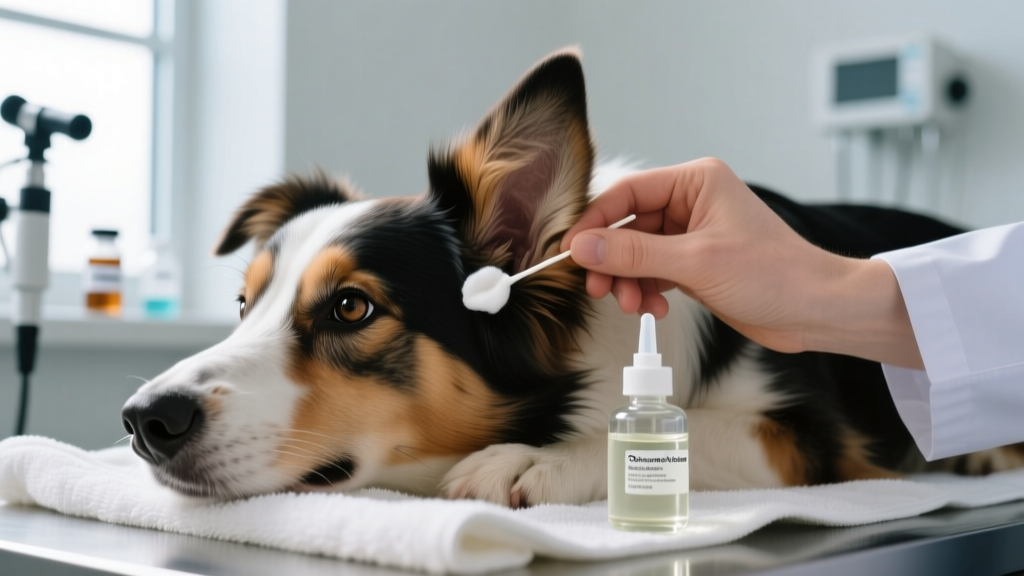
Clindamycin Side Effects in Dogs: What the Science Says
Understand clindamycin side effects in dogs — mechanisms, symptoms, risk factors, dosing science, and when to call your vet for antibiotic reactions.

Quick Answer: Are Clindamycin Side Effects Common in Dogs?
Clindamycin is generally well-tolerated in dogs, but side effects do occur in roughly 10–30% of treated patients. The most frequent reactions are gastrointestinal — vomiting, diarrhea, and loss of appetite. Less commonly, dogs may develop facial swelling, hives, or severe bloody diarrhea indicating antibiotic-associated colitis. Most mild GI upset resolves within 24–48 hours of starting treatment or can be mitigated by giving the medication with food. Severe reactions require immediate veterinary attention.
Clindamycin hydrochloride (brand names Antirobe, ClindaTabs, Cleocin) is one of the most frequently prescribed antibiotics in veterinary medicine. It belongs to the lincosamide class and is used to treat skin infections, dental disease, bone infections (osteomyelitis), and certain protozoal diseases like toxoplasmosis. While the Merck Veterinary Manual classifies it as a reliable first-line agent for anaerobic and gram-positive infections, understanding the physiological reasons behind its side effects helps owners respond appropriately when their dog reacts.
How Clindamycin Works in the Canine Body
The Pharmacological Mechanism
Clindamycin inhibits bacterial protein synthesis by binding to the 50S ribosomal subunit of susceptible organisms. This prevents peptide bond formation, effectively stopping bacteria from reproducing. The drug is rapidly absorbed from the canine gastrointestinal tract — peak blood concentrations occur within 1–3 hours after oral administration.
Here's where side effects originate: clindamycin doesn't distinguish between pathogenic bacteria causing your dog's infection and the beneficial commensal bacteria living in their gut. The canine gastrointestinal microbiome contains an estimated 109 to 1011 bacteria per gram of intestinal content, spanning over 200 species. Clindamycin's broad activity against gram-positive organisms and anaerobes means it disrupts significant portions of this microbial community.
The drug is primarily metabolized in the liver via N-demethylation and sulfoxidation, then excreted through both bile (roughly 70%) and urine (roughly 30%). This dual excretion pathway is why dogs with pre-existing liver or kidney compromise may experience amplified side effects — the clearance half-life extends from the normal 2–3 hours to potentially 6–8 hours in compromised patients.
Documented Clindamycin Side Effects in Dogs: Frequency and Severity
Understanding the probability and severity spectrum of side effects helps owners distinguish between expected transient reactions and genuine emergencies.
| Side Effect | Estimated Frequency | Typical Onset | Severity |
|---|---|---|---|
| Vomiting | 10–20% | Within 1–4 hours of dose | Mild to moderate |
| Diarrhea (non-bloody) | 15–25% | Day 1–3 of treatment | Mild to moderate |
| Loss of appetite / anorexia | 5–15% | Day 1–2 of treatment | Mild |
| Drooling / lip smacking | 5–10% | Minutes after oral dose | Mild (bitter taste) |
| Bloody or mucoid diarrhea (colitis) | 1–3% | Day 3–7 of treatment | Moderate to severe |
| Elevated liver enzymes (ALT, AST) | 2–5% (prolonged use) | Day 7+ of treatment | Moderate |
| Allergic reaction (hives, facial swelling) | <1% | Minutes to hours | Severe — emergency |
| Esophageal stricture (cats primarily, rare in dogs) | <0.5% in dogs | Days to weeks post-treatment | Severe if occurs |
The Evolutionary and Physiological Context: Why Dogs React to Oral Antibiotics
Ancestral Gut Architecture and Modern Drug Exposure
Domestic dogs (Canis lupus familiaris) inherited a relatively short gastrointestinal tract from their wolf ancestors — optimized for rapid digestion of protein-rich meals with high pathogen loads. The ancestral canine gut prioritized speed over fermentation capacity. Transit time in dogs averages 8–10 hours from ingestion to elimination, compared to 24–72 hours in humans.
This evolutionary design has practical consequences for antibiotic exposure. A shorter GI tract means less surface area for beneficial microbial colonization and less buffering capacity when that microbial community is disrupted. When clindamycin wipes out susceptible commensal bacteria, the remaining space can be rapidly colonized by resistant organisms — most notably Clostridioides difficile or Clostridium perfringens. These organisms produce toxins (TcdA, TcdB in C. difficile; enterotoxin CPE in C. perfringens) that damage the intestinal mucosal lining, causing the bloody, mucoid diarrhea that represents the most clinically significant side effect of clindamycin therapy.
Research published in the Journal of Veterinary Internal Medicine has documented that dogs receiving clindamycin show measurable shifts in fecal microbiota diversity within 48 hours, with reductions in Firmicutes and Bacteroidetes populations and corresponding increases in Proteobacteria — a pattern associated with dysbiosis and inflammatory diarrhea.
Dosing Science: How Weight and Formulation Affect Side Effect Risk
Clindamycin side effects in dogs are dose-dependent in many cases. The standard therapeutic range is 5.5 mg/kg (2.5 mg/lb) every 12 hours for most infections, escalating to 11 mg/kg (5 mg/lb) every 12 hours for severe bone infections or osteomyelitis. The FDA's Center for Veterinary Medicine approves clindamycin for canine use at these dosing ranges, but individual tolerance varies.
| Dog Weight | Standard Dose (5.5 mg/kg q12h) | High Dose (11 mg/kg q12h) | Common Formulation |
|---|---|---|---|
| 10 lb / 4.5 kg | 25 mg | 50 mg | 25 mg capsule |
| 25 lb / 11.4 kg | 62.5 mg | 125 mg | 75 mg capsule |
| 50 lb / 22.7 kg | 125 mg | 250 mg | 150 mg capsule |
| 75 lb / 34 kg | 187.5 mg | 375 mg | 150 mg capsule × 2 |
| 100 lb / 45.5 kg | 250 mg | 500 mg | 150 mg + 100 mg capsules |
Your veterinarian will determine the exact dose based on infection type, severity, your dog's organ function, and concurrent medications. Never adjust clindamycin dosing without veterinary guidance — underdosing risks antibiotic resistance, while overdosing amplifies GI and hepatic side effects.
Practical Implications: Managing Clindamycin Treatment at Home
What This Means for Your Daily Routine
- Give with food: Administering clindamycin with a small meal reduces vomiting incidence by an estimated 40–60%. Even a tablespoon of canned food or a treat can buffer the gastric mucosa.
- Follow with water: Clindamycin capsules can lodge in the esophagus, causing local irritation. Give at least 5–10 mL of water via syringe after pilling, or follow the pill with a small amount of wet food to ensure transit to the stomach.
- Add a probiotic: A canine-specific probiotic (containing Enterococcus faecium SF68 or Lactobacillus acidophilus) given 2–3 hours apart from the antibiotic dose can help maintain microbiome balance. Products like FortiFlora or Proviable are commonly recommended.
- Monitor stool quality: Use a 1–7 fecal scoring chart. Scores of 1–3 (formed, firm) are normal. Scores of 5–7 (soft to watery, with or without blood/mucus) warrant a call to your vet.
- Complete the full course: Typical courses run 7–28 days depending on infection type. Stopping early because of mild GI upset risks treatment failure and resistant bacterial selection.
- Typical cost: A 14-day course of clindamycin for a 50 lb dog costs approximately $15–$45 at most pharmacies. Compounded liquid formulations for small dogs may cost $25–$60.
Common Misconceptions About Clindamycin Debunked
| Myth | Fact (Evidence-Based) |
|---|---|
| "If my dog vomits once after clindamycin, I should stop the medication." | A single vomiting episode is common and usually transient. Try giving with food. Only stop and call your vet if vomiting persists for more than 24 hours or is accompanied by lethargy. |
| "Clindamycin is a 'strong' antibiotic so it causes more side effects than others." | Clindamycin's GI side effect rate is comparable to amoxicillin-clavulanate (Clavamox) and slightly higher than cephalexin. Its classification as "strong" is inaccurate — it's a narrow-spectrum agent targeting specific organisms. |
| "I can give my dog my leftover clindamycin prescription." | Human clindamycin formulations may contain different excipients, and dosing is weight-dependent. Some human liquid formulations contain xylitol, which is toxic to dogs. Always use veterinary-prescribed medication. |
| "Diarrhea on antibiotics means my dog is allergic." | Diarrhea is typically a side effect of microbiome disruption, not an immune-mediated allergy. True allergic reactions present with hives, facial swelling, difficulty breathing, or collapse — these are rare (<1%) and constitute emergencies. |
| "Smaller dogs have worse side effects because the dose is too high for them." | Clindamycin is dosed by weight (mg/kg), so small dogs receive proportionally smaller amounts. However, small breeds may have less GI buffering capacity, making probiotics and food co-administration especially important. |
Breed Variations and Risk Factors
While clindamycin side effects are not strongly breed-specific in the way that ivermectin sensitivity is linked to MDR1 gene mutations in herding breeds, certain factors create elevated risk profiles:
- Brachycephalic breeds (French Bulldogs, Pugs, Bulldogs): These dogs already have elevated rates of gastroesophageal reflux and esophageal motility disorders. Clindamycin capsules that linger in the esophagus can cause local irritation more readily. Always follow capsule administration with water or food in these breeds.
- Small and toy breeds (Chihuahuas, Yorkshire Terriers, Pomeranians): Lower body mass means less GI reserve capacity. Dehydration from vomiting or diarrhea progresses faster in a 5 lb dog than a 70 lb dog. Monitor hydration status closely — check gum moisture and skin tenting.
- Dogs with pre-existing GI disease (IBD, chronic enteropathy): Dogs already on immunosuppressive therapy or with compromised intestinal barriers are at higher risk for antibiotic-associated colitis. Your vet may choose an alternative antibiotic or add prophylactic probiotics.
- Senior dogs (typically 8+ years depending on breed size): Age-related decline in hepatic and renal function can slow drug clearance, increasing both efficacy and side effect risk. Bloodwork before starting a prolonged course is advisable.
- Dogs on concurrent medications: Clindamycin may interact with erythromycin (competitive binding at the 50S ribosomal subunit), neuromuscular blocking agents, and certain antifungals. Provide your vet with a complete medication list.
When Clindamycin Side Effects Signal a Problem: Red Flags
🚨 When to Call Your Veterinarian Immediately
Contact your vet or an emergency veterinary clinic if your dog experiences any of the following while on clindamycin:
- Bloody or black tarry stools — indicates intestinal mucosal damage or possible Clostridium overgrowth
- Persistent vomiting (more than 3 episodes in 24 hours or inability to keep water down)
- Facial swelling, hives, or difficulty breathing — signs of anaphylaxis; this is a medical emergency
- Severe lethargy or collapse — may indicate dehydration, sepsis, or systemic reaction
- Yellowing of gums or whites of eyes (icterus/jaundice) — suggests liver injury
- Complete refusal to eat for more than 48 hours — especially dangerous in small breeds due to hypoglycemia risk
- Seizures or neurological signs — extremely rare but reported with high-dose or IV administration
Do not stop the antibiotic without consulting your veterinarian. Abrupt discontinuation can lead to treatment failure and selection for resistant bacteria. Your vet may switch to an alternative antibiotic (such as cephalexin, amoxicillin-clavulanate, or doxycycline depending on the infection type) or adjust the dosing protocol.
How Clindamycin Side Effects Differ From Human Reactions
Humans taking clindamycin face a well-documented risk of C. difficile-associated diarrhea (CDAD), with incidence rates of 2–10% in human patients — one of the highest rates among all antibiotics. This is because the human colon is large and fermentation-heavy, providing ideal conditions for C. difficile overgrowth when commensal flora are disrupted.
In dogs, the shorter GI tract and faster transit time mean that C. difficile colonization, while possible, is less frequent. Dogs more commonly develop C. perfringens-associated diarrhea instead, which tends to be self-limiting once the antibiotic is discontinued and supportive care is provided. However, the canine version of antibiotic-associated colitis can still be severe — particularly in immunocompromised or very young/old dogs.
Another key difference: humans commonly report a metallic taste with oral clindamycin. Dogs exhibit this as drooling, lip smacking, or head shaking immediately after receiving the capsule — a behavioral indicator of the bitter taste rather than a true adverse reaction. Compounded flavored formulations (beef, chicken, or tuna flavoring) can improve palatability in resistant patients, typically adding $10–$25 to the prescription cost.
Related Topics and Cross-References
Understanding clindamycin side effects connects to several broader topics in canine pharmacology and health management:
- Antibiotic stewardship in dogs: The AVMA's antimicrobial use guidelines emphasize using culture and sensitivity testing before starting antibiotics whenever possible, reducing unnecessary exposure and side effect risk.
- Canine probiotic science: Research on strain-specific probiotics (particularly Enterococcus faecium SF68 and Saccharomyces boulardii) shows measurable benefits in preventing antibiotic-associated diarrhea in dogs.
- Gut microbiome restoration: After a course of clindamycin, full microbiome recovery in dogs may take 4–8 weeks. Fecal microbiota transplantation (FMT) is emerging as a treatment for severe post-antibiotic dysbiosis in veterinary medicine.
- Alternative antibiotics for dental disease: Since dental infections are a primary indication for clindamycin, understanding alternatives like amoxicillin-clavulanate or professional dental cleaning under anesthesia is relevant for comprehensive oral health management.
Frequently Asked Questions
Is clindamycin safe for dogs long-term?
Clindamycin can be used for extended courses (up to 28 days or longer for osteomyelitis) under veterinary supervision. Prolonged use increases the risk of hepatic enzyme elevation and microbiome disruption. Your vet should monitor liver values with bloodwork if treatment extends beyond 14 days. Most courses for skin and soft tissue infections run 7–14 days.
Can I give my dog clindamycin on an empty stomach?
Technically yes — clindamycin is well-absorbed regardless of food. However, giving it with food significantly reduces vomiting and nausea. If your dog has a sensitive stomach, always pair the dose with at least a small amount of food. The absorption difference between fed and fasted states is clinically negligible (approximately 5–10% reduction with food).
What should I do if my dog has diarrhea from clindamycin?
For mild, non-bloody diarrhea: continue the medication, add a probiotic 2–3 hours apart from the antibiotic dose, and feed a bland diet (boiled chicken and white rice, or a veterinary GI diet like Hill's i/d or Royal Canin GI). For bloody, mucoid, or profuse watery diarrhea: contact your veterinarian before the next dose. Your vet may recommend fecal testing for Clostridium toxins and may switch antibiotics.
Can clindamycin cause seizures in dogs?
Seizures are an extremely rare side effect, primarily reported with rapid intravenous administration rather than oral dosing. At standard oral doses, neurological side effects are exceedingly uncommon. If your dog has a pre-existing seizure disorder, inform your veterinarian — they may choose an alternative antibiotic or monitor more closely, though clindamycin is not generally contraindicated in epileptic dogs.
How long do clindamycin side effects last after stopping?
Mild GI side effects (soft stool, mild appetite reduction) typically resolve within 48–72 hours after the last dose. Microbiome recovery takes longer — 4–8 weeks for full restoration. Post-antibiotic diarrhea that persists beyond 5 days after discontinuation warrants veterinary evaluation for secondary complications like small intestinal bacterial overgrowth (SIBO) or persistent clostridial infection.
Is clindamycin the same as amoxicillin for dogs?
No. Clindamycin is a lincosamide antibiotic; amoxicillin is a penicillin-class antibiotic. They target different bacterial organisms and have different side effect profiles. Clindamycin is preferred for anaerobic infections, dental disease, bone infections, and toxoplasmosis. Amoxicillin is broader-spectrum for general soft tissue and urinary tract infections. They are not interchangeable, and the choice depends on the specific infection and culture results.
Disclaimer: This article is for informational purposes only and does not replace professional veterinary advice. Always consult your veterinarian before starting, stopping, or adjusting any medication for your dog. If you suspect your dog has ingested a toxic substance or is experiencing a medical emergency, contact your veterinarian or the ASPCA Animal Poison Control Center at (888) 426-4435 (24/7, consultation fee applies).
Tom Renshaw
All our authors care for dogs every day — read more of their work on the authors page.