Dog Ear Cleaners: What Makes a Vet Approved Formula Work
Discover the canine science behind vet approved dog ear cleaner formulas — from ear canal anatomy to pH balance, active ingredients, and safe cleaning protocols.
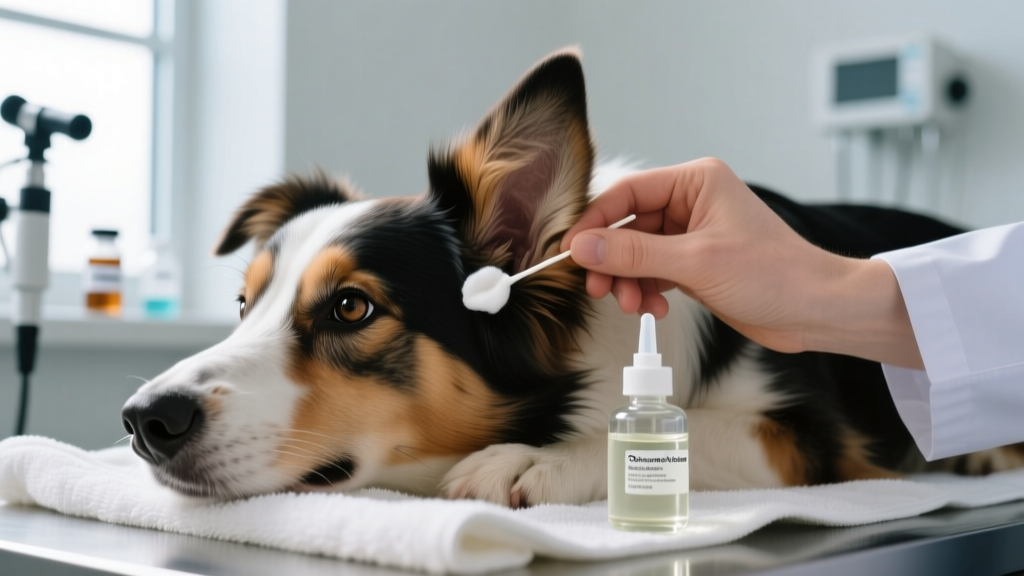
Quick Answer: What Makes a Dog Ear Cleaner "Vet Approved"?
A vet approved dog ear cleaner is a solution specifically pH-balanced for the canine ear canal (typically pH 6.2–7.0), containing ceruminolytic agents (like squalene or dioctyl sulfosuccinate) to break down wax, a drying agent (such as salicylic acid or boric acid) to reduce moisture, and no ototoxic compounds that could damage the middle or inner ear if the tympanic membrane is compromised. Products carrying the Veterinary Oral Health Council (VOHC) seal or recommended by board-certified veterinary dermatologists meet these criteria. Always consult your veterinarian before starting any ear cleaning regimen, especially if your dog shows signs of infection.
Every dog owner has experienced it: that moment you lean in to pet your dog and catch the unmistakable yeasty, musty odor emanating from their ears. You reach for an ear cleaner off the shelf, but which one actually works — and more importantly, which one won't harm your dog's delicate ear structures? The answer lies in canine ear anatomy, microbiology, and decades of veterinary dermatology research. Understanding the science behind ear cleaner formulations transforms a routine grooming task into an evidence-based health practice.
Canine Ear Anatomy: Why Dogs Need Specialized Cleaners
The L-Shaped Canal Problem
Unlike humans, whose ear canals run relatively straight toward the eardrum, dogs possess a distinctly L-shaped ear canal. The vertical canal drops downward from the ear opening (pinna), then bends at nearly a 90-degree angle into the horizontal canal before reaching the tympanic membrane (eardrum). This anatomical feature, documented extensively in the Merck Veterinary Manual, creates a natural trap for moisture, debris, wax (cerumen), and microorganisms.
The canine ear canal is lined with ceruminous glands (modified apocrine sweat glands) and sebaceous glands that produce ear wax. In healthy ears, this wax migrates outward through epithelial cell movement — a self-cleaning mechanism called epithelial migration. However, the L-shaped canal significantly slows this migration compared to human ears, meaning debris accumulates more readily, particularly in breeds with narrow canals or excessive hair in the ear canal.
This anatomy explains why human ear cleaning methods — cotton swabs, hydrogen peroxide, or plain water — are inappropriate and potentially dangerous for dogs. A cotton swab pushed into a dog's vertical canal can compact debris at the bend, and hydrogen peroxide's pH (approximately 6.0 in diluted form but highly oxidative) can damage the thin epithelial lining of the canine ear canal. A properly formulated dog ear cleaner accounts for the L-shaped geometry by using liquid solutions that flow into both canal segments and carry debris outward when the dog shakes its head.
The Evolutionary Basis: How Ancestral Dogs Managed Ear Health
From Wolves to Pugs: What Changed?
Wild canids — wolves, coyotes, foxes — predominantly have erect, open ear pinnae that maximize airflow into the ear canal. This open conformation promotes natural drying and debris expulsion. Thousands of years of domestication and selective breeding for aesthetic traits produced floppy-eared breeds (Cocker Spaniels, Basset Hounds, Beagles) and breeds with heavily haired ear canals (Poodles, Bichon Frises, many terriers). These traits drastically reduce airflow, creating warm, dark, humid environments ideal for microbial overgrowth.
Research published in the Veterinary Dermatology journal has shown that dogs with pendulous (floppy) ears have significantly higher rates of otitis externa compared to erect-eared breeds. A 2021 study found that Cocker Spaniels were 3.5 times more likely to develop chronic otitis than German Shepherds, directly correlating with ear conformation. This means modern breeds face ear health challenges their wild ancestors simply did not encounter — making external intervention via ear cleaners a necessity, not a luxury.
The evolutionary mismatch extends to diet and environment. Ancestral canids spent their lives outdoors in variable climates that promoted ear drying. Modern dogs live in climate-controlled homes with consistent humidity levels, swim in chlorinated pools, and get frequent baths — all introducing moisture that the canine L-shaped canal struggles to expel naturally.
Physiological Mechanisms: What Happens Inside a Dog's Ear
Understanding the physiological environment of the canine ear canal reveals why specific active ingredients appear in vet approved dog ear cleaner formulations:
The Microbiome Balance
A healthy canine ear canal hosts a diverse microbiome dominated by Staphylococcus pseudintermedius (a commensal bacterium), Malassezia pachydermatis (a yeast present in small numbers), and various Corynebacterium species. This microbial community maintains equilibrium through competitive exclusion — beneficial organisms occupy ecological niches that prevent pathogenic overgrowth.
When moisture accumulates, pH shifts, or cerumen builds up excessively, this balance disrupts. Malassezia yeast proliferates rapidly in warm, lipid-rich environments (ear wax contains fatty acids that feed this yeast). Bacterial populations shift toward pathogenic species like Pseudomonas aeruginosa, which thrives in moist, alkaline conditions. The result: otitis externa — inflammation of the outer ear canal — affecting an estimated 5–20% of all dogs seen in general veterinary practice, according to the Journal of the American Veterinary Medical Association.
pH Dynamics and Why They Matter
The canine ear canal maintains a slightly acidic to neutral pH (approximately 6.2–7.0). This pH range inhibits Pseudomonas growth while supporting healthy commensal bacteria. Human skin pH averages 5.5, and human ear canal pH is approximately 5.0–5.7 — significantly more acidic. Using human-formulated products in a dog's ear can shift the pH, disrupting the microbial balance and paradoxically increasing infection risk.
| Ingredient | Function | Mechanism | Concentration Range |
|---|---|---|---|
| Squalene | Ceruminolytic (wax-dissolving) | Lipid-soluble compound that emulsifies cerumen, allowing it to be flushed from the canal | 0.5–2% |
| Dioctyl Sodium Sulfosuccinate (DSS) | Surfactant/ceruminolytic | Reduces surface tension of wax, breaking it into smaller particles that can be expelled | 0.5–5% |
| Salicylic Acid | Keratolytic/drying agent | Promotes shedding of excess epithelial cells; mildly acidifies canal to inhibit bacterial growth | 0.1–2% |
| Boric Acid | Drying/antiseptic | Absorbs moisture; creates mildly acidic environment hostile to yeast overgrowth | 1–3% |
| Chlorhexidine (in medicated cleaners) | Antiseptic | Disrupts bacterial cell membranes; effective against both Gram-positive and Gram-negative organisms | 0.1–0.2% (must be <0.5% to avoid ototoxicity) |
| Aloe Vera / Glycerin | Soothing/humectant | Prevents excessive drying of canal epithelium; reduces irritation from active cleaning agents | Varies (typically 1–5%) |
Common Misconceptions About Dog Ear Cleaning Debunked
| Myth | Scientific Fact |
|---|---|
| "Hydrogen peroxide is safe for cleaning dog ears." | Hydrogen peroxide (H₂O₂) is cytotoxic to fibroblasts — the cells responsible for tissue repair. Repeated use damages the delicate epithelial lining of the ear canal, delays healing in already-inflamed ears, and the effervescence can push debris deeper into the horizontal canal. Veterinary dermatologists consistently advise against its use in ears. |
| "If my dog's ears look clean, I don't need to clean them." | Visible cleanliness doesn't indicate microbiological health. Pathogenic Malassezia overgrowth can begin before visible discharge appears. However, over-cleaning healthy ears can also disrupt the microbiome. The evidence-based recommendation is to clean only when visible wax/debris accumulates or on a schedule recommended by your veterinarian based on your dog's breed and history. |
| "Olive oil or coconut oil works just as well as commercial cleaners." | While oils can soften wax, they lack drying agents — meaning they leave the ear canal more moist than before application. Since moisture is a primary driver of otitis externa, oil-only cleaning can worsen the conditions that lead to infection. Oils also lack pH-buffering capacity and may feed Malassezia yeast, which metabolizes lipids. |
| "All dog ear cleaners are basically the same." | Formulations vary significantly. Basic cleansers (like Epi-Otic Advanced by Virbac) focus on wax removal and drying. Medicated cleaners (like Otoflush by ICF) add antiseptic or antifungal agents. Tris-EDTA solutions (like TrizEDTA by Dechra) specifically target Pseudomonas biofilms. Using the wrong category for your dog's condition can be ineffective or counterproductive. |
| "Cotton swabs are fine if I'm careful." | The canine L-shaped canal makes it nearly impossible to safely swab the horizontal portion without veterinary training and an otoscope. Swabs compact debris at the canal bend and risk tympanic membrane perforation. Veterinary guidance is to fill the canal with cleaner, massage the base, and allow the dog to shake — letting physics do the work. |
Breed Variations: Which Dogs Need More Ear Care and Why
Ear conformation, canal diameter, and ceruminous gland density vary dramatically across breeds. This isn't cosmetic trivia — it directly determines your dog's ear cleaning frequency and product selection.
| Breed Category | Example Breeds | Otitis Risk | Recommended Cleaning Frequency | Product Type |
|---|---|---|---|---|
| Pendulous ears, narrow canals | Cocker Spaniel, Basset Hound, Springer Spaniel | Very High | 1–2× per week | Drying + ceruminolytic formula |
| Hairy ear canals | Poodle, Bichon Frise, Schnauzer | High | 1× per week + professional ear hair plucking as advised by vet | Ceruminolytic with mild antiseptic |
| Water-loving/active breeds | Labrador Retriever, Golden Retriever, Portuguese Water Dog | Moderate–High | After every swim/bath + weekly maintenance | Drying-focused formula (alcohol-free) |
| Brachycephalic breeds | French Bulldog, English Bulldog, Pug | Moderate–High (narrow canals + stenotic openings) | 1× per week | Gentle, low-irritant formula (avoid alcohol-based) |
| Erect ears, open canals | German Shepherd, Siberian Husky, Belgian Malinois | Low | As needed (typically every 2–4 weeks) | Basic maintenance cleanser |
Brachycephalic breeds deserve special mention. Bulldogs and French Bulldogs frequently suffer from stenotic ear canals — congenitally narrowed ear canal openings that severely restrict airflow and make liquid application difficult. Some of these dogs require veterinary-assisted cleaning or even surgical correction (total ear canal ablation) in severe chronic cases. If your brachycephalic dog consistently resists ear cleaning or shows pain during the process, veterinary evaluation is essential before continuing.
Practical Implications: How to Choose and Use a Vet Approved Dog Ear Cleaner
Selection Criteria That Matter
- Check for pH specification: The product label or manufacturer's safety data sheet (SDS) should indicate a pH between 6.2 and 7.0. If the pH isn't listed, contact the manufacturer before use.
- Avoid alcohol-heavy formulas for routine use: Isopropyl alcohol dries effectively but causes stinging in inflamed ears. Alcohol-free drying agents (like boric acid or witch hazel) are preferable for dogs with sensitive or previously infected ears.
- Match the formula to the need: Routine maintenance needs only a basic ceruminolytic. Dogs with recurrent yeast issues benefit from added ketoconazole or miconazole (prescription). Dogs with Pseudomonas history may need Tris-EDTA based products prescribed by your vet.
- Verify ototoxicity safety: If your dog has a ruptured tympanic membrane (which you cannot determine at home), certain ingredients — including chlorhexidine above 0.2%, aminoglycoside antibiotics, and some surfactants — can cause permanent deafness. This is why veterinary examination before starting any ear cleaning protocol is non-negotiable for dogs showing symptoms.
Step-by-Step Cleaning Protocol
Based on the technique taught by the American College of Veterinary Dermatology:
- Restrain gently: Have your dog sit. One hand stabilizes the muzzle; the other holds the cleaner. No force — if your dog resists strongly, stop and consult a force-free trainer for desensitization protocols.
- Fill the vertical canal: Hold the pinna (ear flap) upright and pour enough cleaner to visibly fill the canal opening — typically 1–3 mL for small breeds, 3–5 mL for large breeds. Do not insert the bottle tip into the canal.
- Massage the base: Gently massage the ear canal base (below the ear opening, toward the jaw) for 20–30 seconds. You should hear a squelching sound, indicating the solution is moving through both canal segments.
- Allow the shake: Step back and let your dog shake its head. The centrifugal force of shaking expels dissolved debris from the horizontal canal upward through the vertical canal and out of the ear.
- Wipe the visible portion: Use a cotton ball or gauze pad to wipe away debris from the visible inner pinna and canal opening. Never push material into the canal.
- Reward: High-value treat immediately. Pairing ear cleaning with positive reinforcement builds cooperative behavior over time.
Cost expectations: A quality vet approved dog ear cleaner (such as Virbac Epi-Otic Advanced, Dechra EpiKlean, or Zymox Ear Cleanser) typically costs $12–$25 for an 8 oz bottle, which lasts 2–4 months for a single dog on weekly cleaning. Veterinary-prescribed medicated cleaners (TrizEDTA, MalAcetic Otic) range from $20–$40. If your dog develops otitis externa, a full veterinary treatment — including otoscopic exam, cytology, and medicated drops — typically costs $100–$300 per episode, making preventive cleaning economically sensible.
When Ear Cleaning Behavior Signals a Problem
🚨 Red Flags: Stop Cleaning and See Your Veterinarian
- Head tilt (persistent): Tilting to one side that doesn't resolve within hours may indicate middle ear involvement (otitis media) or vestibular disease. This is not a routine ear issue.
- Pain on palpation: If your dog yelps, pulls away, or becomes aggressive when you touch the ear base, infection or a foreign body (foxtail, grass awn) is likely present.
- Foul odor that persists after cleaning: A properly cleaned ear should smell neutral or mildly like the cleaner. Persistent foul or yeasty odor within 24 hours of cleaning indicates active microbial overgrowth requiring prescription treatment.
- Dark brown/black discharge resembling coffee grounds: This is characteristic of Otodectes cynotis (ear mite) infestation or severe Malassezia infection — both requiring specific veterinary treatment, not just cleaning.
- Swelling of the pinna (ear flap): A puffy, fluid-filled ear flap suggests an aural hematoma — a blood blister caused by vigorous head shaking that often requires surgical drainage.
- Hearing loss or balance issues: These suggest inner ear involvement and require immediate veterinary attention.
ASPCA Animal Poison Control: (888) 426-4435 — Call immediately if your dog ingests ear cleaner or if cleaner contacts eyes.
Frequently Asked Questions
Is it normal for my dog's ears to have some wax?
Yes. A small amount of pale yellow to light brown cerumen is normal and protective. Ear wax contains antimicrobial peptides, fatty acids that maintain canal pH, and lubricants that protect the epithelial lining. The goal of cleaning is to remove excess wax and debris, not to achieve a perfectly clean, wax-free canal. Over-cleaning strips these protective factors and can trigger rebound wax production — a physiological response to irritation.
Can dogs hear the cleaning solution moving in their ear canal?
Dogs have approximately 18 muscles controlling the pinna (humans have 6), and their auditory system is exquisitely sensitive to frequencies between 40 Hz and 60,000 Hz. The sound of liquid moving in the ear canal is well within their hearing range and can be unsettling. This is why gradual desensitization using positive reinforcement — starting with simply showing the bottle, then touching the ear, then introducing the solution over multiple sessions — produces more cooperative dogs than restraint-based approaches.
How is a dog's ear cleaning different from human ear care?
The fundamental difference is the L-shaped canal. Human ear canals are nearly straight and short (approximately 2.5 cm), allowing wax to migrate outward relatively easily. The canine canal is significantly longer (approximately 5–10 cm depending on breed) and bent at a sharp angle, making self-cleaning far less effective. Additionally, human cerumen is drier and more acidic (pH ~5.0), while canine cerumen is more lipid-rich and closer to neutral pH — requiring different chemical approaches to dissolution. This is why "one-size-fits-all" ear care between species doesn't work.
What does it mean when my dog shakes its head frequently?
Occasional head shaking (1–2 times daily) is normal — dogs use this to dislodge debris, water, or insects. Frequent head shaking (multiple times per hour, or in paroxysmal bouts) is a clinical sign called pruritus of the ear canal, most commonly caused by otitis externa, ear mites, foreign bodies, or allergic skin disease (atopic dermatitis). Allergic dogs often present with ear inflammation as their primary symptom — the ears are essentially the "window" to systemic allergic disease. If head shaking persists beyond a day or two, veterinary cytology of the ear canal exudate is needed to determine the underlying cause.
How do dogs process sound differently through a dirty vs. clean ear canal?
Excessive cerumen and debris in the ear canal act as a physical barrier to sound wave transmission. While this doesn't cause the sensorineural hearing loss associated with inner ear damage, it does create a conductive hearing deficit — similar to wearing earplugs. The tympanic membrane cannot vibrate fully when the canal is occluded. Dogs with chronically neglected ears may appear less responsive to commands, which owners sometimes misinterpret as disobedience or cognitive decline. Restoring canal patency through proper cleaning can improve auditory responsiveness noticeably within days.
Can I use a vet approved dog ear cleaner on puppies?
Most vet approved ear cleaners are safe for puppies over 6–8 weeks of age, but you should verify the specific product label. Puppies have more sensitive epithelial linings, and their ear canals are proportionally smaller — meaning less solution is needed (typically 0.5–1 mL per ear for toy breeds). Start ear handling early in puppyhood using positive reinforcement to build lifelong tolerance. Always consult your veterinarian before using any medicated product on a puppy under 12 weeks.
References & Further Reading
Disclaimer: This article is for educational purposes only and does not replace professional veterinary advice. Always consult your veterinarian before starting any ear cleaning protocol, particularly if your dog shows signs of ear discomfort, discharge, or behavioral changes. Individual dogs may respond differently to ear care products, and underlying conditions (allergies, hypothyroidism, autoimmune disease) may require specific medical management beyond routine cleaning.
Dr. Hannah Wickes
All our authors care for dogs every day — read more of their work on the authors page.


