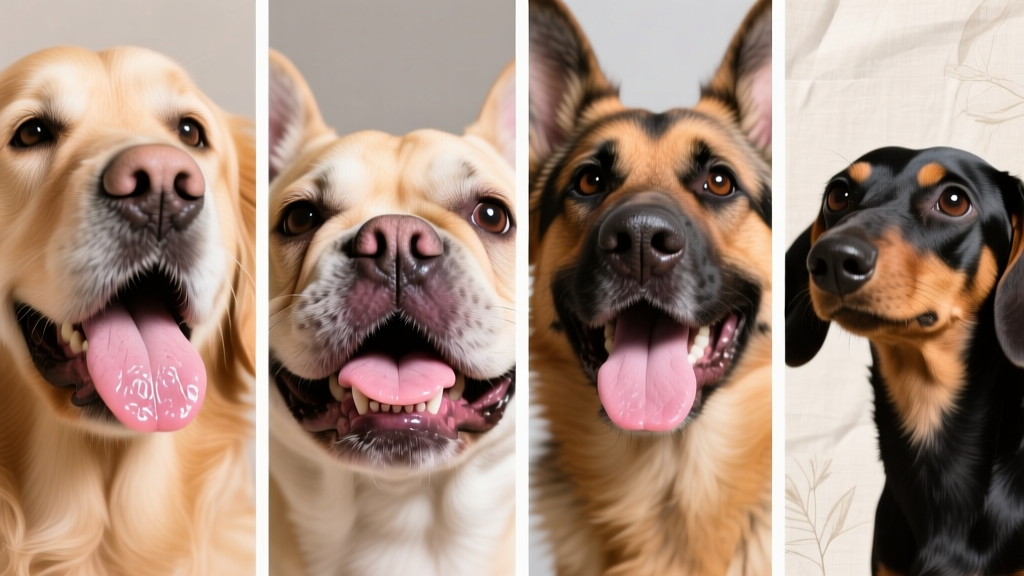
Can a Dog Smile? The Science Behind Canine Facial
Can a dog smile? We break down the science of canine facial expressions, evolutionary origins, and what your dog's 'smile' really means.

Quick Answer: Can a Dog Smile?
Yes — but not the way humans do. Dogs produce a facial expression that looks like a smile (lips pulled back, mouth open, tongue visible, relaxed eyes), but it functions differently from a human smile. Research published in Scientific Reports (2017) confirmed that dogs have a dedicated facial muscle — the levator anguli oculi medialis — that raises their inner eyebrows to create expressions humans interpret as friendly or happy. However, canine "smiles" are more accurately described as submissive grins or relaxed open-mouth expressions that evolved specifically to communicate with humans, not as spontaneous emotional displays identical to ours.
What Does It Mean When My Dog Smiles?
The expression most owners call a "dog smile" typically falls into one of three behavioral categories, each with a distinct meaning:
| Expression Type | Physical Signs | What It Means | Context |
|---|---|---|---|
| Relaxed Open-Mouth | Mouth slightly open, corners of lips relaxed or slightly back, soft eyes, loose body | Contentment, comfort, thermoregulation | Resting after play, lounging at home, post-exercise cooling |
| Submissive Grin | Upper lip pulled up vertically exposing front teeth, ears back, lowered body posture, squinty eyes | Appeasement — "I'm not a threat" | Greeting owners after absence, meeting new people, mild stress situations |
| Learned "Smile" on Cue | Lips pulled back on command, often paired with positive reinforcement history | Trained operant behavior — dog has learned this expression earns rewards | Training sessions, photo ops, when owner says "smile" |
The key distinction: a dog's relaxed open-mouth expression is closest to genuine contentment, while the submissive grin is a communication signal — not necessarily happiness, but social negotiation. Certified applied animal behaviorists emphasize reading the full body language context (ear position, tail carriage, muscle tension) rather than the mouth alone.
The Science of Canine Facial Expressions
Key Research: The Inner Eyebrow Muscle
A landmark 2019 study by Kaminski et al., published in the Proceedings of the National Academy of Sciences (PNAS), compared facial musculature in domestic dogs and wolves. The researchers found that dogs possess the levator anguli oculi medialis muscle — which raises the inner eyebrow to create "puppy dog eyes" — that is either absent or significantly reduced in wolves. This muscle allows dogs to mimic human-like expressions of sadness or pleading, which triggers our innate caregiving response.
The study examined cadaver specimens of 6 domestic dog breeds and 4 wolves, confirming that this muscle is a product of domestication selection, not shared ancestry. You can read the full study via PNAS.org.
Beyond the eyebrow muscle, researchers at the University of Portsmouth's Dog Cognition Centre have documented that dogs produce significantly more facial expressions when a human is facing them compared to when they're alone or facing away — even when food is present. This finding, published in Scientific Reports (2017), suggests canine facial expressions are actively communicative, not purely reflexive emotional leakage.
The physiological mechanism works through the dog's facial nerve (cranial nerve VII), which controls approximately 27 distinct facial action units identified in the DogFACS coding system — a canine adaptation of the human Facial Action Coding System (FACS). When a dog produces a "smile-like" expression, specific muscle contractions pull the lip commissures (corners of the mouth) laterally and dorsally, while the orbicularis oris muscle relaxes to allow mouth opening.
Why Do Dogs Smile? The Evolutionary Basis
Evolutionary Origin: The canine "smile" likely derives from two ancestral wolf behaviors:
- Submissive tooth display: In wolf pack dynamics, lower-ranking wolves expose teeth in a pulled-back-lip gesture to signal non-aggression to dominant pack members. This is a conflict-avoidance mechanism, not a happiness signal.
- Play face: During social play, canids (wolves, coyotes, foxes) adopt a relaxed open-mouth expression called the "play face" — a signal that rough behavior is non-serious. This is the closest wolf equivalent to the domestic dog's contented "smile."
Over approximately 15,000–30,000 years of domestication, humans selectively favored dogs that displayed more expressive, human-readable facial movements. Dogs that "smiled" received more care, food, and breeding opportunities — reinforcing these traits across generations.
This process is called domestication-driven neoteny — the retention of juvenile traits into adulthood. Wolf pups are more facially expressive than adult wolves; domestic dogs essentially remain in a perpetual "puppy" communicative state. A 2020 review in Trends in Ecology & Evolution noted that dogs' facial expressiveness correlates with human preferences, suggesting a feedback loop where humans shaped canine faces through selective breeding and care.
How Is a Dog's Smile Different from a Human Smile?
This is where anthropomorphism — attributing human emotional states to animals without evidence — causes the most confusion. Here's how canine and human smiling compare:
| Feature | Human Smile | Dog "Smile" |
|---|---|---|
| Primary function | Emotional expression (joy, amusement, social bonding) | Communication signal (appeasement, play invitation, learned behavior) |
| Muscle action | Zygomaticus major pulls lip corners up and out | Zygomaticus and levator labii pull lips back; often paired with jaw relaxation |
| Emotional correlate | Dopamine/serotonin-driven happiness response | Varies — may be contentment, submission, stress, or trained response |
| Universality | Cross-culturally recognized as positive | Misread by many owners — submissive grin mistaken for aggression or vice versa |
| Voluntary control | Both voluntary (posed) and involuntary (Duchenne/genuine) | Can be trained on cue; baseline expressions are largely involuntary |
One critical difference: humans smile spontaneously when happy, and the genuine "Duchenne smile" involves both mouth muscles and the orbicularis oculi (eye-crinkling). Dogs don't have an exact equivalent — their relaxed open-mouth expression is the closest analogue, but it's not driven by the same neurological reward pathways.
Breed Variations in Facial Expressiveness
Not all dogs "smile" equally. Skull shape (cephalic index) dramatically affects how visible and frequent facial expressions are:
- Dolichocephalic breeds (long-nosed: Greyhounds, Collies, German Shepherds): Have greater lip mobility and more visible tooth-display grins. Their elongated muzzles allow wider lateral lip retraction.
- Mesocephalic breeds (medium-proportioned: Labrador Retrievers, Beagles, mixed breeds): Display the most "classic" relaxed open-mouth expression. Balanced skull proportions allow clear visibility of mouth and eye expressions.
- Brachycephalic breeds (short-nosed: Pugs, Bulldogs, Shih Tzus): Have reduced facial muscle mobility due to compressed skull structures. Their natural resting expression often appears "smiley" due to lip conformation, but this is anatomical, not emotional. These breeds are also predisposed to brachycephalic obstructive airway syndrome (BOAS), which causes chronic open-mouth breathing that owners frequently misread as smiling.
Some breeds are specifically noted for "smiling" behavior as a breed trait. The Dalmatian is known for a characteristic "Dalmatian smile" — a submissive grin so common it's mentioned in the AKC breed standard. Similarly, Samoyeds have upturned mouth corners that create a permanent "smiling" appearance — so iconic it's called the "Sammy smile" and is a breed standard requirement.
Common Misconceptions About Dogs Smiling
| Myth | Fact |
|---|---|
| "If my dog shows teeth while 'smiling,' they're about to bite." | A submissive grin is the opposite of an aggressive snarl. In a snarl, the lips pull back horizontally with forward body posture and direct eye contact. A submissive grin involves vertical lip elevation with averted gaze and lowered posture. |
| "Dogs smile because they feel exactly the same happiness humans do." | Dogs experience positive emotional states (contentment, anticipation of reward, social attachment), but their facial expressions serve communicative functions that don't map 1:1 onto human emotional displays. |
| "My dog smiles when I come home, so they missed me." | The greeting "smile" is typically a submissive grin combined with excited body language. It signals social appeasement and arousal — your dog is greeting you, but the expression itself is a pacifying gesture, not a direct analog to human joy. |
| "All dogs can learn to smile on command." | Most dogs can be shaped to pull their lips back using positive reinforcement (capturing the behavior when it occurs naturally, then adding a cue). However, brachycephalic breeds may have physical limitations, and some dogs show stress signals during training — watch for lip licking, yawning, and ear pinning. |
When a "Smile" Might Signal a Problem
While most dog "smiles" are benign, certain contexts warrant attention:
Red Flags: When to Consult Your Veterinarian
- Persistent open-mouth expression with labored breathing: Could indicate pain, heatstroke, or respiratory distress — especially in brachycephalic breeds. Normal panting resolves within 5–15 minutes of rest in a cool environment (under 75°F / 24°C).
- Unilateral lip retraction: If only one side of the mouth is pulled back, this may indicate facial nerve paralysis (cranial nerve VII damage), which can result from ear infections, trauma, or idiopathic facial nerve paralysis. Schedule a veterinary exam within 24–48 hours.
- "Smiling" combined with excessive drooling, pawing at the mouth, or dropping food: May indicate dental disease, oral tumors, or a foreign body lodged in the mouth or throat.
- New-onset submissive grinning in an adult dog: A sudden increase in appeasement behavior may signal anxiety, a change in household dynamics causing stress, or an underlying medical condition causing the dog to feel vulnerable.
- Teeth-baring with stiff body, hard stare, and growling: This is NOT a smile — it's an aggressive threat display. Do not punish the dog (this suppresses warning signals). Instead, remove the trigger and consult a certified professional dog trainer (CPDT-KA) or veterinary behaviorist (DACVB).
Always consult your veterinarian if you notice sudden changes in your dog's facial expressions or behavior. A thorough physical exam can rule out neurological, dental, and systemic causes.
Practical Takeaways for Dog Owners
How to Read Your Dog's "Smile" Accurately
- Check the whole body, not just the mouth. A relaxed "smile" comes with: loose, wiggly body; soft or squinty eyes; ears in neutral or slightly back position; tail wagging in wide, sweeping motions at mid-height or below. If the body is stiff, ears are pinned, or eyes are hard — it's not contentment.
- Know your dog's baseline. Spend a week noting what your dog's mouth looks like when they're genuinely relaxed (sleeping, resting after a walk). This is their personal "happy face." Compare any new expression against this baseline.
- Use the "consent test" for greetings. When your dog gives you a submissive grin on your return home, offer a calm, low-energy greeting. Crouch sideways (not looming over), extend a hand, and let them approach. If they lean in and maintain soft body language, they're comfortable. If they flatten further or avoid contact, they may be stressed.
- Teach "smile" using force-free methods only. Wait for your dog to naturally pull their lips back (during a yawn, stretch, or greeting). Mark the behavior with a clicker or "yes!" and reward with a high-value treat (e.g., freeze-dried liver, ~$8–12 for a 4 oz bag). After 10–15 successful captures, add the verbal cue "smile" just before the behavior. Never physically pull your dog's lips back — this causes stress and can trigger a defensive bite.
- Monitor brachycephalic breeds closely. If your Pug, French Bulldog, or Boston Terrier "smiles" constantly, this is likely chronic open-mouth breathing, not happiness. Track their respiratory rate at rest (normal: 15–30 breaths per minute). If it exceeds 40 breaths per minute at rest, or if you hear increased snoring/stridor, schedule a BOAS evaluation with your vet. Surgical correction (nares widening, soft palate resection) costs $1,500–$4,000 depending on procedures required.
Related Canine Communication Behaviors
Understanding your dog's "smile" becomes easier when you recognize the broader communication toolkit dogs use:
- Play bow: Front end down, rear up — signals "what follows is play, not aggression." Often paired with the relaxed open-mouth play face.
- Whale eye (half-moon eye): Shows the whites of the eyes in a crescent shape — indicates anxiety or discomfort, frequently misread as "cute."
- Lip licking and yawning: Calming signals ("I'm stressed, please give me space") when performed outside of eating/sleeping contexts.
- Tail position and movement: High and stiff = arousal/alertness (not always aggression, but heightened state); low or tucked = fear/submission; mid-height with wide wag = friendly engagement.
- Ear position: Forward = interest/engagement; neutral = relaxed; pinned back = fear/submission (breed-dependent — floppy-eared breeds are harder to read).
For a comprehensive guide to canine body language, the ASPCA's dog behavior resources offer detailed breakdowns of stress signals and appeasement gestures.
Frequently Asked Questions
Can dogs actually feel happy when they smile?
Dogs do experience positive emotional states — neuroimaging studies by Dr. Gregory Berns at Emory University showed that dogs' caudate nuclei (reward centers) activate in response to their owner's scent and praise. However, the facial expression we call a "smile" is not a direct readout of happiness. It's a communication signal that may accompany contentment, appeasement, playfulness, or learned behavior. The emotion and the expression don't always align the way they do in humans.
Is a dog's smile the same as a submissive grin?
Not always. "Smile" is an owner-applied label covering multiple distinct expressions. A submissive grin specifically involves vertical lip retraction exposing incisors, combined with lowered posture and averted gaze. A relaxed open-mouth expression (which many owners also call a smile) involves no teeth display and indicates comfort. Both are normal — they just mean different things.
Can I train my dog to smile on command?
Yes, using positive reinforcement. The method: capture the natural behavior (mark and reward when your dog naturally pulls lips back), then add a verbal cue. Most dogs learn this in 2–4 weeks of short daily sessions (3–5 minutes each). Use high-value rewards — small pieces of cooked chicken, cheese, or commercial training treats (expect to spend $5–15/month on training treats). Never use physical manipulation of the lips, as this creates negative associations and bite risk.
Why does my dog smile when I scold them?
This is almost certainly a submissive grin — your dog is reading your angry tone and body language and responding with an appeasement signal: "I see you're upset, I'm not a threat." This is not guilt (dogs don't experience guilt as humans do, per a 2009 study by Dr. Alexandra Horowitz at Barnard College). Punishing a dog for a submissive grin increases their anxiety and may escalate to fear-based aggression. Instead, redirect to a compatible behavior (e.g., "sit") and reward compliance.
Do puppies smile more than adult dogs?
Puppies display more frequent submissive grins and play faces because they are constantly negotiating social relationships and engaging in play. As dogs mature (typically by 18–24 months for most breeds, 3+ years for giant breeds), their facial expressions become more context-specific. Adult dogs in secure, predictable environments may "smile" less frequently but show contentment through other signals: relaxed body posture, sighing, leaning against owners, and seeking proximity.
Is it normal for my dog to smile while sleeping?
Facial muscle twitches during REM sleep (which comprises about 12% of a dog's total sleep time) are completely normal. You may see lip curling, mouth opening, whisker twitching, or even vocalizations. This reflects dream activity, not a conscious "smile." If your dog's sleeping facial movements are accompanied by full-body rigidity or rhythmic jerking that doesn't stop when you gently call their name, consult your veterinarian to rule out seizure activity.
Sources Referenced
- Kaminski, J. et al. (2019). "Evolution of facial muscle anatomy in dogs." PNAS. doi:10.1073/pnas.1820653116
- Kaminski, J. et al. (2017). "Dog facial expressions are influenced by the presence of a human observer." Scientific Reports. doi:10.1038/s41598-017-12781-z
- Horowitz, A. (2009). "Disambiguating the 'guilty look': Salient prompts to a familiar dog behaviour." Behavioural Processes.
- Merck Veterinary Manual: Brachycephalic Airway Syndrome
Jonas Cole
All our authors care for dogs every day — read more of their work on the authors page.