Science Behind Size, Coat Color, and Care
Discover the biggest white dog breeds, the science behind their size and coat color genetics, evolutionary origins, and practical care tips for giant white dogs.
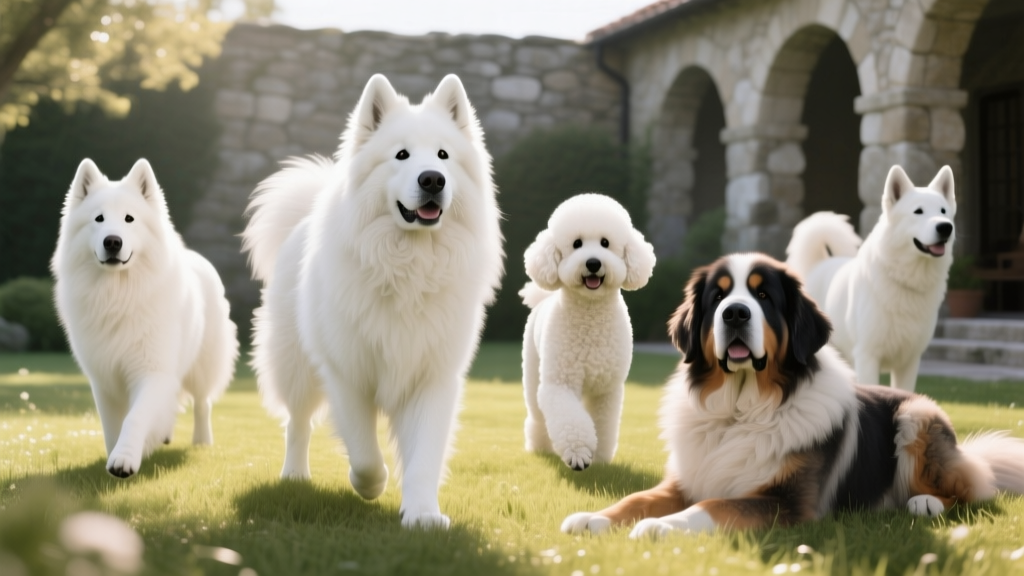
Quick Answer: The biggest white dog breeds include the Great Pyrenees (85–160 lb / 39–73 kg), the Kuvasz (70–115 lb / 32–52 kg), the Maremma Sheepdog (65–100 lb / 30–45 kg), the Akbash (75–140 lb / 34–64 kg), and the Argentine Dogo (80–100 lb / 36–45 kg). Among these, the Great Pyrenees consistently ranks as the biggest white dog by overall mass, with males reaching up to 160 lb (73 kg) and standing 27–32 inches (69–81 cm) at the shoulder. The Samoyed, while iconic for its white coat, is considerably smaller at 35–65 lb (16–29 kg).
If you've ever seen a massive, snow-white dog padding calmly through a field or lounging like a polar bear on someone's living room rug, you've probably wondered what breeds grow this large and why their coats are so uniformly white. The answer sits at the intersection of genetics, evolutionary biology, and centuries of selective breeding for specific working roles. This guide breaks down the canine science behind the biggest white dog breeds — why they evolved to be enormous, what genetic mechanisms produce their white coats, and what owning one actually demands from you in terms of space, budget, and daily management.
The Genetics of White Coat Color in Large Breeds
How Dogs Produce (or Don't Produce) Pigment
Coat color in dogs is determined primarily by two pigments: eumelanin (black/brown) and phaeomelanin (red/yellow). Every color you see in a dog's coat is a variation, dilution, or absence of these two pigments. White coats result when pigment production is suppressed in the hair shaft — the hairs are essentially unpigmented, reflecting all wavelengths of light.
The key genetic locus involved is the S-locus (Spotting locus), which governs the MITF (Microphthalmia-Associated Transcription Factor) gene. Research published in the journal Genetics (2009) identified that extreme white spotting — designated as the sw allele — produces dogs that are predominantly or entirely white. In breeds like the Great Pyrenees and Kuvasz, selective breeding fixed this allele so thoroughly that virtually all members of the breed express a white or near-white coat.
Importantly, white in these breeds is not the same as albinism. True albinism involves a complete absence of melanin production throughout the body, including the eyes and skin, caused by mutations in the TYR (tyrosinase) gene. The biggest white dog breeds typically have dark pigmentation on their nose, eye rims, and paw pads — indicating that melanin production is intact in skin tissue, just suppressed in the hair follicles.
| Breed | Primary White Gene Mechanism | Acceptable Markings | Skin Pigmentation |
|---|---|---|---|
| Great Pyrenees | Extreme white spotting (S-locus) | Badger, gray, tan patches (up to 1/3 of coat per AKC standard) | Dark nose, eye rims, lips |
| Kuvasz | Extreme white spotting (S-locus) | None preferred; skin may show slate-gray patches | Black nose and eye rims |
| Maremma Sheepdog | Extreme white spotting (S-locus) | Light lemon or pale orange tolerated | Black nose, dark eye rims |
| Akbash | Extreme white spotting (S-locus) | Very rare biscuit or silver spots | Black or dark brown nose |
| Samoyed | Extreme white spotting (S-locus) | Cream or light biscuit accepted by AKC | Black nose and lips preferred |
Evolutionary Context: Why the Biggest White Dogs Are So Large
Evolutionary Origin: The biggest white dog breeds almost universally share a common ancestral function: livestock guardian dog (LGD). These breeds were developed in mountainous or open-range regions of Europe and Asia — the Pyrenees mountains, the Hungarian plains, the Italian Apennines, the Anatolian highlands — where they protected flocks of sheep and goats from wolves, bears, and other large predators.
Natural selection and human-directed selection both favored massive body size for several functional reasons:
- Intimidation factor: A 120-lb dog standing 30 inches at the shoulder can deter predators through sheer size display without physical confrontation. Wolves typically avoid confrontations with animals that outweigh them significantly.
- Thermal regulation: Bergmann's Rule, an ecogeographical principle, states that populations of larger body size are found in colder climates. Bigger bodies have a lower surface-area-to-volume ratio, reducing heat loss — critical for dogs working through alpine winters at -20°F (-29°C) or colder.
- Double-coat insulation: Every major white LGD breed possesses a dense, weather-resistant double coat. The white coloration served a practical purpose: it allowed shepherds to distinguish the guardian dog from wolves at a distance, especially in low-light conditions and against dark forest or mountain backdrops.
- Endurance over speed: LGD breeds were selected for the ability to patrol vast territories at a steady trot for hours, not for sprinting. This selected for a mesomorphic-to-stocky build with substantial bone density and muscle mass.
The white coat wasn't arbitrary aesthetic preference — it was a working tool. Shepherds in the Pyrenees, Hungary, and Turkey needed to identify their dogs from predators at distances of 200–400 yards, often at dawn or dusk. A white dog against a dark landscape or among white-fleeced sheep was instantly recognizable. This functional selection pressure is why white became so genetically fixed in these breeds over centuries, long before modern breed registries formalized the standards.
Physiological Mechanisms: How Giant White Dogs Grow and Function
Understanding the physiology of the biggest white dog breeds requires examining how their bodies manage the demands of extreme size.
Growth Hormone and Skeletal Development
Giant breeds like the Great Pyrenees grow for a remarkably long period — typically 18 to 24 months before reaching full skeletal maturity, compared to 10–12 months for medium breeds. During the rapid growth phase (weeks 8–24), a Great Pyrenees puppy can gain 3–5 lb (1.4–2.3 kg) per week. This growth is driven by elevated levels of growth hormone (GH) and insulin-like growth factor 1 (IGF-1), which stimulate long-bone elongation at the epiphyseal (growth) plates.
The risk during this phase is developmental orthopedic disease (DOD), including conditions like hypertrophic osteodystrophy (HOD) and osteochondritis dissecans (OCD). Research from the Merck Veterinary Manual emphasizes that overfeeding and excessive calcium supplementation during puppyhood can accelerate growth beyond what the skeletal system can support. For giant-breed puppies, feeding a diet specifically formulated for large/giant breeds — with controlled calcium-to-phosphorus ratios (1.1:1 to 1.4:1) and caloric density around 320–380 kcal/cup — is essential.
Cardiovascular and Metabolic Load
A 150-lb (68-kg) Great Pyrenees has a resting heart rate of approximately 60–80 beats per minute, lower than smaller breeds (which often sit at 100–140 bpm). This is consistent with the allometric scaling principle in biology: larger animals have slower heart rates and lower mass-specific metabolic rates. However, the absolute cardiac output required to perfuse a giant body is enormous, and this is why giant breeds are predisposed to dilated cardiomyopathy (DCM) and have shorter average lifespans (8–12 years for Great Pyrenees vs. 12–15 years for medium breeds).
Coat Physiology and Thermoregulation
The double coat of white LGD breeds consists of a coarse, weather-resistant outer guard coat (2–6 inches / 5–15 cm long) and a dense, woolly undercoat. The white hairs are structurally identical to pigmented hairs — they simply lack melanin granules in the cortex. This means white hair provides the same UV protection and insulation as pigmented hair, contrary to the common misconception that white-coated dogs are more susceptible to cold.
However, dogs with extensive white markings and pink skin (particularly around the muzzle, ear tips, and groin) are at elevated risk for solar dermatitis and squamous cell carcinoma with prolonged sun exposure. Applying dog-safe sunscreen (SPF 30+, zinc oxide-free) to pink-skinned areas is recommended for white breeds in high-UV climates.
Comparing the Biggest White Dog Breeds: Size, Temperament, and Cost
| Attribute | Great Pyrenees | Kuvasz | Akbash | Maremma Sheepdog | Samoyed |
|---|---|---|---|---|---|
| Male Weight | 100–160 lb (45–73 kg) | 100–115 lb (45–52 kg) | 90–140 lb (41–64 kg) | 77–100 lb (35–45 kg) | 45–65 lb (20–29 kg) |
| Female Weight | 85–120 lb (39–54 kg) | 70–90 lb (32–41 kg) | 75–105 lb (34–48 kg) | 65–88 lb (30–40 kg) | 35–50 lb (16–23 kg) |
| Height (Shoulder) | 25–32 in (64–81 cm) | 26–30 in (66–76 cm) | 26–34 in (66–86 cm) | 24–29 in (60–73 cm) | 19–24 in (48–60 cm) |
| Lifespan | 10–12 years | 10–12 years | 10–11 years | 11–13 years | 12–14 years |
| Original Function | Livestock guardian | Livestock guardian / royal estate guard | Livestock guardian | Livestock guardian | Herding / sled pulling / companion |
| Exercise Needs | 40–60 min/day | 60–90 min/day | 60–90 min/day | 60–90 min/day | 60–90 min/day |
| Puppy Price Range | $1,500–$5,000 | $1,800–$4,500 | $800–$2,500 | $1,500–$3,500 | $2,000–$6,000 |
| Annual Care Cost | $2,800–$4,500 | $2,600–$4,200 | $2,400–$3,800 | $2,500–$4,000 | $2,200–$3,800 |
Practical Implications for Owners of Giant White Dogs
What Living with the Biggest White Dog Breeds Actually Requires
Space requirements: These breeds were developed to patrol hundreds of acres. While they can adapt to suburban life, a fenced yard of at least 1/4 acre (1,000 sq meters) is the practical minimum. Invisible fences are generally ineffective — LGD breeds have high pain tolerance and strong territorial instincts that override the static correction.
Food budget: A 130-lb (59-kg) Great Pyrenees eating a quality large-breed kibble (approximately $55–$80 per 30-lb bag) will consume about 5–7 cups daily, costing roughly $120–$180 per month. Raw feeding a dog this size runs $250–$400 monthly.
Grooming: The double coat of white LGD breeds sheds heavily year-round with extreme "coat blow" periods twice annually (spring and fall). Professional grooming sessions cost $80–$150 per visit, and you'll need a high-velocity dryer ($120–$250 for models like the Shelandy Power Dryer) for home maintenance. Daily brushing with a slicker brush and undercoat rake during shedding season takes 15–25 minutes.
Training approach: LGD breeds are independent thinkers — bred to make decisions without human direction while guarding flocks. This means they score lower on traditional obedience metrics not because of low intelligence, but because of low biddability (willingness to follow commands for their own sake). Positive reinforcement training with high-value food rewards works; force-based methods backfire spectacularly with these breeds, often producing shutdown or defensive behavior. Expect 6–12 months of consistent training to achieve reliable recall, and even then, off-leash freedom in unfenced areas is not recommended.
Veterinary costs: Giant breeds face higher medical expenses. Hip dysplasia screening (OFA/PennHIP evaluation) costs $200–$400. If hip dysplasia develops — prevalence in Great Pyrenees is approximately 12–18% per OFA breed statistics — total hip replacement surgery runs $5,000–$8,000 per hip. Bloat (gastric dilatation-volvulus) emergency surgery costs $3,000–$7,000. Budgeting $200–$400 monthly for pet insurance (providers like Trupanion or Healthy Paws) is strongly recommended for giant breeds.
Common Misconceptions About the Biggest White Dogs
| Myth | Fact |
|---|---|
| "White dogs are always deaf or blind." | Congenital deafness is linked to the merle gene (M-locus) and extreme piebald in specific breeds like Dalmatians and Bull Terriers. LGD breeds like Great Pyrenees and Kuvasz have very low rates of congenital deafness because their white is produced by a different genetic mechanism (fixed extreme spotting without the associated inner ear pigment cell deficiency). |
| "Giant white dogs are aggressive guard dogs." | LGD breeds are protective, not aggressive. They were selected to deter threats through size display, barking, and positioning — not through attack. Well-socialized Great Pyrenees and Maremmas are notably calm and gentle with their families, including children. Aggression toward humans was historically culled from LGD breeding programs because a dog that bites the shepherd or family is useless. |
| "White coats require less grooming because they don't show dirt." | White coats show everything — mud, pollen, tear stains, and urine discoloration are far more visible on white hair. Self-cleaning properties of the coarse guard coat help somewhat (dirt often flakes off when dry), but white dogs generally require more frequent bathing than dark-coated dogs. Expect to bathe a white LGD breed every 4–6 weeks. |
| "These dogs don't need much exercise because they're laid back." | While LGD breeds are calm indoors, they still need 40–90 minutes of daily structured exercise. Without it, they develop destructive behaviors, obesity (which accelerates hip dysplasia), and excessive nighttime barking. Their calm demeanor inside is a result of adequate exercise, not a substitute for it. |
| "All big white dogs are the same breed." | There are significant temperament differences. Great Pyrenees tend to be the most laid-back and independent. Kuvaszok are more alert and handler-focused. Akbash dogs are often the most athletic and agile. Maremmas bond intensely with their families and can be more reserved with strangers. Samoyeds are the most social and "clownish" of the group. |
Health Concerns Specific to Giant White Dog Breeds
The biggest white dog breeds share a cluster of health risks tied to their size and genetics. Understanding these helps you recognize early warning signs and budget for preventive care.
Orthopedic Conditions
Hip dysplasia affects an estimated 12–20% of Great Pyrenees and similar rates in other giant white breeds. The mechanism involves abnormal development of the ball-and-socket hip joint, leading to progressive arthritis. Symptoms include difficulty rising, "bunny-hopping" gait, reluctance to climb stairs, and decreased activity. Diagnosis requires radiographic evaluation ($200–$400 for OFA certification views).
Elbow dysplasia and osteochondritis dissecans (OCD) — where cartilage flaps or fragments develop in the shoulder, elbow, or knee joints — are also elevated in giant breeds. Surgical intervention for OCD typically costs $1,500–$3,500 per joint.
Breed-Specific Risks
Gastric dilatation-volvulus (GDV / bloat) is a life-threatening emergency where the stomach fills with gas and rotates on its axis. Giant, deep-chested breeds like the Great Pyrenees and Kuvasz are among the highest-risk groups. Symptoms include a distended abdomen, unproductive retching, restlessness, and rapid deterioration. This is an immediate emergency — survival drops sharply without surgery within 2–4 hours of onset. Prophylactic gastropexy (surgically tacking the stomach to the abdominal wall) performed during spay/neuter costs $300–$800 additional and reduces GDV recurrence risk by over 90%.
Osteosarcoma (bone cancer) has elevated incidence in giant breeds, with the humerus and radius being the most common sites. Prognosis with amputation and chemotherapy averages 10–12 months; without treatment, survival is typically 2–4 months after diagnosis. Consult your veterinarian immediately if you notice persistent lameness or swelling on a limb.
When to Call Your Vet Immediately:
- Distended or hard abdomen with retching (possible bloat)
- Sudden inability to bear weight on a limb
- Rapid, labored breathing at rest (over 40 breaths/minute)
- Unexplained weight loss exceeding 10% of body weight
- Seizures or collapse
For any suspected toxic ingestion, contact ASPCA Animal Poison Control at (888) 426-4435 (24/7, consultation fee applies).
Related Behaviors and Cross-References
Understanding the biggest white dog breeds connects to several other areas of canine science:
- Guardian instinct vs. herding instinct: LGD breeds (Great Pyrenees, Kuvasz, Maremma) are fundamentally different from herding breeds (Border Collies, Australian Shepherds). Guardians stay with the flock and deter predators; herders move the flock under human direction. This distinction affects trainability, independence, and bonding patterns.
- Nocturnal barking: LGD breeds were selected to be most vigilant at night when predators are most active. Owners frequently report that their Great Pyrenees barks more between 10 PM and 4 AM. This is normal breed-typical behavior, not a behavioral problem, though it may require management in suburban settings (bringing the dog indoors at night, sound-proofing sleeping areas).
- Roaming tendency: These breeds were developed to patrol territories of 50–500 acres. A 6-foot fence is the recommended minimum; some individuals can scale shorter fencing. GPS collar trackers (like the Fi Series 3 at $149 or Whistle Go at $100) provide an additional safety layer.
- Cold-weather adaptation: The double coat provides insulation down to approximately -30°F (-34°C). These dogs are uncomfortable in heat above 85°F (29°C) and require air-conditioned environments, cooling mats, and unlimited fresh water in summer.
Frequently Asked Questions
What is the biggest white dog breed in the world?
By maximum recorded weight, the Great Pyrenees holds the top position among predominantly white breeds, with males reaching 160 lb (73 kg) and some individuals exceeding this. The Akbash can occasionally match or exceed Great Pyrenees weight, but the breed is less standardized and less commonly found outside Turkey. The Dogo Argentino, while muscular and powerful at 80–100 lb (36–45 kg), is shorter and more compact than the Great Pyrenees.
Are big white dogs good family pets?
Yes, with important caveats. Great Pyrenees and Maremmas are generally excellent with children — they were bred to protect vulnerable animals, and this protective instinct extends to human children in their household. However, their size alone poses a risk to toddlers (a 130-lb dog can accidentally knock over a small child), and their independent nature means they won't always respond to commands the way a Golden Retriever would. Early socialization (before 16 weeks of age) and consistent positive reinforcement training are non-negotiable.
How much does a Great Pyrenees eat per day?
An adult Great Pyrenees weighing 100–130 lb (45–59 kg) typically eats 5–7 cups of high-quality large-breed kibble daily, split into two meals. This translates to approximately 2,000–2,800 calories per day, depending on activity level. Always feed from a raised bowl or slow-feeder to reduce bloat risk, and avoid vigorous exercise for 60 minutes before and after meals.
Do white dogs get sunburned more easily?
White hair itself does not increase sunburn risk — the hair shaft provides UV protection regardless of color. However, white dogs often have pink (unpigmented) skin in areas with less hair coverage: the nose bridge, ear tips, belly, and groin. These areas are susceptible to sunburn and, over time, solar-induced skin cancers. Apply a dog-safe, zinc oxide-free sunscreen to exposed pink skin before prolonged outdoor exposure, especially between 10 AM and 4 PM.
Why is my big white dog barking at night?
Nighttime barking is a deeply ingrained breed trait in LGD breeds. In their ancestral working context, these dogs were most active at dusk and dawn when predators like wolves and coyotes hunt. Your Great Pyrenees or Kuvasz barking at 2 AM is responding to stimuli (sounds, movements, shadows) that trigger their guardian instinct. Management strategies include bringing the dog indoors overnight, providing white noise to mask outdoor sounds, and ensuring adequate daytime exercise to reduce excess energy.
Is it normal for a giant breed puppy to sleep 18–20 hours a day?
Yes. Giant breed puppies require extensive sleep for growth hormone release and skeletal development. A Great Pyrenees puppy aged 8–16 weeks commonly sleeps 18–20 hours per 24-hour cycle. This is physiologically normal and should not be interrupted. Ensure the puppy has a quiet, temperature-controlled sleeping area and enforce nap times if the puppy becomes overtired and hyperactive (a sign of sleep deprivation in young dogs).
Sources and Further Reading
- Karlsson, E.K. et al. (2007). "Genome-wide analysis identifies selection for white coat color in dog breeds." PLoS Genetics. Available via NCBI.
- American Kennel Club breed standards: Great Pyrenees, Kuvasz, Samoyed.
- Orthopedic Foundation for Animals (OFA): Hip Dysplasia Breed Statistics.
- Merck Veterinary Manual: Developmental Orthopedic Disease Overview.
Robin Maitland
All our authors care for dogs every day — read more of their work on the authors page.