Standard Poodle Dog Breed Mixes: Doodle Crosses, Traits & Care Guide
Explore popular Standard Poodle dog breed mixes including Goldendoodles, Labradoodles & Bernedoodles. Learn traits, health risks, costs, and care needs.
Why the Standard Poodle Dog Breed Dominates Designer Crosses
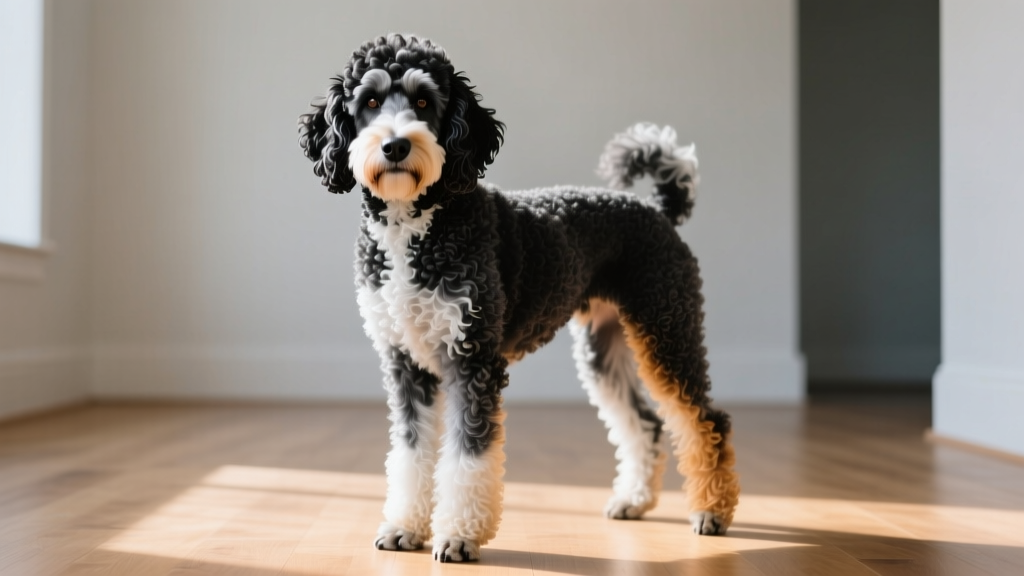
The Standard Poodle isn't just a show-ring icon — it's the genetic backbone of the modern designer dog movement. Standing 15+ inches at the shoulder and weighing 40–70 lb (18–32 kg), the Standard Poodle brings intelligence (ranked #2 among all breeds for working/obedience intelligence by canine researcher Stanley Coren), a low-shedding curly coat, and an athletic build to virtually every popular "doodle" cross on the market.
But here's what most breeder websites won't tell you: crossing a Standard Poodle with another breed doesn't produce a predictable, uniform dog. Each litter — and sometimes each puppy within a litter — can look, behave, and shed differently. This guide breaks down exactly what you're getting (and what you might not) when you bring home a Standard Poodle mix.
The Parent Breeds: What Each Side Brings to the Mix
Understanding a Standard Poodle mix starts with understanding both parents. Every trait your dog inherits — from coat texture to hip structure — traces back to one side or the other, and sometimes it's a blend you can't fully predict.
| Trait | Standard Poodle | Common Cross Breeds (Golden Retriever, Labrador, Bernese Mountain Dog) |
|---|---|---|
| Weight Range | 40–70 lb / 18–32 kg | 55–75 lb / 25–34 kg (Golden); 55–80 lb / 25–36 kg (Lab); 70–115 lb / 32–52 kg (Bernese) |
| Coat Type | Curly, single-layer, low-shedding | Double coat, straight-to-wavy, moderate-to-heavy shedding |
| Energy Level | High — 60–90 min exercise/day | Moderate to high — 45–90 min/day depending on breed |
| Trainability | Exceptional — learns commands in 5–15 repetitions | High (Golden/Lab) to moderate (Bernese — more independent) |
| Lifespan | 12–15 years | 10–12 years (Golden/Lab); 6–8 years (Bernese) |
| Common Health Risks | Addison's disease, bloat (GDV), hip dysplasia, sebaceous adenitis | Hip/elbow dysplasia, cancers (all three); cardiac issues (Golden); exercise-induced collapse (Lab) |
Generation Guide: F1, F1B, F2, and Multigen Explained
If you've browsed doodle breeder websites, you've seen these letter-number codes. They describe how many generations of Poodle-crossing sit behind your dog, and they directly affect coat predictability and shedding levels.
- F1 (First Generation): 50% Standard Poodle × 50% other purebred. Most genetically diverse, least predictable coat. Shedding is a coin toss — some F1 puppies shed like their non-Poodle parent, others barely at all.
- F1B (First Generation Backcross): F1 doodle × purebred Standard Poodle (75% Poodle, 25% other). Bred specifically to increase coat predictability. Roughly 85–90% of F1B litters produce low-shedding coats, making this the go-to for allergy-sensitive households.
- F2 (Second Generation): F1 × F1. Both parents are doodle mixes. Produces the widest variation — a single F2 litter can yield curly, wavy, and straight-coated puppies. Reputable breeders generally avoid F2 pairings due to unpredictability.
- Multigen (F3+): Doodle × doodle for multiple generations. More predictable traits but a smaller gene pool. Responsible multigen breeders perform the same OFA/PennHIP health testing as purebred breeders and maintain detailed pedigrees.
Why this matters practically: If you have dog allergies, an F1 Goldendoodle is a gamble — you could end up with a moderate shedder. An F1B or multigen doodle from a breeder who tests coat genetics (specifically the KRT71 and FGF5 genes) offers far more predictability. Ask breeders for DNA panel results before committing.
Size, Coat, and Appearance: The Variability Spectrum
One of the most common questions from prospective owners: "How big will my Standard Poodle mix get?" The honest answer is a range, not a number.
| Mix Name | Weight Range | Height Range | Coat Possibilities |
|---|---|---|---|
| Goldendoodle (Standard Poodle × Golden Retriever) | 50–90 lb / 23–41 kg | 20–26 in / 51–66 cm | Curly (Poodle-dominant), wavy (blend), or straight (Golden-dominant) |
| Labradoodle (Standard Poodle × Labrador Retriever) | 50–85 lb / 23–39 kg | 21–25 in / 53–64 cm | Fleece (wavy), wool (curly), or hair (straight, sheds) |
| Bernedoodle (Standard Poodle × Bernese Mountain Dog) | 60–100 lb / 27–45 kg | 22–29 in / 56–74 cm | Wavy-to-curly; often tri-color pattern from Bernese parent |
| Sheepadoodle (Standard Poodle × Old English Sheepdog) | 55–85 lb / 25–39 kg | 20–27 in / 51–69 cm | Thick, wavy-to-curly; typically black-and-white or gray |
| Saint Berdoodle (Standard Poodle × Saint Bernard) | 70–130 lb / 32–59 kg | 24–30 in / 61–76 cm | Dense, wavy; moderate shedding common in F1 generation |
Coat Type: The Three Possibilities
Standard Poodle mixes inherit one of three coat types, determined by which parent's genes dominate:
- Curly/Wool coat (Poodle-dominant): Tight curls, single-layer, lowest shedding. Requires professional grooming every 6–8 weeks. Most common in F1B and multigen litters.
- Wavy/Fleece coat (blended): Loose waves, may have a light undercoat. Moderate grooming needs — professional clip every 8–10 weeks plus weekly brushing at home. The most common coat type in F1 litters.
- Straight/Hair coat (non-Poodle-dominant): Flat or slightly wavy, double-layer, sheds seasonally. Lowest grooming maintenance but highest shedding. Occurs in roughly 20–30% of F1 litters.
Is a Standard Poodle Mix Hypoallergenic?
No dog is truly hypoallergenic — allergies are triggered by dander (skin flakes), saliva proteins (specifically Can f 1 and Can f 2), and urine, not just hair. That said, curly-coated Standard Poodle mixes trap dander in their curls rather than releasing it into the environment, which reduces allergic reactions for many people.
Practical tip: If allergies are a concern, spend at least 60 minutes with the specific puppy or adult dog before purchasing. Allergists recommend a home trial period whenever possible. An F1B generation with confirmed KRT71 curly-coat gene inheritance offers the best odds.
Temperament: Best-Case Scenarios and Real Challenges
The Standard Poodle's hallmark traits — high intelligence, sensitivity, and strong bonding with owners — usually carry into mixes. But the other parent breed significantly shapes personality, and individual variation within a single litter can be striking.
Best-Case Temperament Profile
A well-bred Standard Poodle mix from health-tested, temperament-evaluated parents typically shows:
- High trainability — picks up basic obedience commands in 5–20 repetitions using positive reinforcement methods
- Social, people-oriented disposition — enjoys family activities and adapts to new environments with proper socialization
- Moderate-to-high energy with an "off switch" — playful and athletic outdoors, calm and settled indoors after exercise
- Low prey drive (in Poodle-dominant individuals) — generally compatible with cats and small dogs when raised together
Challenging Scenarios to Prepare For
Mixes are not uniform products. Here are real temperament challenges owners encounter:
- Sensitivity and anxiety: Standard Poodles are notoriously sensitive dogs. Mixes inheriting this trait can develop separation anxiety if left alone for 6+ hours daily. They may shut down under harsh training methods — force-free, reward-based training is essential.
- Jumping and mouthiness: The Poodle's athletic spring combined with a retriever parent's oral fixation can produce a dog that jumps on guests and carries/chews objects well into adulthood. Management requires consistent redirection and providing appropriate chew outlets.
- Guarding tendencies: Bernedoodle and Sheepadoodle mixes may inherit protective instincts from their working-dog parent. Without early socialization (ideally beginning at 8–16 weeks), this can develop into leash reactivity or wariness with strangers.
- Stubbornness: Bernese Mountain Dog genetics can introduce an independent streak that frustrates first-time owners accustomed to biddable breeds. Patience and short, engaging training sessions (5–10 minutes) outperform long, repetitive drills.
Health Considerations: Hybrid Vigor vs. Inherited Reality
Let's address the most persistent myth in the designer dog world: hybrid vigor does not eliminate health problems. The concept of heterosis — where crossbred offspring show improved biological function — is real in livestock agriculture. But in dogs, the benefit is modest and does not override the fact that both parent breeds can carry the same genetic mutations.
According to research published in the Journal of Veterinary Internal Medicine, mixed-breed dogs do show a slightly lower overall incidence of certain inherited disorders compared to purebreds. However, this advantage shrinks significantly when both parent breeds share predispositions to the same conditions — as is the case with hip dysplasia, which affects both Standard Poodles and most large breeds used in doodle crosses.
Health Conditions to Screen For
| Condition | From Poodle Side | From Other Parent | Screening Test |
|---|---|---|---|
| Hip Dysplasia | Moderate prevalence (~12% of Standard Poodles per OFA data) | High prevalence in Golden Retrievers (~20%), Labs (~13%), Bernese (~16%) | PennHIP or OFA radiograph — both parents should be tested |
| Addison's Disease | Poodles are the #1 predisposed breed | Not common in most cross breeds | ACTH stimulation test if symptomatic; DNA marker in development |
| Gastric Dilatation-Volvulus (Bloat) | Deep-chested Poodles at elevated risk | Large/deep-chested cross breeds also at risk | No screening test — preventive gastropexy surgery discussed with vet |
| Sebaceous Adenitis | Poodles are the most commonly affected breed | Rare in cross breeds | Skin biopsy if scaling/hair loss develops |
| Cancer | Moderate risk | Golden Retrievers — up to 60% die from cancer; Bernese — histiocytic sarcoma prevalence ~25% | No preventive screening — annual veterinary exams critical |
| Progressive Retinal Atrophy (PRA) | prcd-PRA mutation present in Poodles | Present in Labs, Golden Retrievers | DNA test — both parents should be clear or carrier status disclosed |
Grooming Requirements: Budget and Schedule by Coat Type
Grooming is where Standard Poodle mixes demand more commitment than most owners anticipate. That "adorbable teddy bear" coat requires real maintenance.
By Coat Type
- Curly/Wool coat: Professional grooming every 6–8 weeks ($65–$120 per session depending on your region and dog size). Daily or every-other-day brushing at home with a slicker brush and metal comb to prevent matting. Budget $450–$850/year for professional grooming alone.
- Wavy/Fleece coat: Professional grooming every 8–10 weeks ($55–$100 per session). Brushing 2–3 times per week. Budget $330–$600/year.
- Straight/Hair coat: Professional grooming optional — bath and nail trim every 8–12 weeks ($30–$55). Weekly brushing. Budget $150–$300/year. However, expect seasonal shedding and invest in a quality deshedding tool like the Furminator or Undercoat Rake.
Matting warning: Curly and wavy coats can mat against the skin in as few as 3–5 days without brushing, particularly behind the ears, under the legs, and around the collar line. Severe matting requires a full shave-down at the groomer and can cause skin infections. If you cannot commit to regular home brushing between professional appointments, a straight-coated F1 mix or a different breed entirely may be a better fit.
Cost Breakdown: What You'll Actually Spend
Purchase Price
- F1 Standard Poodle mix from a health-testing breeder: $2,000–$4,000
- F1B or multigen from a specialized doodle program: $3,000–$5,500 (some Bernedoodle and Sheepadoodle programs exceed $6,000)
- Rescue/adoption: $200–$600 through breed-specific rescues like Doodle Rescue Collective or general large-breed rescues. Poodle mixes appear regularly in rescues — the ASPCA adoption database and Petfinder list available dogs by breed mix.
First-Year Cost Estimate
| Expense | Low Estimate | High Estimate |
|---|---|---|
| Puppy purchase/adoption | $200 | $5,500 |
| Veterinary (vaccines, spay/neuter, wellness) | $600 | $1,200 |
| Food (large-breed formula, 40–55 lb bag) | $480 | $900 |
| Professional grooming | $330 | $850 |
| Supplies (crate, bed, leash, toys, brushes) | $250 | $500 |
| Training (group classes or private) | $150 | $600 |
| Pet insurance (annual premium) | $480 | $900 |
| TOTAL (excluding purchase price) | $2,290 | $4,950 |
Who This Mix Suits Best — and Who Should Think Twice
Ideal Owner Profile
- Active individuals or families who can provide 60–90 minutes of daily exercise (walking, hiking, fetch, swimming, puzzle games)
- People with mild-to-moderate dog allergies who have tested their reaction to a specific puppy (F1B or multigen curly coat recommended)
- Owners with some training experience or willingness to invest in positive reinforcement classes — these dogs are smart enough to learn bad habits as quickly as good ones
- Work-from-home households or those who can arrange midday visits — Standard Poodle mixes are social dogs prone to separation distress when left alone 8+ hours
Think Twice If...
- You want a low-maintenance grooming commitment (consider a purebred Labrador or Greyhound instead)
- You're away from home 10+ hours daily with no pet care support
- You prefer a calm, low-energy companion dog (a senior rescue or a breed like the Basset Hound may be a better match)
- You want guaranteed predictability in size, coat, or temperament — consider a well-bred purebred from a health-testing breeder where breed standards provide a reliable blueprint
Frequently Asked Questions
What two breeds make up a Standard Poodle mix?
A Standard Poodle mix pairs a purebred Standard Poodle (15+ inches, 40–70 lb) with another purebred breed. The most popular crosses are the Goldendoodle (Golden Retriever), Labradoodle (Labrador Retriever), Bernedoodle (Bernese Mountain Dog), and Sheepadoodle (Old English Sheepdog). Less common crosses include Newfypoo (Newfoundland), Pyredoodle (Great Pyrenees), and Irish Doodle (Irish Setter).
How big will my Standard Poodle mix get?
Most Standard Poodle mixes reach 50–90 lb (23–41 kg) and 20–26 inches (51–66 cm) at the shoulder. However, crosses with giant breeds like the Bernese Mountain Dog or Saint Bernard can exceed 100 lb (45 kg). Ask your breeder for the exact weight of both parent dogs — the puppy's adult weight typically falls within 10–15% of the average of both parents.
What will the temperament be like?
Expect an intelligent, people-oriented dog that bonds closely with family. Energy levels range from moderate (Bernedoodle) to high (Labradoodle). Trainability is generally excellent, but sensitivity varies — some individuals shut down under pressure and need patient, reward-based training. Early socialization (8–16 weeks) is critical regardless of mix.
Is this mix hypoallergenic or low-shedding?
No dog is truly hypoallergenic. Curly-coated Standard Poodle mixes (most common in F1B and multigen generations) shed minimally and trap dander in their curls, making them better tolerated by allergy sufferers. Straight-coated F1 individuals may shed as much as their non-Poodle parent. Always spend time with the specific dog before committing.
What health issues might this mix inherit?
Key conditions include hip dysplasia (from both parents), Addison's disease (Poodle side), bloat/GDV (deep-chested large breeds), progressive retinal atrophy (both sides), and cancer (especially in Golden Retriever and Bernese Mountain Dog crosses). Reputable breeders screen both parents with OFA hip scores, CAER eye exams, and DNA panels. Consult your veterinarian to establish a breed-appropriate wellness plan.
How much does a Standard Poodle designer mix cost?
Expect $2,000–$5,500 from a health-testing breeder, depending on generation and cross breed. Rescue adoption fees range $200–$600. First-year ongoing costs (vet care, food, grooming, supplies, insurance) typically run $2,300–$5,000 beyond the purchase price.
Are Standard Poodle mixes recognized by the AKC?
No. The AKC does not recognize designer crosses as breeds. However, Standard Poodle mixes can participate in AKC Canine Good Citizen testing, therapy dog certification, and many dog sports through alternate registries. Some owners register the Poodle parent with AKC and the litter with the Continental Kennel Club (CKC) or International Designer Canine Registry (IDCR).
Jonas Cole
All our authors care for dogs every day — read more of their work on the authors page.