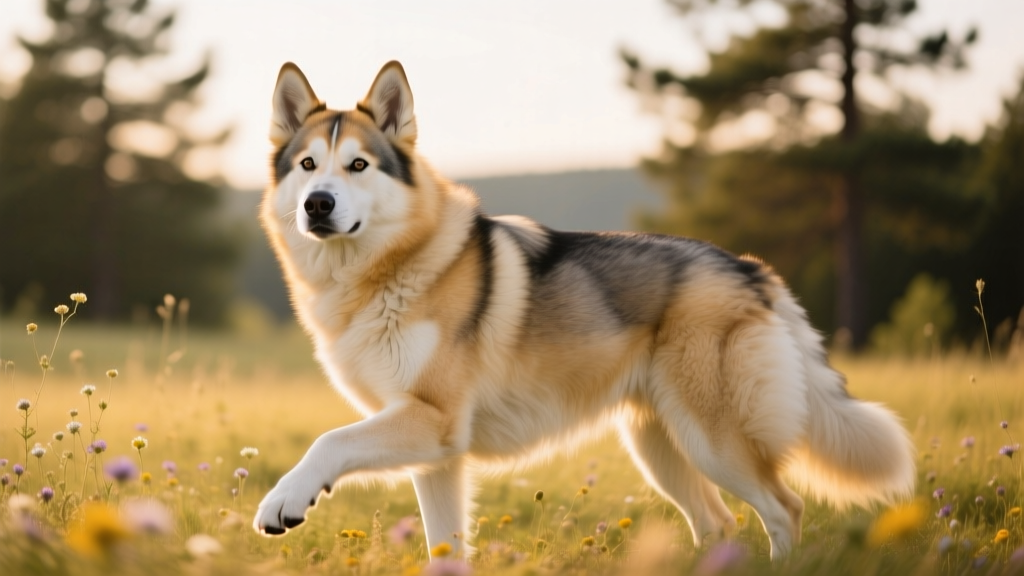
Siberian Samoyed Mix: Complete Breed Profile & Care Guide
Siberian Samoyed mix: size, coat types, temperament variability, health risks, grooming needs, costs

The Siberian Samoyed mix — typically a cross between the Siberian Husky and the Samoyed — combines two ancient spitz breeds into one strikingly beautiful, cold-weather companion. Sometimes called the Samusky, this designer mix has grown in popularity among active families who want the looks of a wolfish spitz with the softer, more people-oriented temperament of the Samoyed. But blending two strong-willed, high-energy working breeds doesn't always produce a predictable outcome.
This guide breaks down exactly what you can expect from a Siberian Samoyed mix in terms of size, coat, temperament, health, grooming demands, and cost — and where individual dogs tend to surprise owners.
What Two Breeds Make Up the Siberian Samoyed Mix?
The Siberian Samoyed mix is a first-generation or multigenerational cross between two purebred spitz dogs: the Siberian Husky and the Samoyed. Both breeds share a northern working heritage, but their historical roles shaped very different personalities.
| Trait | Siberian Husky | Samoyed |
|---|---|---|
| Origin | Northeast Asia (Chukchi people) — sled pulling, endurance running | Siberia (Samoyedic people) — herding reindeer, pulling sleds, companionship |
| AKC Group | Working Group | Working Group |
| Weight Range | 35–60 lb (16–27 kg) | 35–65 lb (16–29 kg) |
| Height | 20–23.5 in (51–60 cm) | 19–23.5 in (48–60 cm) |
| Coat | Medium-length double coat, dense undercoat | Heavy, stand-off double coat — significantly thicker |
| Temperament | Independent, high prey drive, pack-oriented, escape artist | People-focused, gentle, barks more, less prey drive |
| Exercise Needs | 90–120+ min/day — intense endurance exercise | 60–90 min/day — active but more moderate |
| Lifespan | 12–14 years | 12–14 years |
Both parent breeds are recognized by the American Kennel Club in the Working Group. The Samoyed's history as a family companion — sleeping inside tents with Samoyedic nomads — gives it a notably softer, more attachment-seeking personality than the more independent, run-all-day Husky. This distinction matters enormously when predicting what a cross between them might behave like.
Understanding Generations: F1, F1B, F2, and Multigen
- F1 (First Generation): 50% Siberian Husky × 50% Samoyed. Maximum trait variability — puppies in the same litter can look and act very differently.
- F1B (First Generation Backcross): An F1 Samusky bred back to one purebred parent (either Husky or Samoyed), resulting in 75% one breed and 25% the other. Slightly more predictable in the direction of the backcross.
- F2 (Second Generation): Two F1 Samuskies bred together. Genetic recombination increases variability — F2 litters often produce the widest range of traits.
- Multigen (F3+): Multiple generations of Samusky-to-Samusky breeding. Still not standardized, but breeders selecting for specific traits over several generations may achieve more consistency. True multigen Samuskies are rare.
Most Siberian Samoyed mixes you'll find listed are F1 crosses — a purebred Husky bred to a purebred Samoyed. Because neither parent breed is a poodle (which is the typical "base" for doodle-type backcrossing), F1B Samuskies are uncommon. If a breeder advertises F1B or multigen, ask for documentation of which parent was used in the backcross and why.
Size, Weight, and Physical Appearance
Because both parent breeds occupy a similar size range, the Siberian Samoyed mix tends to be a medium-to-large dog — but exactly where an individual lands is variable.
| Measurement | Minimum (Husky-leaning) | Average | Maximum (Samoyed-leaning) |
|---|---|---|---|
| Weight | 35 lb (16 kg) | 45–55 lb (20–25 kg) | 65 lb (29 kg) |
| Height at Shoulder | 19 in (48 cm) | 21–22 in (53–56 cm) | 24 in (61 cm) |
| Age at Full Size | 12–18 months (height by 12 months, weight fills out through 18 months) | ||
Expect pricked, triangular ears, a plumed tail that curls over the back, and an alert, expressive face from either parent. Eye color can range from deep brown (Samoyed standard) to striking blue or heterochromia (one blue, one brown — common in Huskies). Some Samuskies inherit the Samoyed's characteristic "smiling" mouth with upturned corners, while others have the Husky's more neutral expression.
Coat Types, Shedding, and the Hypoallergenic Question
Is the Siberian Samoyed mix hypoallergenic? No. Neither parent breed is hypoallergenic, and this mix inherits a heavy-shedding double coat from both sides. If you have dog allergies, this is not the mix for you.
Both the Husky and Samoyed carry a dense, weather-resistant double coat — a soft, insulating undercoat beneath a longer, coarser guard coat. The Samoyed's coat is substantially heavier and more stand-off (fluffy, standing away from the body), while the Husky's is sleeker and closer to the body. A Samusky puppy can inherit anywhere along that spectrum.
| Coat Trait | Husky-Leaning | Blended | Samoyed-Leaning |
|---|---|---|---|
| Length | Medium (1–2 in) | Medium-long (2–3 in) | Long (3–5 in) |
| Texture | Sleek, flat-lying | Slightly stand-off | Very fluffy, stand-off |
| Shedding Level | Heavy (7/10) | Very heavy (8/10) | Extreme (9–10/10) |
| Blow Coat Season | Twice yearly (spring/fall), 2–3 weeks | Twice yearly, 3–4 weeks | Twice yearly, up to 4–5 weeks of intense shedding |
| Common Colors | Black/white, gray/white, red/white, agouti | White with biscuit/cream markings | Pure white, cream, biscuit |
During coat-blowing season, a Samoyed-leaning Samusky can produce enough loose undercoat to fill a large grocery bag. Daily brushing with an undercoat rake (tools like the Furminator deShedding Tool for medium/large dogs or the Chris Christensen Big G slicker brush) becomes non-negotiable. Outside of blow season, plan on brushing 3–4 times per week minimum.
Temperament: What to Expect (and What Might Surprise You)
Temperament is where the Siberian Samoyed mix shows the widest variability. Both parent breeds are friendly and social with people, but their working styles differ enough that offspring can land anywhere on the independence spectrum.
Best-Case Temperament Scenario
A Samusky that leans Samoyed in temperament tends to be affectionate, eager to be near its people, relatively biddable (willing to follow cues), gentle with children, and sociable with other dogs. It will still be energetic and vocal, but it checks in with its owner more frequently and shows less wanderlust than a pure Husky.
Challenging Temperament Scenario
A Samusky that leans Husky in temperament can be highly independent, difficult to recall off-leash (Huskies are notorious runners with weak recall instincts), prone to digging and fence-testing, vocal in a howling rather than barking pattern, and high prey drive toward cats, rabbits, or small dogs. This isn't a "bad" dog — it's a working dog expressing breed-appropriate behavior in a suburban context where that behavior doesn't fit.
| Trait | Samoyed-Leaning | Husky-Leaning | Predictability |
|---|---|---|---|
| Trainability | Moderate — responds to food/toy motivation | Low-moderate — "what's in it for me?" attitude | Unpredictable in F1 |
| Vocalization | Barks frequently, "talks" to owners | Howls, "roos," less barking | Moderately predictable — most are vocal |
| Prey Drive | Low-moderate | High — will chase small animals | Unpredictable — test before trusting off-leash |
| Separation Anxiety | Moderate-high — very people-bonded | Moderate — more pack-oriented than person-specific | Moderately predictable — most struggle alone |
| Escape Tendency | Low-moderate | Very high — will dig under, jump over, or find gaps | Unpredictable — always secure fencing |
| Child-Friendliness | High — patient and gentle | Moderate — can be mouthy and overly physical | Generally good with supervision |
Training should always use positive reinforcement and force-free methods. Both parent breeds are sensitive to harsh correction and will shut down or become avoidant under aversive pressure. High-value food rewards (freeze-dried liver, small pieces of chicken), toy play, and short training sessions of 5–10 minutes work best. If you're struggling with leash pulling or recall, work with a certified professional dog trainer (CPDT-KA or IAABC-credentialed) who uses positive reinforcement methods.
Health Considerations: Hybrid Vigor vs. Reality
A common misconception about designer mixes is that "hybrid vigor" eliminates inherited health problems. This is not accurate. While outcrossing two unrelated breeds can reduce the risk of recessive genetic disorders that are common within a single closed gene pool, it does not eliminate conditions that both parent breeds share. The Siberian Husky and Samoyed overlap on several health risks.
According to the Merck Veterinary Manual, conditions to screen for in both parent breeds include:
| Condition | Prevalence | Present in Both Parents? | Screening Test |
|---|---|---|---|
| Hip Dysplasia | ~7–12% in both breeds (OFA data) | Yes | OFA/PennHIP radiograph evaluation |
| Progressive Retinal Atrophy (PRA) | Low-moderate — both breeds carry forms of PRA | Yes | DNA panel + annual CERF eye exam |
| Cataracts (Hereditary) | Huskies: higher prevalence; Samoyeds: moderate | Yes | Annual veterinary ophthalmologist exam |
| Hypothyroidism | Samoyeds: elevated risk; Huskies: moderate | Yes | Thyroid panel (T4, free T4, TSH) |
| Samoyed Hereditary Glomerulopathy | Samoyed-specific kidney disease | No — Samoyed parent only | DNA test available; urinalysis monitoring |
| Corneal Dystrophy | Husky-specific — lipid deposits in cornea | No — Husky parent only | Ophthalmologist exam |
A responsible breeder will provide health clearances for both parent dogs — not just the mix. Ask for OFA hip scores, CERF eye certifications, and any available DNA test results. If a breeder cannot or will not provide these, walk away.
Typical veterinary costs for a healthy Samusky range from $500–$800/year for routine preventive care (vaccines, heartworm, flea/tick, annual exam, dental cleaning). Budget an additional emergency fund of $1,000–$3,000 or consider pet insurance — monthly premiums for this size and breed mix typically run $45–$75/month with companies like Trupanion or Healthy Paws (2026 rates).
Exercise, Training, and Daily Care Requirements
Regardless of which parent a Samusky favors, this is a high-energy dog that needs significant daily exercise. Plan for 60–120 minutes of structured activity per day, depending on the individual's energy level and age.
Activities that suit this mix well:
- Hiking and trail running (once growth plates close at 14–18 months)
- Bikejoring or canicross — both breeds were built to pull
- Agility and rally obedience (Samoyed-leaning dogs tend to enjoy these more)
- Structured fetch or flirt pole sessions
- Cold-weather activities — these dogs thrive in temperatures below 60°F (15°C)
Activities to approach carefully:
- Off-leash hiking — unless recall is extremely reliable (rare in Husky-leaning dogs)
- Hot-weather exercise — heat stroke risk is real above 75°F (24°C); exercise early morning or evening
- Leaving alone in a yard — escape risk is too high without supervision
Fencing should be a minimum of 6 feet (1.8 m) tall, with no gaps at the base. Husky-leaning Samuskies can clear 4-foot fences and will dig under anything shorter. Consider adding a concrete footer or buried wire apron extending 12 inches outward from the fence base to prevent dig-outs.
Cost and Availability: Breeders vs. Rescue
| Source | Price Range | Availability | What to Expect |
|---|---|---|---|
| Reputable Breeder | $1,200–$3,000 | Limited — few breeders specialize in this cross | Health-tested parents, early socialization, take-back clause |
| Backyard/Casual Breeder | $500–$1,200 | More common online | Often no health testing, limited socialization — buyer beware |
| Rescue/Shelter | $150–$450 (adoption fee) | Uncommon but available — check Husky and Samoyed breed-specific rescues | Adult dogs, temperament assessed, usually spayed/neutered and vaccinated |
First-year ownership costs beyond the purchase price typically total $2,500–$4,500, including spay/neuter ($300–$700), initial vaccine series ($200–$400), crate and gear ($200–$500), grooming tools and professional grooming sessions ($400–$800/year), food ($600–$900/year for a 45–55 lb dog on quality kibble), and preventive medications ($300–$500/year).
Adoption is a strong option for this mix. Check ASPCA's adoption search, regional Husky rescues (such as the Siberian Husky Rescue Trust), and Samoyed rescue organizations. Mixed-breed spitz dogs are sometimes mislabeled in shelters — a "Husky mix" or "Samoyed mix" listing may be exactly this cross.
Who Is the Siberian Samoyed Mix Best Suited For?
This mix works best for:
- Active households that can commit to 60–120 minutes of daily exercise
- Cooler climates — these dogs overheat easily in southern US summers
- Owners with spitz breed experience — or at minimum, those who've researched independent, vocal working breeds and understand what that means day-to-day
- Homes with secure yards — apartments are possible only with a very dedicated exercise routine
- Families with older children (6+) who understand how to interact with a large, mouthy, energetic dog
- People who don't mind dog hair — it will be on your furniture, in your laundry, and in your food
This mix is not ideal for first-time dog owners who haven't researched working breed challenges, people who work 10+ hour days away from home, apartment dwellers without outdoor access, or anyone seeking a low-maintenance, low-shedding companion.
Frequently Asked Questions
How big will a Siberian Samoyed mix get?
Most Samuskies reach 35–65 lb (16–29 kg) and 19–24 inches (48–61 cm) at the shoulder. Males tend toward the upper end, females toward the lower. Growth plateaus in height around 12 months, with weight filling out through 14–18 months.
Is the Siberian Samoyed mix good with cats?
It depends heavily on which parent's prey drive the individual inherits. Samoyed-leaning dogs typically coexist with cats if introduced young. Husky-leaning dogs may have strong chase instincts that make cat cohabitation risky. Always supervise initial introductions and never leave a Samusky alone with small animals until you're confident in its behavior over weeks of observation.
How long do Siberian Samoyed mixes live?
Expect a lifespan of 12–14 years, consistent with both parent breeds. Maintaining a lean body condition score (BCS of 4–5 out of 9), providing regular exercise, and keeping up with veterinary screenings are the most impactful things you can do to maximize longevity.
Do Siberian Samoyed mixes bark a lot?
Most are vocal, but the type of vocalization varies. Samoyed-leaning dogs bark and "talk" (grumbling, whining vocalizations). Husky-leaning dogs howl and do the characteristic "roo" (a rising-falling vocalization). Either way, this is not a quiet breed mix — if you have close neighbors or noise-sensitive living arrangements, this is important to consider.
Can a Siberian Samoyed mix live in a hot climate?
They can, but it requires management. Exercise must shift to early morning and late evening during summer months. Air conditioning is essential — these dogs are at genuine risk of heat stroke above 80°F (27°C). Never shave the coat, provide constant access to shade and water, and consider cooling mats or cooling vests for outdoor time.
What's the difference between a Samusky and a Pomsky?
A Samusky is a Siberian Husky × Samoyed cross (medium-large, 35–65 lb). A Pomsky is a Pomeranian × Siberian Husky cross (small, typically 10–30 lb). They share one parent breed but are very different dogs in size, energy level, and care requirements.
Dr. Hannah Wickes
All our authors care for dogs every day — read more of their work on the authors page.