Husky and Golden Retriever Mix: The Goberian Breed Profile
Everything you need to know about the husky and golden retriever mix (Goberian): size, coat, temperament, health risks, cost, and whether this designer
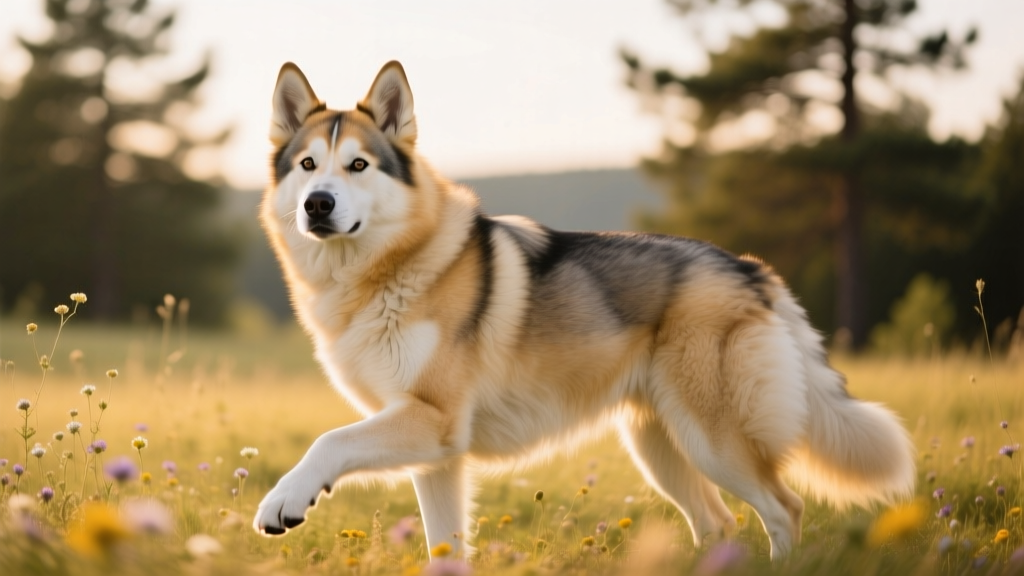
The husky and golden retriever mix — commonly called the Goberian — pairs two of the most popular companion breeds in the United States into a single, often striking-looking dog. With the Siberian Husky's piercing eyes and the Golden Retriever's gentle disposition, this cross has attracted significant attention from prospective owners looking for an active, family-friendly companion.
But designer mixes are inherently variable. Unlike purebred dogs governed by AKC breed standards, a Goberian can inherit any combination of traits from either parent. One puppy in a litter might look almost entirely Husky; another might be a dead ringer for a Golden. Understanding this variability is the single most important thing you can do before committing to this mix.
This profile breaks down what the science and real-world ownership data tell us about the husky and golden retriever mix — including the traits you can reasonably predict, the ones you can't, and the health conditions you should screen for.
The Parent Breeds: What Goes Into a Goberian
Every mixed breed is a genetic lottery between its two parent breeds. To understand what a Goberian might be like, you first need to understand the Siberian Husky and the Golden Retriever as individual breeds.
| Trait | Siberian Husky | Golden Retriever |
|---|---|---|
| AKC Group | Working | Sporting |
| Weight Range | 35–60 lb (16–27 kg) | 55–75 lb (25–34 kg) |
| Height at Shoulder | 20–23.5 in (51–60 cm) | 21.5–24 in (55–61 cm) |
| Coat | Double coat, medium length | Double coat, medium to long |
| Shedding | Heavy (seasonal blowout) | Moderate to heavy year-round |
| Energy Level | Very high (working drive) | High (sporting drive) |
| Trainability | Independent, stubborn | Eager to please, highly trainable |
| Prey Drive | High | Moderate |
| Vocalization | High (howling, talking) | Low to moderate (barking) |
| Typical Lifespan | 12–14 years | 10–12 years |
The contrast in trainability and independence is the biggest wildcard in this cross. Golden Retrievers rank among the most biddable breeds in canine cognition research, while Siberian Huskies are notoriously independent thinkers. A Goberian can land anywhere on that spectrum.
Generation Types: F1, F1B, and Beyond
Understanding Designer Breed Generations
F1 (First Generation): A direct 50/50 cross between a purebred Siberian Husky and a purebred Golden Retriever. These puppies have the widest trait variability — you genuinely don't know which parent they'll favor.
F1B (First Generation Backcross): An F1 Goberian bred back to one of the parent breeds (usually the Golden Retriever for a calmer temperament). Result: approximately 75% one breed, 25% the other. Trait predictability improves.
F2 (Second Generation): Two F1 Goberians bred together. Genetic recombination increases variability even further — this generation is the least predictable.
Multigen (F3+): Multiple generations of Goberian-to-Goberian breeding. Some traits stabilize, but without a formal breed standard, consistency remains limited compared to established purebreds.
Most Goberians on the market are F1 crosses, since breeders typically maintain purebred parent stock rather than multi-generational Goberian lines. If a breeder advertises F1B or multigen puppies, ask for documentation of which parent breed was used in the backcross and why.
Size, Build, and Physical Appearance
Because both parent breeds fall in the medium-to-large range, Goberians don't show the extreme size variation you see in crosses involving toy breeds. Still, there's a meaningful spread.
| Measurement | Low End (Husky-leaning) | High End (Golden-leaning) |
|---|---|---|
| Weight | 40 lb (18 kg) | 80 lb (36 kg) |
| Height | 20 in (51 cm) | 24 in (61 cm) |
| Body Type | Lean, athletic build | Stockier, broader chest |
Females tend to cluster toward the lower end of these ranges, males toward the upper. Nutrition plays a significant role — an overfed Goberian can easily exceed 80 lb, which puts stress on joints already predisposed to dysplasia from both parent breeds.
Coat and Color Possibilities
Both parents carry double coats, so virtually all Goberians will have a double coat with a dense undercoat and a longer guard coat. What varies is:
- Length: Short-to-medium (Husky-like) vs. medium-to-long (Golden-like)
- Color: Golden, cream, red-gold, black-and-white, gray-and-white, agouti, sable, or any blended combination
- Markings: Husky-style facial masks, Golden-style feathering on legs and tail, or mixed patterns
- Eye color: Brown (most common), blue (from the Husky side), or heterochromia (one blue, one brown) — a trait unique to the Husky genetic contribution
The blue eye trait is governed by the ALX4 gene on chromosome 18, identified in Siberian Huskies by NIH-funded research. If your Goberian inherits this gene, blue or parti-colored eyes are possible even if the coat otherwise reads as entirely Golden.
Temperament: The Predictable and the Unpredictable
Temperament is where the Goberian cross presents its biggest gamble. Both parent breeds are friendly and people-oriented, but their working styles and drives differ sharply.
Best-Case Scenario
- Golden-like friendliness with strangers and children
- Husky-like endurance for hiking, running, and outdoor activity
- Moderate trainability — responsive to positive reinforcement
- Lower prey drive than a pure Husky
- Social with other dogs
Challenging Scenario
- Husky-like stubbornness with Golden-size body strength
- High prey drive toward cats, squirrels, small dogs
- Escape artist tendencies (digging, jumping fences)
- Excessive vocalization (howling, "talking")
- Separation anxiety if under-stimulated
Trait Variability Breakdown
| Trait | Predictability | Notes |
|---|---|---|
| Friendly with humans | High — both breeds are sociable | Rare to get a genuinely aggressive Goberian |
| Energy level | High — both are active breeds | Expect 60–90+ minutes of daily exercise regardless |
| Trainability | Low — wide spectrum | Can range from Golden-eager to Husky-indifferent |
| Prey drive | Low — unpredictable | Husky side may dominate; cat introductions need caution |
| Shedding level | High — heavy either way | Both breeds are prolific shedders |
| Vocalization | Moderate — varies | Husky-leaning dogs howl; Golden-leaning dogs bark |
| Off-leash reliability | Low — generally poor | Husky recall genetics make off-leash risky |
The honest assessment: you should be prepared for the challenging scenario and pleasantly surprised by the best case. If you can't manage a dog that might be stubborn, vocal, and high-prey-drive, this is not the right mix for you.
Health Considerations: Hybrid Vigor vs. Reality
One of the most persistent myths in the designer dog world is that mixed breeds automatically enjoy "hybrid vigor" — the idea that crossing two breeds eliminates all inherited health problems. The reality is more nuanced.
Hybrid vigor (heterosis) does exist in canine genetics. It primarily reduces the risk of recessive conditions that require two copies of a faulty gene — conditions like progressive retinal atrophy (PRA) or ichthyosis. When two different breeds are crossed, the odds of both parents carrying the same recessive mutation drop dramatically.
However, hybrid vigor does not protect against conditions that both parent breeds share. And the Siberian Husky and Golden Retriever share several significant health risks:
| Condition | Husky Risk | Golden Risk | Goberian Risk Level |
|---|---|---|---|
| Hip Dysplasia | Moderate (~9% OFA rate) | High (~20% OFA rate) | Moderate to High |
| Elbow Dysplasia | Low | Moderate (~13% OFA rate) | Moderate |
| Eye Conditions (cataracts, PRA) | Moderate (hereditary cataracts) | Moderate (PRA, pigmentary uveitis) | Moderate — different conditions, but both at risk |
| Cancer (hemangiosarcoma, lymphoma) | Low | Very High (~60% of Goldens die of cancer per AKC data) | Moderate to High — Golden genetic contribution is significant |
| Hypothyroidism | Moderate | Moderate | Moderate |
| Heart Conditions (subvalvular aortic stenosis) | Low | Moderate | Low to Moderate |
Recommended Health Screenings
Reputable breeders of Goberian puppies should provide health clearances for both parent dogs. Ask for:
- Hip evaluation: OFA or PennHIP certification for both parents
- Elbow evaluation: OFA certification
- Eye exam: Current CERF/OFA ophthalmologist evaluation
- Cardiac exam: OFA cardiologist clearance (especially on the Golden parent)
- DNA panel: Embark or Wisdom Panel testing for known breed-specific mutations (PRA-prcd, ichthyosis, degenerative myelopathy)
For owners, annual veterinary checkups should include hip and eye monitoring starting at age 2, and cancer screening discussions beginning at age 5–6 given the Golden Retriever's elevated cancer risk. Always consult your veterinarian about an appropriate screening schedule for your individual dog.
Grooming and Shedding: What to Expect
Let's be direct: no Goberian is hypoallergenic or low-shedding. If someone tells you otherwise, they're misinformed or misleading you. Both the Siberian Husky and the Golden Retriever are double-coated, heavy-shedding breeds, and their offspring will be the same.
Shedding Pattern
Expect two distinct shedding phases:
- Year-round moderate shedding: Daily hair on furniture, clothing, and floors. A rubber-bristle curry brush or undercoat rake used 2–3 times per week keeps this manageable.
- Seasonal coat blowout (1–2 times annually): Typically in spring and fall, the undercoat releases in massive clumps over a 2–4 week period. During blowout, daily brushing with an undercoat rake or deshedding tool (such as the Furminator or Oster ShedMonster) is necessary. Expect to fill grocery bags with removed fur.
Grooming Schedule
| Task | Frequency | Tools/Notes |
|---|---|---|
| Brushing (maintenance) | 2–3x per week | Undercoat rake + slicker brush |
| Brushing (blowout season) | Daily | Deshedding tool, wide-tooth comb |
| Bathing | Every 6–8 weeks | Double-coat-safe shampoo; never shave the coat |
| Nail trimming | Every 2–3 weeks | Guillotine or scissor-style clippers |
| Ear cleaning | Weekly check, clean as needed | Veterinary ear cleaner; Husky-type ears trap moisture |
| Dental care | Daily brushing ideal | Veterinary enzymatic toothpaste |
Never shave a Goberian. The double coat provides insulation against both heat and cold, and shaving disrupts the guard hair regrowth cycle. Shaved double-coated dogs are more susceptible to sunburn, overheating, and coat alopecia. If the coat becomes matted, work through tangles with a detangling spray and comb rather than resorting to clipping.
Exercise, Training, and Daily Life
This is a high-energy cross that requires genuine commitment to physical and mental stimulation. Plan for:
- 60–90 minutes of structured exercise daily — hiking, running, fetch, swimming (if Golden-leaning), or pulling activities (if Husky-leaning)
- Mental enrichment — puzzle feeders, scent work, trick training sessions of 10–15 minutes, 2–3 times daily
- Secure fencing — minimum 6-foot fence with dig-proofing at the base. Huskies are notorious escape artists, and Goberians often inherit this trait
Training Approach
Use positive reinforcement and force-free methods exclusively. Both parent breeds respond poorly to aversive techniques — Huskies shut down, and Goldens lose trust. Specific strategies:
- High-value treats (freeze-dried liver, chicken) for recall training — this is critical given the potential for high prey drive
- Long-line training (15–30 ft leash) for practicing recall in open areas before any off-leash attempts
- Counter-conditioning for prey drive management around cats or small animals
- Crate training from puppyhood to manage separation anxiety and destructive behavior
A word on recall: even well-trained Goberians should not be trusted off-leash in unfenced areas. The Husky genetic impulse to run and explore is strong, and no amount of training fully overrides it in most individuals. This is a safety issue, not a training failure.
Cost: Purchase Price, Ongoing Expenses, and Availability
Puppy Pricing
| Source | Price Range | What You Get |
|---|---|---|
| Reputable breeder (health-tested parents) | $1,000–$2,500 | Health clearances, early socialization, take-back clause, genetic testing |
| Backyard breeder / online listing | $400–$800 | Typically no health testing, no guarantees, unknown lineage |
| Rescue / shelter adoption | $50–$400 | Adult dogs of mixed heritage; Goberians appear in breed-specific Husky and Golden rescues |
Goberians are not as widely produced as Goldendoodles or Labradoodles, so availability varies regionally. Breed-specific rescue organizations — such as Siberian Husky rescue networks and Golden Retriever rescue groups — occasionally take in Goberians or similar mixes. This is a legitimate and often lower-cost path to a dog with this genetic profile.
First-Year Budget Estimate
- Puppy purchase: $1,000–$2,500
- Veterinary (initial series + spay/neuter): $600–$1,200
- Food (premium large-breed kibble): $480–$720/year
- Gear (crate, leash, harness, grooming tools): $200–$400
- Training classes: $150–$400
- Pet insurance (recommended): $50–$90/month ($600–$1,080/year)
- Total first-year estimate: $3,030–$6,300
Who Is the Goberian Best Suited For?
Ideal Goberian Owner Profile:
- Experience level: Intermediate to experienced — not recommended for first-time dog owners due to the potential for Husky-like independence and high energy
- Lifestyle: Active, outdoor-oriented. Hikers, runners, and people with access to yards or open spaces
- Family composition: Families with children 6+ (both breeds are generally good with kids, but a large, energetic dog can knock over toddlers)
- Other pets: Best with other dogs; cat households should proceed cautiously with proper introductions and prey-drive assessment
- Housing: House with a securely fenced yard — apartment living is possible only with a serious exercise commitment
- Time commitment: At least 2 hours daily for exercise, training, and grooming
- Tolerance for fur: High. If you're particular about a clean home, this is not your dog
Not ideal for: Sedentary households, first-time owners who haven't managed an independent breed, apartment dwellers without outdoor access, families with very young children who can't manage a 50–80 lb dog in motion, or anyone seeking a low-shedding companion.
Frequently Asked Questions
What two breeds make up the husky and golden retriever mix?
The Goberian is a cross between a Siberian Husky (a working breed originally developed for sled pulling in northeastern Asia) and a Golden Retriever (a sporting breed developed in Scotland for retrieving waterfowl). Both breeds are AKC-recognized, but the Goberian cross itself is not recognized by any major kennel club.
How big will a husky and golden retriever mix get?
Adult Goberians typically weigh between 40–80 lb (18–36 kg) and stand 20–24 inches (51–61 cm) at the shoulder. Males trend larger. The exact size depends on which parent's genes dominate, the specific lineage, and nutrition during growth. You can estimate by averaging the weights of the two parent dogs, but this is only approximate for mixed breeds.
What is the temperament of a Goberian like?
Goberians are typically friendly, social, and energetic — but the specifics vary widely. You may get a Golden-like eager-to-please companion or a Husky-like independent thinker. Most fall somewhere in between: friendly but moderately stubborn, playful but with variable prey drive. Early socialization (before 16 weeks) and consistent positive-reinforcement training are essential regardless of where your dog lands on the spectrum.
Is the husky and golden retriever mix hypoallergenic?
No. Neither parent breed is hypoallergenic, and Goberians inherit a heavy-shedding double coat. They produce typical levels of the Can f 1 allergen protein found in dog saliva and dander. If allergies are a concern, this is not an appropriate breed choice. Consider a Poodle-based cross instead.
What health issues might a Goberian inherit?
The most significant shared risks are hip dysplasia, certain cancers (particularly from the Golden Retriever side, where cancer accounts for approximately 60% of deaths), eye conditions (cataracts, PRA), and hypothyroidism. Reputable breeders screen parent dogs through OFA and DNA testing to reduce these risks, but they cannot be eliminated entirely. Discuss breed-appropriate screening with your veterinarian.
How much does a husky and golden retriever mix cost?
From a reputable breeder who health-tests parent dogs, expect to pay $1,000–$2,500. Rescue adoption fees range from $50–$400. Factor in $3,000–$6,000+ for first-year expenses including veterinary care, food, gear, training, and recommended pet insurance. Ongoing annual costs after the first year typically run $1,500–$2,500 for food, preventive veterinary care, grooming supplies, and insurance.
Anouk Beaumont
All our authors care for dogs every day — read more of their work on the authors page.


