Shih Tzu Poodle Mix (Shih-Poo): Complete Breed Guide
Everything about the Shih Tzu Poodle mix (Shih-Poo): size, coat types, temperament, health risks, grooming needs, cost.
What Two Breeds Make Up the Shih Tzu Poodle Mix?
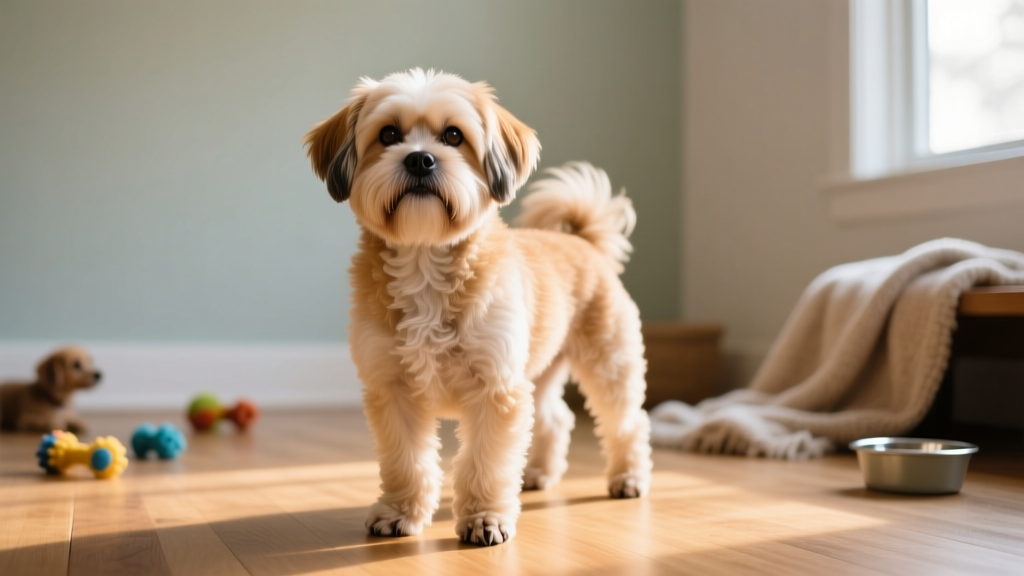
The Shih Tzu Poodle mix — most commonly called the Shih-Poo — is a designer cross between a Shih Tzu and a Toy or Miniature Poodle. Breeders almost exclusively use Toy Poodles (4–6 lb / 1.8–2.7 kg) or Miniature Poodles (10–15 lb / 4.5–6.8 kg) rather than Standard Poodles, keeping the resulting puppies in the small-dog category. The goal is to blend the Shih Tzu's affectionate, laid-back companionship with the Poodle's intelligence and lower-shedding coat.
Neither the American Kennel Club nor the UKC recognizes the Shih-Poo as a standalone breed. It is, by definition, a crossbreed. That means every individual puppy is a genetic lottery — even within the same litter, you can see wide variation in coat texture, body structure, and personality.
Parent Breed Breakdown
| Trait | Shih Tzu | Toy / Miniature Poodle |
|---|---|---|
| Origin | China (ancient imperial companion) | Germany/France (water retriever turned companion) |
| AKC Weight Range | 9–16 lb (4–7 kg) | Toy: 4–6 lb (1.8–2.7 kg); Mini: 10–15 lb (4.5–6.8 kg) |
| Height | 9–10.5 in (23–27 cm) | Toy: ≤10 in (25 cm); Mini: 10–15 in (25–38 cm) |
| Coat | Long, flowing double coat; hair-like | Dense, curly single coat; hair-like |
| Shedding Level | Low (but high grooming need) | Very low |
| Energy | Low to moderate | Moderate to high (especially Miniature) |
| Trainability | Moderate — can be stubborn | Very high — ranked #2 in canine intelligence |
| Lifespan | 10–18 years | 10–18 years |
| Brachycephalic? | Yes (short muzzle) | No (mesocephalic) |
| Key Health Risks | Brachycephalic obstructive airway syndrome (BOAS), eye issues, hip dysplasia | Patellar luxation, progressive retinal atrophy, Addison's disease |
Understanding Shih-Poo Generations: F1, F1B, F2, and Beyond
Generation Guide
F1 (First Generation): Direct cross of a purebred Shih Tzu × purebred Poodle. Maximum genetic diversity, but the most unpredictable appearance and coat type. Puppies in one F1 litter can look dramatically different from each other.
F1B (First-Generation Backcross): An F1 Shih-Poo bred back to a Poodle (usually a Toy Poodle). Produces puppies that are roughly 75% Poodle and 25% Shih Tzu. Tends to yield curlier, lower-shedding coats — which is why many breeders prefer this generation for allergy-conscious buyers.
F2 (Second Generation): Two F1 Shih-Poos bred together. Genetic variation re-expands, meaning coat types and sizes become unpredictable again. Less common in intentional breeding programs.
Multigen (F3+): Shih-Poos bred to Shih-Poos over multiple generations. Over time, traits stabilize somewhat, but without a closed breed registry and rigorous selection, true predictability remains elusive.
Most Shih-Poos sold through small breeders are F1 or F1B. If coat type matters to you (especially for allergy management), ask the breeder which generation they produce and request to see both parents in person. An F1B litter will generally produce more consistently curly, Poodle-dominant coats than an F1 litter.
How Big Will a Shih Tzu Poodle Mix Get?
Size in designer crosses depends heavily on which Poodle variety was used and which parent the puppy takes after more. Here are realistic ranges based on parent breed standards:
| Size Category | Weight | Height at Shoulder | Typical Parentage |
|---|---|---|---|
| Small (Toy Poodle parent) | 8–12 lb (3.6–5.4 kg) | 8–10 in (20–25 cm) | Shih Tzu × Toy Poodle |
| Medium (Mini Poodle parent) | 12–18 lb (5.4–8.2 kg) | 10–13 in (25–33 cm) | Shih Tzu × Miniature Poodle |
Most Shih-Poos land between 8 and 18 lb (3.6–8.2 kg) at maturity. An F1 puppy from a Shih Tzu dam and a Toy Poodle sire could be as small as 7 lb or as large as 14 lb — that 7-pound spread is normal for first-generation crosses. By 12–14 weeks, an experienced breeder or veterinarian can usually estimate adult weight within 1–2 lb based on growth curves and paw size.
Coat Types, Shedding, and the Hypoallergenic Question
This is where the Shih-Poo's genetic lottery becomes most visible. Both parent breeds have hair-like coats (rather than fur), and both are considered low-shedding. But "low-shedding" is not the same as "hypoallergenic," and coat outcomes in a mixed breed vary widely.
Coat Possibilities in Shih-Poos
| Coat Type | Description | Shedding | Most Likely In |
|---|---|---|---|
| Curly (Poodle-dominant) | Tight curls, dense texture | Very low | F1B generations; some F1s |
| Wavy | Loose waves, softer texture | Low | F1 generation (most common outcome) |
| Straight / Silky (Shih Tzu-dominant) | Long, flowing, fine texture | Low to moderate | F1 and F2 generations |
Is the Shih-Poo hypoallergenic? No dog is truly hypoallergenic. Allergens live in dander (dead skin flakes), saliva, and urine — not just shed hair. A curly-coated F1B Shih-Poo will typically release less dander into the environment than a straight-coated F1, making it a better choice for allergy sufferers. But if you have significant dog allergies, spend at least 2–3 hours with the specific puppy or adult dog before committing. Allergists at the ASPCA recommend this trial period.
Grooming Requirements
Regardless of coat type, Shih-Poos require consistent grooming:
- Brushing: Every 1–2 days for curly or wavy coats to prevent matting; every 2–3 days for straight coats. Use a slicker brush (like the Chris Christensen Big G or a comparable medium-firm slicker) followed by a metal comb to check for tangles at the skin level.
- Professional grooming: Every 6–8 weeks for a full clip and bath. Expect to pay $55–$90 per session depending on your area and coat condition. Matted coats may incur a de-matting surcharge of $20–$40.
- Eye area: Both parent breeds are prone to tear staining. Wipe the eye area daily with a damp cloth or a veterinary-approved eye wipe. Keep hair trimmed short around the eyes to prevent irritation.
- Ears: Poodle-influenced coats grow hair inside the ear canal. Ask your groomer or vet whether plucking is necessary for your individual dog — current veterinary dermatology guidance from the Merck Veterinary Manual recommends against routine ear hair plucking unless there's a history of ear infections, as plucking can cause inflammation.
- Nails: Trim every 2–3 weeks. Small dogs often don't wear nails down naturally on indoor surfaces.
Temperament: What to Expect (and What Can Vary)
Shih-Poos generally fall into a friendly, people-oriented temperament range, but the blend of traits from each parent breed creates a spectrum rather than a guarantee.
Best-Case Temperament Profile
A well-socialized Shih-Poo combines the Shih Tzu's cheerful affection with the Poodle's alertness and trainability. These dogs tend to be:
- Deeply bonded to their people — they follow you room to room and thrive on companionship
- Friendly with strangers after a brief warm-up period
- Playful but not hyperactive — happy with indoor play and short walks
- Responsive to positive reinforcement training — they pick up tricks quickly when food-motivated
- Good with respectful children (ages 8+) and other pets when properly socialized
Challenging Scenarios
Some Shih-Poos inherit more of the Shih Tzu's independent streak or the Poodle's sensitivity:
- Stubbornness in housebreaking: Small dogs with Shih Tzu heritage can take 4–8 months to fully housebreak, compared to 2–4 months for larger breeds. Consistent crate training and scheduled potty breaks are essential.
- Separation distress: Both parent breeds form intense bonds. A Shih-Poo left alone for 8+ hours daily may develop separation anxiety — barking, destructive chewing, or inappropriate elimination.
- Sensitivity to noise and chaos: Poodle-influenced temperaments can be reactive to loud environments, making them a poor fit for households with toddlers or frequent loud gatherings.
- Small-dog syndrome: Without consistent boundaries, any small dog can develop resource guarding, excessive barking, or leash reactivity. Use positive reinforcement and counter-conditioning — never punitive methods like shock collars or alpha rolls, which damage trust and increase fear-based aggression.
Exercise Needs
Plan for 30–45 minutes of daily activity, split into two or three sessions. This includes:
- Two 15-minute leash walks (morning and evening)
- Indoor play sessions with puzzle toys or fetch in a hallway
- Optional: supervised off-leash time in a secure yard or small-dog playgroup
Shih-Poos with stronger Shih Tzu and brachycephalic features should not exercise in temperatures above 80°F (27°C) due to breathing limitations. Watch for excessive panting, blue-tinged gums, or collapse — these are emergency signs of heatstroke.
Health Considerations: The Hybrid Vigor Myth vs. Reality
Let's address a common misconception directly: hybrid vigor does not eliminate health risks. The concept of heterosis (hybrid vigor) is real in livestock genetics, where crossing two inbred lines can improve traits like growth rate and fertility. In dogs, the benefit is more modest and specific. Crossbreeds may have reduced risk for conditions caused by recessive genes that are concentrated within a single breed — but they can still inherit any condition that both parent breeds share, as well as conditions common to small dogs generally.
Always ask a breeder for health clearances on both parent dogs. Reputable breeders test for conditions recommended by the Orthopedic Foundation for Animals (OFA) and share results publicly.
Health Conditions to Watch For
| Condition | Inherited From | Prevalence / Notes | Screening / Prevention |
|---|---|---|---|
| Brachycephalic Obstructive Airway Syndrome (BOAS) | Shih Tzu | Affects ~50%+ of brachycephalic breeds to some degree. Shorter muzzle = higher risk. | Choose puppies with longer muzzles; avoid exercise in heat; surgical correction available in severe cases ($2,000–$5,000) |
| Patellar Luxation | Both breeds | Very common in toy breeds; grades I–IV. Grade I–II often managed conservatively; Grade III–IV may need surgery ($1,500–$3,500 per knee). | OFA patella evaluation on parents; maintain healthy weight |
| Progressive Retinal Atrophy (PRA) | Both breeds | Causes gradual blindness; onset typically 3–9 years. No cure. | DNA test available (Optigen prcd-PRA); responsible breeders test parents |
| Hip Dysplasia | Both breeds (lower rate than large breeds) | Estimated 5–10% in Shih Tzus; lower in Toy Poodles | OFA or PennHIP evaluation on parents |
| Dental Disease | Both (small-dog predisposition) | Over 80% of small dogs show periodontal disease by age 3 | Daily tooth brushing; professional cleanings every 1–2 years ($300–$800) |
| Allergies / Atopic Dermatitis | Both breeds | Poodles and Shih Tzus both rank among breeds predisposed to environmental and food allergies | Identify triggers; Apoquel or Cytopoint injections from your vet if needed |
Consult your veterinarian about a preventive care schedule tailored to your Shih-Poo's specific build, muzzle length, and inherited risk factors. Brachycephalic dogs in particular benefit from early airway assessment.
Cost Breakdown: Purchase Price and Ongoing Expenses
Puppy Purchase Price
| Source | Price Range | What to Expect |
|---|---|---|
| Responsible breeder (health-tested parents, F1 or F1B) | $1,200–$3,000 | Health guarantees, OFA clearances, early socialization, take-back clause |
| Casual / backyard breeder | $500–$1,200 | No health testing, minimal socialization, no contract protections |
| Puppy mill / pet store pipeline | $800–$2,500 | High risk of health and behavioral issues; avoid entirely |
| Breed-specific rescue or shelter | $150–$500 (adoption fee) | Adult dogs available; may need behavioral or medical rehabilitation; saves a life |
Designer breed rescues do exist — organizations like Doodle Rescue Collective and IDOG Rescue occasionally take in Shih-Poos or similar small Poodle mixes. Check Petfinder and filter by Shih Tzu and Poodle mix to find available dogs near you.
First-Year Estimated Costs
| Expense Category | Estimated Cost |
|---|---|
| Puppy purchase / adoption | $150–$3,000 |
| Initial vet visits (3 puppy exams, DHPP/rabies vaccines, fecal tests) | $300–$600 |
| Spay/neuter | $250–$600 |
| Grooming (6–8 sessions/year) | $350–$650 |
| High-quality small-breed food (AAFCO complete & balanced) | $250–$450 |
| Preventive medications (heartworm, flea/tick) | $150–$300 |
| Supplies (crate, harness, bed, toys, grooming tools) | $200–$400 |
| Pet insurance (optional but recommended) | $350–$600/year |
| Total first year (excluding purchase) | $1,850–$3,600 |
Annual ongoing costs after the first year typically range from $1,500–$2,800, depending on grooming frequency, veterinary needs, and whether you carry pet insurance.
Who Is the Shih-Poo Best Suited For?
Based on their size, energy, and temperament profile, Shih-Poos tend to thrive in these situations:
- Apartment and condo dwellers: Their small size and moderate energy make them excellent apartment dogs, provided they get daily walks. They are not typically excessive barkers, though some individuals inherit the Shih Tzu's alert-barking tendency.
- Older adults or retirees: A Shih-Poo offers companionship without demanding intense physical activity. Their lap-dog instincts and manageable exercise needs pair well with a less active lifestyle.
- Families with older children (8+): Shih-Poos can be wonderful family dogs, but their small size makes them fragile around toddlers who may drop, squeeze, or step on them. Supervision is essential with any young child.
- First-time dog owners: Their manageable size and generally eager-to-please temperament make them a reasonable first dog — as long as the owner commits to consistent housebreaking routines and positive reinforcement training from day one.
- People who work from home or have flexible schedules: These dogs do not handle long daily absences well. If you're gone 8+ hours, consider a dog walker or daycare, or reconsider whether a companion breed is the right fit.
Who should look elsewhere: If you want a hiking partner for rugged trails, need a dog that tolerates long solo hours, have very young children, or want a guaranteed non-shedding coat without variability, a Shih-Poo may not be the best match. Consider a purebred Poodle for more predictable coat and temperament outcomes.
Frequently Asked Questions
Is a Shih-Poo a good dog for allergy sufferers?
A curly-coated F1B Shih-Poo is one of the better options among small mixed breeds for mild allergy sufferers, but no dog is truly hypoallergenic. Spend time with the specific dog before committing, and consider consulting an allergist for testing.
How long do Shih-Poos live?
Most Shih-Poos live 12–16 years, with some reaching 18 years. Both parent breeds are known for longevity. Maintaining a healthy weight, keeping up with dental care, and addressing health issues early are the biggest factors in extending lifespan.
Are Shih-Poos easy to train?
They are moderately easy to train using positive reinforcement (treats, praise, clicker training). Poodle-influenced Shih-Poos tend to learn faster, while Shih Tzu-dominant individuals may require more patience and repetition. Housebreaking is the most common training challenge — expect 4–8 months for full reliability.
Do Shih-Poos bark a lot?
Most Shih-Poos are moderate barkers — they'll alert you to someone at the door but aren't typically constant barkers. Early training to manage alert barking (rewarding quiet behavior after the initial bark) helps prevent the habit from becoming excessive.
Can Shih-Poos be left alone during the day?
Adult Shih-Poos can typically handle 4–6 hours alone if properly exercised beforehand and given enrichment toys (food-stuffed Kongs, snuffle mats). Beyond 6 hours, arrange a midday dog walker. Puppies under 6 months should not be left alone for more than 2–3 hours.
What should I feed a Shih-Poo?
Choose an AAFCO-approved small-breed formula with named protein sources (chicken, lamb, salmon) as the first ingredient. Most adult Shih-Poos eat 1/3 to 3/4 cup of dry kibble daily, split into two meals, depending on their weight and activity level. Consult your veterinarian for specific caloric recommendations based on your dog's body condition score (BCS).
Priya Sutaria
All our authors care for dogs every day — read more of their work on the authors page.