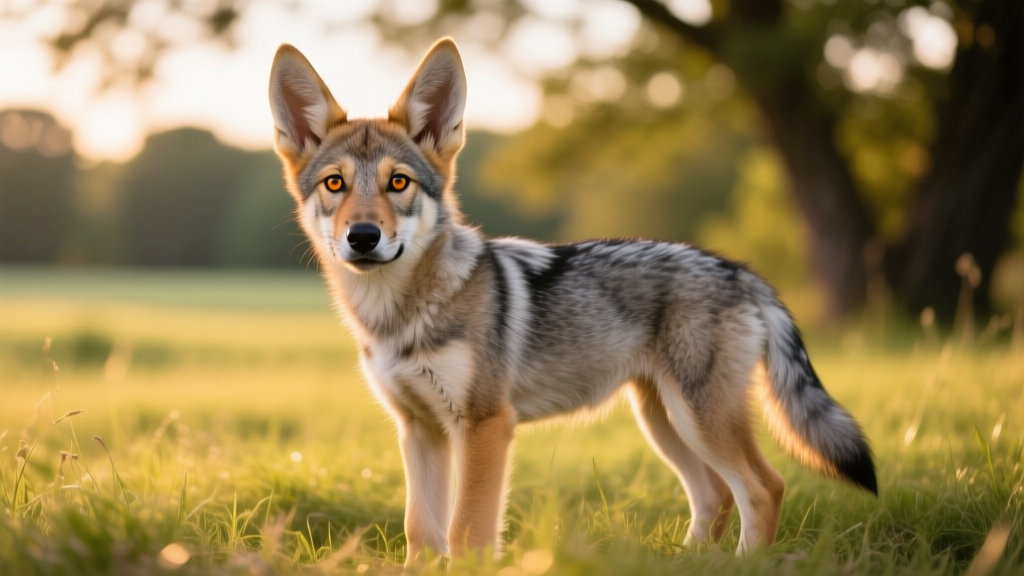
Rhodesian Ridgeback Lab Mix: Complete Breed Profile & Care Guide
Everything about the Rhodesian Ridgeback Lab mix: size, temperament, coat types, health risks, grooming needs.

The Rhodesian Ridgeback Lab mix — sometimes called a Ridgeback Lab or simply a Ridgeback-Labrador cross — pairs one of Africa's most athletic hounds with America's most popular family dog. The result can be a stunning, capable companion, but this is not a mix for first-time owners or apartment dwellers. With the Ridgeback's independence and prey drive colliding with the Lab's exuberant energy, prospective owners need a clear-eyed picture of what they're signing up for before bringing one home.
This guide breaks down the parent breeds, explains why individual puppies in the same litter can look and behave completely differently, and gives you the real numbers on size, cost, and health screening so you can make an informed decision.
Parent Breed Breakdown: Rhodesian Ridgeback Meets Labrador Retriever
Understanding a mixed-breed dog starts with understanding each parent. The Rhodesian Ridgeback and the Labrador Retriever occupy nearly opposite ends of the canine temperament spectrum, which is exactly why their offspring can be so unpredictable.
| Trait | Rhodesian Ridgeback | Labrador Retriever |
|---|---|---|
| AKC Group | Hound | Sporting |
| Weight Range | 70–85 lb (32–39 kg) | 55–80 lb (25–36 kg) |
| Height | 24–27 in (61–69 cm) | 21.5–24.5 in (55–62 cm) |
| Lifespan | 10–12 years | 11–13 years |
| Coat | Short, dense, sleek | Short, dense, water-resistant double coat |
| Energy Level | Moderate-high; athletic bursts | High; sustained stamina |
| Temperament | Independent, aloof with strangers, strong prey drive | Outgoing, eager to please, highly social |
| Trainability | Moderate; responds to respect-based methods | High; excels with positive reinforcement |
| Guarding Instinct | Strong — natural watchdog | Low — more likely to greet intruders warmly |
The Rhodesian Ridgeback was originally bred in southern Africa to track and hold lions at bay until hunters arrived. That heritage produces a dog that is courageous, physically powerful, and deeply suspicious of anything unfamiliar. Ridgebacks bond intensely with their family but rarely extend that warmth to strangers without careful socialization.
The Labrador Retriever, by contrast, was developed in Newfoundland and refined in England as a gun dog and retriever. Labs are famously biddable, food-motivated, and socially indiscriminate — they love everyone. This temperamental gap between the two parents is the single biggest source of variability in the mix.
Generations Explained: F1, F1B, and Multigen Ridgeback Labs
- F1 (First Generation): One purebred Rhodesian Ridgeback × one purebred Labrador Retriever. Maximum genetic diversity, but traits are the least predictable. Puppies in the same litter may look and behave very differently.
- F1B (First Generation Backcross): An F1 Ridgeback Lab × one of the parent breeds (usually the Lab, to soften temperament). Slightly more predictable, but still variable.
- F2 (Second Generation): Two F1 Ridgeback Labs bred together. Trait expression becomes more scattered — you may get puppies that look almost entirely like one grandparent breed.
- Multigen (F3+): Multiple generations of Ridgeback Lab breeding. Rare for this particular cross. Some trait stabilization occurs, but true predictability requires many more generations than most designer breed programs achieve.
Most Ridgeback Lab mixes you'll encounter are F1 crosses, often the accidental or intentional result of a breeder pairing two dogs that happened to be available. Unlike the well-established Labradoodle or Goldendoodle lines, there is no major registry or breed club tracking multigen Ridgeback Lab lines, so finding anything beyond F1 or F1B is uncommon. Always ask the breeder which generation a litter is and request documentation of both parents' pedigrees.
Size, Weight, and Physical Appearance
Because both parent breeds are large dogs, the Ridgeback Lab mix will be a substantial animal — but exactly how large depends on which parent's growth genes dominate and whether the Lab parent is from a show line (heavier, stockier) or a field line (leaner, lighter).
| Measurement | Small End | Large End |
|---|---|---|
| Adult Weight | 55 lb (25 kg) | 90 lb (41 kg) |
| Adult Height (at shoulder) | 22 in (56 cm) | 27 in (69 cm) |
| Growth Plateau | Most reach full height by 12–14 months; fill out to adult weight by 18–24 months | |
Males typically land toward the upper end of these ranges, females toward the lower. A female from a smaller field-line Lab mother and an average Ridgeback father might top out around 60 lb (27 kg), while a male from a large show-line Lab and a heavy Ridgeback could push past 85 lb (39 kg).
Physically, expect a well-muscled, athletic build. The head shape varies — some inherit the Ridgeback's broader, more angular skull with a defined stop, while others show the Lab's softer, more rounded features. Ears may be pendant like a Lab's or slightly larger and more hound-like. The distinctive dorsal ridge of hair that gives the Ridgeback its name may or may not appear; it's controlled by a dominant gene, so roughly half of F1 puppies inherit a visible ridge.
Coat Types, Colors, and Shedding Reality
Neither parent breed is hypoallergenic, and the Ridgeback Lab mix is not low-shedding. If you have dog allergies or a strict no-fur-on-the-furniture policy, this is not the cross for you.
Coat texture: Most Ridgeback Labs inherit a short, dense coat similar to both parents. Some lean toward the Lab's double coat — slightly longer guard hairs over a soft undercoat — while others get the Ridgeback's sleeker, single-layer coat. The double-coated variants shed more heavily and blow their undercoat seasonally (typically spring and fall).
Colors: Expect a range from the Ridgeback's signature wheaten (light tan to red wheaten) through the Lab's black, yellow, and chocolate. Common outcomes include:
- Solid black (if the Lab parent carries dominant black)
- Wheaten or fawn with possible black masking on the muzzle
- Chocolate or liver
- Yellow/cream with varying saturation
- Brindle is rare but possible if the Lab line carries the gene
Shedding level: Moderate to high year-round, with seasonal spikes. Dogs inheriting the Lab's double coat will shed noticeably more. Plan on vacuuming at least twice weekly and daily brushing during coat-blowing seasons.
Temperament: Best-Case, Challenging, and What Falls Between
This is where the Ridgeback Lab mix demands the most honest assessment. You are blending two dogs with fundamentally different social strategies, and the result depends heavily on which parent's temperament genes are more strongly expressed — something you cannot predict in an F1 puppy.
Best-Case Scenario
The dog inherits the Lab's sociability and trainability with the Ridgeback's calm confidence and lower reactivity. You get an athletic, eager-to-work companion who is friendly with visitors, reliable off-leash with proper training, and settles well in the house. This dog excels at hiking, canicross, dock diving, and advanced obedience.
Challenging Scenario
The dog inherits the Ridgeback's wariness and prey drive without the Lab's biddability. You get a powerful, fast dog that is aloof with strangers, reactive to other dogs (particularly same-sex dogs, a known Ridgeback tendency), and difficult to recall around wildlife or livestock. Without early, intensive socialization, this dog can develop fear-based reactivity or resource guarding.
What Most Owners Actually Get
Most Ridgeback Labs land somewhere in the middle: friendly with family, cautiously polite with strangers, moderately reactive to squirrels and deer, and responsive to training when motivated. Food motivation from the Lab side is usually strong enough to make positive reinforcement training effective, but don't expect the hair-trigger obedience of a pure Lab. Ridgeback-influenced dogs tend to think before they comply — they'll do what you ask if they see a reason to.
- Prey drive: Moderate to high. Cats, rabbits, and small wildlife may trigger chase behavior. Early exposure to household cats can help, but never leave unsupervised.
- Dog-dog socialization: Ridgebacks can be same-sex aggressive. Start puppy socialization classes by 10–12 weeks and maintain regular, positive dog-dog interactions through adolescence (up to 24 months).
- Separation tolerance: Both breeds can develop separation distress if left alone excessively. Plan for no more than 4–5 hours alone for adult dogs; puppies need more frequent breaks.
- Vocalization: Typically low to moderate. Neither breed is a nuisance barker, but Ridgebacks can produce a distinctive, low "roo-roo" vocalization when excited.
Exercise and Mental Stimulation Requirements
This is a high-energy athletic cross that needs genuine daily work — not just a walk around the block.
| Life Stage | Physical Exercise | Mental Stimulation |
|---|---|---|
| Puppy (3–12 months) | 5 minutes per month of age, twice daily (structured play, not forced running) | 15–20 min: sniffing games, basic training, puzzle feeders |
| Young Adult (1–3 years) | 60–90 min: running, hiking, swimming, fetch | 20–30 min: scent work, advanced tricks, agility foundations |
| Adult (3–8 years) | 60–90 min: varied terrain, swimming preferred for joint health | 20–30 min: food puzzles, training refreshers, nosework |
| Senior (8+ years) | 30–60 min: shorter, gentler walks; swimming excellent | 15–20 min: gentle puzzles, short training sessions |
Swimming is particularly valuable for this cross because both parent breeds enjoy water (the Lab especially), and it provides full-body conditioning without joint impact. If you have access to a safe swimming area, incorporate it 2–3 times per week.
Mental stimulation is not optional. A bored Ridgeback Lab mix will find its own entertainment — typically by destroying furniture, digging under fences, or counter-surfing. Invest in durable puzzle toys like the Kong Wobbler or Outward Hound Nina Ottosson puzzles, and rotate them to maintain novelty.
Health Considerations: Hybrid Vigor vs. Reality
Let's address a common misconception directly: hybrid vigor does not guarantee a healthier dog. The term "heterosis" refers to the potential reduction in recessive genetic disorders when two unrelated gene pools combine. It does not eliminate conditions that both parent breeds share, nor does it protect against structural issues influenced by multiple genes.
Both the Rhodesian Ridgeback and the Labrador Retriever carry specific hereditary health risks, and any mix can inherit from either side. According to the Merck Veterinary Manual, the following conditions are relevant to this cross:
| Condition | Source Breed | Prevalence | Screening Test |
|---|---|---|---|
| Hip Dysplasia | Both | ~12% Labs, ~6% Ridgebacks (OFA data) | OFA or PennHIP radiograph |
| Elbow Dysplasia | Both (higher in Labs) | ~11% Labs | OFA elbow radiograph |
| Dermoid Sinus | Ridgeback | ~5–8% of Ridgebacks | Physical exam at birth; may require imaging |
| Progressive Retinal Atrophy (PRA) | Both | Variable by line | DNA test (prcd-PRA); CERF eye exam |
| Exercise-Induced Collapse (EIC) | Labrador | ~5% carriers, ~2% affected | DNA test (EIC gene) |
| Centronuclear Myopathy (CNM) | Labrador | Low but present in some lines | DNA test |
| Gastric Dilatation-Volvulus (Bloat) | Both (deep-chested breeds) | Lifetime risk ~5–10% for deep-chested large breeds | No screening; preventive gastropexy may be discussed with your vet |
| Obesity | Labrador (genetic predisposition) | Labs have a known POMC gene variant linked to food motivation | Body Condition Score monitoring; DNA test available |
What responsible breeders screen for: At minimum, both parents should have OFA hip and elbow certifications, a current CERF eye exam, and DNA tests for PRA and EIC (Lab side) and dermoid sinus evaluation (Ridgeback side). If a breeder cannot produce these results, walk away.
Bloat awareness is critical. Both breeds are deep-chested, placing this mix at elevated risk for gastric dilatation-volvulus (GDV), a life-threatening emergency. Feed two smaller meals rather than one large meal, avoid vigorous exercise for 60 minutes before and after eating, and know the signs: distended abdomen, unproductive retching, restlessness, and rapid breathing. GDV requires immediate emergency veterinary surgery — survival drops sharply with each hour of delay.
Consult your veterinarian about a preventive gastropexy (stomach tacking) if your Ridgeback Lab mix will be spayed or neutered. This procedure, performed at the same time as the alteration, significantly reduces GDV risk and is increasingly recommended for deep-chested breeds. Your vet can advise whether it's appropriate for your individual dog.
Grooming and Maintenance
Grooming needs for this mix are straightforward compared to many designer breeds, but "low maintenance" does not mean "no maintenance."
- Brushing: 2–3 times weekly with a rubber curry brush (like the Kong ZoomGroom) or a bristle brush. During seasonal shedding, add a de-shedding tool such as the Furminator for large short-haired breeds, used once weekly.
- Bathing: Every 6–8 weeks or as needed. Use a gentle, canine-specific shampoo — human shampoo disrupts the skin's acid mantle. Earthbath or Burt's Bees oatmeal shampoos are solid mid-range options ($12–$18 per bottle).
- Nail trimming: Every 2–3 weeks. If you hear clicking on hard floors, nails are too long. Overgrown nails alter gait and contribute to joint stress over time.
- Ear care: Check weekly. Floppy-eared variants (Lab-influenced) are more prone to ear infections. Clean with a vet-recommended ear wash (e.g., Epi-Otic Advanced, ~$15) if you see wax buildup or detect odor.
- Dental: Daily tooth brushing with enzymatic canine toothpaste (Virbac C.E.T. or similar, ~$10–$14). Annual professional dental cleanings under anesthesia typically cost $300–$700 depending on your region and whether extractions are needed.
Training Approach and Socialization Timeline
Force-free, positive reinforcement methods are the only appropriate training framework for this cross. Ridgebacks are sensitive dogs that shut down under harsh correction, and Labs are soft-mouthed, food-motivated dogs that thrive on reward-based learning. Combining aversive tools like shock collars or prong collars with a dog that may inherit the Ridgeback's wariness is a recipe for fear-based aggression.
Socialization timeline (critical windows):
- 3–5 weeks: Breeder should be handling puppies daily, exposing them to varied surfaces, sounds, and gentle human interaction.
- 8–12 weeks: After you bring puppy home, expose to 10–15 new people per week (different ages, ethnicities, clothing styles, mobility aids). Keep all experiences positive — let the puppy approach at their own pace.
- 12–16 weeks: Enroll in a force-free puppy socialization class. This is your last prime window for building confidence around unfamiliar dogs.
- 4–12 months: Continue structured exposures: different environments (urban streets, parks, outdoor cafés), novel objects, car rides, grooming handling. Adolescent Ridgeback-influenced dogs may go through a "fear period" around 6–10 months — don't force interactions, but maintain gentle exposure.
- 12–24 months: Social maturity. By now, your dog's adult temperament is largely set. Continue regular social outings to maintain skills.
Cost Breakdown: Purchase Price and Annual Care
| Expense Category | Low End | High End |
|---|---|---|
| Puppy from responsible breeder | $800 | $2,000 |
| Adoption from rescue/shelter | $150 | $500 |
| First-year veterinary (vaccines, spay/neuter, wellness) | $800 | $1,500 |
| Annual veterinary (adult, routine) | $500 | $900 |
| Food (high-quality large-breed kibble or equivalent) | $600/year | $1,100/year |
| Pet insurance (large breed, accident + illness) | $480/year | $900/year |
| Training (group classes, 6–8 week sessions) | $200 | $600 per session |
| Estimated first-year total | $3,000 | $6,000+ |
Breeder availability: Dedicated Ridgeback Lab breeders are uncommon. Most F1 litters come from small-scale hobby breeders or accidental breedings. Check AKC Marketplace for listings, but verify health testing independently through OFA's public database (ofa.org). Never purchase from a breeder who cannot provide OFA numbers for both parents.
Rescue availability: Ridgeback Lab mixes appear in large-breed rescues and general shelters, particularly in the southern and western United States where both parent breeds are popular. Rhodesian Ridgeback-specific rescues (such as Rhodesian Ridgeback Rescue, Inc.) sometimes take in mixes as well. Adoption is a legitimate, often more affordable path — and you'll typically get a dog that has been temperament-evaluated and spayed/neutered already.
Who This Mix Suits Best — And Who Should Look Elsewhere
Ideal owner profile:
- Active individual or family with a securely fenced yard (minimum 5–6 feet; Ridgebacks can clear 4-foot fences)
- Experience with large, strong breeds — this is not a first-dog recommendation
- Willing to commit to 12–18 months of structured training and socialization
- Enjoys outdoor activities: hiking, trail running, swimming, camping
- Home during the day or able to arrange midday breaks (dog walker, daycare)
- Comfortable with a dog that may be reserved with strangers and selective with other dogs
Not a good fit for:
- Apartment living without dedicated outdoor access and time commitment
- First-time dog owners unfamiliar with large-breed training challenges
- Homes with small pets (cats, rabbits, chickens) unless the dog is raised with them and closely managed
- Families wanting a universally friendly, greet-everyone dog — the Ridgeback influence can produce a more discriminating temperament
- Owners who work long hours with no pet care support
Frequently Asked Questions
What two breeds make up the Ridgeback Lab mix?
The Ridgeback Lab mix is a cross between a purebred Rhodesian Ridgeback and a purebred Labrador Retriever. It is a designer or mixed breed, not a recognized breed by the AKC, though some mixed-breed registries like the Designer Dogs Kennel Club (DDKC) may register them.
How big will a Ridgeback Lab mix get?
Adult weight typically ranges from 55 to 90 lb (25–41 kg) and height from 22 to 27 inches at the shoulder. Males tend to be larger. The exact size depends on which parent's genes are more strongly expressed and the size of the individual parent dogs used in the breeding.
What will the temperament be like?
Temperament varies significantly between individual dogs. Expect a range from Lab-like outgoing friendliness to Ridgeback-like wariness. Most fall in the middle: loyal and playful with family, cautious but not aggressive with strangers, and moderately high in prey drive. Early socialization is the strongest factor you can control.
Is the Ridgeback Lab mix hypoallergenic or low-shedding?
No. Both parent breeds are moderate to heavy shedders, and the Ridgeback Lab mix inherits that trait. There is no hypoallergenic gene present in either parent breed. If you need a low-shedding dog, look at Poodle or Portuguese Water Dog crosses instead.
What health issues might this mix inherit?
The primary concerns are hip and elbow dysplasia, progressive retinal atrophy, exercise-induced collapse (from the Lab side), dermoid sinus (from the Ridgeback side), and gastric dilatation-volvulus (bloat), which affects both deep-chested parent breeds. Reputable breeders screen both parents for these conditions. Always consult your veterinarian about a health monitoring plan tailored to your dog.
How much does a Ridgeback Lab mix cost?
From a breeder, expect to pay $800–$2,000 for a puppy, depending on the breeder's reputation, health testing, and location. Adoption from a rescue typically costs $150–$500. First-year total costs (including veterinary care, food, supplies, and training) generally range from $3,000 to $6,000+.
Can Ridgeback Lab mixes live with cats?
Some can, particularly if raised with cats from puppyhood, but the Ridgeback's prey drive makes this an uncertain arrangement. Never leave a Ridgeback Lab mix unsupervised with cats or small animals, even if they've coexisted peacefully for months. Prey drive can trigger suddenly in response to running or squeaking behavior.
Do Ridgeback Lab mixes have the ridge on their back?
About 50% of F1 puppies inherit the characteristic ridge — a strip of hair along the spine that grows in the opposite direction. The ridge is controlled by a dominant gene, so if the Ridgeback parent carries it, roughly half the litter will show it. The absence of a ridge does not indicate any health problem.
Dr. Hannah Wickes
All our authors care for dogs every day — read more of their work on the authors page.