Male Yorkie: Complete Breed Profile, Traits & Care Guide
Everything you need to know about the male Yorkie — temperament, health risks, grooming, training tips, costs.
The Male Yorkie at a Glance
The Yorkshire Terrier — affectionately known as the Yorkie — has held a spot among the American Kennel Club's top 15 most popular breeds for over a decade, and for good reason. When prospective owners search for a male Yorkie, they're usually drawn by the breed's bold personality packed into a tiny frame. But owning a male Yorkshire Terrier comes with specific behavioral tendencies, health considerations, and grooming demands that differ subtly from their female counterparts.
Originating in the mid-1800s in Yorkshire, England, these dogs were initially bred by working-class weavers and miners to catch rats in textile mills and coal mines. The breed was refined using a mix of now-extinct Clydesdale Terriers, Paisley Terriers, and likely Maltese and Skye Terrier bloodlines. By 1885, the AKC had officially recognized the Yorkshire Terrier, and the breed transitioned from industrial mouser to aristocratic lapdog within a generation.
Male Yorkies typically weigh 4–7 lb (1.8–3.2 kg) and stand 7–8 inches (18–20 cm) at the shoulder. Their lifespan ranges from 11 to 15 years, with many living into their late teens when given proactive veterinary care. They belong to the toy size class and carry themselves with a confidence that belies their diminutive stature.
| Attribute | Detail |
|---|---|
| Size Class | Toy |
| Weight (Male) | 4–7 lb / 1.8–3.2 kg |
| Height | 7–8 in / 18–20 cm |
| Lifespan | 11–15 years |
| Coat Type | Long, silky, single-layer (hair, not fur) |
| Energy Level | Moderate |
| Grooming Needs | High — daily brushing, professional grooming every 4–6 weeks |
| Apartment Friendly | Excellent |
| First-Time Owner Fit | Good with commitment to grooming and training |
Temperament & Personality: What Makes the Male Yorkie Tick
Male Yorkies are not wallflowers. The AKC breed standard describes them as "bold, confident, and courageous" — traits that show up daily in a male Yorkie's behavior. Here are the core personality traits you'll encounter:
- Territorial confidence: A male Yorkie will announce visitors, delivery drivers, and passing dogs with sharp, persistent barking. This isn't nervousness — it's genuine watchdog instinct. Males tend to be more vocal and territory-marking than females, especially if left intact.
- Velcro attachment: Male Yorkies often bond intensely with one primary person. You'll find your male Yorkie following you from room to room, curling up against your leg while you work, and showing visible distress during separations longer than a few hours.
- Feisty assertiveness: Despite weighing less than a bag of sugar, male Yorkies frequently challenge dogs ten times their size at the dog park. This "big dog in a small body" syndrome requires active management on leash to prevent dangerous confrontations.
- Playful persistence: Well into their senior years, male Yorkies retain a playful streak. Expect short, enthusiastic play sessions — a 5-minute game of tug or chasing a flirt pole — followed by immediate nap demands.
- Stubborn intelligence: Yorkies rank 34th in Stanley Coren's The Intelligence of Dogs, placing them in the "above average working intelligence" tier. They learn commands quickly but may choose to ignore them if something more interesting captures their attention. A male Yorkie's terrier drive means squirrels often win over "come."
Compared to female Yorkies, males tend to be slightly more affectionate and demonstrative but also more prone to marking behavior and same-sex dog aggression if not neutered. Neutering typically reduces marking by 80–90% when performed before sexual maturity (around 6 months).
Physical Characteristics & Coat Details
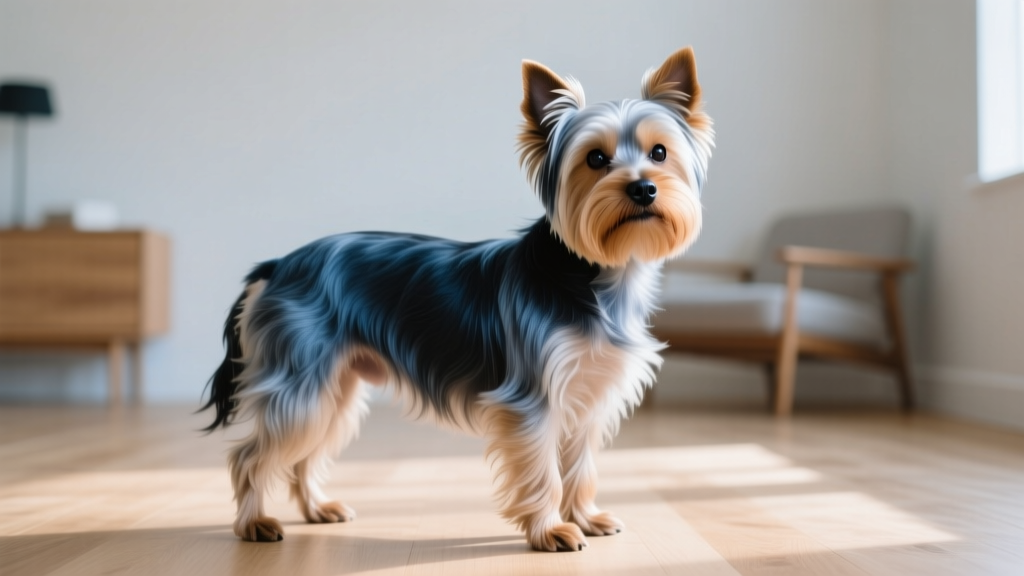
The male Yorkie's appearance is defined by a compact, well-proportioned body with a level topline and a tail carried slightly higher than the back (natural tails are now standard in many countries, as the AKC no longer requires docking as of recent standard revisions).
The coat is the breed's signature feature: fine, glossy, and straight — more similar to human hair than typical canine fur. This single-layer coat means Yorkies shed minimally and are often cited as a better option for allergy sufferers, though no dog is truly hypoallergenic. The classic coloration is a dark steel blue saddle over the body with rich tan on the face, chest, and legs. Puppies are born black and tan, with the adult coloring emerging gradually between 12 and 24 months.
Male Yorkies may develop a slightly thicker coat and more substantial ruff around the neck compared to females, though individual variation is significant. The average male weighs between 5–7 lb (2.3–3.2 kg), though "teacup" Yorkies (under 4 lb / 1.8 kg) exist — these are not a separate breed classification and come with substantially elevated health risks including hypoglycemia and fragile bones.
Exercise & Activity Requirements
A common misconception is that toy breeds don't need real exercise. Male Yorkies are terriers at heart, and insufficient activity leads to pent-up energy expressed through excessive barking, destructive chewing, and hyperactivity indoors.
| Age Group | Minutes/Day | Activity Types |
|---|---|---|
| Puppy (3–12 months) | 15–25 minutes | Short leash walks (5 min per month of age), indoor play sessions, socialization outings |
| Adult (1–8 years) | 30–45 minutes | Two 15-min leash walks, 10–15 min interactive play (fetch, flirt pole, puzzle toys) |
| Senior (8+ years) | 20–30 minutes | Gentle leash walks, low-impact indoor play, sniffari enrichment walks |
A male Yorkie's exercise should be split across at least two sessions daily. Morning walks help burn off overnight energy and reduce marking behavior inside the home. Evening activity supports digestion and promotes better sleep. Avoid exercising in extreme temperatures — Yorkies lack an insulating undercoat and are vulnerable to both hypothermia (below 40°F / 4°C) and heat exhaustion (above 85°F / 29°C).
Common Health Issues in Male Yorkies
The Yorkshire Terrier is generally a long-lived breed, but several conditions appear with notable frequency. As always, consult your veterinarian for diagnosis and treatment — this information is meant to help you recognize symptoms early and prepare for veterinary visits.
| Condition | Prevalence | Typical Onset | Key Signs |
|---|---|---|---|
| Patellar Luxation | ~10–15% of Yorkies (OFA data) | 6 months – 4 years | Intermittent "skipping" gait, sudden hind leg holding, reluctance to jump |
| Tracheal Collapse | Estimated 20–30% in toy breeds by age 10 | 4–8 years (progressive) | Honking cough, exercise intolerance, gagging after drinking water |
| Portosystemic Shunt (PSS) | Yorkies are among the most predisposed breeds; ~2–5% incidence | Congenital, signs often before 1 year | Stunted growth, disorientation after meals, seizures, head pressing |
| Dental Disease (Periodontitis) | Over 80% of toy breeds by age 3 (AVMA estimates) | 1–3 years | Bad breath, red/swollen gums, tooth loss, reluctance to eat hard kibble |
| Hypoglycemia | Most common in puppies under 4 months and teacup varieties | Birth – 6 months | Lethargy, trembling, disorientation, collapse, seizures |
Male Yorkies specifically face a higher risk of perineal hernias compared to females — a condition where abdominal contents push through weakened pelvic muscles near the anus. Intact males over 7 years are most at risk, and neutering significantly reduces incidence. Additionally, cryptorchidism (retained testicles) occurs at a higher rate in Yorkies than the general dog population, affecting an estimated 5–10% of males and requiring surgical correction to prevent testicular cancer.
The Merck Veterinary Manual notes that tracheal collapse is particularly prevalent in Yorkshire Terriers, and using a harness instead of a collar for leash walks is a critical preventive measure to reduce pressure on the trachea.
Grooming: Tools, Schedule & Costs
A male Yorkie's coat requires more maintenance than nearly any other breed in the toy group. The hair-like coat grows continuously and mats easily if neglected. Here's a practical grooming schedule:
| Task | Frequency | Tools Needed | Estimated Cost |
|---|---|---|---|
| Full-body brushing | Daily (long coat) or 3x/week (puppy cut) | Pin brush, stainless steel comb, detangling spray | $15–$25 for tool set |
| Professional grooming | Every 4–6 weeks | Groomer handles | $50–$90 per session |
| Bathing | Every 2–3 weeks | Oatmeal-based dog shampoo, conditioner | $10–$18 per bottle (lasts 4–6 baths) |
| Ear cleaning | Weekly | Veterinary ear cleanser, cotton balls | $8–$15 per bottle |
| Nail trimming | Every 2–3 weeks | Guillotine or scissor-style small-dog nail clippers | $8–$15 for clippers |
| Teeth brushing | Daily (ideal) or minimum 3x/week | Dog-specific enzymatic toothpaste, finger brush or small head brush | $6–$12 per tube |
| Eye area cleaning | Daily | Pre-moistened eye wipes or damp cotton pad | $8–$14 per pack |
Most male Yorkie owners opt for a "puppy cut" (uniform 1–2 inch length all over) to drastically reduce grooming time. If you prefer the traditional long show coat, expect to spend 15–20 minutes daily on brushing alone and budget for professional grooming every 4 weeks without exception.
Training & Intelligence
Male Yorkies are trainable but require a specific approach. Their terrier heritage means they respond poorly to harsh corrections or repetitive drilling. Force-free, positive reinforcement methods — using small, high-value treats (think pea-sized pieces of freeze-dried chicken or lamb lung) and enthusiastic praise — produce the best results.
Trainability rating: 3.5/5 — Above average intelligence with moderate willingness to comply. They learn new commands in 15–25 repetitions but need ongoing motivation to perform reliably.
Key training priorities for male Yorkies:
- Housebreaking: Yorkies are notoriously difficult to house-train, with males taking longer than females on average. Expect 4–8 months of consistent crate training and scheduled potty breaks (every 1–2 hours for puppies). Indoor potty systems like the PuppyGoHere litter box are popular among apartment-dwelling Yorkie owners.
- Bark management: Rather than trying to eliminate barking entirely (unrealistic for a terrier), train a "quiet" cue. Reward silence after 2–3 barks with a high-value treat. Pair this with desensitization to doorbell sounds and passing pedestrians.
- Leash manners: Use a well-fitted H-harness (brands like Ruffwear Front Range in XXS or Blue-9 Balance Harness in mini) to protect the trachea. Train loose-leash walking using direction-change rewards — every time your Yorkie looks at you while walking, mark and reward.
- Socialization: Expose your male Yorkie to diverse dogs, people, surfaces, and sounds between 8 and 16 weeks. Poorly socialized male Yorkies are at high risk for fear-based reactivity and resource guarding later in life.
Family Suitability: Kids, Pets & Living Spaces
- Apartments: Excellent fit. Small size and moderate exercise needs suit condo/apartment life. Manage barking with training and white noise machines for shared walls.
- Young children (under 8): Not recommended. A male Yorkie's fragile frame (bones can fracture from a toddler's fall or rough handling) makes this pairing risky. Supervised interaction only.
- Older children (8+): Good fit when children are taught gentle handling and respect for the dog's space.
- Other dogs: Variable. Male Yorkies can be assertive with other male dogs, particularly those of similar size. Early socialization and neutering improve multi-dog household success. Introduce carefully with larger dogs — a playful swipe from a Labrador can seriously injure a 6 lb Yorkie.
- Cats: Generally good if raised together. Yorkies' prey drive may trigger chasing behavior with smaller pets like hamsters or birds.
Cost of Owning a Male Yorkie
Budgeting realistically prevents the sticker shock that leads to surrendered pets. Here's a breakdown based on 2026 market data:
| Expense Category | Cost Range |
|---|---|
| Puppy from responsible AKC breeder (health-tested parents) | $1,500 – $3,500 |
| Adoption/rescue fee | $200 – $600 |
| First-year veterinary care (vaccines, spay/neuter, microchip, wellness exams) | $600 – $1,200 |
| Annual veterinary care (adult) | $400 – $800 |
| Grooming (professional, every 5 weeks = ~10 sessions/year) | $500 – $900/year |
| Food (premium small-breed kibble or balanced fresh diet) | $240 – $480/year |
| Pet insurance (accident + illness, e.g., Trupanion, Healthy Paws) | $360 – $720/year ($30–$60/month) |
| Supplies (harness, crate, bed, toys, grooming tools — first year) | $200 – $400 |
| Dental cleaning (annual professional, often needed by age 3) | $300 – $700 per procedure |
Estimated first-year total: $3,800 – $7,500 (purchased from breeder) or $2,500 – $5,000 (adopted). Ongoing annual cost: $1,500 – $3,500 after the first year.
When looking for a male Yorkie puppy, prioritize breeders who perform OFA (Orthopedic Foundation for Animals) evaluations for patellar luxation, conduct bile acid testing for liver shunts, and provide a written health guarantee with a take-back clause. Rescue organizations like the Yorkshire Terrier Club of America's rescue network also place adult male Yorkies needing new homes — an excellent option for owners who want to skip the puppy housebreaking phase.
Frequently Asked Questions
Is a male Yorkie right for a first-time dog owner?
Yes, with caveats. Male Yorkies suit first-time owners who are home frequently (they struggle with long solo hours), willing to commit to daily grooming or regular professional appointments, and patient with a 4–8 month housebreaking process. If you work 10-hour days away from home or want a low-maintenance dog, consider a different breed.
Do male Yorkies mark inside the house?
Intact males have a strong instinct to urine-mark vertical surfaces. Neutering before 6–9 months of age reduces or eliminates this behavior in approximately 80–90% of cases. If marking persists after neutering, a thorough enzymatic cleaner (like Nature's Miracle) and management with belly bands during the retraining period are effective strategies.
How long can a male Yorkie be left alone?
Adult male Yorkies can manage 4–6 hours alone with proper preparation (potty break before departure, safe confinement area, enrichment toys). Puppies under 6 months should not be left longer than 1–2 hours. Yorkies are prone to separation anxiety, so gradual alone-time training from puppyhood is essential.
Are male Yorkies aggressive?
Male Yorkies are not inherently aggressive toward people. They can display assertive or reactive behavior toward other dogs — particularly unfamiliar males — if not properly socialized. This is fear-driven or territorial behavior, not malice, and responds well to counter-conditioning and positive reinforcement-based behavior modification with a certified trainer.
Should I get a male or female Yorkie?
Male Yorkies tend to be more openly affectionate, more prone to marking if intact, and slightly more challenging to housebreak. Females are often marginally more independent and easier to potty train. Both sexes share the breed's bold personality, grooming needs, and health profile. If you already have a male dog, adding a female Yorkie may reduce inter-dog tension.
Aaron Whyte
All our authors care for dogs every day — read more of their work on the authors page.