Labrador and Retriever Mix: The Ultimate Goldador Breed Guide
Complete guide to the Labrador and Retriever mix (Goldador): size, temperament, coat types, health risks, cost.

If you've been searching for a family-friendly companion that blends two of America's most beloved gun dogs, the Labrador and Retriever mix — most commonly known as the Goldador — likely keeps appearing in your research. This designer cross pairs the Labrador Retriever with the Golden Retriever, producing puppies that inherit traits from two breeds consistently ranked in the top three of AKC popularity standings.
But unlike purebred dogs with predictable breed standards, a Labrador and Retriever mix is inherently variable. One puppy in a litter might lean heavily toward Lab stockiness and drive, while a littermate could inherit the Golden's softer mouth and feathered coat. Understanding that variability — and what it means for your home, budget, and lifestyle — is essential before committing to this cross.
The Goldador is a first-generation or multigenerational cross between a Labrador Retriever and a Golden Retriever. Expect a medium-to-large sporting dog weighing 55–80 lb (25–36 kg), standing 21.5–24.5 inches (55–62 cm) at the shoulder, with a lifespan of 10–14 years. Temperament tends toward outgoing and trainable, but individual variation is significant.
Parent Breed Breakdown: Labrador Retriever vs. Golden Retriever
Before evaluating any mixed breed, you need to understand both parent breeds in detail. The Goldador's traits don't appear randomly — they're drawn from the genetic pools of two well-documented sporting breeds. Here's how the parent breeds compare on the metrics that matter most to owners:
| Trait | Labrador Retriever | Golden Retriever |
|---|---|---|
| AKC Weight Range | 55–80 lb (25–36 kg) | 55–75 lb (25–34 kg) |
| Height (at shoulder) | 21.5–24.5 in (55–62 cm) | 21.5–24 in (55–61 cm) |
| Coat Type | Short, dense double coat; water-resistant | Medium-long, wavy or straight with feathering |
| Shedding Level | High — year-round with seasonal blows | High — year-round with seasonal blows |
| Energy Level | High (60–90 min/day) | Moderate-High (45–75 min/day) |
| Trainability | Exceptional — food-motivated, high drive | Exceptional — praise-motivated, softer temperament |
| Prey Drive | Moderate-High | Moderate (soft-mouthed retrieving instinct) |
| Common Roles | Hunting, service work, detection, search & rescue | Therapy, assistance work, hunting, companionship |
| Lifespan | 11–13 years | 10–12 years |
What stands out immediately is how similar these breeds are in size, trainability, and shedding. The Goldador isn't a cross between dramatically different dogs — it's a pairing of two closely aligned sporting breeds. That similarity creates some predictability in the offspring, but meaningful differences in coat length, energy intensity, and temperament softness still produce noticeable variation between individual puppies.
Understanding Generations: F1, F1B, F2, and Multigen Goldadors
F1 (First Generation): One purebred Labrador × one purebred Golden Retriever. Maximum genetic diversity. Puppies are 50/50 split, but individual expression varies.
F1B (First Generation Backcross): An F1 Goldador bred back to one of the parent breeds (Lab or Golden). Results in 75/25 genetic split. Breeders typically backcross to Golden to achieve longer coat or to Lab for stockier build.
F2 (Second Generation): Two F1 Goldadors bred together. Greater trait variability than F1 — puppies may lean strongly toward either parent breed or land somewhere in between.
F3 / Multigenerational: Goldador bred to Goldador for three or more generations. Some breeders pursue this for trait consistency, but without a formal breed standard, predictability remains limited compared to purebreds.
Most Goldador litters you'll encounter from breeders are F1 crosses — a Labrador sire or dam paired with a Golden. This is generally the healthiest generation because it maximizes genetic distance between the parents. F2 and multigen litters are less common for this particular cross because both parent breeds already share so many traits; there's less incentive for breeders to develop a stabilized multigenerational line compared to, say, Labradoodles or Cavapoos where coat type varies dramatically across generations.
When a breeder advertises an F1B Goldador, ask which parent breed was used for the backcross. Backcrossing to a Golden typically produces a longer, more feathered coat and slightly softer temperament. Backcrossing to a Lab usually yields a shorter coat and higher working drive.
Size Range: How Big Will a Labrador and Retriever Mix Get?
Because both parent breeds occupy nearly the same size category, Goldadors don't have the dramatic size variability you see in crosses involving toy or giant breeds. Still, there's a meaningful range, particularly between males and females:
| Measurement | Male Range | Female Range |
|---|---|---|
| Weight | 65–80 lb (29–36 kg) | 55–70 lb (25–32 kg) |
| Height (shoulder) | 22.5–24.5 in (57–62 cm) | 21.5–23 in (55–58 cm) |
| Full-grown age | 12–18 months for height; up to 24 months for full muscling and chest width | |
A few factors influence where your individual dog lands within these ranges:
- Parent size: Ask the breeder for the exact weight and height of both sire and dam. Puppies tend to average near the midpoint of their parents, with males trending toward the sire's size and females toward the dam's.
- Generation: F1 puppies from a large Lab sire (80+ lb) and a smaller Golden dam (55 lb) can produce a wider size spread within one litter than an F2 from two similarly sized Goldador parents.
- Nutrition: Overfeeding during the 4–7 month growth window can push a genetically medium-sized dog into overweight territory, masking their true frame size. Feed a large-breed puppy formula (AAFCO growth statement) until 12–14 months, then transition to adult maintenance.
Coat Types and Shedding: What to Expect
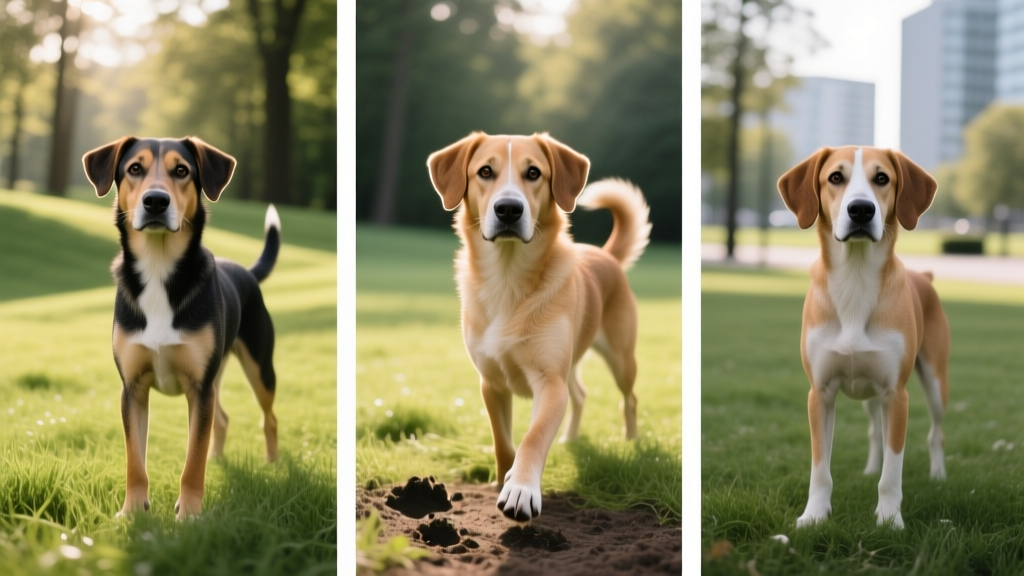
Here's where individual variation matters most. The Labrador carries genes for a short, dense, water-resistant double coat. The Golden carries genes for a longer, wavy or straight coat with pronounced feathering on the legs, chest, and tail. A Goldador puppy can inherit anywhere along that spectrum.
Most common coat outcomes in F1 Goldadors:
- Short-to-medium length with light feathering (most common) — the coat is longer than a pure Lab's but shorter than a pure Golden's. You'll see some feathering on the legs and tail, but not the full Golden fringe.
- Lab-dominant short coat — nearly indistinguishable from a Labrador's coat. Dense, straight, and relatively low-maintenance.
- Golden-dominant longer coat — less common in F1 litters but possible. Full feathering, wavy texture, and higher grooming demands.
Is the Goldador hypoallergenic or low-shedding? No. Neither parent breed carries the low-shedding coat genes found in Poodles or Soft-Coated Wheaten Terriers. Both Labs and Goldens are prolific shedders with seasonal coat blows. Every Goldador will shed — the only variable is whether you're vacuuming up short hairs or longer, wispy ones. If you have dog allergies, this cross is not a suitable choice regardless of generation.
Shedding management: Plan on brushing 3–4 times per week with a slicker brush or undercoat rake (the Furminator Large Short Hair or Chris Christensen Big G Dog Brush both work well depending on coat length). During seasonal shedding peaks in spring and fall, daily brushing is necessary. Budget $40–$80 per professional deshedding session if you prefer to outsource this twice yearly.
Temperament Range: Best-Case Scenarios and Challenging Realities
Both Labs and Goldens are renowned for stable, people-oriented temperaments — which is why this cross is popular for families and service dog programs. But "friendly and trainable" doesn't mean every Goldador is easy to live with. Here's the realistic spectrum:
Best-case temperament (and the most common outcome): Your Goldador is eager to please, responds well to positive reinforcement training, greets visitors warmly, gets along with children and other pets, and settles in the house after adequate exercise. They're the dog that makes training feel effortless — retrieving toys on command, learning household routines quickly, and checking in with you on walks.
Challenging scenarios you should prepare for:
- High puppy energy with mouthiness: Both parent breeds are retrievers, which means Goldador puppies are often extremely mouthy until 6–8 months. Expect nipping, chewing, and carrying everything in their mouth. This isn't aggression — it's genetic retrieving drive — but it requires management with appropriate chew toys and redirection, not punishment.
- Separation anxiety tendencies: Goldens in particular are prone to attachment-based anxiety. A Goldador that leans Golden in temperament may struggle with being left alone for 8+ hours. If your household has long absences, plan for a dog walker, daycare, or gradual alone-time conditioning starting in puppyhood.
- Over-excitability around strangers: Some Goldadors inherit the Lab's boisterous greeting style — jumping, mouthing, and body-slamming visitors. This is fixable with consistent training but requires commitment during the 6–18 month adolescent period when impulse control is lowest.
- Food motivation bordering on obsession: Labs carry a documented genetic variant (the POMC gene mutation) linked to increased food-seeking behavior. A Goldador inheriting this variant may counter-surf, raid trash cans, and inhale meals at a pace that increases bloat risk. Use slow-feed bowls and never free-feed.
Goldadors respond best to positive reinforcement methods — food rewards, play rewards, and verbal praise. Force-free training builds the trust these dogs thrive on. Avoid aversive tools like shock collars, prong collars, or alpha rolls, which damage the handler-dog bond and can trigger fear-based reactivity in softer-tempered individuals. Look for a certified trainer (CPDT-KA or IAABC-credentialed) who uses LIMA (Least Intrusive, Minimally Aversive) principles.
Health Considerations: Hybrid Vigor Myth vs. Reality
One of the most persistent claims in the designer dog market is that mixed breeds are automatically healthier than purebreds due to "hybrid vigor" (heterosis). Let's be precise about what the science actually says:
What hybrid vigor does: Crossing two unrelated purebred lines can reduce the risk of recessive genetic disorders that are concentrated within a single breed's gene pool. If a disease requires two copies of a defective gene and those defects are breed-specific, crossbreeding lowers the probability of a puppy inheriting both copies.
What hybrid vigor does NOT do: It does not eliminate health risks that both parent breeds share. When a Labrador and a Golden Retriever are crossed, any condition common to both breeds remains a significant risk for the offspring. And unfortunately, these two breeds share several overlapping health concerns.
According to data compiled by the Orthopedic Foundation for Animals (OFA) and breed health surveys, here are the conditions Goldador owners should actively screen for:
| Condition | Prevalence in Parent Breeds | Screening Recommendation |
|---|---|---|
| Hip Dysplasia | Lab: ~12% | Golden: ~20% (OFA data) | Both parents should have OFA or PennHIP hip scores — ask for certificates |
| Elbow Dysplasia | Lab: ~11% | Golden: ~13% | OFA elbow clearance for both parents |
| Cancer (hemangiosarcoma, lymphoma, osteosarcoma) | Golden: ~60% lifetime cancer rate | Lab: ~30% | No genetic test available — ask breeder about cancer history in pedigree lines |
| Progressive Retinal Atrophy (PRA-prcd) | Present in both breeds | DNA test available — both parents should be clear or carrier-status documented |
| Exercise-Induced Collapse (EIC) | Lab: ~5–8% carriers | Golden: documented carriers | DNA test available — both parents should be tested |
| Ichthyosis (ICH-1, ICH-2) | Golden: ~25% carriers | Lab: less common | DNA test available for ICH-1 in Golden lines |
| Obesity-related conditions (diabetes, joint stress) | Lab: high predisposition | Golden: moderate | Manage through measured feeding — maintain body condition score (BCS) of 4–5/9 |
What a responsible breeder will provide: OFA hip and elbow scores for both parents (not just "vet checked" — that phrase means nothing for genetic screening), DNA test results for PRA-prcd and EIC, and ideally a documented pedigree showing low cancer incidence in the Golden parent's line. If a breeder cannot produce these documents, walk away.
Always consult your veterinarian about a screening schedule appropriate for your individual dog. Many vets recommend baseline hip and elbow radiographs at 24 months for large-breed crosses, even in asymptomatic dogs.
Goldadors — like both parent breeds — are at elevated risk for gastric dilatation-volvulus (GDV / bloat). This is a life-threatening emergency. Call your vet or emergency clinic immediately if your dog shows: distended or swollen abdomen, unproductive retching (trying to vomit but nothing comes up), restlessness and pacing after eating, pale gums, or sudden collapse. Never exercise a Goldador for 60 minutes before or after meals. Ask your vet about prophylactic gastropexy during spay/neuter surgery — this procedure tacks the stomach to the abdominal wall and dramatically reduces GDV risk.
Grooming and Daily Care Requirements
Grooming demands for a Goldador depend entirely on which coat type they inherit. Here's a realistic breakdown:
| Task | Lab-Type Short Coat | Intermediate Coat (Most Common) | Golden-Type Long Coat |
|---|---|---|---|
| Brushing frequency | 2–3× per week | 3–4× per week | 4–5× per week (daily in feathering zones) |
| Brush type | Rubber curry or bristle brush | Slicker brush + undercoat rake | Slicker brush + steel comb for feathering |
| Bathing | Every 6–8 weeks | Every 4–6 weeks | Every 4–6 weeks with conditioner |
| Professional grooming | Rarely needed | Optional — deshedding treatments 2×/year | Every 8–12 weeks for sanitary trims and thinning |
| Annual grooming cost estimate | $100–$200 | $200–$400 | $400–$700 |
Beyond coat care, budget time for:
- Nail trims: Every 3–4 weeks. If you hear nails clicking on hard floors, they're overdue. Overgrown nails alter foot mechanics and contribute to joint stress.
- Ear cleaning: Both parent breeds have drop ears prone to moisture trapping and yeast infections. Clean weekly with a veterinarian-recommended ear wash (e.g., Epi-Otic Advanced), especially after swimming.
- Dental care: Daily brushing with enzymatic dog toothpaste is ideal. At minimum, aim for 3× per week. Plan on professional dental cleanings ($300–$700 under anesthesia) every 1–3 years depending on tartar accumulation.
Cost Breakdown: What You'll Actually Spend
The Goldador sits in a moderate price range for designer crosses — less expensive than Doodle varieties but pricier than many shelter dogs. Here's what the numbers look like in 2026:
| Expense | Range | Notes |
|---|---|---|
| Puppy purchase (responsible breeder) | $1,500–$3,500 | Varies by region and breeder reputation. Health-tested parents command higher prices. |
| Adoption (rescue/shelter) | $150–$500 | Goldador-specific rescues are rare; check Lab and Golden breed rescues, which sometimes accept mixes. |
| First-year veterinary care | $800–$1,500 | Includes puppy vaccine series (DHPP, rabies, bordetella), spay/neuter ($300–$700), heartworm prevention, microchip |
| Annual ongoing care (food, vet, prevention) | $1,800–$3,000 | High-quality large-breed food ($50–$90/month), annual exams, flea/tick/heartworm prevention |
| Pet insurance (recommended) | $40–$80/month | Enroll at 8–10 weeks to cover hereditary conditions. Companies like Trupanion, Healthy Paws, and Fetch cover breed-specific issues if enrolled before diagnosis. |
| Training (puppy classes + intermediate) | $300–$800 | 6-week group classes run $150–$250 per session. Private sessions $75–$150/hour. |
Breeder vs. rescue availability: Goldadors are moderately common through breeders, particularly in the Midwest and Southeast where both parent breeds are popular hunting companions. Dedicated Goldador breeders are less common than Labradoodle or Goldendoodle breeders — you'll more often find breeders who specialize in one parent breed and occasionally cross to the other.
Rescue availability is inconsistent. You're unlikely to find a puppy through rescue, but adult Goldadors (typically owner surrenders due to exercise needs or relocation) appear periodically in Labrador Retriever rescue networks and Golden Retriever rescue organizations. Check AKC Rescue Network listings for both parent breeds.
Who This Mix Suits Best
The Goldador is an excellent match for specific lifestyles and a poor fit for others. Be honest with yourself about which category you fall into:
Ideal Goldador owners:
- Active families with children 6+: Goldadors are patient and playful, but their adolescent exuberance (6–18 months) can knock over toddlers. Families with school-age kids who can participate in training and exercise routines are the best match.
- First-time dog owners willing to commit to training: The Goldador's trainability makes them forgiving of beginner mistakes, but their size and energy mean that untrained behaviors (jumping, pulling, counter-surfing) become genuinely difficult to manage by 60+ lb.
- People interested in dog sports: Rally obedience, dock diving, nosework, and hunt tests are all activities where Goldadors excel. Their versatility is one of their strongest assets.
- Households with yards: While apartment living is possible with committed daily exercise (minimum 60–90 minutes of structured activity), a fenced yard gives a Goldador space to burn energy between walks and is strongly preferred.
- Prospective service or therapy dog handlers: Both parent breeds are staples in assistance dog work. Goldadors are used by several service dog organizations for their stable temperaments and retrieving skills.
Think carefully if:
- You work 10+ hour days with no midday dog walker — separation anxiety and boredom destruction are real risks
- You live in a small apartment without nearby green space and cannot commit to twice-daily 30+ minute walks
- You have severe dog allergies — this cross sheds significantly
- You want a low-energy couch companion — Goldadors need physical and mental exercise or they develop problem behaviors
Frequently Asked Questions
What two breeds make up the Labrador and Retriever mix?
The Goldador is a cross between a Labrador Retriever and a Golden Retriever. Some people use "Labrador and Retriever mix" to refer to any cross involving a Lab and another retriever-type breed (Chesapeake Bay Retriever, Nova Scotia Duck Tolling Retriever), but the Goldador — Lab × Golden — is by far the most common pairing.
How big will my Labrador and Retriever mix get?
Expect 55–80 lb (25–36 kg) and 21.5–24.5 inches (55–62 cm) at the shoulder. Males trend toward the upper range; females toward the lower. Your dog will reach full height by 12–14 months but may continue filling out musculoskeletally until 18–24 months.
What will the temperament be like?
Most Goldadors are outgoing, trainable, and eager to please. They tend to be friendly with strangers and good with children. The variable is intensity: some inherit the Lab's higher drive and boisterousness, while others lean toward the Golden's softer, more sensitive nature. Early socialization (8–16 weeks) and consistent positive reinforcement training are the biggest factors in shaping a stable adult temperament.
Is the Goldador hypoallergenic or low-shedding?
No. Both Labs and Goldens are heavy-shedding double-coated breeds. A Goldador will shed year-round with increased shedding during seasonal coat blows in spring and fall. There is no generation of Goldador that produces a non-shedding coat. If low-shedding is a priority, consider a Labradoodle (Lab × Poodle) or Goldendoodle (Golden × Poodle) instead — though even those crosses are not guaranteed hypoallergenic.
What health issues might this mix inherit?
The primary concerns are hip dysplasia, elbow dysplasia, cancer (especially from the Golden lineage), progressive retinal atrophy, and exercise-induced collapse. Bloat (GDV) is an acute emergency risk due to the deep-chested build inherited from both parents. Responsible breeders test parent dogs for hip/elbow scores, PRA, and EIC. Cancer risk cannot be tested for but can be partially assessed through pedigree research.
How much does a Labrador and Retriever mix cost?
From a responsible breeder with health-tested parents, expect $1,500–$3,500. Adoption through a breed rescue typically costs $150–$500. First-year ownership costs (vet care, food, supplies, training) add another $2,500–$4,000 on top of the purchase price. Budget for ongoing annual costs of $1,800–$3,000 for the life of the dog.
Are Goldadors recognized by the AKC?
No. The American Kennel Club does not recognize designer crosses as breeds. Goldadors can be registered with organizations like the American Canine Hybrid Club (ACHC) or Designer Breed Registry (DBR), but these registrations do not carry the same health-testing requirements or breed-standard enforcement as AKC purebred registration.
How much exercise does a Goldador need daily?
Plan for 60–90 minutes of structured activity per day for an adult Goldador. This should include at least one off-leash or long-line session where they can run freely (in a safe, enclosed area), plus mental stimulation like training games, puzzle feeders, or scent work. Puppies under 12 months should follow the "5 minutes per month of age" guideline for structured walks to protect developing joints.
This article is for informational purposes and does not replace professional veterinary advice. Always consult your veterinarian for health decisions specific to your dog. For breed-specific health screening guidance, reference the AKC Canine Health Foundation and OFA databases.
Priya Sutaria
All our authors care for dogs every day — read more of their work on the authors page.