King Charles Spaniel Mix: Traits, Health & Care Guide
Everything about the King Charles Spaniel mix: parent breeds, size range, temperament variability, coat types, health risks, grooming, and 2026 pricing.

What Is a King Charles Spaniel Mix?
When people search for a "King Charles Spaniel mix," they are usually referring to a cross between the Cavalier King Charles Spaniel and another breed. The Cavalier King Charles Spaniel — recognized by the American Kennel Club (AKC) since 1995 — is one of the most popular toy breeds in the United States, consistently ranking in the top 15 registered breeds. Its gentle disposition, compact size, and expressive eyes make it a sought-after parent in designer crosses.
It is important to clarify terminology: the Cavalier King Charles Spaniel (CKCS) is distinct from the older King Charles Spaniel (also known as the English Toy Spaniel), which has a flatter face and smaller frame. Most designer mixes use the Cavalier as the parent breed. In this guide, "King Charles Spaniel mix" refers to Cavalier-based crosses unless otherwise noted.
Common Cavalier mixes you will encounter include:
- Cavapoo (Cavalier × Poodle, typically Miniature or Toy)
- Cavachon (Cavalier × Bichon Frise)
- Cav-a-Mo (Cavalier × American Eskimo Dog)
- King Schnauzer (Cavalier × Miniature Schnauzer)
- Cavalier × Cocker Spaniel (sometimes called a "Cockalier")
- Cava-Tzu (Cavalier × Shih Tzu)
Each cross produces different results in size, coat, and temperament. Unlike purebred dogs with predictable breed standards, mixed-breed puppies inherit traits in varying combinations — which is both their charm and their challenge.
The Parent Breeds: Cavalier King Charles Spaniel and Common Cross Partners
Understanding both parent breeds is essential for predicting what a King Charles Spaniel mix might look and behave like. Below is a side-by-side comparison of the Cavalier against the most frequently used cross partners.
| Trait | Cavalier King Charles Spaniel | Toy/Miniature Poodle | Bichon Frise | Shih Tzu |
|---|---|---|---|---|
| AKC Weight Range | 13–18 lb (5.9–8.2 kg) | Toy: 4–6 lb (1.8–2.7 kg); Mini: 10–15 lb (4.5–6.8 kg) | 12–18 lb (5.4–8.2 kg) | 9–16 lb (4.1–7.3 kg) |
| Height at Withers | 12–13 in (30–33 cm) | Toy: ≤10 in (25 cm); Mini: 10–15 in (25–38 cm) | 9.5–11.5 in (24–29 cm) | 9–10.5 in (23–27 cm) |
| Coat Type | Silky, medium-length, moderate shedding | Curly, dense, low-shedding | Curly/wavy double coat, low-shedding | Long, flowing double coat, moderate shedding |
| Energy Level | Moderate — 30–45 min/day | High — 45–60 min/day | Moderate — 30–45 min/day | Low to Moderate — 20–30 min/day |
| Trainability | High — eager to please | Very High — ranked 2nd in canine intelligence | Moderate — can be stubborn | Moderate — independent streak |
| Typical Lifespan | 12–15 years | 12–18 years | 14–15 years | 10–18 years |
| Major Health Concerns | Mitral valve disease, syringomyelia, hip dysplasia | Addison's disease, patellar luxation, bloat (in Standards) | Allergies, patellar luxation, bladder stones | Brachycephalic airway issues, eye conditions, hip dysplasia |
What the Cavalier Brings to the Mix
The Cavalier contributes a deeply affectionate, people-oriented temperament. These dogs were bred for centuries as companion animals — they thrive on physical closeness and tend to follow their owners room to room. They are generally quiet (low barking tendency), good with children, and sociable with other dogs. Physically, the Cavalier contributes a moderately sized frame, a silky coat that may have feathering on the ears, legs, and tail, and the breed's signature large, round, dark eyes.
What the Second Parent Typically Contributes
When crossed with a Poodle (Cavapoo), you often get a curlier, lower-shedding coat and a slightly more energetic, alert temperament. A Bichon Frise cross (Cavachon) tends to produce a fluffy, white-or-cream coat with a playful, slightly clownish personality. A Shih Tzu cross (Cava-Tzu) leans toward a calmer, more independent dog with a longer, straighter coat. The second parent breed significantly shapes the outcome — never assume all Cavalier mixes will behave or look alike.
Generations Explained: F1, F1B, F2, and Multigen
If you are shopping for a King Charles Spaniel mix from a breeder, you will encounter generation labels. These matter because they influence trait predictability and coat type.
Generation Guide for Designer Cavalier Mixes
F1 (First Generation): A direct cross between a purebred Cavalier King Charles Spaniel and a purebred second breed (e.g., a Poodle). F1 puppies have maximum genetic diversity but the least predictable traits — one puppy in a litter may have a curly Poodle-like coat while another has a straight Cavalier coat. Expect roughly 50/50 breed inheritance.
F1B (First Generation Backcross): An F1 mix bred back to one of the parent breeds — usually the Poodle, to increase the likelihood of a low-shedding coat. Genetically approximately 75% one breed and 25% the other. More predictable coat type, but slightly reduced genetic diversity compared to F1.
F2 (Second Generation): Two F1 mixes bred together. This produces the widest variation in a single litter — coat types, sizes, and temperaments can vary dramatically. Some breeders avoid F2 pairings for this reason.
Multigen (F3 and beyond): Multiple generations of the same cross bred together. Over time, multigen lines can produce more consistent results, but they are still not as predictable as established purebreds. Reputable multigen breeders health-test every generation.
Why this matters practically: If you have allergy concerns, an F1B Cavapoo (backcrossed to Poodle) gives you the highest probability of a low-shedding coat — but it is never guaranteed. An F1 Cavapoo may shed moderately despite having one Poodle parent. Always meet the puppy and observe the coat texture in person before committing.
Size Range: How Big Will a King Charles Spaniel Mix Get?
Size is one of the more predictable traits in a Cavalier mix because the parent breeds are typically well-documented. However, individual puppies can fall outside expected ranges.
| Mix Type | Weight Range | Height Range | Size Category |
|---|---|---|---|
| Cavapoo (Cavalier × Toy Poodle) | 9–18 lb (4.1–8.2 kg) | 9–14 in (23–36 cm) | Small |
| Cavapoo (Cavalier × Miniature Poodle) | 13–25 lb (5.9–11.3 kg) | 12–16 in (30–41 cm) | Small to Medium |
| Cavachon (Cavalier × Bichon Frise) | 10–20 lb (4.5–9.1 kg) | 10–14 in (25–36 cm) | Small |
| Cava-Tzu (Cavalier × Shih Tzu) | 10–16 lb (4.5–7.3 kg) | 9–12 in (23–30 cm) | Small |
| King Schnauzer (Cavalier × Mini Schnauzer) | 12–22 lb (5.4–10 kg) | 11–15 in (28–38 cm) | Small to Medium |
| Cockalier (Cavalier × Cocker Spaniel) | 15–28 lb (6.8–12.7 kg) | 12–16 in (30–41 cm) | Medium |
Practical tip: To estimate an individual puppy's adult weight, look at the parents' weights. A rough formula: add both parents' weights, divide by two, and expect the puppy to land within ±15% of that number. For example, if the Cavalier parent weighs 15 lb and the Toy Poodle parent weighs 6 lb, expect puppies around 9–13 lb (average of 10.5 lb ±15%). This is an estimate, not a guarantee.
Coat Types and the Low-Shedding Question
One of the most common questions about King Charles Spaniel mixes — especially Cavapoos and Cavachons — is whether they are hypoallergenic or low-shedding. The honest answer: no dog is truly hypoallergenic, and coat inheritance in mixed breeds is unpredictable.
Coat Possibilities by Mix
- Cavapoo: Coat may be curly (Poodle-dominant), wavy (blended), or straight/silky (Cavalier-dominant). Curly coats shed the least but require the most grooming — professional clipping every 6–8 weeks at $50–$90 per session. Wavy coats are a middle ground. Straight Cavalier-type coats shed moderately and need brushing 3–4 times per week.
- Cavachon: Typically a soft, wavy-to-curly white or cream coat. Low to moderate shedding. Prone to matting if not brushed every other day. Professional grooming every 6–8 weeks recommended.
- Cava-Tzu: Usually a longer, straighter coat that sheds moderately. Daily brushing is ideal to prevent tangles, especially around the ears and behind the legs.
- King Schnauzer: May inherit the Schnauzer's wiry outer coat or the Cavalier's silky coat — or a blend. Wiry coats need hand-stripping or clipping every 8–10 weeks.
Temperament: Best-Case and Challenging Scenarios
Temperament is where mixed-breed variability becomes most apparent. Even puppies in the same litter can have markedly different personalities.
Best-Case Scenario
A well-socialized King Charles Spaniel mix typically inherits the Cavalier's gentle, affectionate nature combined with the second breed's positive traits. A Cavapoo, for instance, may blend the Cavalier's calmness with the Poodle's intelligence and alertness — producing a dog that is cuddly yet quick to learn, good with children, and adaptable to apartment living. These dogs often excel in therapy work and are strong candidates for positive-reinforcement-based obedience and trick training.
Challenging Scenarios
Less ideal outcomes are possible, especially from poorly bred lines or puppies that miss critical socialization windows (3–14 weeks of age):
- Separation anxiety: Cavaliers are deeply bonded to their people. A mix that inherits this trait strongly may struggle when left alone for more than 4–5 hours, leading to destructive chewing, excessive barking, or house-soiling.
- Timidity or fearfulness: Some Cavaliers carry a genetic predisposition to shyness. If the second parent breed is also sensitive (e.g., a Shih Tzu), the mix may be cautious around strangers, loud noises, or new environments.
- Stubbornness: If the second parent is a Bichon or Shih Tzu, you may get a dog with an independent streak that makes house training take longer — sometimes 4–6 months of consistent crate training and scheduled potty breaks.
- Prey drive: A Cavalier crossed with a Schnauzer may inherit terrier-like prey drive, making off-leash reliability harder to achieve and requiring secure fencing (minimum 4 feet / 1.2 m).
Temperament Variability Chart
| Trait | Leans Cavalier-Dominant | Leans Second-Breed-Dominant | Blended Outcome (Most Common) |
|---|---|---|---|
| Energy Level | Low-moderate; 20–30 min walks | Moderate-high; 45–60 min activity | Moderate; 30–45 min daily |
| Trainability | Eager, food-motivated, soft correction needed | Varies — may be more independent or more driven | Responsive to positive reinforcement; moderate patience required |
| Barking | Low — Cavaliers are relatively quiet | Moderate to high (Poodles and Schnauzers are more vocal) | Moderate — alert barking but not excessive |
| Sociability with Dogs | Very high — Cavaliers are pack-oriented | Varies by breed | Generally good with proper socialization |
| Sociability with Strangers | Very friendly, may lack wariness | May be reserved or alert | Friendly after brief warm-up period |
Health Considerations: What a King Charles Spaniel Mix Might Inherit
Before discussing specific conditions, it is critical to address the hybrid vigor myth. The idea that mixed-breed dogs are automatically healthier than purebreds is an oversimplification. While genetic diversity can reduce the risk of certain recessive conditions, a mixed-breed puppy can inherit health problems from either parent — or both. A 2013 study published in the Journal of the American Veterinary Medical Association found that while mixed breeds had lower rates of some inherited disorders, they were not universally healthier across all conditions.
Always consult your veterinarian about breed-appropriate screening, and ask any breeder for health clearances on both parent dogs.
Conditions Inherited from the Cavalier Parent
- Mitral Valve Disease (MVD): The single most significant health concern for Cavaliers. According to the AKC, over 50% of Cavaliers develop MVD by age 5, and nearly all by age 10. A mix may inherit this predisposition. Annual cardiac auscultation by a veterinarian starting at age 2 is strongly recommended, with echocardiograms if a murmur is detected.
- Syringomyelia (SM): A neurological condition where fluid-filled cavities form in the spinal cord near the brain. Estimated to affect up to 70% of Cavaliers to some degree, though not all show symptoms. Signs include neck scratching without making contact, yelping in pain, and sensitivity to touch around the head and neck. The Merck Veterinary Manual describes this condition in detail.
- Hip Dysplasia: Present in approximately 10–15% of Cavaliers based on Orthopedic Foundation for Animals (OFA) data. Can lead to arthritis and mobility issues in middle to senior years.
- Episodic Falling Syndrome: A genetic condition causing muscle rigidity and collapse during exercise or excitement. A DNA test is available.
- Eye Conditions: Including cataracts, dry eye (keratoconjunctivitis sicca), and retinal dysplasia.
Conditions Potentially Inherited from the Second Parent
- From Poodle: Patellar luxation, Addison's disease, progressive retinal atrophy (PRA), Legg-Calvé-Perthes disease.
- From Bichon Frise: Allergies (atopic dermatitis), bladder stones, patellar luxation.
- From Shih Tzu: Brachycephalic obstructive airway syndrome (BOAS) — breathing difficulty due to shortened skull — if the mix inherits a shorter muzzle. Also prone to intervertebral disc disease (IVDD) and eye proptosis.
- From Schnauzer: Pancreatitis susceptibility, hyperlipidemia, urinary stones.
- Cardiac evaluation (auscultation + echocardiogram if indicated) — annually from age 2
- OFA or PennHIP hip evaluation — once at skeletal maturity (12–24 months)
- Ophthalmologist examination — annually
- Patella evaluation — at annual wellness visits
- DNA panel for breed-relevant conditions (e.g., SM, episodic falling, PRA) — available through labs like Embark or Wisdom Panel ($79–$199)
Grooming, Exercise, and Daily Care
Daily care requirements for a King Charles Spaniel mix depend heavily on which coat type the dog inherits, but some general guidelines apply across most Cavalier crosses.
Grooming by Coat Type
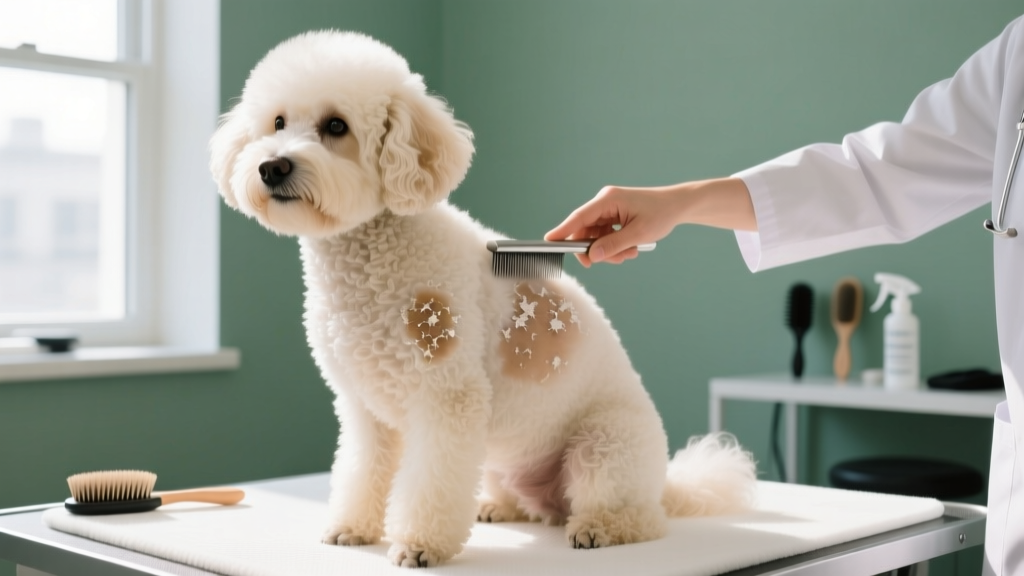
- Curly/wavy coats (Poodle or Bichon influence): Brush every other day with a slicker brush and metal comb to prevent matting. Professional grooming every 6–8 weeks ($50–$90/session). Budget roughly $400–$720 annually for professional grooming.
- Silky/straight coats (Cavalier-dominant): Brush 3–4 times per week with a pin brush. Pay attention to ear feathering and behind the legs, which mat easily. Professional grooming optional but a sanitary trim every 8–10 weeks helps ($30–$50).
- Wiry coats (Schnauzer influence): Brush weekly; hand-strip or clip every 8–10 weeks.
Ear care is non-negotiable for any Cavalier mix. The breed's long, floppy ears trap moisture and debris, creating an environment for yeast and bacterial infections. Clean ears weekly with a veterinarian-approved ear cleanser (products like Epi-Otic Advanced or Zymox). Watch for head shaking, ear odor, or redness — these signal a vet visit.
Exercise Requirements
Most Cavalier mixes need 30–45 minutes of daily activity, split into two walks plus playtime. This is moderate compared to high-energy breeds but more than many owners expect from a small dog. Mental stimulation matters too — puzzle feeders, snuffle mats, and short training sessions (5–10 minutes, 2–3 times daily) keep these intelligent dogs from developing boredom-related behaviors like excessive licking or barking.
Cost Breakdown and Where to Find a King Charles Spaniel Mix
Designer mixes like Cavalier crosses command premium prices from breeders, but rescue options exist if you know where to look.
Purchase Price from Breeders (2026 Estimates)
| Mix | Price Range (USD) | Factors Affecting Price |
|---|---|---|
| Cavapoo (F1) | $1,500–$3,500 | Generation, coat color, breeder location, health testing |
| Cavapoo (F1B/Multigen) | $2,000–$4,500 | Multigen lines with proven health-tested parents cost more |
| Cavachon | $1,200–$3,000 | Less common than Cavapoo; regional availability varies |
| Cava-Tzu | $800–$2,000 | Lower demand keeps prices moderate |
| King Schnauzer | $1,000–$2,500 | Niche cross; fewer breeders |
| Cockalier | $1,000–$2,500 | Both parent breeds readily available |
What a responsible breeder provides: Health clearances for both parents (OFA cardiac, hips, eyes), a written health guarantee (minimum 1 year), a spay/neuter contract for pet-quality puppies, a take-back clause if you can no longer keep the dog, and proof of early socialization (exposure to varied surfaces, sounds, and people during weeks 3–8). Expect to pay at the higher end of these ranges for breeders who do comprehensive testing.
Rescue and Adoption Options
Cavalier mixes appear regularly in rescue, particularly through breed-specific organizations:
- Cavalier Rescue USA — primarily purebred Cavaliers but occasionally mixes
- Local humane societies and SPCA shelters — adoption fees typically $150–$400, which includes spay/neuter, vaccinations, and microchipping
- Petfinder and Adopt-a-Pet — searchable databases where you can filter by "Cavalier King Charles Spaniel" mix
Adopting an adult Cavalier mix lets you see the dog's full-grown size, established temperament, and any known health conditions — removing much of the guesswork that comes with a puppy.
First-Year Cost Estimate
Beyond the purchase price, budget for first-year expenses:
- Veterinary care (initial exam, vaccinations, spay/neuter, heartworm prevention): $500–$1,200
- Food (high-quality small-breed kibble or AAFCO-approved diet): $240–$480/year
- Grooming (if professional): $300–$720/year
- Pet insurance (recommended given Cavalier MVD risk): $300–$600/year for accident-illness plans
- Supplies (crate, leash, harness, bed, toys): $200–$400
- Training (group classes or private sessions): $150–$500
Total first-year estimate: $2,700–$7,400 depending on purchase price and grooming needs. Ongoing annual costs after the first year: approximately $1,500–$3,500.
Who Is the Ideal Owner for a King Charles Spaniel Mix?
Based on temperament tendencies, care requirements, and health considerations, Cavalier mixes suit specific lifestyles best.
Best Fit
- Households where someone is home frequently: These dogs are companions first. They do poorly in homes where they are left alone 8+ hours daily. Remote workers, retirees, or families with staggered schedules are ideal.
- Apartment dwellers: Most Cavalier mixes are well-suited to apartment life due to their moderate energy and small size. A 30-minute daily walk plus indoor play is sufficient.
- Families with children ages 5+: Cavaliers are gentle, but very young children may accidentally injure a small dog. Teach children to respect the dog's space, especially during eating and sleeping.
- First-time dog owners: The Cavalier's eagerness to please and general biddability make these mixes forgiving of beginner training mistakes. Stick to positive reinforcement methods — treat rewards, clicker training, and patience.
- Multi-pet households: Most Cavalier mixes are sociable with other dogs and even cats when properly introduced.
Potential Challenges
- Owners who travel frequently: Without a consistent companion or dog sitter, separation anxiety can develop rapidly.
- Homes with very young toddlers: A 12-lb dog is fragile; a toddler who falls on or squeezes the dog can cause injury.
- Budget-conscious owners: Between grooming costs, cardiac monitoring, and potential MVD treatment (cardiology consultations run $200–$400; echocardiograms $300–$600; cardiac medications $50–$150/month), these dogs can be expensive to maintain in good health over their lifetime.
Frequently Asked Questions
What two breeds make up a King Charles Spaniel mix?
A King Charles Spaniel mix typically pairs the Cavalier King Charles Spaniel with a second breed — most commonly a Toy or Miniature Poodle (Cavapoo), Bichon Frise (Cavachon), Shih Tzu (Cava-Tzu), or Miniature Schnauzer (King Schnauzer). The specific combination determines size, coat, and temperament tendencies.
How big will a King Charles Spaniel mix get?
Most Cavalier mixes fall in the 10–25 lb (4.5–11.3 kg) range and stand 9–16 inches (23–41 cm) tall at the shoulder. Exact size depends on the second parent breed — a Cavapoo from a Toy Poodle will be smaller than one from a Miniature Poodle. The Cockalier (Cavalier × Cocker Spaniel) is the largest common mix, sometimes reaching 28 lb (12.7 kg).
Is a King Charles Spaniel mix hypoallergenic?
No dog is truly hypoallergenic. Some Cavalier mixes — particularly F1B Cavapoos backcrossed to Poodles — tend to shed less and may produce fewer allergens, but individual variation is significant. If you have allergies, spend time with the specific puppy before committing. Allergens are present in saliva and dander, not just shed fur.
What is the temperament of a King Charles Spaniel mix like?
Expect a friendly, people-oriented dog that bonds closely with its family. Most Cavalier mixes are affectionate, moderately playful, and good with children and other pets. However, individual temperament varies — some puppies inherit more independence or sensitivity. Early socialization (exposure to varied people, environments, and sounds between 3–14 weeks) is critical for a well-adjusted adult dog.
What health issues might a King Charles Spaniel mix inherit?
The most significant inherited risk from the Cavalier parent is mitral valve disease (MVD), which affects the majority of Cavaliers by middle age. Other concerns include syringomyelia, hip dysplasia, and eye conditions. The second parent breed adds its own risks — for example, Poodle-related patellar luxation or Schnauzer-related pancreatitis. Ask breeders for health clearances on both parents and maintain annual veterinary cardiac screening.
How much does a King Charles Spaniel mix cost?
From a breeder, expect to pay $800–$4,500 depending on the specific mix, generation, and breeder reputation. Cavapoos from multigen lines with extensive health testing command the highest prices. Adoption through rescue organizations typically costs $150–$400 and includes veterinary care. First-year total costs (including supplies, vet care, and grooming) range from $2,700–$7,400.
Do King Charles Spaniel mixes bark a lot?
Generally, no. Cavaliers are a relatively quiet breed, and most mixes inherit moderate vocalization — they will alert-bark at the doorbell or a passerby but are not persistent barkers. However, crosses with more vocal breeds (Poodles, Schnauzers) may bark more, especially if under-stimulated or left alone for long periods.
How long do King Charles Spaniel mixes live?
Most live 12–15 years, with some reaching 16 or 17. Smaller mixes (Cavapoo from Toy Poodle, Cava-Tzu) tend toward the longer end of the range. Lifespan is significantly influenced by cardiac health — dogs that develop MVD early may have shortened lifespans, making regular veterinary monitoring essential.
Priya Sutaria
All our authors care for dogs every day — read more of their work on the authors page.