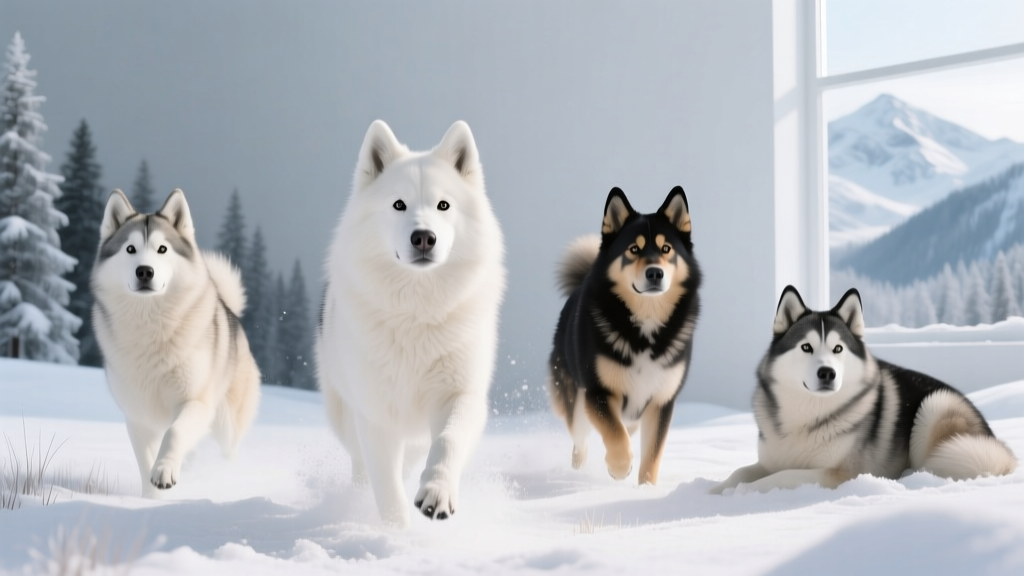
Japanese Akita x Husky: The Complete Huskita Breed
Everything you need to know about the Japanese Akita x Husky mix (Huskita): size, temperament, health risks, exercise needs, grooming, and ownership costs.

Meet the Huskita: When Northern Power Meets Arctic Endurance
The Japanese Akita x Husky — widely known as the Huskita — is a deliberate cross between two of the most striking spitz-type breeds in the world: the Akita (specifically the Japanese Akita, or Akita Inu) and the Siberian Husky. This designer cross emerged in North America during the late 1990s and early 2000s, as part of the broader trend of pairing purebred dogs to combine desirable traits. Breeders aimed to blend the Akita's dignified loyalty and guarding instinct with the Husky's endurance, sociability, and cold-weather resilience.
Neither the American Kennel Club nor the FCI recognizes the Huskita as a standalone breed. It is classified as a designer or mixed breed, meaning individual dogs can vary significantly in appearance and temperament depending on which parent they favor. That said, consistent patterns have emerged across litters, giving prospective owners a reasonably predictable picture of what to expect.
Size class: Large
Lifespan range: 10–13 years (with some individuals reaching 14–15 with excellent preventive care)
Origin: United States (designer cross), late 1990s–2000s
Parent breeds: Japanese Akita (Akita Inu) × Siberian Husky
| Attribute | Details |
|---|---|
| Weight (Male) | 60–100 lb / 27–45 kg |
| Weight (Female) | 50–80 lb / 23–36 kg |
| Height (Male) | 22–26 in / 56–66 cm |
| Height (Female) | 20–24 in / 51–61 cm |
| Lifespan | 10–13 years |
| Coat Type | Double coat, medium to long length |
| Energy Level | High (70–90 min/day) |
| Grooming Needs | Moderate–High (3–4x/week brushing) |
| Family Fit | Best with experienced owners, older children |
| Apartment Suitability | Low — needs yard access |
Temperament & Personality: What a Huskita Is Really Like to Live With
The Huskita inherits a fascinating — and sometimes challenging — blend of traits from both parent breeds. Understanding these core behavioral tendencies helps set realistic expectations before bringing one home.
1. Fiercely loyal but selectively affectionate. Unlike a Labrador who greets every stranger like a long-lost friend, the Huskita tends to bond deeply with one or two people. They'll follow their primary person from room to room, lean against their legs during quiet moments, and position themselves between their owner and unfamiliar visitors. Affection is earned, not automatic.
2. Independent and strong-willed. Both Akitas and Huskies rank low on traditional obedience intelligence scales — not because they can't learn, but because they question why they should comply. A Huskita who understands the purpose of a command will perform it reliably. One who doesn't see the point will simply stare at you and walk away. This is a thinking dog, not a compliant one.
3. High prey drive. The Akita's hunting heritage and the Husky's predatory instincts combine to create a dog who will chase squirrels, cats, rabbits, and sometimes small dogs. Off-leash reliability in unfenced areas is extremely difficult to achieve with this cross, regardless of training level.
4. Vocal but not excessive barkers. Expect howling, "talking" (the characteristic Husky woo-woo vocalization), and occasional alarm barking. They're not typically nuisance barkers, but apartment neighbors will notice the vocal range.
5. Reserved with strangers. The Akita's natural wariness surfaces in most Huskitas. They won't usually show outright aggression without provocation, but they won't wag their tails at visitors either. Early and ongoing socialization is non-negotiable to prevent over-guarding behavior.
Physical Characteristics: Size, Build, and Coat
The Huskita is a substantial, athletic dog with the upright ears, curled tail, and wedge-shaped head characteristic of spitz breeds. Most individuals fall solidly into the large-breed category, though those favoring the Husky parent may land at the upper end of medium.
Weight range: Males typically weigh 60–100 lb (27–45 kg); females 50–80 lb (23–36 kg). Dogs leaning heavily toward the Akita parent can exceed 100 lb, while Husky-dominant individuals may be as light as 45 lb.
Height range: Males stand 22–26 inches (56–66 cm) at the shoulder; females 20–24 inches (51–61 cm).
Coat: The double coat is the Huskita's most demanding physical feature. The dense, plush undercoat provides insulation down to approximately -20°F (-29°C), inherited from both Arctic-origin parents. The outer coat is straight and coarse, typically 1.5–3 inches in length. Colors vary widely: black and white, red and white, silver, sable, brindle, and the Akita's characteristic red-fawn with white markings (urajiro pattern).
Notable physical traits:
- Erect, triangular ears (almost universal in this cross)
- Tail carried in a curl or sickle over the back
- Almond-shaped eyes — blue (Husky-inherited), brown, or heterochromia (one of each)
- Broad chest and muscular hindquarters
- Compact, well-furred paws suited for snow
Exercise & Activity Requirements: How Much Does a Huskita Need Daily?
This is not a dog you can exercise with a 15-minute walk around the block. The Huskita requires 70–90 minutes of structured physical activity daily, split across at least two sessions. On days when exercise is insufficient, expect destructive behavior — chewing furniture, digging in yards, and escape attempts are common outlets for pent-up energy.
| Activity Type | Duration | Frequency | Notes |
|---|---|---|---|
| Brisk leash walk or jog | 30–40 min | Daily (morning) | Use a front-clip harness to manage pulling |
| Off-leash play in fenced area | 20–30 min | Daily | Minimum 6-ft fence; Huskitas are escape artists |
| Mental enrichment (puzzle toys, scent work) | 15–20 min | Daily | Kong Wobbler, Outward Hound puzzles work well |
| Hiking or trail running | 60–90 min | 2–3x/week | Excellent cold-weather companion |
| Pull/cart or weight-pull exercise | 15–20 min | 1–2x/week | Channels Akita working heritage |
| Structured fetch or flirt pole | 15–20 min | 3–4x/week | Good for high-intensity bursts |
Cold-weather advantage: Huskitas thrive in cold climates and can comfortably exercise in temperatures that would sideline most breeds. However, they overheat rapidly in warm weather. When temperatures exceed 75°F (24°C), shift exercise to early morning and late evening, and always provide shade and water access.
Heat warning: Never shave a Huskita's double coat in summer. The undercoat actually insulates against heat as well as cold. Shaving disrupts thermoregulation and increases sunburn risk. Instead, use a cooling mat (such as the K&H Cool Bed III) and limit midday activity.
Common Health Issues: What Health Problems Is This Breed Prone To?
While crossbreeding can provide some hybrid vigor (the reduced likelihood of inheriting recessive conditions common to a single breed), the Huskita remains susceptible to conditions prevalent in both parent breeds. Responsible breeders screen for these using OFA (Orthopedic Foundation for Animals) and CERF (Canine Eye Registration Foundation) certifications.
| Condition | Description | Estimated Prevalence | Prevention/Screening |
|---|---|---|---|
| Hip Dysplasia | Malformation of the hip joint leading to arthritis and mobility loss | ~15–25% (combined parent breed data) | OFA hip scoring of parents; maintain lean body condition |
| Progressive Retinal Atrophy (PRA) | Degenerative eye disease causing gradual blindness | ~5–10% | CERF eye exams; DNA test available for prcd-PRA form |
| Hypothyroidism | Underactive thyroid gland causing weight gain, lethargy, coat thinning | ~8–12% (Akitas are particularly predisposed) | Annual thyroid panel; manageable with levothyroxine |
| Gastric Dilatation-Volvulus (Bloat) | Stomach fills with gas and twists — life-threatening emergency | ~3–5% (large, deep-chested breeds) | Feed 2–3 small meals; avoid exercise 1 hour before/after eating |
| Sebaceous Adenitis | Autoimmune skin condition destroying oil glands; causes scaling and hair loss | ~5–8% (Akita lineage) | No screening test; managed with cyclosporine and medicated shampoos |
Additional considerations: Huskitas may inherit the Husky's predisposition to zinc-responsive dermatosis (a skin condition requiring zinc supplementation) and the Akita's susceptibility to autoimmune conditions such as VKH-like syndrome (uveodermatologic syndrome), which affects the eyes and skin.
Always consult your veterinarian for diagnosis and treatment planning. The prevalence figures above are estimates drawn from parent breed registries and veterinary literature — individual risk varies based on lineage and environmental factors.
- Unproductive retching or a distended, hard abdomen (possible bloat/GDV)
- Sudden rear-leg weakness or inability to stand
- Cloudy eyes, squinting, or apparent vision loss
- Seizures or collapse
- Difficulty breathing or blue-tinged gums
Grooming Requirements: Managing That Double Coat
The Huskita's double coat demands consistent maintenance. Plan on brushing 3–4 times per week under normal conditions, increasing to daily during the two annual shedding seasons (spring and fall "coat blows"). During these 3–4 week periods, you'll remove enough undercoat to fill a grocery bag — this is normal and unavoidable.
Essential grooming tools:
- Undercoat rake (e.g., Furminator for Large Dogs or the Oster ShedMonster) — for removing dead undercoat without damaging the guard hairs
- Slicker brush — for finishing and removing tangles in the outer coat
- High-velocity dryer (e.g., MetroVac Air Force Commander) — dramatically reduces drying time after baths and blows out loose undercoat
- Nail grinder (e.g., Dremel 7300-PT) — preferred over clippers for large-breed nails
Bathing frequency: Every 8–12 weeks unless the dog gets into something messy. Over-bathing strips natural oils from the double coat and can trigger skin dryness. Use a dog-specific oatmeal or deshedding shampoo (e.g., Earthbath Shed Control Shampoo).
Dental care: Brush teeth 3–4 times per week using enzymatic dog toothpaste. Huskitas are prone to tartar buildup, and dental disease can accelerate systemic health issues by age 5–6.
Training & Intelligence: Working With an Independent Thinker
The Huskita is intelligent but not biddable — a critical distinction. They learn commands quickly (often within 5–10 repetitions) but compliance depends on motivation. This is a breed that asks "what's in it for me?" before acting.
Trainability rating: 5/10 for obedience compliance; 8/10 for problem-solving intelligence.
Recommended methods: Positive reinforcement exclusively. High-value treats (freeze-dried liver, small pieces of chicken), clicker marking, and short sessions (10–15 minutes maximum) produce the best results. Force-free, LIMA (Least Intrusive, Minimally Aversive) methods are essential — harsh corrections or dominance-based techniques will damage trust and increase resistance.
Priority training goals:
- Recall: Begin in enclosed areas with a long line (15–30 ft). Expect 6–12 months of consistent practice before reliable off-leash recall — and even then, prey drive may override training in high-distraction environments.
- Leash manners: Harness-based loose-leash training from day one. Huskitas are powerful pullers; a front-clip harness (e.g., Ruffwear Front Range) redirects pulling force without choking.
- Socialization: Critical window is 8–16 weeks. Expose to 100+ people, varied surfaces, sounds, other dogs, and handling exercises. Ongoing socialization through adult dog classes prevents the guarding instinct from becoming problematic.
- Impulse control: "Leave it," "wait," and mat training (e.g., Karen Overall's Protocol for Relaxation) are more valuable than trick training for this breed.
What doesn't work: Shock collars, prong collars, alpha rolls, and repetitive drill training. These methods increase anxiety and can trigger the defensive aggression that Akitas are capable of when they feel threatened. The American Veterinary Society of Animal Behavior explicitly recommends against aversive training methods due to documented risks of fallout.
Family Suitability: Kids, Other Pets, and Living Environments
✅ Strengths
- Deeply loyal to family members
- Excellent cold-weather companion for hiking and outdoor activities
- Naturally clean — minimal doggy odor
- Alert and protective without excessive barking
- Striking, athletic appearance
⚠️ Challenges
- Not ideal for first-time dog owners
- High prey drive — risky around cats, small dogs, and pocket pets
- Heavy shedding year-round, extreme during coat blows
- Can be same-sex aggressive (especially male-male)
- Poor apartment dog — needs space and yard access
- Escape-prone; requires secure 6-foot fencing
With children: Huskitas can coexist well with children they're raised alongside, particularly children aged 8+ who understand how to interact respectfully with dogs. They are not naturally patient with toddlers who grab ears or tails, and their large size means accidental knocks can injure small children. Always supervise interactions and teach children canine body language.
With other dogs: Same-sex aggression is common, particularly in males. Opposite-sex pairings tend to work better. Dog-dog socialization from puppyhood helps, but some Huskitas remain selectively dog-tolerant throughout life. Dog parks are risky — the prey drive and potential for conflict with unfamiliar dogs make controlled playdates a better option.
With cats and small animals: The high prey drive makes cohabitation with cats risky unless the Huskita was raised with cats from early puppyhood. Even then, the instinct to chase may surface unpredictably. Small mammals (rabbits, guinea pigs, hamsters) should never have unsupervised access to a Huskita.
Apartment living: Not recommended. The combination of size, exercise needs, vocalization, and shedding makes the Huskita a poor fit for apartments or condos. A home with a securely fenced yard (minimum 6-foot fence, ideally with dig-proofing at the base) is strongly preferred.
Cost of Ownership: Puppy Price and Annual Expenses
Owning a Huskita is a significant financial commitment. Here's a realistic breakdown based on 2026 pricing from breeders and veterinary cost data.
| Expense Category | First Year | Annual (Ongoing) |
|---|---|---|
| Puppy purchase (responsible breeder) | $800–$2,500 | — |
| Adoption (breed-specific rescue) | $200–$500 | — |
| Initial veterinary (vaccines, spay/neuter, microchip) | $600–$1,200 | — |
| Annual veterinary (exams, vaccines, heartworm/flea prevention) | — | $500–$900 |
| Food (premium large-breed kibble or balanced raw) | $600–$1,100 | $600–$1,100 |
| Grooming supplies and professional grooming | $200–$500 | $150–$400 |
| Pet insurance (recommended for large breeds) | $480–$960 | $480–$960 |
| Training classes (puppy + adult) | $300–$600 | $100–$300 |
| Miscellaneous (toys, beds, leashes, crate) | $300–$600 | $150–$300 |
| Total Estimated Cost | $3,280–$7,460 | $1,980–$3,960 |
Puppy sourcing: If purchasing from a breeder, insist on OFA hip and elbow certifications, CERF eye clearances, and thyroid panels for both parent dogs. Reputable breeders will provide a written health guarantee and a take-back clause. Breed-specific rescues (such as AKC Rescue Network affiliates) occasionally have Huskita mixes available for adoption at lower cost.
Frequently Asked Questions
Is the Japanese Akita x Husky right for first-time dog owners?
Generally, no. The Huskita's combination of independence, strength, high prey drive, and need for experienced handling makes this cross better suited to owners who have successfully raised at least one large, strong-willed breed before. First-time owners who are committed to the breed should invest heavily in professional training (minimum 6 months of structured classes) and seek mentorship from experienced spitz-breed owners.
How much exercise does a Huskita need every day?
Plan for 70–90 minutes of structured activity daily, split into two or more sessions. This should include brisk walks or jogs (30–40 min), off-leash play in a secure area (20–30 min), and mental enrichment through puzzle toys or scent work (15–20 min). Insufficient exercise leads to destructive behavior, escape attempts, and anxiety.
How big does a Huskita get as an adult?
Adult males typically weigh 60–100 lb (27–45 kg) and stand 22–26 inches (56–66 cm) tall at the shoulder. Females are somewhat smaller at 50–80 lb (23–36 kg) and 20–24 inches (51–61 cm). Dogs that inherit more Akita traits may exceed these ranges; those leaning Husky may fall below.
Is a Huskita good with children and other pets?
Huskitas do well with children they're raised with, especially those aged 8 and older who understand respectful dog interaction. They are not naturally tolerant of toddlers. With other dogs, opposite-sex pairings work best due to same-sex aggression tendencies. Cats and small animals are at risk due to the breed's high prey drive and should be carefully managed or avoided.
What health problems are Huskitas most prone to?
The five most significant health risks are hip dysplasia (~15–25% prevalence in parent breeds), progressive retinal atrophy, hypothyroidism (particularly from the Akita side), gastric dilatation-volvulus (bloat), and sebaceous adenitis. Responsible breeding with health-tested parents reduces but does not eliminate these risks. Annual veterinary exams with breed-specific screening are essential.
How much does a Huskita cost to buy and maintain?
Puppy prices from responsible breeders range from $800–$2,500; adoption fees from rescues are $200–$500. First-year total costs (including veterinary setup, food, supplies, and training) typically fall between $3,280–$7,460. Ongoing annual costs are approximately $1,980–$3,960, with pet insurance strongly recommended to offset potential orthopedic or autoimmune treatment expenses.
The information in this guide is intended for educational purposes and should not replace professional veterinary advice. Always consult your veterinarian for health-related decisions specific to your dog. For breed-specific health screening recommendations, refer to the Orthopedic Foundation for Animals and your veterinarian's guidance.
Marcus Aldridge
All our authors care for dogs every day — read more of their work on the authors page.