Goldendoodle Mix Breed Puppies: The Complete 2026 Owner's Guide
Everything about Goldendoodle mix breed puppies: generations (F1, F1B, F2), size ranges, coat types, temperament variability, health risks, costs, & who...
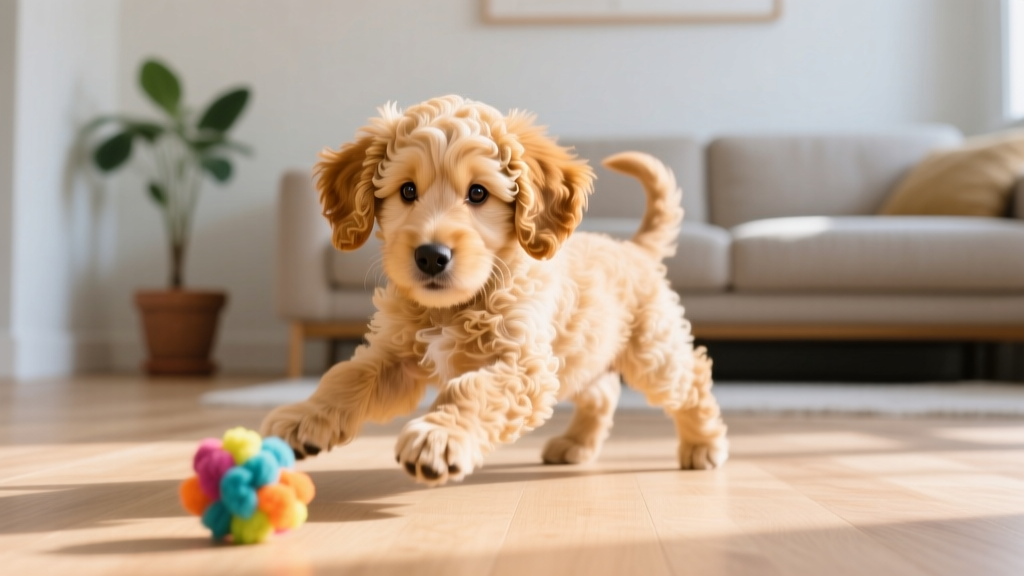
What Is a Goldendoodle? The Parent Breeds Behind the Mix
Goldendoodle mix breed puppies are the result of crossing two of the most popular purebred dogs in America: the Golden Retriever and the Poodle (Standard, Miniature, or Toy). First intentionally bred in the late 1960s as guide dogs for visually impaired individuals with allergies, the Goldendoodle exploded in popularity throughout the 2000s and remains one of the most sought-after designer crosses in 2026.
Understanding the parent breeds is essential before committing to any mixed breed puppy. Each parent contributes a distinct set of traits, and the combination produces a wide range of possible outcomes.
| Trait | Golden Retriever | Poodle (Standard) |
|---|---|---|
| Weight Range | 55–75 lb / 25–34 kg | 40–70 lb / 18–32 kg |
| Height | 21.5–24 in / 55–61 cm | Over 15 in / 38+ cm (Standard) |
| Coat Type | Dense double coat, heavy shedding | Single-layer curly coat, minimal shedding |
| Energy Level | High — 60–90 min/day exercise | High — 45–60 min/day exercise |
| Trainability | Excellent (AKC Sporting Group) | Excellent (AKC Non-Sporting/Toy Group) |
| Typical Lifespan | 10–12 years | 12–15 years |
| Common Health Risks | Hip dysplasia, cardiac disease, cancer | Hip dysplasia, eye disorders, Addison's disease |
Both parent breeds rank in the top five for intelligence according to canine neuropsychologist Stanley Coren's research cited by the AKC. This makes Goldendoodle puppies highly trainable but also means they require consistent mental stimulation — a bored Goldendoodle can develop destructive behaviors quickly.
Generation Breakdown: F1, F1B, F2, and Multigen Explained
One of the most confusing aspects of shopping for Goldendoodle mix breed puppies is the generation terminology. These labels tell you exactly which breeds were crossed and in what combination — and they significantly influence coat type, shedding level, and trait predictability.
- F1 (First Generation): Golden Retriever × Poodle. 50/50 genetic split. Most variable in coat — some puppies have wavy, Retriever-dominant coats while others get curlier Poodle-type coats. Moderate shedding is common.
- F1B (First Generation Backcross): F1 Goldendoodle × Poodle. 75% Poodle / 25% Golden Retriever. Curlier coat, lower shedding. Often marketed as "hypoallergenic" but no dog is truly allergen-free.
- F1BB (Double Backcross): F1B Goldendoodle × Poodle. 87.5% Poodle. Very Poodle-dominant in appearance and coat.
- F2 (Second Generation): F1 Goldendoodle × F1 Goldendoodle. 50/50 split but with high genetic variability. The least predictable generation — puppies in the same litter can look drastically different.
- F3 / Multigen: F2 × F2 or later-generation crosses. Breeders aiming for consistency over multiple generations. The AKC notes that multigenerational breeding can stabilize some traits, but these dogs still cannot be registered as a distinct breed.
Why this matters: If low shedding is your priority (e.g., household allergy concerns), an F1B or F1BB generation gives you the best probability — though never a guarantee. F1 puppies are the most genetically diverse but the least predictable in appearance and coat type.
Size Range: How Big Will a Goldendoodle Get?
Goldendoodle size varies enormously depending on the Poodle parent's size classification. Responsible breeders will specify the expected adult size range, but individual puppies can still fall outside projections.
| Size Category | Poodle Parent | Expected Weight | Expected Height |
|---|---|---|---|
| Petite / Toy | Toy Poodle (4–6 lb) | 10–25 lb / 4.5–11 kg | 12–15 in / 30–38 cm |
| Miniature | Miniature Poodle (10–15 lb) | 25–45 lb / 11–20 kg | 15–20 in / 38–51 cm |
| Medium | Moyen / Small Standard | 35–55 lb / 16–25 kg | 18–22 in / 46–56 cm |
| Standard | Standard Poodle (40–70 lb) | 50–90 lb / 23–41 kg | 20–26 in / 51–66 cm |
Important caveat: These are estimated ranges. An F1 Standard Goldendoodle can land anywhere from 45 to 90 lb depending on which parent's growth genes dominate. Puppies from multigenerational lines (F3+) tend to be more size-predictable. Ask the breeder for the exact weights of both parents and previous litters to narrow your estimate.
Coat Types, Shedding, and the Hypoallergenic Question
Goldendoodles inherit one of three coat types, and the outcome depends heavily on generation:
- Straight / Flat Coat: Resembles the Golden Retriever parent. Most common in F1 puppies. Moderate to heavy shedding. Easiest to maintain — brushing 2–3 times per week.
- Wavy / Fleece Coat: Loose waves, often described as "shaggy." Moderate shedding. Common in F1 and F2 generations. Requires brushing 3–4 times per week and professional grooming every 8–10 weeks.
- Curly Coat: Tight Poodle-type curls. Minimal shedding. Most common in F1B and later generations. Requires daily brushing to prevent matting and professional grooming every 6–8 weeks. Budget $60–$120 per grooming session depending on your region and the dog's size.
Is a Goldendoodle hypoallergenic? No dog is truly hypoallergenic. The Merck Veterinary Manual confirms that canine allergies in humans are triggered by dander, saliva, and urine proteins — not just hair. Curly-coated F1B Goldendoodles shed less dander into the environment, which reduces (but does not eliminate) allergic reactions. If allergies are a concern, spend time with the specific puppy before committing, and consider an allergy test with an allergist.
Temperament: What to Expect (and What Might Surprise You)
Goldendoodles inherit traits from two highly social, people-oriented breeds. The best-case scenario is a friendly, eager-to-please companion that excels in therapy work, agility, and family life. However, temperament is where individual variation is most pronounced.
| Trait | Best-Case Scenario | Challenging Scenario |
|---|---|---|
| Sociability | Greets everyone warmly, great with children and other pets | Inherits Poodle wariness — reserved with strangers, slow to warm up |
| Energy | Playful but settles well indoors after exercise | Inherits high-drive Retriever energy — bouncy, mouthy, needs 90+ min/day activity |
| Sensitivity | Responsive to gentle correction, emotionally attuned | Inherits Poodle sensitivity — shuts down or stress-reactive in chaotic households |
| Barking | Alert but not excessive | Poodle-alert barking at every sound, especially in apartment settings |
| Separation Behavior | Tolerates 4–6 hours alone with proper training | Strong attachment — develops separation anxiety if left alone frequently without gradual conditioning |
Key insight: Goldendoodles from Golden-dominant temperaments tend to be more go-anywhere, meet-everyone dogs. Those leaning Poodle-dominant are often more discerning, loyal to their primary person, and potentially reactive in unfamiliar environments. Neither is "better" — the right fit depends on your household. Families with young children and frequent visitors often do better with Golden-leaning temperaments. Quieter, single-person or couple households may prefer the Poodle-leaning intensity.
Regardless of temperament leaning, early socialization between 8 and 16 weeks is critical. Expose your puppy to varied surfaces, sounds, people (including children, men with hats, people in wheelchairs), and other vaccinated dogs using positive reinforcement methods. Force-free puppy kindergarten classes are strongly recommended.
Health Considerations: Hybrid Vigor vs. Reality
One of the most persistent myths in the designer dog world is "hybrid vigor" — the claim that mixed breed puppies are automatically healthier than purebreds. The reality is more nuanced.
Genetic diversity can reduce the probability of inheriting recessive disorders that are concentrated within a single breed's gene pool. However, Goldendoodles can inherit any condition that affects either parent breed. According to research cited by the AVMA, crossbreeds are not immune to the structural and genetic conditions prevalent in their parent breeds.
| Condition | Inherited From | Prevalence | Screening Test |
|---|---|---|---|
| Hip Dysplasia | Both breeds | ~15–20% in Golden Retrievers; ~10% in Standard Poodles (OFA data) | OFA/PennHIP radiograph |
| Elbow Dysplasia | Both breeds | ~10% in Golden Retrievers | OFA elbow radiograph |
| Progressive Retinal Atrophy (PRA) | Both breeds | Carrier rate ~5–10% in Poodles | DNA test (Optigen prcd-PRA) |
| Subvalvular Aortic Stenosis (SAS) | Golden Retriever | ~5–7% prevalence | Cardiologist echocardiogram |
| Addison's Disease | Poodle | Higher in Standard Poodles; exact prevalence unknown | ACTH stimulation test (diagnostic, not screening) |
| Sebaceous Adenitis | Poodle | ~2–8% in Standard Poodles | Skin biopsy (diagnostic) |
| Cancer (hemangiosarcoma, lymphoma) | Golden Retriever | ~60% of Golden Retrievers die of cancer (GRCA health survey) | No screening test; regular vet exams |
What responsible breeders do: Both parent dogs should have OFA (or PennHIP) hip certifications, OFA elbow certifications (for Standards), annual CERF/OFA eye exams, and breed-specific DNA panels. Ask to see actual certificates — not just verbal assurances. A reputable breeder will share these openly and discuss results honestly.
Always consult your veterinarian about a health monitoring plan tailored to your Goldendoodle's specific size and generation. Early screening for hip and elbow issues (radiographs at 12–24 months) can catch problems before they cause chronic pain.
- Sudden hind-leg weakness or reluctance to jump/climb stairs (possible hip issue)
- Cloudy eyes, bumping into furniture, or night blindness (possible PRA)
- Unexplained lethargy, vomiting, or dark skin patches (possible Addisonian crisis — this is a medical emergency)
- Lumps or masses that grow rapidly, change color, or bleed
Cost Breakdown: What Goldendoodle Mix Breed Puppies Actually Cost
Goldendoodle pricing has shifted significantly over the past five years. In 2026, expect the following ranges from breeders in the United States:
| Source | Price Range | What's Typically Included |
|---|---|---|
| Responsible breeder (health-tested parents, OFA certs) | $2,500–$5,500 | Health testing, first vaccinations, deworming, microchip, spay/neuter contract, take-back clause, early neurological stimulation (ENS) |
| High-volume / "boutique" breeder (limited health testing) | $1,200–$3,000 | First vaccinations, basic vet check; health testing documentation often absent or incomplete |
| Rescue / Rehoming | $200–$600 (adoption fee) | Varies — often spayed/neutered, vaccinated, microchipped; adult dogs more common than puppies |
First-year total cost of ownership (beyond the purchase price): budget approximately $2,800–$4,500 for food ($600–$900/year for a Standard size), professional grooming ($480–$960/year), veterinary care including spay/neuter ($800–$1,500), supplies ($300–$500), pet insurance ($480–$840/year for comprehensive coverage), and puppy training classes ($150–$350).
Finding a Goldendoodle through rescue: While Goldendoodle puppies rarely appear in shelters, adult Goldendoodles and similar mixes are available through Golden Retriever and Poodle breed-specific rescues, as well as general shelters. Organizations like Golden Retriever Club of America rescue networks and regional Poodle rescues sometimes take in Goldendoodle surrenders. Adopting an adult gives you the advantage of a known temperament and size.
Who Is the Goldendoodle Best Suited For?
After working with dozens of Goldendoodle-owning families, here's my honest assessment of fit:
- Active families who enjoy daily walks, hikes, or fetch sessions (60+ min/day)
- Households seeking a therapy or emotional support dog candidate
- First-time dog owners willing to invest in puppy classes
- Homes with children ages 6+ (smaller Goldendoodles can be fragile with toddlers)
- People with mild dog allergies (F1B or curly-coat generations)
- People who work 10+ hour days away from home (separation anxiety risk)
- Those seeking a true non-shedding dog (no guarantee exists)
- Owners unwilling to budget for professional grooming every 6–10 weeks
- Households wanting a protection or guard dog (Goldendoodles are notoriously friendly)
- Anyone expecting a "mini Golden Retriever" — Poodle traits are equally likely to surface
Experience level: Goldendoodles are forgiving of first-time owner mistakes thanks to their intelligence and eagerness to please. However, their sensitivity means harsh training methods (shock collars, prong collars, alpha rolls) are counterproductive and damaging. Positive reinforcement, force-free training is the only recommended approach.
Frequently Asked Questions
What two breeds make up a Goldendoodle?
A Golden Retriever and a Poodle (Toy, Miniature, or Standard). The Poodle size determines the Goldendoodle's adult size category.
How big will my Goldendoodle mix breed puppy get?
Anywhere from 10 lb (4.5 kg) to 90 lb (41 kg), depending on the Poodle parent's size and the generation. Standard Goldendoodles typically reach 50–90 lb (23–41 kg) and 20–26 inches (51–66 cm) at the shoulder. Ask the breeder for parent weights to estimate.
Are Goldendoodles good with children and other pets?
Generally yes — both parent breeds are known for sociability. However, individual temperament varies. Early socialization and teaching children to respect the dog's space are essential. Very small (Toy/Petite) Goldendoodles may be too fragile for rough toddler play.
How much grooming does a Goldendoodle require?
Curly-coated Goldendoodles need daily brushing and professional grooming every 6–8 weeks ($60–$120 per session). Wavy-coated dogs need brushing 3–4 times per week and grooming every 8–10 weeks. Straight-coated dogs need brushing 2–3 times per week. Matting is painful and can lead to skin infections — grooming is non-negotiable for curly and wavy coats.
What's the difference between a Goldendoodle and a Labradoodle?
Both are Poodle crosses, but the Labradoodle uses a Labrador Retriever as the other parent. Labradoodles tend to have slightly higher energy and more mouthy/play-retrieving behavior. Goldendoodles are often described as slightly softer in temperament. Both require similar exercise, grooming, and health screening.
Can I find a Goldendoodle through a shelter or rescue?
Adult Goldendoodles occasionally appear in shelters and breed-specific rescues, though puppies are rare in rescue. Check Golden Retriever rescue networks, Poodle rescue organizations, and platforms like Petfinder. Adopting an adult lets you evaluate the dog's actual temperament and size rather than guessing from puppy traits.
Do Goldendoodles have a shorter or longer lifespan than their parent breeds?
Most Goldendoodles live 10–15 years. Smaller Goldendoodles (Miniature and Toy crosses) tend toward the longer end of that range. Lifespan is influenced more by health screening of parents, weight management, and preventive veterinary care than by generation alone.
Priya Sutaria
All our authors care for dogs every day — read more of their work on the authors page.


