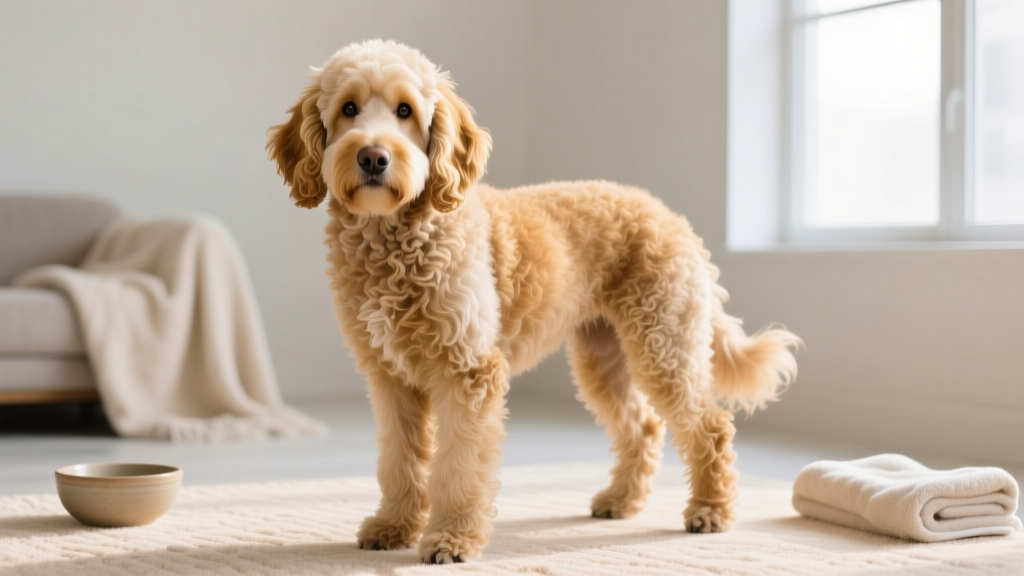
German Shepherd Poodles: The Shepadoodle Designer Breed Profile
German Shepherd Poodles (Shepadoodles): size, temperament, coat types, generations, health risks, grooming, and costs for this designer mix.

What Two Breeds Make Up German Shepherd Poodles?
German Shepherd Poodles — most commonly called Shepadoodles — are a designer cross between a German Shepherd Dog (GSD) and a Poodle (usually a Standard Poodle, though Miniature Poodle crosses exist). This mix first gained traction in the U.S. military working dog programs during the 1960s, when breeders sought a dog combining the GSD's protective instincts and trainability with the Poodle's intelligence and lower-shedding coat. Today, they're primarily companion animals, though some still serve in detection and therapy work.
Because this is a crossbreed and not a recognized purebred, the American Kennel Club does not register Shepadoodles. However, hybrid registries like the International Designer Canine Registry (IDCR) and the Designer Breed Registry (DBR) do track them.
Parent Breed Breakdown
| Trait | German Shepherd | Standard Poodle |
|---|---|---|
| Weight | 50–90 lb / 23–41 kg | 40–70 lb / 18–32 kg |
| Height | 22–26 in / 56–66 cm | 15+ in / 38+ cm (Standard) |
| Coat | Double coat, heavy shedder | Single coat, low-shedding, curly |
| Temperament | Loyal, protective, driven | Intelligent, alert, sociable |
| Energy Level | High — 60–90 min/day | High — 45–60 min/day |
| Trainability | Exceptional (ranked #3) | Exceptional (ranked #2) |
| Lifespan | 7–10 years | 10–18 years |
| Common Health Risks | Hip/elbow dysplasia, degenerative myelopathy, bloat | Addison's disease, sebaceous adenitis, bloat |
Sources: AKC breed standards for German Shepherd and Standard Poodle.
Generations Explained: F1, F1B, F2, and Multigen Shepadoodles
Unlike purebred dogs, designer mixes come in different generational classifications that significantly affect coat type, shedding level, and trait predictability. Understanding these terms is essential before contacting a breeder.
Shepadoodle Generation Guide
- F1 (First Generation): 50% German Shepherd × 50% Poodle. Most unpredictable coat and temperament. Widest variation even within the same litter.
- F1B (First Generation Backcross): F1 Shepadoodle × Poodle (75% Poodle / 25% GSD) or F1 × GSD (75% GSD / 25% Poodle). Backcrossing to Poodle increases the chance of a low-shedding coat.
- F2 (Second Generation): F1 Shepadoodle × F1 Shepadoodle. Both parents are mixed — trait variation remains high. Coat types can range wildly.
- F2B: F1 × F1B or F2 × Poodle. More Poodle-dominant traits on average.
- F3 / Multigen: Multigenerational breeding (F2 × F2 or beyond). Theoretically more predictable, but reputable multigen Shepadoodle programs are rare compared to Labradoodle or Goldendoodle lines.
Practical implication: If low shedding is your priority, an F1B backcrossed to a Poodle gives you the best odds — but never a guarantee. F1 puppies from the same litter can produce one puppy with a tight Poodle curl and a littermate with a straight, shedding GSD-style coat.
How Big Will German Shepherd Poodles Get?
Size is one of the more variable traits in this mix, especially in F1 litters. Most breeders pair Standard Poodles with German Shepherds to keep size relatively consistent, but individual puppies can land anywhere along the spectrum.
Shepadoodle Size Estimates by Generation and Parent Size
| Generation / Cross | Weight Range | Height Range |
|---|---|---|
| F1 (GSD × Standard Poodle) | 50–90 lb / 23–41 kg | 22–28 in / 56–71 cm |
| F1B (backcross to Standard Poodle) | 45–80 lb / 20–36 kg | 20–26 in / 51–66 cm |
| F1B (backcross to GSD) | 55–95 lb / 25–43 kg | 23–28 in / 58–71 cm |
| Mini Shepadoodle (GSD × Mini Poodle) | 25–50 lb / 11–23 kg | 15–20 in / 38–51 cm |
Note: Mini Shepadoodles are less common and carry higher risk of skeletal issues due to extreme size disparity between parents. Reputable breeders rarely produce this cross.
Males typically land on the higher end of these ranges. If you need a dog under a specific weight (for apartment living or airline travel, for example), discuss parent sizing with the breeder and expect to wait for a smaller female from a smaller-framed dam.
Coat Types, Shedding, and the Hypoallergenic Question
This is where German Shepherd Poodles diverge most dramatically from puppy to puppy. The GSD carries genes for a dense double coat with a harsh outer layer and soft undercoat. The Poodle carries genes for a single-layer, continuously growing curly coat. A Shepadoodle can inherit any combination.
Coat Possibilities in Shepadoodles
| Coat Type | Description | Shedding Level | Most Likely Generation |
|---|---|---|---|
| Straight / Flat | Resembles GSD coat, may have slight wave | Moderate to heavy | F1, F2 (GSD-dominant) |
| Wavy / Fleece | Loose waves, softer texture, medium length | Low to moderate | F1, F1B |
| Curly / Wool | Tight Poodle-like curls, dense | Minimal | F1B (Poodle backcross), Multigen |
| Wire / Harsh | Rough texture, less common | Low | F2 (uncommon gene combo) |
Is This Mix Hypoallergenic or Low-Shedding?
No dog is truly hypoallergenic. The term is a marketing label, not a veterinary classification. Allergies are triggered by dander (skin flakes) and saliva proteins, not hair itself. That said, curly-coated Shepadoodles that inherit the Poodle's single-layer, continuously growing coat will shed significantly less hair and dander into the environment than straight-coated littermates.
If allergy sensitivity is your primary reason for choosing this mix, insist on an F1B backcrossed to a Poodle, meet the puppy in person before committing, and spend at least 30 minutes in close contact to assess your reaction. Even within curly-coated litters, individual dander production varies.
Temperament: What to Expect (and What Might Surprise You)
Both parent breeds rank among the most intelligent dogs on the planet — the Poodle at #2 and the German Shepherd at #3 in Stanley Coren's intelligence rankings. This means your Shepadoodle will learn commands rapidly, but it also means they'll learn unwanted behaviors just as fast if left bored or under-stimulated.
Best-Case Temperament Scenario
A well-socialized Shepadoodle from health-tested parents typically shows:
- High trainability: Picking up new commands in 5–15 repetitions with positive reinforcement methods
- Loyal bonding: Strong attachment to their primary family, often shadowing owners room-to-room
- Measured alertness: Will bark to notify you of visitors but settles quickly once you acknowledge the alert
- Playful intelligence: Enjoys puzzle toys, nosework, agility, and advanced trick training
- Gentle with familiar children: Especially when raised with kids from puppyhood
Challenging Temperament Scenarios
Not every Shepadoodle is easy to live with. Depending on which parent's traits dominate, you may encounter:
- GSD-dominant wariness: Some individuals inherit strong protective/guarding instincts and may be aloof or suspicious with strangers — requiring extensive socialization from 8–16 weeks
- Poodle-dominant sensitivity: Poodles are emotionally sensitive dogs; some Shepadoodles shut down or become anxious with harsh corrections or chaotic households
- Herding behavior: Nipping at heels, circling children or other pets — a GSD trait that needs redirection
- Separation distress: Both breeds bond deeply and can develop separation anxiety if left alone 8+ hours daily without enrichment
- High prey drive: Some individuals will chase cats, squirrels, or small dogs — this varies even within a single litter
Training note: Use only positive reinforcement and force-free methods. Both breeds respond poorly to aversive tools like shock collars or prong collars, which can trigger fear-based aggression in GSD-influenced dogs and anxiety shutdowns in Poodle-influenced ones. A certified force-free trainer (look for IAABC or CCPDT certification) is worth the investment for foundational work.
Health Considerations: Hybrid Vigor vs. Reality
Let's address the biggest misconception about designer mixes head-on: hybrid vigor does not eliminate health risks. The concept of heterosis (hybrid vigor) is real in livestock breeding, where crossing two inbred lines produces healthier offspring. But German Shepherds and Poodles are both already outbred populations — crossing them doesn't produce a magical health shield.
What hybrid vigor can do is reduce the risk of recessive genetic diseases that are specific to one breed (because the other parent likely doesn't carry the same mutation). But conditions that both breeds share remain a genuine risk.
Health Conditions to Screen For
| Condition | Inherited From | Prevalence | Screening Test |
|---|---|---|---|
| Hip Dysplasia | Both (GSD: ~19%, Poodle: ~11%) | Common | OFA or PennHIP radiograph |
| Elbow Dysplasia | Primarily GSD | Moderate | OFA elbow radiograph |
| Degenerative Myelopathy (DM) | Primarily GSD | Moderate (carrier rate ~35% in GSDs) | DNA test (SOD1 mutation) |
| Gastric Dilatation-Volvulus (Bloat) | Both (deep-chested breeds) | Moderate to high risk | No screening — preventive gastropexy discussed with vet |
| Addison's Disease | Primarily Poodle | Low to moderate | ACTH stimulation test (diagnostic, not screening) |
| Sebaceous Adenitis | Primarily Poodle | Low | Skin biopsy if symptomatic |
| Progressive Retinal Atrophy (PRA) | Both | Low | DNA test + CERF eye exam |
| Hemangiosarcoma | Primarily GSD | Low but serious | No reliable screening — monitor for symptoms |
Prevalence data sourced from the Orthopedic Foundation for Animals (OFA) breed health statistics.
🚨 Bloat Emergency Warning
Both German Shepherds and Standard Poodles are deep-chested breeds at elevated risk for gastric dilatation-volvulus (GDV), commonly called bloat. This is a life-threatening emergency where the stomach fills with gas and may twist.
Call your emergency vet immediately if you notice:
- Distended or swollen abdomen
- Unsuccessful retching (trying to vomit but nothing comes up)
- Excessive drooling with restlessness
- Pale gums and rapid heart rate
- Weakness or collapse
Prevention: Feed 2–3 smaller meals per day instead of one large meal. Avoid vigorous exercise 1 hour before and 2 hours after eating. Ask your vet about prophylactic gastropexy (surgically tacking the stomach) during spay/neuter surgery — this reduces GDV risk by up to 90%.
Responsible breeder requirement: Both parents should have OFA hip scores (Excellent, Good, or Fair — not Borderline or Dysplastic), OFA elbow clearance, DNA testing for DM, and a current CERF eye exam. Ask to see certificates, not just verbal assurances. If a breeder cannot produce these documents, walk away.
Always consult your veterinarian about breed-appropriate health screening and preventive care for your individual dog.
Grooming Needs Based on Coat Type
Your Shepadoodle's grooming routine depends entirely on which coat type they inherit — and you won't always know for certain until the puppy coat transitions around 8–12 months of age.
Grooming by Coat Type
| Coat Type | Brushing Frequency | Professional Grooming | Estimated Annual Cost |
|---|---|---|---|
| Straight / GSD-type | 3–4× per week (daily during shedding season) | Not typically needed; deshedding treatments optional | $0–$150 |
| Wavy / Fleece | 3–4× per week | Every 8–10 weeks | $400–$700 |
| Curly / Poodle-type | Daily to every other day | Every 6–8 weeks | $600–$1,000+ |
Key grooming tasks regardless of coat type:
- Nail trims: Every 3–4 weeks (or when you hear clicking on hard floors)
- Ear cleaning: Weekly — both breeds have pendant or semi-pendant ears prone to infection; use a veterinary-approved ear cleanser
- Dental care: Daily tooth brushing with enzymatic dog toothpaste, or at minimum 3× per week — both breeds are prone to periodontal disease
- Matting checks: Behind ears, armpits, and behind hind legs — wavy and curly coats mat quickly in friction areas
Budget for grooming before committing to this mix. A curly-coated Shepadoodle in a major metro area can cost $80–$120 per grooming session, and skipping appointments leads to painful matting that may require a full shave-down.
Cost: Purchase Price, Annual Care, and Where to Find One
Puppy Purchase Price
| Source | Price Range | What's Typically Included |
|---|---|---|
| Reputable breeder (health-tested parents) | $1,500–$3,500 | Health guarantees, first vaccinations, dewclaw removal, microchip, early socialization program |
| Backyard breeder / online listing | $500–$1,200 | Often nothing — no health testing, no guarantees |
| Rescue / shelter adoption | $100–$500 | Spay/neuter, vaccinations, microchip (varies by organization) |
Shepadoodle-specific rescues are uncommon, but German Shepherd rescues and Poodle rescues occasionally take in mixed-breed dogs. Check Petfinder and breed-specific rescue networks. Adult Shepadoodles sometimes surface when owners underestimate the exercise and grooming commitment.
First-Year Cost Estimate
| Expense Category | Estimated Cost |
|---|---|
| Puppy purchase (reputable breeder) | $1,500–$3,500 |
| Initial vet visits (vaccines, spay/neuter, fecal tests) | $400–$800 |
| Food (premium large-breed formula, 12 months) | $500–$900 |
| Grooming (if wavy/curly coat) | $400–$1,000 |
| Supplies (crate, bed, leash, harness, bowls, toys) | $200–$400 |
| Training (group classes or private sessions) | $150–$600 |
| Preventive medications (heartworm, flea/tick) | $200–$400 |
| Pet insurance (optional, recommended) | $400–$800/year |
| Total first year | $3,750–$8,400 |
Ongoing annual costs after the first year typically run $2,000–$4,500 depending on grooming needs, insurance, and any emerging health conditions.
Who Should (and Shouldn't) Get a German Shepherd Poodle Mix?
This Mix Suits You If:
- You have experience with large, intelligent working breeds — this is not an ideal first-dog choice
- You can provide 60–90 minutes of structured physical exercise daily (hiking, jogging, agility, fetch sessions)
- You're committed to ongoing mental stimulation: puzzle feeders, scent work, obedience training, or dog sports
- You have a fenced yard (minimum 5-foot fence — both breeds are athletic jumpers)
- You're home most of the day or can arrange midday breaks — these dogs do poorly with 8+ hour isolation
- You want an alert, bonded companion who will be involved in every aspect of your life
- You're prepared for grooming costs and time commitment if the coat comes in curly
Consider a Different Breed If:
- You live in a small apartment with no outdoor access and limited exercise time
- You work 10+ hour days away from home with no dog walker or daycare option
- You want a low-maintenance, independent dog that's content entertaining itself
- You have very young children and cannot supervise all interactions — large, energetic dogs can accidentally knock over toddlers
- You're unwilling to invest in professional training during the first year
- You need a guaranteed low-shedding dog — no Shepadoodle can promise this
Frequently Asked Questions
Are German Shepherd Poodles good family dogs?
They can be excellent family dogs for active households with older children (8+). Early socialization with children from puppyhood is critical. Their large size and energy level make them better suited to families with fenced yards and active lifestyles. Supervise all interactions between dogs and young children regardless of breed.
Do Shepadoodles make good guard dogs?
Some individuals inherit strong protective instincts from the GSD side and will naturally alert-bark and position themselves between their owner and strangers. However, this varies enormously between dogs. If protection work is your primary goal, a purebred German Shepherd from working-line breeders is more predictable than a cross.
How long do German Shepherd Poodles live?
The typical lifespan range is 10–14 years, which often exceeds the GSD average (7–10 years) due to the Poodle's longer lifespan contributing to the mix. However, this depends heavily on inherited health conditions, weight management, and preventive care.
Can Shepadoodles be registered with the AKC?
No. The AKC only registers purebred dogs. Shepadoodles can be registered with hybrid/designer breed registries like the IDCR or DBR, but these registrations don't carry the same weight for competition or breeding purposes. Your Shepadoodle can still participate in AKC Canine Good Citizen testing and many performance events through the AKC's Canine Partners program for mixed breeds.
What should I feed a German Shepherd Poodle mix?
Feed a large-breed formula that meets AAFCO nutrient profiles for your dog's life stage. For puppies, choose a large-breed puppy formula to support controlled growth and reduce hip dysplasia risk. Look for a named animal protein as the first ingredient and a guaranteed analysis showing minimum 22% protein for adults (26%+ for puppies). Brands like Purina Pro Plan, Royal Canin, and Hill's Science Diet all offer appropriate options. Consult your veterinarian for personalized feeding recommendations based on your dog's body condition score.
Are Shepadoodles easy to train?
Yes — both parent breeds are among the most trainable dogs in existence. Shepadoodles typically excel in obedience, agility, nosework, and trick training. However, "easy to train" doesn't mean "trains itself." You still need a structured positive reinforcement program, consistency, and patience through the adolescent phase (6–18 months), when both breeds can test boundaries. Enroll in puppy kindergarten by 12 weeks and continue through at least intermediate obedience.
How much exercise does a Shepadoodle need?
Plan for a minimum of 60–90 minutes of intentional exercise daily. This should include a mix of physical activity (brisk walks, jogging, swimming, fetch) and mental work (training sessions, puzzle toys, scent games). A Shepadoodle that doesn't get enough stimulation will create its own entertainment — often in the form of destructive chewing, excessive barking, or digging.
Beth Carrasco
All our authors care for dogs every day — read more of their work on the authors page.