Best Dog Shampoo & Conditioner for Goldendoodle Coats: A
Find the best dog shampoo and conditioner for Goldendoodle coats.
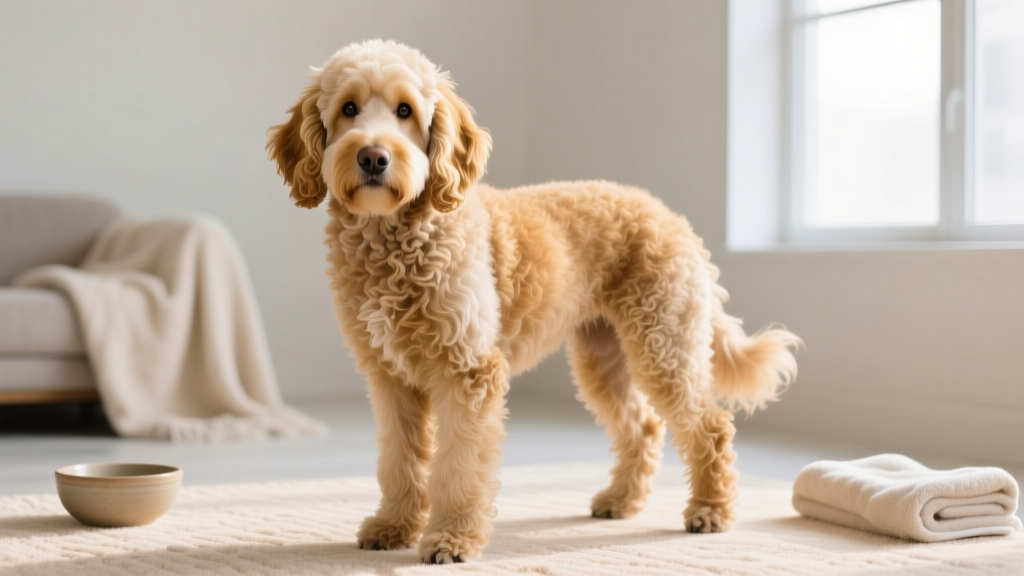
If you share your home with a Goldendoodle, you already know that their coat can be a glorious, curly, high-maintenance puzzle. One bath day can leave you wondering whether you're using the right products—or whether that tangled mess behind the ears will ever come out. Choosing the right dog shampoo and conditioner for a Goldendoodle isn't a one-size-fits-all decision. It depends heavily on which generation your dog belongs to, what coat type they inherited, and whether they have skin sensitivities common to both Poodles and Golden Retrievers.
This guide walks you through the Goldendoodle's coat genetics, breaks down what each generation means for grooming, and gives you specific product recommendations with real pricing you'll find in 2026. We'll also cover the breed profile essentials—size, temperament, health, and cost—so you have a complete reference whether you're considering a Goldendoodle or already deep in the brushing trenches.
What Two Breeds Make Up the Goldendoodle?
The Goldendoodle is a deliberate cross between the Golden Retriever and the Poodle (usually Standard or Miniature). First intentionally bred in the late 1960s and popularized in the 1990s, the goal was to combine the Golden Retriever's gentle temperament with the Poodle's low-shedding coat for allergy-sensitive households. The result is a dog that varies enormously depending on which parent's genes dominate.
| Trait | Golden Retriever | Poodle (Standard) |
|---|---|---|
| Weight Range | 55–75 lb / 25–34 kg | 40–70 lb / 18–32 kg |
| Height | 21.5–24 in / 55–61 cm | Over 15 in / 38+ cm (Standard) |
| Coat Type | Dense double coat, heavy shedding | Single curly coat, minimal shedding |
| Temperament | Friendly, eager, mouthy | Intelligent, alert, sometimes reserved |
| Lifespan | 10–12 years | 12–15 years |
| Key Health Risks | Hip dysplasia, cancer, heart disease | Addison's disease, bloat, sebaceous adenitis |
Understanding these parent breeds is essential because every Goldendoodle inherits a randomized combination of traits from each side. There is no breed standard recognized by the AKC, which means variation is the rule, not the exception.
Understanding Goldendoodle Generations: F1, F1B, F2, and Multigen
Generation terminology matters enormously when you're trying to predict coat type—and therefore which dog shampoo and conditioner will work best. Here's the breakdown:
- F1 (First Generation): 50% Golden Retriever × 50% Poodle. Most unpredictable coat—can be straight, wavy, or curly. Moderate to heavy shedding is common.
- F1B (First Generation Backcross): F1 Goldendoodle × Poodle (75% Poodle, 25% Golden). Curlier coats, lower shedding. Most commonly marketed as "hypoallergenic."
- F1BB (Second Backcross): F1B × Poodle (87.5% Poodle). Very curly, Poodle-like coat. Lowest shedding of the group.
- F2 (Second Generation): F1 × F1. Highly variable—puppies in the same litter can have drastically different coats.
- F2B: F1 × F1B or F2 × Poodle. Intermediate variability.
- Multigen (F3+): Multiple generations of Goldendoodle × Goldendoodle breeding. More predictable if the breeder has selected for consistent traits over 3+ generations.
Why this matters for shampoo selection: An F1 Goldendoodle with a straight, Golden-like double coat needs a deshedding shampoo and a lightweight conditioner that won't weigh down the undercoat. An F1B with tight Poodle curls needs a moisturizing, curl-defining conditioner to prevent matting. Using the wrong product type on the wrong coat is the single most common grooming mistake I see with Doodle owners.
How Big Will a Goldendoodle Get? Size Ranges Explained
Size depends on which Poodle variety was used (Standard, Miniature, or Toy) and the generation. Here are the realistic ranges you should plan for:
| Type | Weight Range | Height (at shoulder) | Poodle Parent Used |
|---|---|---|---|
| Standard Goldendoodle | 50–90 lb / 23–41 kg | 20–26 in / 51–66 cm | Standard Poodle |
| Medium Goldendoodle | 30–50 lb / 14–23 kg | 17–20 in / 43–51 cm | Moyen/Klein Poodle |
| Miniature Goldendoodle | 15–30 lb / 7–14 kg | 13–17 in / 33–43 cm | Miniature Poodle |
| Tiny/Toy Goldendoodle | 10–15 lb / 4.5–7 kg | Under 13 in / 33 cm | Toy Poodle |
Important caveat: F1 and F2 litters can produce puppies that fall outside these ranges. I've seen "mini" Goldendoodles hit 45 lb because the Golden Retriever genes expressed more strongly than expected. If size is a dealbreaker for your living situation, an F1B or multigen puppy from a breeder who can show you the parents' actual weights is a safer bet.
Coat Types and the Right Dog Shampoo and Conditioner for Each
Goldendoodle coats fall into three main categories, and each demands a different bathing strategy:
Straight / Flat Coat (Most Common in F1)
This coat resembles the Golden Retriever parent—straight to slightly wavy with a visible undercoat. These dogs shed moderately to heavily and benefit from:
- Shampoo: Deshedding formulas with omega-3 and omega-6 fatty acids. Look for products like the Furminator deShedding Ultra Premium Dog Shampoo (~$12–15 for 16 oz).
- Conditioner: Lightweight spray-in conditioners that don't leave residue. Heavy cream conditioners will flatten the coat and trap loose undercoat against the skin.
- Bath frequency: Every 4–6 weeks, with brushing 3–4 times per week between baths.
Wavy / Fleece Coat (Common in F1B and F2)
Loose waves that don't form tight curls. Moderate shedding. The most "forgiving" coat type for grooming:
- Shampoo: Moisturizing, sulfate-free formulas. Earthbath Oatmeal & Aloe Dog Shampoo (~$14–18 for 16 oz) is a solid choice for sensitive skin.
- Conditioner: Cream-based rinse-out conditioners. Apply from mid-shaft to tips, avoiding the skin to prevent oiliness.
- Bath frequency: Every 3–5 weeks, with brushing 2–3 times per week.
Curly / Wool Coat (Common in F1B, F1BB, Multigen)
Tight Poodle-like curls. Minimal shedding but highest matting risk. This coat type is where product selection matters most:
- Shampoo: Hydrating, curl-enhancing shampoos. Chris Christensen White on White or Ice on Ice lines ($22–35 per 16 oz) are professional-grade options many Doodle groomers recommend.
- Conditioner: Rich, detangling conditioners are non-negotiable. Leave-in conditioning sprays between baths (like Iv San Bernard Atami leave-in, ~$25–30) help prevent mat formation.
- Bath frequency: Every 3–4 weeks, with daily brushing using a slicker brush and metal comb.
Temperament: What to Expect Across the Spectrum
Goldendoodles are generally friendly, intelligent, and eager to please—traits inherited from both parent breeds. But "generally" does a lot of heavy lifting in that sentence. Here's the realistic temperament range:
Best-Case Scenario
Your Goldendoodle inherits the Golden Retriever's sociability and the Poodle's trainability. They're great with children, other dogs, and strangers. They pick up commands quickly with positive reinforcement methods—treat rewards, clicker training, and praise. They adapt well to apartment living if exercised adequately (60–90 minutes of physical activity daily for Standards, 45–60 minutes for Minis).
Challenging Scenario
Some Goldendoodles inherit the Poodle's wariness of strangers combined with the Golden's mouthy, high-energy puppy phase that can last well into year two. These dogs may bark at visitors, jump excessively, and carry objects (shoes, hands, children's arms) in their mouths. Without consistent, force-free training and adequate mental stimulation—puzzle toys, scent work, trick training—they can develop separation anxiety or nuisance barking.
Socialization Timeline
The critical socialization window closes around 14–16 weeks. If you're bringing home a Goldendoodle puppy, expose them to at least 100 novel stimuli (surfaces, sounds, people types, other animals) before 16 weeks. The AKC recommends structured socialization checklists to track exposure.
Health Considerations: Hybrid Vigor vs. Reality
Let's address a persistent myth: hybrid vigor does not eliminate health issues in Goldendoodles. The concept of heterosis (hybrid vigor) is real in livestock and some animal populations, but its application to designer dogs is overstated. A Goldendoodle can inherit any health condition that affects either parent breed. What crossbreeding may reduce is the probability of inheriting recessive conditions that require two copies of a gene—but only if both parents are genetically clear.
Health Conditions to Screen For
| Condition | Origin | Prevalence Estimate | Screening Test |
|---|---|---|---|
| Hip Dysplasia | Both parents | ~15–20% of Goldens; ~10% of Standard Poodles | OFA or PennHIP radiograph |
| Elbow Dysplasia | Golden Retriever | ~10–12% of Goldens | OFA radiograph |
| Progressive Retinal Atrophy (PRA) | Both parents | Variable; ~2–5% in Poodles | DNA test (Optigen) |
| Sebaceous Adenitis | Poodle | ~2–8% of Standard Poodles | Skin biopsy |
| Subvalvular Aortic Stenosis (SAS) | Golden Retriever | ~5–7% of Goldens | Cardiac exam + echocardiogram |
| Addison's Disease | Poodle | ~2–5% of Standard Poodles | ACTH stimulation test |
| Hemangiosarcoma | Golden Retriever | Goldens have one of the highest cancer rates among breeds (~60% lifetime cancer risk) | No reliable early screening |
What to ask a breeder: Request OFA certificates for hips, elbows, and cardiac health on both parents. For Poodle-origin conditions, ask for DNA test results for PRA (prcd-PRA), von Willebrand's disease, and degenerative myelopathy. A responsible breeder will provide these without hesitation.
Always consult your veterinarian about a health screening schedule tailored to your dog's specific generation, size, and family history. Early detection of conditions like hip dysplasia can significantly improve prognosis with weight management, physical therapy, and, when necessary, surgical intervention.
Grooming-Related Health Note
Curly-coated Goldendoodles are prone to sebaceous adenitis, an inflammatory skin condition that destroys oil glands and causes flaky, scaly skin with hair loss. If your dog's coat becomes unusually dry, brittle, or develops patches of thinning hair, consult your veterinarian before switching shampoos. The wrong product can worsen an underlying condition. Medicated shampoos containing phytosphingosine or ceramides may be prescribed.
Is a Goldendoodle Hypoallergenic or Low-Shedding?
No dog is truly hypoallergenic. Allergens come from dander (dead skin cells), saliva, and urine—not just hair. However, Goldendoodles with curly, Poodle-dominant coats (typically F1B and multigen) shed significantly less and therefore distribute less dander around your home.
Here's what the data suggests:
- F1 Goldendoodles: Approximately 50% will shed noticeably. Not suitable for allergy sufferers.
- F1B Goldendoodles: Approximately 75–85% will be low-shedding. Better odds for mild allergy sufferers.
- Multigen (F3+): Predictability depends on breeder selection. Reputable multigen breeders test for the RSPO2 gene variant associated with furnishings (the "furnishing" gene influences coat texture and shedding).
If allergies are a primary concern, request that your breeder perform DNA coat testing (available through labs like Embark or Animal Genetics, ~$50–75 per test) on parent dogs. Dogs carrying two copies of the curl gene (KRT71) and the furnishing gene (RSPO2) are most likely to produce low-shedding puppies.
How Much Does a Goldendoodle Cost?
Pricing varies dramatically based on generation, size, breeder reputation, and geographic location. Here are realistic 2026 ranges for the US market:
| Source | Price Range | What's Typically Included |
|---|---|---|
| Backyard breeder / online listing | $500–$1,500 | Usually nothing beyond the puppy. No health testing. High risk. |
| Mid-tier breeder (some health testing) | $1,500–$3,000 | First vaccines, deworming, basic vet check. Variable health screening. |
| Reputable breeder (full OFA + DNA testing) | $3,000–$5,500 | Comprehensive health testing on parents, early neurological stimulation, take-back clause, spay/neuter contract. |
| Breed-specific rescue | $200–$600 | Spay/neuter, vaccines, microchip, behavioral assessment. Availability is unpredictable. |
First-year total cost of ownership (beyond purchase price) typically runs $2,500–$4,500 including: professional grooming every 6–8 weeks ($75–120 per session for Standards), high-quality food ($50–90/month for a 50+ lb dog), pet insurance ($40–80/month), initial veterinary visits and vaccinations ($400–700), and supplies (crate, leash, harness, grooming tools: $200–400).
Grooming alone—where your dog shampoo and conditioner investment lives—will cost $600–1,200 annually if you use a professional groomer, plus $100–200 in at-home products (shampoos, conditioners, brushes, detangling sprays).
Who Is the Goldendoodle Best Suited For?
Based on temperament, exercise needs, grooming demands, and health considerations, here's an honest fit assessment:
Ideal Fit
- Active families with children ages 6+ who can participate in daily walks and play
- First-time dog owners willing to invest in puppy training classes (6–8 week courses typically cost $150–300)
- Work-from-home households—Goldendoodles are social dogs and do poorly with 8+ hours alone daily
- Mild allergy sufferers who choose F1B or multigen puppies with confirmed low-shedding parentage
- Owners who enjoy grooming or can budget for professional grooming every 6–8 weeks
Poor Fit
- Severe allergy sufferers—no Goldendoodle generation is guaranteed hypoallergenic
- Owners unwilling to brush daily—curly-coated Goldendoodles mat painfully within days of neglected brushing
- Long-hour work schedules without dog walker or daycare arrangements ($25–50/day for daycare)
- Budget-constrained households—between grooming, potential hip/elbow surgery ($3,000–7,000 per joint), and cancer treatment (Goldens have high cancer rates), emergency veterinary costs can be substantial
Goldendoodle Grooming Product Guide: Specific Picks and Prices
Based on coat type, here are specific dog shampoo and conditioner combinations with real 2026 pricing:
| Coat Type | Shampoo Pick | Conditioner Pick | Combined Cost |
|---|---|---|---|
| Straight/Flat (F1) | Furminator deShedding Ultra Premium ($12–15/16oz) | Furminator deShedding Conditioner ($12–15/16oz) | $24–30 |
| Wavy/Fleece (F1B, F2) | Earthbath Oatmeal & Aloe ($14–18/16oz) | Earthbath Oatmeal & Aloe Conditioner ($14–18/16oz) | $28–36 |
| Curly/Wool (F1B, Multigen) | Chris Christensen Ice on Ice ($25–35/16oz) | Chris Christensen Thick N Thicker ($28–38/16oz) | $53–73 |
| Sensitive Skin (Any type) | 4-Legger Organic Dog Shampoo ($16–20/16oz) | Warren London Hydrating Butter ($15–20/8oz) | $31–40 |
Frequently Asked Questions
How often should I bathe my Goldendoodle?
Every 3–6 weeks depending on coat type and activity level. Over-bathing strips natural oils and can trigger skin irritation. Curly coats tolerate more frequent bathing (every 3–4 weeks) with proper conditioning. Straight coats should be bathed less frequently (every 5–6 weeks) to preserve the undercoat's natural weather protection.
Can I use human shampoo on my Goldendoodle?
No. Human skin has a pH of approximately 5.5 (acidic), while canine skin ranges from 6.2–7.4 (closer to neutral). Human shampoos disrupt the acid mantle on dog skin, increasing susceptibility to bacterial and fungal infections. Always use a dog-formulated product. This is confirmed by veterinary dermatology guidelines referenced in the Merck Veterinary Manual.
My Goldendoodle's coat changed texture as they grew up—is this normal?
Yes. Goldendoodle puppies often have a soft, fluffy puppy coat that transitions between 6–14 months of age. The adult coat may be curlier, coarser, or a different color than the puppy coat. This transition period is when matting is most severe, and you may need to adjust your dog shampoo and conditioner products to match the new coat texture.
What's the best brush for a Goldendoodle?
For curly coats: a slicker brush (Chris Christensen Big G or similar, $55–75) followed by a stainless steel greyhound comb ($10–15) to check for remaining tangles. For wavy coats: a standard slicker brush works well. For straight coats: an undercoat rake and a bristle brush. Never use a Furminator-style de-shedding tool on curly coats—it will damage the curl pattern.
Should I take my Goldendoodle to a professional groomer or groom at home?
Most owners benefit from a hybrid approach: professional grooming every 6–8 weeks for haircuts, nail trimming, and ear cleaning, supplemented by at-home bathing and daily brushing between appointments. Professional groomers charge $75–150 per session for Standard Goldendoodles depending on coat condition and geographic area. Learning to bathe and brush at home between sessions saves $300–600 annually.
Are Goldendoodles good with children?
Generally yes, but individual temperament varies. Goldendoodles with stronger Golden Retriever influence tend to be more tolerant of children's handling. Poodle-dominant individuals may be more sensitive to loud noises and sudden movements. Always supervise interactions between dogs and children under 10, and teach children to respect the dog's resting space—especially during crate time.
Whether you're selecting your first Goldendoodle puppy or fine-tuning your grooming routine for a seasoned Doodle, understanding the genetic lottery behind their coat, temperament, and health helps you make better decisions. The right dog shampoo and conditioner is just one piece of the puzzle—but it's a piece that directly impacts your dog's comfort, skin health, and the hours you spend together on the couch post-bath.
Tom Renshaw
All our authors care for dogs every day — read more of their work on the authors page.


