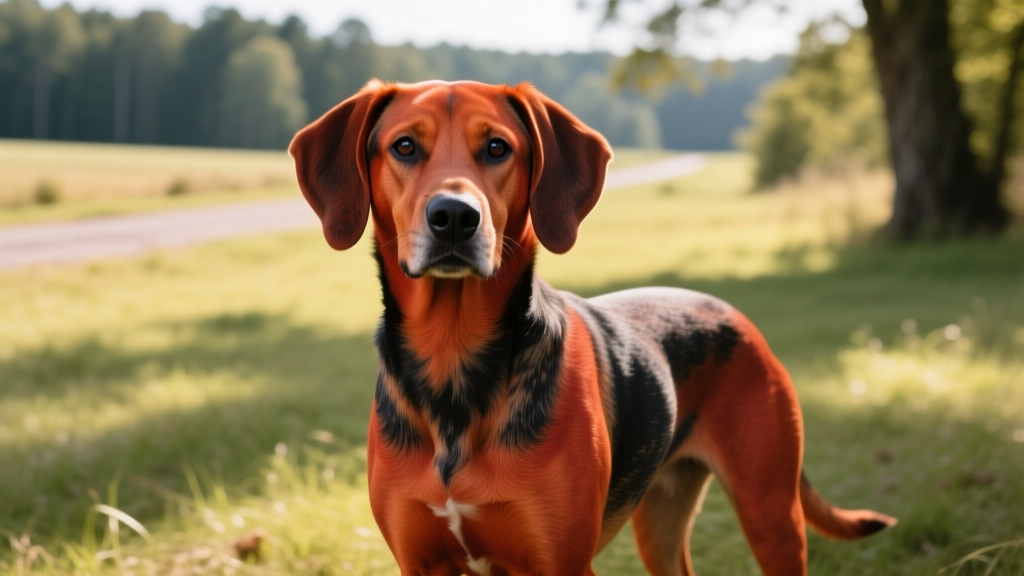
Entlebucher Mountain Dog: The Rare Swiss Herder You've Never Heard Of
Everything about the Entlebucher Mountain Dog: rare Swiss herding breed history, temperament, health risks, costs.

If you've spent any time browsing rare herding breeds, you've probably encountered the Appenzeller or the Bernese Mountain Dog. But tucked beneath those more famous Swiss cousins sits the smallest of the four Sennenhund breeds: the Entlebucher Mountain Dog. Compact, intensely loyal, and surprisingly athletic for their size, Entlebuchers (pronounced "ENT-leh-boo-cur") remain one of the least common purebred dogs in the United States — with fewer than 1,500 registered with the AKC as of recent counts.
This guide covers everything prospective owners need to know before seeking out an Entlebucher Mountain Dog puppy, from their Alpine cattle-droving origins to the specific health screenings responsible breeders should provide.
Origins: A Swiss Valley's Working Dog
The Entlebucher Mountain Dog takes its name from the Entlebuch valley in the Lucerne canton of central Switzerland. Like all four Swiss Mountain Dog breeds (the Bernese, Greater Swiss, Appenzeller, and Entlebucher), they are believed to descend from large molosser-type dogs brought across the Alps by Roman legions roughly 2,000 years ago. Over centuries of isolation in remote Alpine valleys, these dogs evolved into distinct regional types suited to specific working roles.
- ~1st century CE: Roman molosser-type dogs believed to arrive in Swiss Alps with military campaigns
- 1889: Franz Schertenlieb, a Swiss cynologist, begins promoting the "Entlebucherhund" as a distinct type after observing cattle dogs in the Entlebuch valley
- 1913: Dr. Albert Heim, a prominent Swiss geologist and dog judge, formally recognizes the Entlebucher as a separate breed at a Swiss dog show
- 1926: The Schweizerischer Klub für Entlebucher Sennenhunde (Swiss Entlebucher Mountain Dog Club) is founded
- 1927: The Swiss Kennel Club (SKC/FCI) officially recognizes the breed
- 2009: The American Kennel Club grants full recognition in the Herding Group
- 2011: The breed competes in AKC Herding Group for the first time
The Entlebucher's historical job was cattle driving and farm guarding in steep, rugged terrain. Unlike the larger Bernese, which also pulled carts, the Entlebucher was valued for speed, agility, and the ability to nip at cattle heels while dodging kicks on narrow mountain paths. They also served as general-purpose farm sentinels, alerting families to strangers or predators.
According to the AKC breed profile, the Entlebucher nearly faced extinction during the World Wars when Swiss farming modernized and demand for herding dogs plummeted. Dedicated Swiss breeders, particularly through the club founded in 1926, preserved the breed through careful line-breeding programs.
Physical Traits: Small but Substantial
| Attribute | Standard |
|---|---|
| Height (male) | 17–21 inches (43–53 cm) at withers |
| Height (female) | 16–20 inches (41–51 cm) at withers |
| Weight (male) | 55–66 lb (25–30 kg) |
| Weight (female) | 45–55 lb (20–25 kg) |
| Lifespan | 11–15 years |
| Coat | Short, close-fitting double coat; harsh outer layer |
| Color | Tricolor: black base with symmetrical white and tan (rust) markings |
| Energy Level | High — 60–90 minutes of vigorous activity daily |
| Grooming | Low — weekly brushing, seasonal shedding |
| Family Fit | Experienced owners; best with older children; not ideal first dog |
What immediately sets the Entlebucher apart from similar-looking Swiss breeds is their proportions. They are distinctly longer than they are tall — the AKC standard calls for a length-to-height ratio of roughly 10:9 — giving them a low-slung, muscular silhouette more reminiscent of a herding dog than a stock-type mountain breed. Their tail is a natural bob in many lines (a genetic trait, not docking), though some individuals carry a full-length tail.
The tricolor pattern is shared with the Bernese, Appenzeller, and Greater Swiss, but the Entlebucher's markings are tighter and more symmetrical. The white forms a blaze on the face, a chest "Swiss cross," and wraps around all four paws. Tan points appear above the eyes, on the cheeks, and on the legs between the black and white zones.
Temperament: What Surprises New Owners
People often expect a small Swiss farm dog to be gentle and laid-back, similar to the Bernese Mountain Dog's reputation. The Entlebucher is a different animal entirely. Here's what consistently catches first-time Entlebucher owners off guard:
Intensity of the herding drive. Entlebuchers were bred to control cattle by nipping heels, barking, and body-blocking. That instinct doesn't vanish in a suburban home. Expect ankle-nipping at children who run, persistent circling of joggers or cyclists on walks, and attempts to "herd" other pets. This isn't misbehavior — it's hardwired genetics that requires redirection, not suppression.
Vocalization levels. These dogs are not quiet. They were bred to alert farmers to approaching strangers across Alpine valleys, and they take that job seriously. Barking at doorbells, delivery drivers, passing dogs, and unusual sounds is baseline behavior. Training can moderate it, but if you live in an apartment with thin walls or close neighbors, this breed will create friction.
Velcro-level attachment. Entlebuchers bond intensely — almost exclusively — to their primary person. They follow owners from room to room, lean against legs during conversations, and can develop separation anxiety if left alone for extended periods without conditioning. Many owners describe them as "shadow dogs."
Intelligence paired with independence. They learn commands quickly but aren't eager to comply on your timeline. Positive reinforcement training with high-value treats (freeze-dried liver, real chicken) works well. Force-free, reward-based methods are essential — aversive tools like shock collars or prong collars damage the trust-based bond this breed requires and often trigger defensive reactivity.
How Rare Is the Entlebucher Mountain Dog Today?
The Entlebucher Mountain Dog remains genuinely rare outside Switzerland. Here's the current landscape:
- AKC registrations: The breed consistently ranks in the bottom 20 of AKC's popularity rankings (out of ~200 recognized breeds). In 2024, they placed around #175.
- US breeding population: Estimated at fewer than 30 active breeders, most concentrated in the Midwest, Pacific Northwest, and Northeast.
- Litter availability: Expect to wait 12–24 months for a puppy from a health-tested, reputable breeder. Many breeders produce only 1–2 litters per year.
- Rescue availability: Extremely limited. The National Entlebucher Mountain Dog Association (NEMDA) occasionally coordinates breed-specific rescue, but surrendered Entlebuchers are rare.
In Switzerland, the breed is more common but still considered a heritage working dog rather than a mainstream pet. The FCI (Fédération Cynologique Internationale) recognizes the breed under Group 2, Section 3 (Swiss Mountain Dogs), and maintains breed standards internationally.
Health Concerns: Breed-Specific Predispositions
Because the Entlebucher Mountain Dog population is small, the gene pool is limited. Responsible breeders screen for several heritable conditions. Before purchasing a puppy, request documentation of the following tests from both parents:
| Condition | Test | Prevalence/Notes |
|---|---|---|
| Hip Dysplasia | OFA or PennHIP radiograph evaluation | Moderate prevalence in the breed; OFA data shows approximately 15–20% of evaluated Entlebuchers rated dysplastic. Both parents should have "Good" or "Excellent" ratings. |
| Progressive Retinal Atrophy (PRA) | DNA test (prcd-PRA) + CERF/OFA eye exam annually | Autosomal recessive; carriers exist in the population. Breeding two carriers produces affected puppies. At least one parent should test clear. |
| Entlebucher Urinary Syndrome (EUS) | DNA test available | Breed-specific condition involving urinary tract abnormalities (ectopic ureters, kidney malformations). More common in females. DNA screening allows breeders to avoid producing affected puppies. |
| Elbow Dysplasia | OFA elbow radiographs | Lower prevalence than hip dysplasia but present in the breed. Parents should be cleared. |
| Hemangiosarcoma | No screening test; monitor and report to breed health database | Reported at higher-than-average rates in Entlebuchers and other Swiss breeds. Aggressive cancer of blood vessel lining; poor prognosis once diagnosed. |
Always consult your veterinarian about breed-appropriate screening and preventive care. The Orthopedic Foundation for Animals (OFA) maintains a searchable database where you can verify a dog's health clearances before purchasing a puppy.
Special Care Requirements
Entlebuchers are not high-maintenance in the grooming sense, but they have specific needs that differ from generic herding breed advice:
- Exercise: 60–90 minutes daily of structured activity — hiking, herding trials, agility, or long off-leash runs in secure areas. A yard alone is insufficient; they need a job or directed activity to prevent destructive boredom.
- Mental stimulation: Puzzle feeders, nose work, trick training sessions (10–15 minutes, 2–3x daily). Entlebuchers thrive on cognitive challenges and deteriorate behaviorally without them.
- Socialization window: Critical between 8–16 weeks. Expose puppies to diverse surfaces, sounds, people (hats, uniforms, children, elderly), and other dogs. Under-socialized Entlebuchers develop fear-based reactivity that is difficult to remediate in adulthood.
- Coat care: Weekly brushing with a slicker brush or rubber curry comb. They shed moderately year-round with heavier seasonal blows in spring and fall. Bathe only as needed (every 6–8 weeks) to preserve natural coat oils.
- Temperature sensitivity: Their double coat provides insulation but they are not cold-weather specialists like the Bernese. In temperatures below 20°F (−7°C), limit outdoor time and consider a fitted fleece coat for extended activities. In heat above 85°F (29°C), exercise during early morning/evening and provide shade and water at all times.
- Weight management: Keep body condition score (BCS) at 4–5 out of 9. Overweight Entlebuchers place excess stress on hips and elbows, accelerating dysplasia progression. Typical adult feeding: 1.5–2.5 cups of high-quality AAFCO-approved kibble daily, split into two meals, adjusted for activity level.
Entlebucher vs. Similar Breeds: A Practical Comparison
If you're drawn to the Entlebucher but aren't certain they're the right fit, here's how they compare to breeds that share similar looks or working backgrounds:
| Trait | Entlebucher Mountain Dog | Appenzeller Sennenhund | Border Collie |
|---|---|---|---|
| Weight | 45–66 lb (20–30 kg) | 49–70 lb (22–32 kg) | 30–55 lb (14–25 kg) |
| Energy | High | Very High | Very High |
| Trainability | Moderate-High (independent) | High | Exceptional |
| Barking | Frequent | Frequent | Moderate |
| Stranger Friendliness | Reserved/Alert | Reserved/Alert | Friendly-Neutral |
| Herding Style | Heeler (nips, body-blocks) | Heeler | Header (eye/stalk) |
| Apartment Suitability | Poor | Poor | Poor |
| First-Time Owner Fit | Not recommended | Not recommended | Challenging |
| AKC Popularity Rank | ~#175 | Not AKC recognized (FCI only) | ~#38 |
The Entlebucher's key differentiator from the Border Collie is physical sturdiness — they're stockier, more durable on rough terrain, and less prone to nervous sensitivity. Compared to the Appenzeller (which is not AKC-recognized), the Entlebucher is slightly smaller and marginally more available in North America.
Cost, Availability, and Finding a Breeder
Owning an Entlebucher Mountain Dog requires both patience and a realistic budget. Here's what to expect:
Puppy purchase price: $2,000–$3,500 from a health-tested, AKC-registered breeder. Prices at the lower end typically come from breeders with longer waitlists or those in regions with lower cost of living. Show-quality puppies from champion bloodlines may reach $4,000+.
First-year total costs: Budget $4,500–$7,000 when including the puppy price, initial veterinary exams, core vaccinations (DHPP series at 8, 12, and 16 weeks; rabies at 12–16 weeks), spay/neuter ($300–$800), crate, leash gear, training classes, and high-quality food.
Annual ongoing costs: $1,800–$3,200 per year for food, preventive medications (heartworm, flea/tick), routine veterinary care, pet insurance, and supplies.
- The breeder cannot provide OFA hip, elbow, and eye clearances plus DNA test results for PRA and EUS for both parents
- Puppies are available immediately with no waitlist (reputable Entlebucher breeders almost always have waitlists)
- Multiple litters are available simultaneously or year-round
- The breeder cannot explain the breed's temperament challenges or asks no questions about your lifestyle
- Puppies are priced below $1,500 — this often signals a backyard breeder or puppy mill operation
- No take-back clause or health guarantee in the purchase contract
Start your search with the AKC Entlebucher Mountain Dog marketplace and the National Entlebucher Mountain Dog Association's breeder directory. Attend regional specialty shows or herding trials to meet breeders and adult dogs in person before committing.
Is the Entlebucher Right for Your Family?
The Entlebucher Mountain Dog is best suited for:
- Active households where someone is home most of the day or can bring the dog to work
- Experienced dog owners who have managed herding or working breeds before
- Homes with a securely fenced yard (minimum 5-foot fence; Entlebuchers are athletic jumpers and climbers)
- Families with older children (8+ years) who can participate in training and respect the dog's space
- Owners interested in dog sports — herding trials, agility, rally obedience, and nose work all channel the Entlebucher's drive constructively
This breed is not a good match for first-time dog owners, apartment dwellers, families with toddlers (herding nips can knock small children over), or anyone who works 10+ hour days away from home without dog care coverage.
Frequently Asked Questions
Are Entlebucher Mountain Dogs good with cats and other small pets?
It depends heavily on early socialization and the individual dog's prey drive. Entlebuchers raised with cats from puppyhood often coexist peacefully, but their herding instinct may still trigger chasing behavior. Introduce slowly and always supervise interactions with small animals. Never leave an Entlebucher unsupervised with cats until trust is established over months, not weeks.
Do Entlebuchers shed a lot?
Moderate shedding year-round with two heavier seasonal shedding periods (spring and fall). Their short double coat is easier to manage than a Bernese Mountain Dog's, but you'll still find black and white hairs on furniture and clothing. Weekly brushing with a de-shedding tool during blow seasons significantly reduces loose hair in the home.
Can Entlebuchers be left alone during the workday?
Adult Entlebuchers can tolerate 4–6 hours alone if properly conditioned from puppyhood, but this is not a breed that thrives on long solo stretches. Without adequate exercise before departure and mental stimulation (food puzzles, frozen Kongs), they are prone to destructive behavior and excessive barking that will disturb neighbors. Consider a midday dog walker or doggy daycare 2–3 days per week if you work full-time.
How do I find Entlebucher Mountain Dog rescue dogs?
Breed-specific rescue is coordinated through the National Entlebucher Mountain Dog Association (NEMDA) and occasionally through Swiss Mountain Dog rescue organizations that take in multiple Sennenhund breeds. Available dogs are rare — typically 1–3 per year nationwide. Joining rescue notification lists and being flexible on age and location improves your chances. Expect a thorough application process including home visits and reference checks.
What is the difference between an Entlebucher and a "mini Bernese"?
There is no such thing as a recognized "miniature Bernese Mountain Dog." Some breeders market small Bernese or Bernese mixes under this label, but the Entlebucher is a completely separate breed — not a downsized Bernese. They have different temperaments, health profiles, and breed standards. If a breeder advertises "mini Bernese" puppies, this is a marketing term, not a recognized breed, and should be treated as a red flag.
Jonas Cole
All our authors care for dogs every day — read more of their work on the authors page.