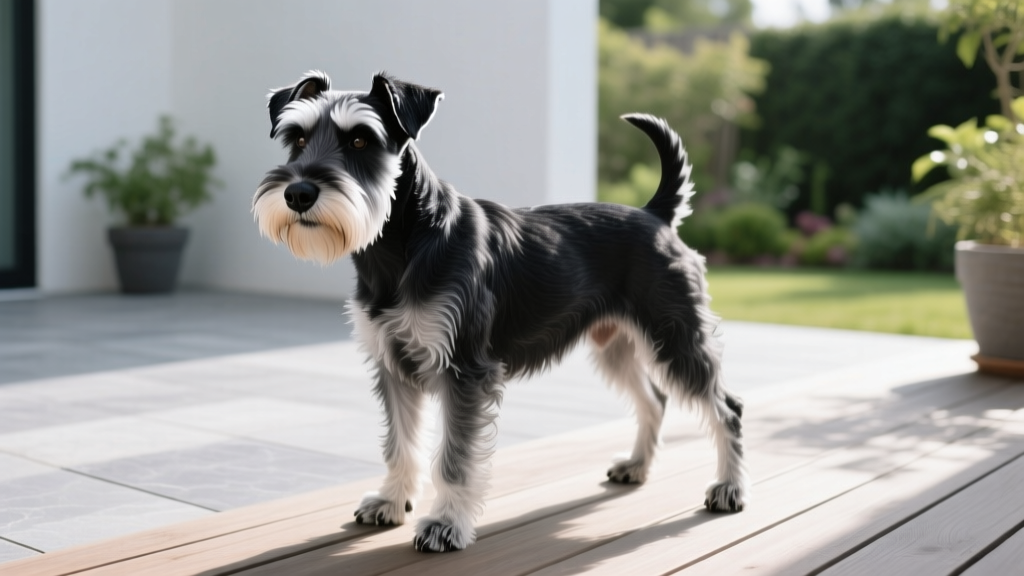
Chow Mix Shepherd: The German Shepherd Chow Chow Cross Guide
Everything about the Chow Mix Shepherd (German Shepherd x Chow Chow): size, temperament, coat, health risks, cost.

If you've encountered a dog with the striking silhouette of a German Shepherd but the unusual blue-black tongue and dense mane of a Chow Chow, you've likely met a Chow Mix Shepherd — sometimes called a Chow Shepherd, Chow Shepherd, or German Chow. This cross pairs two ancient, strong-willed working breeds, and the result is a dog that demands an owner who understands both parent lineages before bringing one home.
Unlike the heavily marketed doodle crosses, the Chow Mix Shepherd is rarely the product of intentional breeding programs. Most arise from accidental pairings or small-scale backyard operations, which means predictability is limited. This guide breaks down what you can reasonably expect — and where surprises are almost guaranteed.
The Parent Breeds Behind a Chow Mix Shepherd
Understanding any mixed breed starts with its foundation. Both the German Shepherd Dog (GSD) and the Chow Chow carry centuries of selective breeding for specific jobs, and those instincts don't disappear in a first-generation cross.
| Trait | German Shepherd (GSD) | Chow Chow |
|---|---|---|
| AKC Group | Herding | Non-Sporting |
| Typical Weight | 50–90 lb / 23–41 kg | 45–70 lb / 20–32 kg |
| Height at Shoulder | 22–26 in / 56–66 cm | 17–20 in / 43–51 cm |
| Coat | Medium or long double coat | Rough (dense) or smooth double coat |
| Shedding | Heavy, seasonal blowouts | Moderate-heavy, seasonal blowouts |
| Energy Level | High — 60–90+ min daily exercise | Low-moderate — 30–45 min daily |
| Trainability | Highly trainable, eager to work | Independent, low biddability |
| Stranger Wariness | Moderate — aloof but accepting | High — famously reserved |
| Lifespan | 7–10 years | 8–12 years |
The German Shepherd's herding drive, protective instinct, and need for mental work sit in direct tension with the Chow Chow's cat-like independence and territorial nature. A Chow Mix Shepherd can land anywhere on that spectrum — which is exactly why prospective owners need to prepare for both extremes.
Generations Explained: F1, F2, and Why It Matters Here
Generation quick reference
- F1 (first generation): One purebred GSD parent + one purebred Chow Chow parent. Maximum genetic diversity but least predictable appearance and temperament.
- F1B (backcross): An F1 Chow Shepherd bred back to one of the parent breeds (usually GSD). Slightly more predictable, leaning toward the backcross parent.
- F2 (second generation): Two F1 Chow Shepherds bred together. Trait expression becomes highly variable — some puppies look nearly purebred, others split evenly.
- Multigen (F3+): Multiple generations of Chow Shepherd to Chow Shepherd breeding. Rarely seen in this cross; unlike doodles, there is no established multigen Chow Shepherd breeding community.
Because the Chow Mix Shepherd is not a recognized designer breed with an established breeding community, the vast majority you'll encounter are F1 crosses — often accidental. This means you're essentially getting a genetic coin flip on many traits. If a breeder advertises F2 or multigen Chow Shepherds, ask for documentation of parentage and health testing; the absence of a registry like the AKC or a designer registry makes verification harder.
Size, Build, and Physical Appearance
The size range for a Chow Mix Shepherd is broader than most people expect. Because the German Shepherd is substantially taller and heavier than the Chow Chow, the mix's final size depends heavily on which parent's growth genes dominate.
| Category | Weight | Height at Shoulder |
|---|---|---|
| Small end (Chow-dominant) | 45–55 lb / 20–25 kg | 18–21 in / 46–53 cm |
| Average | 55–75 lb / 25–34 kg | 20–24 in / 51–61 cm |
| Large end (GSD-dominant) | 75–90 lb / 34–41 kg | 24–26 in / 61–66 cm |
Physical traits that tend to show up consistently include a sturdy, well-boned frame, a broad skull, and erect or semi-erect ears. The Chow Chow's signature blue-black tongue and gums may appear fully, partially (spotted), or not at all — it's a dominant trait but not guaranteed in a cross. Some Chow Shepherds develop the Chow's characteristic straight hind legs, which gives them a stilted gait; others inherit the GSD's angulated rear, though the extreme sloping topline seen in show-line GSDs is uncommon in crosses.
Coat Types, Colors, and the Shedding Reality
Both parent breeds are double-coated, so a Chow Mix Shepherd will virtually always have a double coat. The texture and length, however, vary:
- Rough-coated (Chow-dominant): Dense, off-standing outer coat with heavy ruff around the neck. Resembles a shorter-coated Chow. Requires the most maintenance.
- Medium-length (balanced): Closer to a GSD coat but thicker. Most common in F1 crosses.
- Smooth-coated: Shorter, flatter coat. Less common but possible if both parents carry smooth-coat genes.
Colors span a wide palette: black, red, cream, blue (dilute black), cinnamon, sable, and bi-color combinations. The Chow's distinctive lion-like ruff may or may not develop fully.
Is the Chow Mix Shepherd hypoallergenic or low-shedding? No. Both parent breeds are prolific shedders with dramatic seasonal coat blows (typically spring and fall). Expect year-round shedding with two heavy "blowout" periods where you'll pull out tufts of undercoat daily. If you have dog allergies or cannot tolerate fur on furniture and clothing, this is not the cross for you.
Temperament: Where Predictability Ends
The temperament of a Chow Mix Shepherd is the most unpredictable aspect of this cross, and it deserves honest discussion. Both parent breeds share traits that, when combined, can create a challenging companion for unprepared owners.
Trait variability spectrum
| Trait | GSD-leaning | Balanced mix | Chow-leaning |
|---|---|---|---|
| Sociability | Outgoing with family, reserved with strangers | Selective — bonds with 1–2 people | Aloof with nearly everyone outside family |
| Trainability | Responsive, enjoys working tasks | Trainable but needs motivation | Stubborn, questions every command |
| Protective instinct | Alert, will bark at threats | Watchful, moderate guarding | Strong territorial guarding, may react to visitors |
| Tolerance of children | Generally patient with known children | Tolerant if socialized early | Low tolerance for rough handling, unpredictable |
| Dog-dog social skills | Variable, can coexist with training | Selective, prefers familiar dogs | Often same-sex aggressive, prefers solitude |
| Separation tolerance | Prone to separation anxiety | Moderate | Generally independent, handles alone time well |
The best-case scenario is a dog with the GSD's intelligence and loyalty tempered by the Chow's calm independence — an alert, devoted companion that's trainable without being needy. The challenging scenario is a dog that inherits the Chow's wariness and territoriality without the GSD's biddability, creating an animal that is difficult to redirect once aroused and suspicious of strangers, guests, and unfamiliar dogs.
Early socialization is not optional for this cross. The critical socialization window closes around 14–16 weeks of age, and both parent breeds are prone to fear-based reactivity if underexposed during this period. Enroll in a force-free, positive reinforcement puppy class — never use prong collars, shock collars, or alpha rolls, which will amplify the defensive instincts already present in both breeds.
Health Considerations: Debunking the Hybrid Vigor Myth
A common claim in designer dog marketing is that mixed breeds automatically enjoy "hybrid vigor" — the idea that crossing two breeds eliminates inherited diseases. The reality is more nuanced. Hybrid vigor (heterosis) can reduce the risk of recessive conditions that require two copies of a gene, but it does nothing to protect against conditions that both parent breeds share or that are controlled by dominant or polygenic genes.
The Chow Mix Shepherd can inherit any of the following from either parent:
| Condition | From | Prevalence / Notes |
|---|---|---|
| Hip dysplasia | Both (especially GSD) | ~19% of GSDs affected per OFA data; also present in Chows |
| Elbow dysplasia | Both | Polygenic; screening both parents is critical |
| Degenerative myelopathy (DM) | GSD | Progressive spinal cord disease; DNA test available |
| Exocrine pancreatic insufficiency (EPI) | GSD | GSDs are the most commonly affected breed |
| Entropion | Chow Chow | Eyelid rolls inward, requires surgical correction |
| Hot spots (acute moist dermatitis) | Both | Dense double coat traps moisture; common in humid climates |
| Hip luxation / stifle issues | Chow Chow | Chows have a higher-than-average rate of cranial cruciate ligament disease |
| Bloat (GDV) | GSD (primarily) | Deep-chested dogs at higher risk; prophylactic gastropexy worth discussing with your vet |
| Autoimmune thyroiditis | Both | Can lead to hypothyroidism; annual thyroid panels recommended after age 3 |
What to ask a breeder: Request OFA or PennHIP hip scores for both parents, elbow scores, a DM DNA test result (for the GSD parent), and a current CERF/CAER eye exam. If the breeder cannot provide these, walk away — the absence of health testing dramatically increases your risk of a dog with painful, expensive orthopedic issues. According to the Merck Veterinary Manual, early screening and weight management are the most impactful interventions for dysplasia-prone dogs.
Always consult your veterinarian about a breed-appropriate wellness plan, including when to begin joint supplements (glucosamine/chondroitin or omega-3 fatty acids) and whether a prophylactic gastropexy is advisable if your dog inherits the GSD's deep chest.
Grooming and Maintenance Requirements
Regardless of which coat type your Chow Mix Shepherd inherits, plan for a significant grooming commitment:
- Brushing: 3–4 times per week with an undercoat rake and slicker brush during non-shedding seasons. Daily brushing during seasonal blows (spring and fall, each lasting 2–4 weeks).
- Bathing: Every 6–8 weeks, or as needed. Over-bathing strips natural oils from the double coat. Use a dog-specific, pH-balanced shampoo (canine skin pH is 6.2–7.4, not the same as human products).
- Drying: A forced-air dryer (like a Metro Air Force Commander, ~$120–$170) is nearly essential for a dense double coat. Air-drying a Chow Shepherd coat can take 6–8 hours and risks hot spots if the undercoat stays damp.
- Nail trims: Every 3–4 weeks. Both breeds can develop overgrown nails quickly if not walked on abrasive surfaces regularly.
- Ear cleaning: Weekly checks; erect ears (GSD-type) need less maintenance than folded ears, but the dense fur around the ear canal can trap debris.
- Never shave a double-coated dog. Shaving disrupts the thermoregulatory function of the coat and can cause permanent follicle damage (post-clipping alopecia), particularly in Chow-influenced coats.
Professional grooming costs for a dog of this size and coat density typically run $75–$120 per session for a bath-and-brush-out, with deshedding treatments adding $20–$40. Budget for 6–8 professional sessions per year plus home grooming tools ($40–$80 initial investment).
Cost: Purchase Price and Ongoing Ownership
| Expense | Range | Notes |
|---|---|---|
| Puppy from a breeder | $500–$1,500 | Health-tested parents command higher prices; avoid any breeder charging over $2,000 without full OFA documentation |
| Adoption / rescue | $100–$400 | More common route for this cross; check GSD and Chow-specific rescues |
| First-year veterinary | $800–$1,400 | Vaccines, spay/neuter, heartworm prevention, initial screening X-rays |
| Annual care (years 2+) | $1,200–$2,200 | Food, preventives, grooming, routine vet visits |
| Emergency fund recommendation | $2,000–$5,000 | Orthopedic surgery (hip or cruciate) can cost $3,500–$7,000 per procedure |
| Pet insurance (monthly) | $45–$85 | Varies by deductible, reimbursement level, and dog's age at enrollment |
Because this cross is not a popular designer breed, you're more likely to find a Chow Mix Shepherd through breed-specific rescues (German Shepherd rescues frequently take in mixes) or general shelters than through dedicated breeders. Adoption is a strong option, though it means accepting greater uncertainty about health history and early socialization.
Who Should (and Shouldn't) Consider This Cross
The Chow Mix Shepherd is not a beginner dog. The combination of guarding instincts, potential dog-aggression, and stubbornness inherited from both parent breeds requires an owner who can provide:
- Experience: At least one prior dog, preferably a strong-willed or guardian breed. First-time owners should consider lower-drive, more biddable breeds or crosses.
- Time commitment: 60–90 minutes of structured exercise daily (leash walks, hiking, structured play) plus 15–20 minutes of training or enrichment work.
- Socialization discipline: Willingness to expose the dog to diverse people, environments, and neutral dog encounters through at least the first 18 months of life.
- Household composition: Best suited to adult-only homes or families with children over age 10 who understand canine body language. Not recommended for homes with small pets (cats, rabbits) unless the dog has been raised with them — both parent breeds have prey drive.
- Space: A securely fenced yard is strongly preferred. The Chow's territoriality combined with the GSD's patrol instinct means off-leash reliability is difficult to achieve, and invisible fences are ineffective for dogs with strong guarding drives.
- Patience for grooming: If you don't enjoy brushing your dog multiple times per week, this cross will become matted and uncomfortable quickly.
This cross can be a deeply rewarding companion for the right owner — loyal, striking, and intellectually engaging. But the number of Chow Shepherds surrendered to rescues each year (often between 1–3 years of age, when guarding behaviors peak) suggests that many buyers underestimate the temperament demands. Go in with realistic expectations, invest in professional training early, and you'll give yourself the best chance at a successful partnership.
Frequently Asked Questions
What two breeds make up a Chow Mix Shepherd?
A Chow Mix Shepherd is a cross between a German Shepherd Dog and a Chow Chow. The cross is sometimes called a Chow Shepherd or German Chow. There is no recognized breed standard, so individual dogs vary significantly.
How big will a Chow Mix Shepherd get?
Most fall between 45–90 lb (20–41 kg) and 18–26 inches (46–66 cm) at the shoulder. The average is 55–75 lb and 20–24 inches, but GSD-dominant individuals can reach the upper end. You won't know a puppy's final size with certainty until around 12–14 months.
What will the temperament be like?
Expect a dog that is loyal and protective of its family, reserved to aloof with strangers, and moderately to highly independent. Trainability varies widely — some individuals are responsive and eager, while others inherit the Chow's stubbornness. Early and ongoing socialization is essential regardless of temperament leaning.
Is this mix hypoallergenic or low-shedding?
No. Both parent breeds are heavy-shedding double-coated dogs. A Chow Mix Shepherd will shed year-round and experience intense seasonal coat blows. This cross is not suitable for allergy sufferers.
What health issues might a Chow Mix Shepherd inherit?
Key concerns include hip and elbow dysplasia (from both parents), degenerative myelopathy and bloat (GSD side), entropion and cruciate ligament disease (Chow side), and autoimmune thyroiditis (both). Request full health clearances from breeders and discuss a screening plan with your veterinarian.
How much does a Chow Mix Shepherd cost?
Puppies from breeders typically range $500–$1,500, though adoption through rescues costs $100–$400. First-year ownership expenses (vet care, supplies, food, grooming) typically total $2,000–$3,500. Annual ongoing costs are approximately $1,200–$2,200.
Jonas Cole
All our authors care for dogs every day — read more of their work on the authors page.