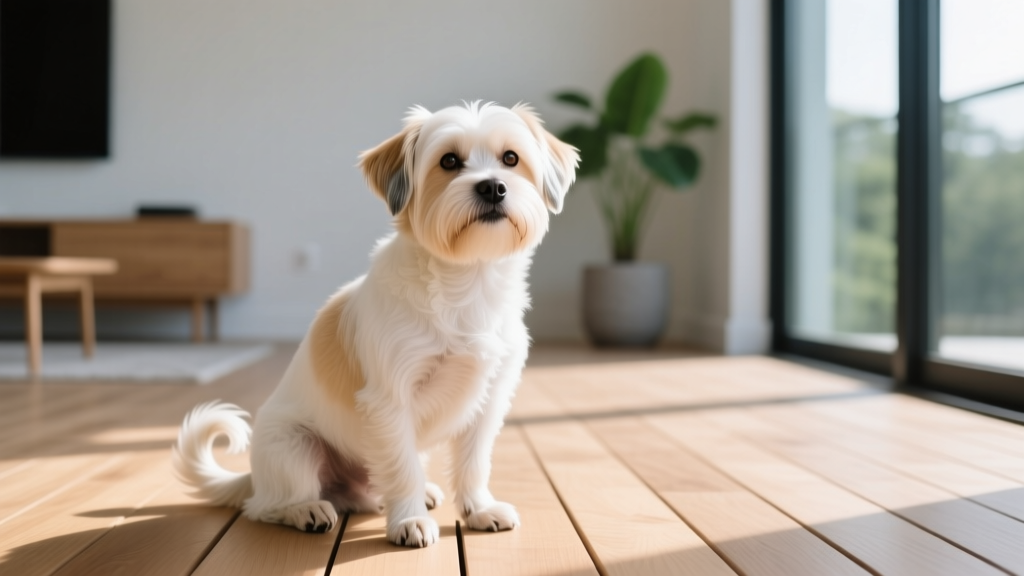
Brown Toy Poodle Mixes: What to Expect From Popular Designer Crosses
Explore brown toy poodle designer mixes including temperament, size variability, coat types, health risks, and costs for popular crosses like Cavapoo and Maltipoo.

If you've been searching for a brown toy poodle mix, you're likely drawn to the idea of a small, low-shedding companion with that rich chocolate or café-au-lait coloring that makes brown toy poodles so photogenic. Designer crosses using the toy poodle as one parent have exploded in popularity — and for good reason. But unlike purebred dogs where you can reference the AKC breed standard for predictable traits, mixed-breed puppies are genetic lotteries. This guide breaks down exactly what you can (and cannot) predict when bringing home a brown toy poodle designer mix.
Parent Breed Breakdown: The Toy Poodle Side
Understanding your mix starts with the toy poodle parent. The poodle breed standard (which covers toy, miniature, and standard varieties) describes a highly intelligent, active, and people-oriented dog. The toy variety stands under 10 inches tall and typically weighs 4–6 pounds (1.8–2.7 kg).
Toy Poodle Key Traits Passed to Mixes
- Intelligence: Ranked #2 in canine intelligence (behind only the Border Collie) according to Stanley Coren's research — this cognitive ability often transfers to mixes
- Coat genetics: The poodle's curly, continuously-growing hair (not fur) carries genes for low-shedding coats, though expression depends on the other parent's genes
- Brown color genetics: Brown in poodles is a recessive trait controlled by the B-locus (b/b genotype). Both parents must carry the brown gene for puppies to express chocolate, café, or silver-beige coloring
- Size influence: Toy poodles contribute small-frame genetics, but actual adult size depends heavily on the other parent's breed and which size-related genes the puppy inherits
- Health predispositions: Progressive retinal atrophy (PRA), patellar luxation, Legg-Calvé-Perthes disease, and dental crowding due to small jaw size
The Other Parent: Popular Brown Toy Poodle Mixes
The non-poodle parent breed dramatically shapes your dog's personality, appearance, and health profile. Here are the most common toy poodle mixes where brown coloring appears:
| Mix Name | Non-Poodle Parent | Parent Weight Range | Parent Temperament | Brown Coat Likelihood |
|---|---|---|---|---|
| Cavapoo | Cavalier King Charles Spaniel | 12–18 lb / 5.4–8.2 kg | Affectionate, gentle, eager | Moderate (if Cavalier carries brown) |
| Maltipoo | Maltese | 4–7 lb / 1.8–3.2 kg | Playful, alert, devoted | Low (Maltese are typically white) |
| Yorkipoo | Yorkshire Terrier | 4–7 lb / 1.8–3.2 kg | Bold, vocal, confident | Moderate (Yorkie saddle pattern may blend) |
| Poochon | Bichon Frisé | 12–18 lb / 5.4–8.2 kg | Cheerful, adaptable, social | Low (Bichons are white) |
| Pomapoo | Pomeranian | 3–7 lb / 1.4–3.2 kg | Lively, curious, sometimes stubborn | Moderate (Pomeranians come in brown/sable) |
| Peekapoo | Pekingese | 7–14 lb / 3.2–6.4 kg | Independent, dignified, loyal | Low–Moderate |
| Chipoo | Chihuahua | 2–6 lb / 0.9–2.7 kg | Alert, devoted, can be territorial | Moderate–High (Chihuahuas come in chocolate) |
For a brown toy poodle mix puppy to display brown coloring, both parents must contribute the recessive brown allele. This means the non-poodle parent must either be brown themselves or carry the brown gene. Breeds like the Cavalier King Charles Spaniel (Blenheim and ruby varieties), Pomeranian, and Chihuahua have higher odds of carrying brown genetics than strictly white breeds like the Maltese or Bichon Frisé.
Generation Explained: F1, F1B, F2, and Multigen
Generation Guide for Designer Mixes
F1 (First Generation): One purebred toy poodle × one purebred parent breed. Maximum genetic diversity, most unpredictable traits. Roughly 50/50 genetic split.
F1B (First Generation Backcross): An F1 mix × a purebred toy poodle (or purebred of the other parent). Approximately 75% poodle genetics. Higher likelihood of low-shedding, curly coat. More predictable poodle-like traits.
F2 (Second Generation): Two F1 mixes bred together. Highly variable — puppies can look very different from each other even in the same litter. Genetic recombination creates wide trait spread.
F2B: An F2 mix × a purebred (usually poodle). Approximately 62.5% poodle genetics.
Multigen (F3+): Multiple generations of mixed-to-mixed breeding. More predictable than F1 or F2, but still not as uniform as a purebred. Reputable multigen programs health-test every generation.
For brown coloring specifically, generation matters significantly. An F1B backcrossed to a brown toy poodle has the highest probability of producing brown puppies because 75% of the genetics come from a known brown poodle. F2 litters are the most unpredictable — you might get one brown puppy, three cream puppies, and one parti-colored puppy in the same litter.
Size Range: How Big Will a Brown Toy Poodle Mix Get?
This is where mixed-breed variability becomes most apparent. Even when both parents are small, the puppy's adult size can surprise you. Growth plates in toy and small breeds typically close between 8–12 months, though some mixes continue filling out until 14–16 months.
| Mix | Weight Range (lb / kg) | Height Range (inches / cm) | Size Notes |
|---|---|---|---|
| Cavapoo | 9–25 lb / 4.1–11.3 kg | 9–14 in / 23–36 cm | Widest range — Cavaliers are significantly larger than toy poodles |
| Maltipoo | 5–12 lb / 2.3–5.4 kg | 8–12 in / 20–30 cm | Most consistently small — both parents are tiny |
| Yorkipoo | 4–14 lb / 1.8–6.4 kg | 7–12 in / 18–30 cm | Can be very small if Yorkie genetics dominate |
| Pomapoo | 5–15 lb / 2.3–6.8 kg | 8–12 in / 20–30 cm | Pom influence can add stockiness |
| Chipoo | 3–10 lb / 1.4–4.5 kg | 6–11 in / 15–28 cm | Smallest possible mix — both parents under 7 lb |
| Poochon | 10–18 lb / 4.5–8.2 kg | 10–15 in / 25–38 cm | Tends toward the larger end of "small" |
Coat Type and the Low-Shedding Question
One of the biggest reasons people seek out brown toy poodle mixes is the hope of a low-shedding, "hypoallergenic" coat. Let's address the science directly: no dog is truly hypoallergenic. The Merck Veterinary Manual notes that dog allergies in humans are triggered by dander, saliva, and urine proteins — not fur length. However, low-shedding dogs do spread less dander around the home because their hair stays trapped in the coat rather than falling onto furniture.
Coat Possibilities by Inheritance Pattern
| Coat Type | Genetic Influence | Shedding Level | Appearance | Generation Most Likely |
|---|---|---|---|---|
| Curly (poodle-dominant) | Poodle curl gene (KRT71) | Very low | Tight curls, corded potential, brown/chocolate shades | F1B, F2B (poodle-heavy) |
| Wavy (fleece) | Mixed expression | Low to moderate | Loose waves, soft texture, teddy-bear look | F1, F2 |
| Straight (other-parent-dominant) | Non-poodle parent genes | Moderate to high | Flat coat, may have feathering (Cavalier) or silky texture (Yorkie) | F1, F2 (unpredictable) |
| Wire/harsh | Rare, breed-specific | Low (but requires stripping) | Rough texture, terrier-like | Yorkipoo, certain F2 crosses |
For brown coloring to show clearly, a curly or wavy coat tends to display the richest chocolate tones. Straight-coated mixes may show brown as a diluted or blended shade, especially if the non-poodle parent carries genes for color dilution or sable patterning.
Brown Coat Color Variations
Even within "brown," toy poodle genetics produce several shades:
- Chocolate: Deep, rich brown with liver-colored nose and eye rims. Most desirable and often most expensive.
- Café au lait: Lighter, milky brown that may lighten ("silver") with age. Born brown, fades to a silvery-beige by 18–24 months.
- Silver beige: Born brown, progressively lightens. Can be difficult to distinguish from café au lait in puppyhood.
- Apricot/cream with brown points: Not technically brown, but some mixes show brown-tipped hairs or brown patches.
Temperament: Best-Case and Challenging Scenarios
Temperament in mixed breeds exists on a spectrum. Your brown toy poodle mix might lean heavily toward the poodle parent's biddable intelligence or the other parent's more independent streak — and you won't fully know until the puppy matures past 6–8 months.
Best-Case Temperament Profile
- Highly trainable — responds to positive reinforcement quickly, learns new commands in 5–15 repetitions
- Socially confident — comfortable with strangers, children, and other dogs when properly socialized during the 3–14 week critical period
- Adaptable energy — playful when engaged, calm when the household is quiet
- Strong bond with family — follows you room to room, enjoys physical contact
- Alert without excessive barking — notifies you of visitors but settles quickly
Challenging Temperament Scenarios
- Small dog syndrome: Without consistent training, toy-sized mixes can develop resource guarding, leash reactivity, or fear-based aggression — especially Chipoo (Chihuahua) and Yorkipoo crosses
- Separation anxiety: Both toy poodles and breeds like Cavaliers and Pomeranians are prone to distress when left alone. A mix inheriting this from both sides may struggle significantly with alone time exceeding 3–4 hours
- Vocal tendencies: Pomeranian, Chihuahua, and Yorkshire Terrier mixes often inherit high vocalization drives. Expect barking at doorbells, passersby, and unfamiliar sounds
- Stubbornness: Pekingese (Peekapoo) and Chihuahua genetics can produce a dog that's intelligent but uninterested in compliance — requires patient, reward-based training methods
- Fearfulness: Poorly socialized mixes, particularly from puppy mills or high-volume breeders who don't handle puppies during the critical socialization window, may develop lifelong fear responses
Health Considerations: Hybrid Vigor vs. Reality
Let's debunk a persistent myth: hybrid vigor does not eliminate health problems in designer mixes. The concept of heterosis (hybrid vigor) applies primarily to production livestock and refers to measurable improvements in traits like growth rate and fertility. In dogs, crossbreeding can reduce the risk of recessive disorders that are common in specific purebred lines — but only if both parents are health-tested and free of those conditions. A mix whose parents both carry the gene for patellar luxation is just as likely to develop it as a purebred.
Health Conditions to Screen For
| Condition | Prevalence | Inherited From | Screening Test | Typical Treatment Cost |
|---|---|---|---|---|
| Patellar Luxation | Common in toy breeds | Both parents (all toy breeds at risk) | OFA patella evaluation | $1,500–$3,500 per knee (surgical) |
| Progressive Retinal Atrophy (PRA) | 2–5% in poodles | Toy poodle parent | DNA test (prcd-PRA), CERF eye exam | No cure — management only |
| Mitral Valve Disease (MVD) | 50%+ of Cavaliers by age 5 | Cavalier parent (Cavapoo specific) | Cardiac auscultation, echocardiogram | $200–$800/year (medication management) |
| Legg-Calvé-Perthes Disease | 1–3% in toy breeds | Both parents | X-ray at 6–12 months if limping | $2,000–$4,000 (femoral head ostomy) |
| Dental Disease | 80%+ of dogs under 10 lb by age 3 | Small jaw size (both parents) | Annual veterinary dental exam | $300–$800 per cleaning; $150–$400 per extraction |
| Tracheal Collapse | Common in toy breeds | Both parents, especially Pomeranian/Chihuahua | Radiographs, fluoroscopy | $200–$600/year (medical); $3,000–$5,000 (stent) |
| Idiopathic Epilepsy | 1–2% in poodles | Toy poodle parent | Neurological exam, MRI if indicated | $100–$400/year (anti-seizure medication) |
| Syringomyelia (SM) | Up to 70% in Cavaliers (subclinical) | Cavalier parent (Cavapoo specific) | MRI of cervical spine | $200–$600/year (pain management) |
Always consult your veterinarian about a breed-appropriate health screening schedule for your specific mix. A vet can recommend which genetic panels (such as Embark or Wisdom Panel) make sense based on your dog's known parentage and physical traits.
What Responsible Breeders Health-Test
Before purchasing any brown toy poodle mix puppy, request documentation of the following health tests for both parent dogs:
- OFA (Orthopedic Foundation for Animals) patella evaluation — rated Normal or better
- OFA or PennHIP hip evaluation (if the non-poodle parent is over 15 lb)
- CERF/OFA eye examination — current within 12 months
- DNA test for prcd-PRA (Progressive Rod-Cone Degeneration)
- Cardiac auscultation by a veterinary cardiologist (especially for Cavalier parents)
- Breed-specific DNA panels relevant to the non-poodle parent
A breeder who cannot provide these records — or who says "my dogs are healthy so I don't need to test" — is not a responsible breeder. Walk away.
Grooming Needs: What Your Mix's Coat Will Require
Grooming requirements for a brown toy poodle mix depend entirely on which coat type the puppy inherits. Here's a practical breakdown:
Curly Coat (Poodle-Dominant)
- Brushing: Every 1–2 days with a slicker brush (Chris Christensen Big G is a professional-grade option, ~$65) followed by a metal comb to check for mats at the skin level
- Professional grooming: Every 4–6 weeks for a full clip. Budget $60–$120 per session depending on your area and the groomer's experience with poodle-type coats
- Bathing: Every 2–3 weeks using a dog-specific shampoo (Earthbath Oatmeal & Aloe, ~$14) to prevent skin dryness
- Brown coat maintenance: Sun exposure can bleach brown coats to a reddish or faded tone. Limit prolonged direct sunlight and consider a dog-safe leave-in conditioner with UV protection
Wavy/Fleece Coat
- Brushing: 3–4 times per week — less prone to matting than tight curls, but tangles still form behind ears and under legs
- Professional grooming: Every 6–8 weeks
- Shedding: Light seasonal shedding possible — you may notice small amounts of hair on dark clothing
Straight Coat (Other-Parent-Dominant)
- Brushing: 2–3 times per week with a pin brush or bristle brush
- Professional grooming: Every 8–12 weeks (or as needed for sanitary trims)
- Shedding: Moderate — expect seasonal blow-outs in spring and fall if the non-poodle parent has a double coat (Pomeranian, Pekingese)
Regardless of coat type, all toy-sized mixes need:
- Daily teeth brushing with enzymatic dog toothpaste (Virbac C.E.T., ~$10) — dental disease is the #1 health issue in dogs under 20 lb
- Ear cleaning weekly with a veterinary ear wash (Epi-Otic Advanced, ~$15) — poodle-type ears trap moisture and debris, creating ideal conditions for yeast and bacterial infections
- Nail trimming every 2–3 weeks — overgrown nails alter gait and contribute to patellar luxation stress
Cost and Availability: What You'll Actually Spend
Puppy Purchase Price
| Mix | Responsible Breeder Price Range | High-Volume/Backyard Breeder | Rescue/Adoption |
|---|---|---|---|
| Cavapoo | $2,000–$4,500 | $800–$1,500 | $200–$600 |
| Maltipoo | $1,500–$3,500 | $600–$1,200 | $200–$500 |
| Yorkipoo | $1,200–$3,000 | $500–$1,000 | $150–$450 |
| Pomapoo | $1,500–$3,500 | $600–$1,200 | $200–$500 |
| Chipoo | $1,000–$2,500 | $400–$900 | $150–$400 |
| Poochon | $1,500–$3,500 | $700–$1,300 | $200–$500 |
| Peekapoo | $1,000–$2,500 | $500–$1,000 | $150–$400 |
Brown-specific coloring often commands a premium of $200–$500 above the base price because breeders must maintain brown-carrying lines, which requires deliberate genetic planning. "Rare" chocolate or café coloring marketed at prices above $5,000 is typically a red flag for exploitative pricing.
First-Year Cost Breakdown
Beyond the purchase price, budget realistically for these first-year expenses:
- Veterinary care (initial): $400–$800 — puppy vaccination series (DHPP at 8, 12, 16 weeks; rabies at 16 weeks), fecal exams, heartworm prevention start, spay/neuter ($300–$700)
- Food: $300–$500/year — small-breed formulas like Royal Canin X-Small, Hill's Science Diet Small Paws, or Open Farm Small Breed (approximately 1/4 to 1/2 cup/day depending on adult weight)
- Grooming: $480–$1,440/year — assuming professional grooming every 4–8 weeks
- Supplies: $200–$400 — harness (Ruffwear Hi & Light, ~$40), crate, bedding, toys, bowls, toothbrush, nail clippers
- Pet insurance: $300–$600/year — companies like Trupanion, Healthy Paws, or Lemonade. Enroll during the puppy wellness window before any conditions are documented as pre-existing
- Training: $150–$400 — group puppy classes (6–8 week sessions) through local positive-reinforcement trainers or facilities like PetSmart AKC S.T.A.R. Puppy programs
Total first-year estimated cost: $3,500–$7,500+ (including puppy price from a responsible breeder).
Rescue and Adoption Availability
Designer mixes do end up in rescues — typically when owners underestimate grooming needs, develop allergies, or face housing restrictions. Check breed-specific rescues (Poodle rescues often take mixes), Petfinder, and local humane societies. Adult mixes offer the advantage of known size, coat type, and temperament — removing much of the unpredictability of puppyhood. Adoption fees typically range from $200–$600 and usually include spay/neuter, vaccinations, and a microchip.
Who Is This Mix Right For?
Brown toy poodle mixes suit specific lifestyles well — and are a poor fit for others. Be honest with yourself about which category you fall into.
Ideal Homes
- Apartment dwellers: Toy-sized mixes adapt well to smaller spaces with 20–40 minutes of daily exercise (two 10–20 minute walks plus indoor play)
- Older adults or retirees: Manageable size, affectionate companionship, and lower exercise demands make these mixes excellent for less active households
- Allergy-sensitive families: While no dog is guaranteed hypoallergenic, F1B or multigen mixes with confirmed curly coats produce the least dander. Spend time with the specific puppy before committing — allergic reactions are individual
- First-time dog owners: Cavapoo and Maltipoo crosses in particular are forgiving of beginner mistakes, eager to please, and respond well to positive reinforcement training
- Work-from-home households: These dogs thrive on companionship and do best when someone is home most of the day
Poor Fits
- Families with toddlers under 5: Toy-sized dogs (under 10 lb) are fragile. A child who drops, squeezes, or steps on a small dog can cause serious injury — and the dog may bite defensively. Wait until children are old enough to understand gentle handling (typically age 6–8+)
- Long work hours (8+ hours away): Separation anxiety risk is high. If you're away all day, consider a dog sitter, doggy daycare, or a more independent breed
- Owners who want a low-maintenance coat: Even straight-coated mixes require regular grooming. Curly-coated mixes are high-maintenance — budget and time commitment are non-negotiable
- Outdoor/adventure lifestyles: Toy-sized mixes are not hiking companions for rugged terrain. They're vulnerable to predators (hawks, coyotes), temperature extremes, and rough terrain injuries
Frequently Asked Questions
What two breeds make up a brown toy poodle mix?
A brown toy poodle mix is any cross between a brown toy poodle and another breed. The most popular pairings include the Cavalier King Charles Spaniel (Cavapoo), Maltese (Maltipoo), Yorkshire Terrier (Yorkipoo), Pomeranian (Pomapoo), Chihuahua (Chipoo), Bichon Frisé (Poochon), and Pekingese (Peekapoo). The specific mix determines the dog's name and heavily influences its traits.
How big will my brown toy poodle mix get?
Adult weight ranges from as small as 3 lb (1.4 kg) for a Chipoo to as large as 25 lb (11.3 kg) for a Cavapoo that favors the Cavalier side. Most toy poodle mixes land between 5–15 lb (2.3–6.8 kg) at maturity. Height typically falls between 7–14 inches (18–36 cm) at the shoulder. Size is not guaranteed — even within the same litter, puppies can vary by 30–40% in adult weight.
What will the temperament be like?
Expect a smart, people-oriented companion who bonds closely with family. Poodle genetics contribute trainability and alertness, while the other parent adds breed-specific personality: Cavaliers add gentleness, Pomeranians add boldness, Chihuahuas add wariness with strangers. Early socialization (exposure to diverse people, sounds, surfaces, and environments between 3–14 weeks) is the single most important factor in shaping a confident, well-adjusted adult dog.
Is a brown toy poodle mix hypoallergenic or low-shedding?
No dog is truly hypoallergenic, but poodle-dominant mixes (especially F1B generations) with curly coats shed very little and may be better tolerated by people with mild dog allergies. Wavy and straight-coated mixes will shed more. Always spend time with the specific puppy or adult dog before committing — allergic responses vary by individual and by the specific dog's dander profile.
What health issues might this mix inherit?
The most common inherited risks include patellar luxation (knee dislocation), dental disease (crowded teeth in small jaws), progressive retinal atrophy, tracheal collapse, and breed-specific conditions from the non-poodle parent (such as mitral valve disease in Cavapoos or luxating patellas in Chipoos). Health testing both parent dogs significantly reduces — but does not eliminate — these risks. Always consult your veterinarian for a screening plan tailored to your dog's specific mix.
How much does a brown toy poodle designer mix cost?
From a responsible breeder, expect to pay $1,000–$4,500 depending on the specific mix, breeder reputation, and geographic location. Brown coloring may add a $200–$500 premium. Adoption through rescue organizations costs $150–$600. First-year total costs (including puppy price, veterinary care, grooming, food, and supplies) typically range from $3,500–$7,500+. Be cautious of breeders charging above $5,000 for "rare" brown coloring — this often signals profit-driven rather than health-driven breeding practices.
Can I find a brown toy poodle mix in a shelter or rescue?
Yes, though it requires patience. Check Petfinder, local humane societies, and poodle-specific rescue organizations (many accept mixes). Adult rescue dogs offer the advantage of known size, coat type, and established temperament. You may need to broaden your search geographically and set up alerts for poodle mixes in your area.
Priya Sutaria
All our authors care for dogs every day — read more of their work on the authors page.