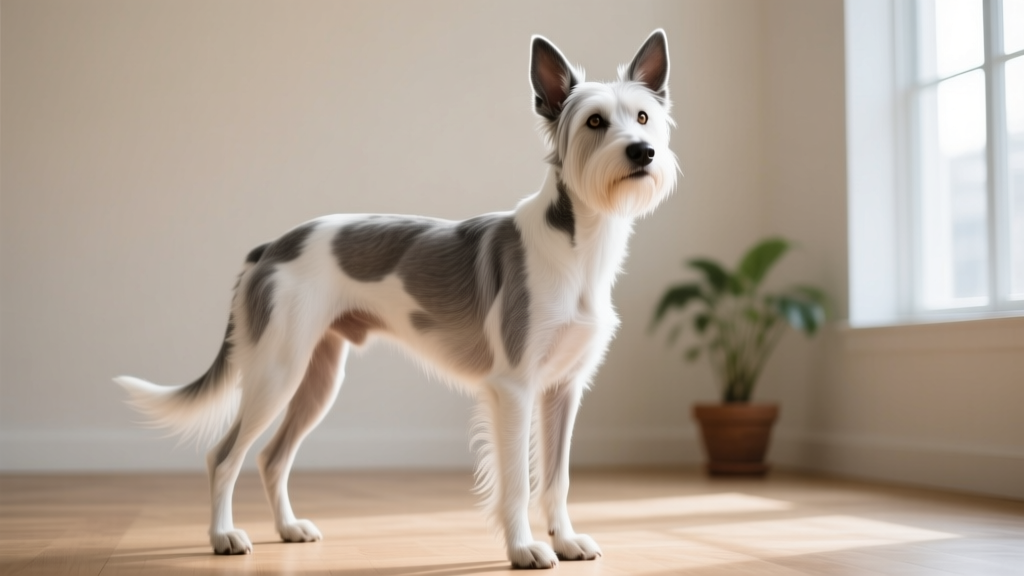
Border Doodle: The Border Collie Poodle Mix Complete Guide
Everything about the Border Doodle: size, temperament, coat types, health risks, generations (F1/F1B/F2), grooming needs, and 2026 cost breakdown.

What Is a Border Doodle?
A Border Doodle (sometimes called a Border Collie Poodle mix, Border Collie Doodle, or Bordoodle) is a designer cross between a Border Collie and a Poodle — most often a Miniature or Medium Poodle, though Standard Poodle pairings produce a noticeably larger dog. This mix combines what many consider the world's most intelligent herding breed with the world's most versatile non-sporting breed, resulting in a dog that is exceptionally bright, athletic, and often — though never guaranteed — lower-shedding than a pure Border Collie.
Border Doodles are not recognized as a standardized breed by the American Kennel Club (AKC), but they are registered with hybrid registries like the International Designer Canine Registry (IDCR) and the Designer Breed Registry (DBR). Because they are a crossbreed rather than a purebred, individual Border Doodles can vary significantly in size, coat type, temperament, and health profile — even within the same litter.
| Parent Breeds | Border Collie × Poodle (Miniature, Medium, or Standard) |
| Weight Range | 15–70 lb / 7–32 kg (depends heavily on Poodle parent size) |
| Height Range | 14–24 in / 36–61 cm at the shoulder |
| Lifespan | 12–16 years (estimated) |
| Coat Types | Curly, wavy, or straight; low-shed to moderate-shed |
| Energy Level | High to very high |
| Best Suited For | Active households, experienced owners, homes with yards |
Parent Breed Breakdown: Border Collie Meets Poodle
To understand what a Border Doodle might become, you need to understand both parent breeds. Each contributes distinct genetic tendencies, and the mix inherits a combination that's impossible to predict with certainty.
Border Collie: The Working Genius
The Border Collie originated in the Anglo-Scottish border region and was developed specifically for herding sheep. According to the AKC Border Collie breed standard, these dogs stand 18–22 inches tall and weigh 30–55 lb (14–25 kg). They are widely regarded as the most intelligent dog breed — Stanley Coren's research ranked them #1 in working and obedience intelligence, capable of learning a new command in fewer than 5 repetitions.
Border Collies carry strong herding instincts, which can manifest as nipping at heels, chasing moving objects (cars, bikes, children), and an intense "eye" — a focused stare used to control livestock. They require 90–120+ minutes of vigorous daily exercise and significant mental stimulation. Without adequate outlets, they are prone to developing destructive behaviors, anxiety, and obsessive-compulsive patterns like shadow chasing or fly snapping.
Poodle: The Versatile Athlete
The Poodle — despite its French associations — likely originated in Germany as a water retriever. Poodles come in three AKC-recognized sizes: Standard (over 15 inches, 40–70 lb / 18–32 kg), Miniature (10–15 inches, 10–15 lb / 5–7 kg), and Toy (under 10 inches, 4–6 lb / 2–3 kg). For Border Doodle breeding, Miniature and Standard Poodles are most common.
Poodles rank #2 in Coren's intelligence rankings. They are athletic, highly trainable, and carry a low-shedding, curly coat that produces less dander than many breeds — though no dog is truly hypoallergenic. Poodles are generally less driven by herding instinct but carry strong retrieving and problem-solving tendencies. Standard Poodles are typically more laid-back than Miniatures, which tend toward higher alertness and sensitivity.
| Trait | Border Collie | Poodle (Miniature/Standard) |
|---|---|---|
| AKC Group | Herding | Non-Sporting / Toy |
| Intelligence Rank | #1 (Coren) | #2 (Coren) |
| Exercise Need | 90–120+ min/day | 45–90 min/day |
| Shedding | Moderate (seasonal heavy) | Low (hair, not fur) |
| Barking Level | Moderate to high | Moderate |
| Herding Instinct | Very strong | Minimal |
| Sensitivity | High | High |
| Common Health Risks | Hip dysplasia, CEA, epilepsy | Hip dysplasia, Addison's, bloat (Standard) |
Generations Explained: F1, F1B, F2, and Multigen Border Doodles
Because Border Doodles are a designer cross, the generation of breeding significantly affects trait predictability. Understanding these terms is essential before talking to any breeder.
- F1 (First Generation): 50% Border Collie × 50% Poodle. Maximum genetic diversity, but highest trait variability. Coat type, shedding level, and size are least predictable in F1 litters.
- F1B (First Generation Backcross): F1 Border Doodle × Poodle (75% Poodle, 25% Border Collie). Bred to increase the likelihood of a low-shedding, curly coat. More predictable coat but still variable temperament.
- F1B (Reverse Backcross): F1 Border Doodle × Border Collie (75% Border Collie, 25% Poodle). Less common. Typically higher herding drive and more moderate shedding.
- F2 (Second Generation): F1 Border Doodle × F1 Border Doodle. Both parents are already mixed, producing the widest range of variation — puppies in the same F2 litter can look and behave dramatically differently.
- F2B: F1 × F1B or F2 × Poodle backcross. Aims for more coat consistency.
- Multigen (F3+): Border Doodle × Border Doodle for multiple generations. Theoretically more predictable, but no Border Doodle population is large or established enough to guarantee consistency the way purebred lines do.
What this means practically: If low-shedding is your priority, an F1B (backcrossed to a Poodle) gives you the best odds — but still not a guarantee. If you want a dog that leans more toward Border Collie working ability, an F1 or a reverse F1B backcrossed to a Border Collie is more likely to deliver that. Always ask a breeder which specific generation they produce and request the parent dogs' health testing documentation.
Size, Coat, and Appearance: The Variability Reality
One of the most common questions prospective owners ask is: "How big will my Border Doodle get?" The honest answer depends almost entirely on which size Poodle was used in the breeding.
| Poodle Parent | Estimated Adult Weight | Estimated Adult Height | Commonality |
|---|---|---|---|
| Miniature Poodle | 15–30 lb / 7–14 kg | 14–18 in / 36–46 cm | Common |
| Medium/Moyen Poodle | 25–45 lb / 11–20 kg | 17–21 in / 43–53 cm | Less common |
| Standard Poodle | 40–70 lb / 18–32 kg | 19–24 in / 48–61 cm | Common |
Even within these ranges, individual puppies can land outside expected parameters. F1 puppies tend to fall somewhere between the two parents' sizes, but genetics don't split neatly in half — a puppy might inherit a larger frame gene from the Border Collie side and a stockier build from a Standard Poodle, producing a dog heavier than either parent.
Coat Types and Shedding
Border Doodles can inherit three general coat types:
- Curly (Poodle-dominant): Tight curls, low-shedding, highest grooming maintenance. Most likely in F1B generations backcrossed to Poodles.
- Wavy/Fleece (Blended): Loose waves, moderate shedding, moderate grooming. The most common coat in F1 litters.
- Straight/Smoother (Border Collie-dominant): Flatter coat with feathering, moderate-to-high shedding, lowest grooming needs. More common in reverse backcrosses or F2 litters that lean toward the Border Collie parent.
Is a Border Doodle hypoallergenic? No dog is truly hypoallergenic. Allergens come from dander (dead skin cells), saliva, and urine — not just hair. A curly-coated, Poodle-leaning Border Doodle may produce fewer airborne allergens because the curly coat traps dander rather than releasing it. But an F1 or Border Collie-leaning Border Doodle with a wavy or straight coat will shed more and distribute more dander. If allergies are a concern, spend time with the specific puppy or adult dog before committing, and consult an allergist.
Temperament: Best-Case Scenarios and Real Challenges
The Border Doodle's temperament is where the combination of two brilliant, sensitive breeds creates both extraordinary potential and significant challenges.
Best-Case Temperament
A well-bred, well-socialized Border Doodle can be: intensely bonded to their family, eager to learn, responsive to subtle cues, excellent at dog sports (agility, obedience, rally, nose work, disc), gentle with children they're raised with, and adaptable to various living situations when their exercise and mental stimulation needs are met. Many owners describe them as "velcro dogs" — always nearby, always watching, always ready to engage.
Challenging Scenarios
The same traits that make Border Doodles wonderful can become serious problems in the wrong environment:
- Herding behaviors: Nipping at children's heels, chasing joggers or cyclists, attempting to "herd" household cats. This is instinct, not disobedience — it requires management and redirection, not punishment.
- Overstimulation and reactivity: Both parent breeds are sensitive and alert. A Border Doodle that doesn't get adequate decompression time can become reactive on-leash, hyper-vigilant at windows, or unable to settle.
- Separation distress: These dogs bond deeply and often struggle when left alone for long periods. Separation anxiety is a realistic risk, especially in dogs that haven't been gradually conditioned to alone time from puppyhood.
- Destructive intelligence: A bored Border Doodle doesn't just chew shoes — they learn to open doors, escape crates, dismantle furniture, and find creative ways to entertain themselves that owners rarely appreciate.
- Sensitivity to handler stress: Both breeds are known for absorbing their owner's emotional state. An anxious, inconsistent, or frustrated handler often produces an anxious, reactive dog.
Training Approach
Use positive reinforcement and force-free methods exclusively. Both Border Collies and Poodles are highly sensitive to correction — harsh methods, shock collars, prong collars, or alpha rolls will damage your dog's trust and often increase the very behaviors you're trying to stop. Focus on reward-based training using high-value treats, toy play, and environmental rewards. Consider enrolling in classes for agility, nose work, or competitive obedience — these dogs thrive when they have structured learning opportunities.
Health Considerations: Hybrid Vigor vs. Reality
One of the most persistent myths in designer dog marketing is that crossbreeding automatically produces healthier dogs through "hybrid vigor." The reality is more nuanced.
Hybrid vigor (heterosis) is a real genetic phenomenon — it refers to the reduced likelihood of inheriting two copies of the same recessive disease allele when parents come from unrelated gene pools. This means a Border Doodle is statistically less likely than a purebred to inherit conditions caused by recessive genes common within a single breed. However, hybrid vigor does not eliminate health risks. Both parent breeds share some overlapping conditions, and any crossbreed can inherit dominant or polygenic diseases from either side.
Health Conditions to Screen For
| Condition | Inherited From | Screening Test | Notes |
|---|---|---|---|
| Hip Dysplasia | Both breeds | OFA or PennHIP evaluation | Polygenic — both parents contribute. OFA database shows ~12% of Border Collies and ~8% of Standard Poodles rated dysplastic. |
| Collie Eye Anomaly (CEA) | Border Collie | DNA test (Optigen) | Recessive. Responsible breeders test both parents. Can cause blindness. |
| Progressive Retinal Atrophy (PRA) | Both breeds | DNA test / CERF exam | Multiple forms exist. Both breeds carry PRA-associated genes. |
| Epilepsy (Idiopathic) | Both breeds | No genetic test — diagnosis of exclusion | Border Collies have a notably higher epilepsy prevalence (~3-6%). Idiopathic means the cause is unknown. |
| Addison's Disease | Poodle (Standard) | ACTH stimulation test (if symptomatic) | Autoimmune adrenal insufficiency. More common in Standard Poodles. |
| Gastric Dilatation-Volvulus (Bloat) | Standard Poodle / deep-chested dogs | No screening — preventive gastropexy possible | Life-threatening emergency. Risk increases with deep chest conformation. |
| Multidrug Sensitivity (MDR1) | Border Collie | DNA test (WSU Vet College) | Affects drug metabolism. Dogs with MDR1 mutation can have severe reactions to ivermectin, loperamide, and others. |
What to ask a breeder: Request documentation that both parent dogs have been tested for hip dysplasia (OFA/PennHIP), CEA, PRA, and MDR1 at minimum. A reputable breeder will share these results willingly — often they're publicly searchable on the Orthopedic Foundation for Animals (OFA) database. If a breeder says "our dogs are healthy so we don't need to test," walk away.
Always consult your veterinarian for personalized health guidance for your specific dog. Regular wellness exams, maintaining a lean body condition score (BCS 4-5/9), and feeding an AAFCO-complete diet are the foundations of preventive care regardless of breed mix.
Grooming and Daily Care
Grooming requirements for a Border Doodle depend heavily on which coat type they inherit, but plan for a moderate-to-high commitment.
Curly Coat (Poodle-Dominant)
- Brushing: Every 1–2 days with a slicker brush and metal comb to prevent matting
- Professional grooming: Every 6–8 weeks ($60–$100 per session depending on region and dog size)
- Annual grooming cost: $500–$1,000+
Wavy/Fleece Coat (Blended)
- Brushing: 3–4 times per week
- Professional grooming: Every 8–10 weeks
- Annual grooming cost: $350–$700
Straight Coat (Border Collie-Dominant)
- Brushing: 2–3 times per week (daily during seasonal shedding)
- Professional grooming: Optional; occasional bath and nail trim
- Annual grooming cost: $100–$300
All Border Doodles need regardless of coat: nail trims every 2–4 weeks, ear cleaning weekly (especially floppy-eared individuals prone to ear infections), dental brushing 3–7 times per week, and regular checks for ticks and skin irritation after outdoor activity.
Exercise Requirements
Plan for a minimum of 60–120 minutes of structured daily activity. This should include:
- At least one 30–45 minute brisk walk or hike with sniffing opportunities
- 15–30 minutes of focused training (new skills, trick training, obedience practice)
- Active play: fetch, flirt pole, agility equipment, or swimming
- Mental enrichment: puzzle feeders (Kong, Outward Hound puzzles), snuffle mats, scent work games
A tired Border Doodle is a good Border Doodle. But "tired" means mentally and physically exercised — not just physically exhausted. A dog that runs 5 miles but never uses their brain will still develop behavioral problems.
Cost Breakdown: Purchase Price and Lifetime Ownership
| Expense Category | Low Range | Mid Range | High Range |
|---|---|---|---|
| Puppy Purchase (Breeder) | $1,200 | $2,000–$3,000 | $4,000+ |
| Adoption/Rescue | $200 | $400–$600 | $800 |
| First-Year Veterinary (vaccines, spay/neuter, wellness) | $500 | $800–$1,200 | $1,800+ |
| Annual Veterinary (ongoing) | $400 | $600–$900 | $1,500+ |
| Food (Quality AAFCO-Complete) | $400/yr | $600–$900/yr | $1,200+/yr |
| Grooming | $100/yr | $500–$700/yr | $1,000+/yr |
| Training Classes | $150 | $300–$600 | $1,500+ (private/specialty) |
| Pet Insurance (monthly) | $30/mo | $50–$70/mo | $100+/mo |
Realistic first-year total: $3,000–$6,000+ including puppy purchase. Ongoing annual cost: $1,500–$4,000+ depending on grooming needs, health issues, and your region. Pet insurance is strongly recommended for this mix given the potential for hip dysplasia surgery ($3,500–$7,000 per hip) or bloat emergency surgery ($3,000–$7,000+).
Breeder vs. Rescue
Reputable breeders of Border Doodles are less common than breeders of more established doodle mixes like Goldendoodles or Labradoodles. Look for breeders who: health-test both parent dogs (not just "vet-checked"), raise puppies in their home with early neurological stimulation (ENS) and Puppy Culture or similar protocols, offer a take-back clause in their contract, and can explain their generation choice and breeding goals. Avoid breeders who always have puppies available, sell through third-party websites, or cannot show you the parent dogs.
Rescue and adoption: Border Doodles and similar herding-Poodle mixes do appear in breed-specific rescues (Border Collie rescues, Poodle rescues) and general shelters. Check Petfinder, Adopt-a-Pet, and regional Doodle rescue organizations. Adult dogs from rescue can be excellent options because their size, coat type, and temperament are already established — removing much of the guesswork.
Who Is the Border Doodle Best Suited For?
This mix thrives in specific environments and struggles in others. Here's an honest assessment:
Ideal Homes
- Active individuals or couples who hike, run, or spend significant time outdoors daily
- Experienced dog owners who understand herding breed intensity and sensitivity
- Families with older children (8+) who can participate in training and respect the dog's boundaries — young toddlers and herding-instinct dogs can be a difficult combination due to nipping
- Dog sport enthusiasts interested in agility, obedience trials, herding trials, nose work, or disc competition
- Work-from-home households where the dog won't be left alone for 8+ hours regularly
- Homes with secure yards — apartment living is possible with sufficient exercise commitment but adds difficulty
Homes That Should Consider a Different Mix
- First-time dog owners who haven't researched herding breed behavior extensively
- Households where the dog will be crated or alone for 8+ hours daily
- Families seeking a low-energy "couch dog" — this is almost never a Border Doodle
- Homes with very young toddlers where herding/nipping behavior would be a safety concern
- Owners unwilling to commit to professional training or dog sports as outlets
Frequently Asked Questions
What two breeds make up a Border Doodle?
A Border Doodle is a cross between a Border Collie and a Poodle (Miniature, Medium, or Standard). The specific Poodle size used determines the resulting dog's size range.
How big will a Border Doodle get?
Border Doodles from Miniature Poodle parents typically weigh 15–30 lb (7–14 kg) and stand 14–18 inches tall. Those from Standard Poodle parents typically weigh 40–70 lb (18–32 kg) and stand 19–24 inches. Individual variation means puppies can fall outside these ranges.
What is the temperament of a Border Doodle?
Most Border Doodles are highly intelligent, energetic, sensitive, and deeply bonded to their families. They tend to be trainable and responsive but can develop anxiety, reactivity, or herding behaviors without adequate exercise, mental stimulation, and positive-reinforcement training. Temperament varies by generation and individual genetics.
Is a Border Doodle hypoallergenic or low-shedding?
No dog is truly hypoallergenic. Border Doodles with curly, Poodle-dominant coats (most common in F1B generations) tend to shed less and may be better tolerated by people with mild allergies. F1 or Border Collie-leaning Border Doodles with wavy or straight coats will shed more. Always spend time with the specific dog before committing if allergies are a concern.
What health issues might a Border Doodle inherit?
Key conditions to be aware of include hip dysplasia (both breeds), Collie Eye Anomaly and MDR1 drug sensitivity (Border Collie), Progressive Retinal Atrophy (both), idiopathic epilepsy (both, higher in Border Collies), Addison's disease (Standard Poodle), and bloat (deep-chested individuals). Ask your breeder for parent health testing documentation and consult your veterinarian for a personalized wellness plan.
How much does a Border Doodle cost?
Border Doodle puppies from breeders typically range from $1,200 to $4,000+, with most health-tested, well-bred puppies falling in the $2,000–$3,000 range. Adoption through rescues typically costs $200–$800. First-year total ownership costs range from $3,000 to $6,000+, with ongoing annual costs of $1,500–$4,000+.
Are Border Doodles good with children?
They can be excellent with children they're raised with, particularly older children (8+) who understand how to interact respectfully with dogs. However, the herding instinct can cause nipping at running children's heels, which makes supervision essential with younger kids. Early socialization and positive training for both the dog and the children are critical.
How long do Border Doodles live?
Estimated lifespan is 12–16 years, based on the lifespans of both parent breeds. Border Collies average 12–15 years and Poodles average 12–16 years (Miniatures often longer). Maintaining a healthy weight, regular veterinary care, and preventive health screening all contribute to longevity.
Dr. Hannah Wickes
All our authors care for dogs every day — read more of their work on the authors page.