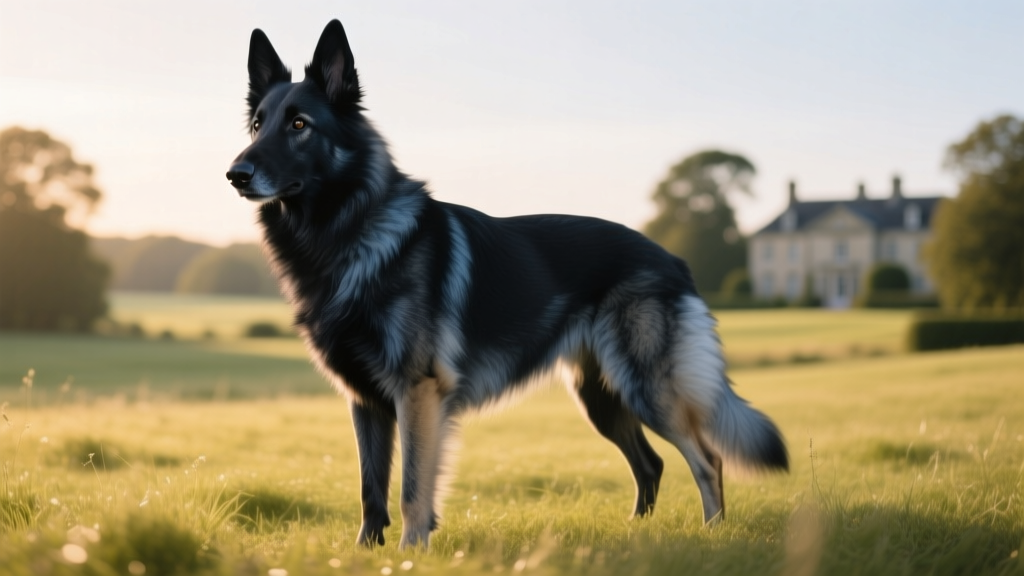
Black Great Pyrenees Dog: Rare Color, Full Breed Guide &...
the black Great Pyrenees dog: rare color genetics, temperament, size, health risks, grooming needs, training tips, and 2026 ownership costs.

What Is a Black Great Pyrenees Dog?
The black Great Pyrenees dog is one of the most striking — and most misunderstood — variations of the Great Pyrenees breed. While the American Kennel Club (AKC) breed standard describes the Pyrenean Mountain Dog as predominantly white with possible markings of badger, gray, or tan, black-coated specimens do appear in litters, particularly from working-line and European bloodlines where the original breed palette was broader.
These dogs are not a separate breed or a designer mix. A black Great Pyrenees is a purebred Great Pyrenees that carries recessive color genes producing a dark coat. The result is a giant-sized livestock guardian with the same calm, independent, and fiercely protective temperament as their white counterparts — just wrapped in an unexpected package.
Because black is considered a fault in the AKC conformation ring, you won't see these dogs at Westminster. But in working homes, on farms, and with families who prioritize temperament over show-ring politics, the black Great Pyrenees dog has earned a devoted following.
| Attribute | Details |
|---|---|
| Breed | Great Pyrenees (Pyrenean Mountain Dog) |
| Color Variant | Black (non-standard, recessive) |
| Size Class | Giant |
| Weight (Males) | 100–160 lb / 45–73 kg |
| Weight (Females) | 85–120 lb / 39–54 kg |
| Height (Males) | 27–32 in / 69–81 cm |
| Height (Females) | 25–29 in / 64–74 cm |
| Lifespan | 10–12 years |
| Coat Type | Double coat; dense undercoat, long outer coat |
| Energy Level | Low to moderate |
| Grooming Needs | High (weekly brushing minimum) |
| Family Fit | Best with experienced owners, fenced yards, and space |
Origin and History: Where Do Black Great Pyrenees Come From?
The Great Pyrenees traces its roots to the Pyrenees Mountains between France and Spain, where dogs of this type have guarded flocks for at least 3,000 years. Fossil evidence of large white mountain dogs in the region dates back to the Bronze Age (approximately 1800–1000 BCE). The breed was formalized in France by the 17th century, and Louis XIV declared the Great Pyrenees the "Royal Dog of France" in 1675.
Historically, the breed's color palette was broader than the modern AKC standard suggests. Early European working lines produced dogs in white, badger, gray, tan, and occasionally black or predominantly dark coats. As kennel clubs codified breed standards in the late 19th and early 20th centuries, white became the preferred color for conformation, and darker coats were gradually bred out of show lines.
However, black and dark-marked Great Pyrenees continued to appear in working-line breeding programs, especially in rural France and Spain, where function mattered more than coat color. Today, black Great Pyrenees dogs typically come from:
- European working lines imported from France, Spain, or Portugal, where color restrictions are less rigid
- Recessive gene expression in standard white litters — two carrier parents can produce a black pup even from AKC-registered white dogs
- Historical outcross influence — some researchers note that the Pyrenean Mastiff and other Iberian livestock guardians occasionally contributed genetics to mountain dog populations
It's important to understand that a reputable breeder will never charge a premium for a black Great Pyrenees as a "rare exotic" color. Ethical breeders price based on health testing, lineage, and breeding quality — not novelty coat colors. If someone is marketing "rare black Pyrenees puppies" at inflated prices, that's a red flag for a backyard breeder.
Physical Characteristics and Coat Genetics
A black Great Pyrenees dog is physically identical to any other Great Pyrenees in build, bone structure, and proportion. The only difference is coat pigmentation. These dogs are substantial animals — males can stand 32 inches at the shoulder and weigh up to 160 pounds (73 kg), while females are slightly smaller but still firmly in the giant-breed category.
Coat Color Variations in Black Pyrenees
Not all "black" Great Pyrenees look the same. The dark coat can manifest in several ways:
- Solid black: Entirely black coat, relatively rare; may have small white markings on the chest or feet
- Black and white (parti-color): Large black patches over a white base, sometimes resembling a Newfoundland in pattern
- Black with badger or gray overlay: Dark base coat with lighter tipping or grizzling, especially around the face and shoulders
- Dark charcoal/slate: Not truly black but very dark gray, often lightening slightly as the dog matures
The genetics behind black coats in Great Pyrenees involve the K locus (dominant black, controlled by the CBD103 gene) and the A locus (agouti signaling protein, which controls pattern distribution). A black Pyrenees likely carries at least one copy of the dominant KB allele, which overrides the agouti patterns that produce the typical badger or tan markings. Because white in the breed is controlled by separate piebald and extreme-white spotting genes, a black dog can still carry white and produce white puppies if bred to a white partner.
Body Condition and Build
Regardless of coat color, Great Pyrenees should have a body condition score (BCS) of 4–5 out of 9. You should be able to feel their ribs without pressing hard, but the ribs shouldn't be visible. These dogs are naturally broad-chested and heavy-boned — they are not supposed to look lean like a Greyhound. However, obesity is a serious concern in the breed and accelerates joint deterioration, so maintaining a healthy weight is non-negotiable.
Temperament and Personality: 5 Core Traits
The black Great Pyrenees dog shares the exact same temperament as any other Great Pyrenees. Coat color has zero influence on personality. Here are the five defining traits you'll encounter:
1. Independent Thinker
Bred to make decisions alone while guarding flocks in mountain valleys, the Pyrenees is not a breed that looks to you for constant direction. If you ask your Pyrenees to sit and they see no compelling reason to comply, they may simply stare at you and lie down instead. This is not defiance — it's a working dog evaluating whether the command serves a purpose. In my experience working with livestock guardian breeds, Pyrenees owners who succeed are the ones who reframe "obedience" as "cooperation."
2. Calm and Low-Key Indoors
Despite their massive size, adult Great Pyrenees are famously mellow inside the house. They tend to find a cool spot (often directly in front of a door or in a hallway — strategic guardian positioning) and park themselves there for hours. Many owners describe their Pyr as "a very large area rug that occasionally snores." This calmness makes them surprisingly manageable indoors, provided they have adequate space.
3. Nocturnal Vigilance
Great Pyrenees are naturally more alert at night — a holdover from their original job of protecting flocks from nocturnal predators like wolves and bears. Expect your black Pyr to patrol the yard at dusk, bark at sounds you can't hear, and prefer sleeping near entry points. This behavior is normal and deeply ingrained. It also means they can be vocal at night, which is a consideration for suburban or close-neighbor situations.
4. Gentle with Family, Reserved with Strangers
A well-socialized Great Pyrenees is patient and affectionate with their own family, including children. They are not typically clingy or velcro dogs — they show love through proximity rather than constant physical contact. With strangers, they are polite but watchful. They will position themselves between you and an unfamiliar person, not out of aggression, but out of a deep-seated instinct to assess and guard. Early and ongoing socialization is critical so this wariness doesn't become fear-based reactivity.
5. Low Prey Drive, High Guardian Drive
Unlike many giant breeds, Great Pyrenees were selected to live with the animals they protect, not chase them. This means most Pyrs coexist peacefully with cats, smaller dogs, and even backyard chickens. Their protective instinct is directed at perceived threats from outside the family unit, not at household members of any species.
Exercise, Activity, and Mental Stimulation Needs
The Great Pyrenees is a low-energy giant, but "low energy" does not mean "no exercise." Here's what a realistic daily activity plan looks like:
| Activity Type | Duration | Frequency | Notes |
|---|---|---|---|
| Leashed walk | 30–45 minutes | Daily | Two shorter walks (20 min each) work better in hot weather |
| Free yard time | 30–60 minutes | Daily | Supervised access to a securely fenced area; minimum 6-foot fence |
| Structured play | 15–20 minutes | 3–4x/week | Gentle tug, scent games, or puzzle feeders — avoid high-impact jumping |
| Mental enrichment | 10–15 minutes | Daily | Snuffle mats, frozen Kongs, hide-and-seek with treats |
| Hiking (adults only) | 60–90 minutes | 1–2x/week | Moderate terrain; avoid steep descents that stress joints |
Total daily exercise target: 45–75 minutes of mixed activity, adjusted for age, weather, and individual energy level.
A few important caveats for Great Pyrenees exercise:
- Heat sensitivity: The double coat and giant body mass make black Great Pyrenees dogs especially prone to overheating. Black coats absorb more solar radiation than white coats, so limit outdoor activity to early morning and evening when temperatures exceed 75°F (24°C). Always provide shade and fresh water.
- Puppy exercise restrictions: Giant breeds mature slowly. Avoid forced running, jogging, or repetitive jumping until growth plates close, typically between 18–24 months. Free play on soft surfaces is fine; structured high-impact exercise is not.
- Secure fencing is mandatory: Pyrenees are wanderers by nature. A 6-foot fence (minimum) with no gaps is essential. Underground electric fences are ineffective — the breed's pain tolerance and guardian instinct will override the shock, and they'll simply leave the boundary to patrol a wider territory.
Common Health Issues in the Great Pyrenees
Great Pyrenees are generally hardy for a giant breed, but their size alone creates health vulnerabilities. The black coat variant carries no additional health risks beyond those of the standard breed — color is not linked to disease in this breed. Here are the conditions every Pyr owner should know about:
| Condition | Description | Estimated Prevalence | Prevention / Management |
|---|---|---|---|
| Hip Dysplasia | Malformation of the hip joint causing arthritis and pain | ~15–20% (OFA data) | Health-test breeding parents (OFA/PennHIP); maintain lean body weight; joint supplements (glucosamine/chondroitin) from 12 months |
| Gastric Dilatation-Volvulus (Bloat/GDV) | Stomach fills with gas and twists; life-threatening emergency | Great Pyrenees are a high-risk breed; exact % varies | Prophylactic gastropexy at spay/neuter; feed 2–3 small meals daily; no vigorous exercise 1 hour before/after eating |
| Osteosarcoma | Aggressive bone cancer, typically affecting limbs | Higher than average for giant breeds | No proven prevention; early detection via lameness workup; amputation + chemotherapy offers 10–12 month median survival |
| Entropion / Ectropion | Eyelid rolling inward or outward, causing irritation | ~5–8% in some lines | Surgical correction if symptomatic; breed screening recommended |
| Hypothyroidism | Underactive thyroid causing weight gain, lethargy, coat issues | ~5–10% | Lifelong thyroid hormone replacement (levothyroxine); annual thyroid panels after age 4 |
When to see the vet immediately: If your Great Pyrenees shows a distended abdomen, unproductive retching, restlessness, or pale gums — these are signs of bloat (GDV), which can kill within hours. This is always an emergency. Do not wait to see if symptoms resolve on their own.
Before purchasing or adopting a Great Pyrenees of any color, ask the breeder for health clearances from the Orthopedic Foundation for Animals (OFA) — specifically hip, elbow, and thyroid evaluations. Reputable breeders will have these results publicly listed on the OFA database.
As with any breed health concern, always consult your veterinarian for diagnosis and treatment plans tailored to your individual dog.
Grooming Requirements for a Black Great Pyrenees
The double coat on a Great Pyrenees is a serious commitment, and black coats present unique grooming considerations. The breed has a dense, woolly undercoat beneath a longer, coarser outer coat that is naturally weather-resistant.
Brushing Schedule and Tools
- Weekly brushing (minimum): 30–45 minutes using a slicker brush and an undercoat rake. Focus on the hindquarters, behind the ears, and the "britches" (feathering on the back legs), which mat first.
- Heavy shedding seasons (spring and fall): Daily brushing for 20–30 minutes during coat blow, which lasts 2–4 weeks. An undercoat rake and a deshedding tool like the Furminator (use gently) are essential.
- Black coat advantage: Dark coats tend to show dirt less than white coats, so you may bathe a black Pyr slightly less often — every 8–10 weeks versus every 4–6 weeks for a white dog.
Essential Grooming Toolkit
- Slicker brush (large size — Chris Christensen Big G or similar quality)
- Undercoat rake (long-tooth version for thick Pyr coats)
- Steel greyhound comb for checking for remaining tangles after brushing
- High-velocity dryer (makes blow-drying after baths manageable — air-drying a Pyr coat can take 4+ hours and risks hot spots)
- Dog-specific shampoo and conditioner (oatmeal-based for sensitive skin)
- Nail clippers or a Dremel grinder — trim every 3–4 weeks
Never shave a Great Pyrenees. The double coat provides insulation against both heat and cold. Shaving disrupts the coat's natural thermoregulation, increases sunburn risk (especially on a dark-coated dog where skin underneath may be lightly pigmented), and the coat often grows back improperly — patchy, cottony, and without its weather-resistant properties.
Training and Intelligence
Great Pyrenees are intelligent dogs, but their intelligence manifests differently than in breeds like Border Collies or German Shepherds. A Pyr is capable of learning complex tasks — they just need a reason. This breed scores moderately on standardized trainability assessments, not because they lack cognitive ability, but because they were bred for independent decision-making rather than handler responsiveness.
What Works
- Positive reinforcement: Food rewards, praise, and play. Pyrs respond well to high-value treats (freeze-dried liver, cheese bits) during training sessions.
- Short sessions: 5–10 minutes, 2–3 times daily. This breed disengages quickly from repetitive drills.
- Early socialization: Between 8–16 weeks, expose your Pyr puppy to diverse people, surfaces, sounds, and other animals. This window is critical for preventing over-guarding and fear responses later.
- Consistent boundaries: Pyrs test limits calmly but persistently. If jumping on the couch is sometimes allowed and sometimes not, your Pyr will choose "sometimes" every time.
What Doesn't Work
Force-based methods, shock collars, prong collars, and alpha rolls are counterproductive with this breed. Great Pyrenees have a high pain tolerance and a strong sense of fairness — harsh corrections will damage your relationship and can trigger defensive behavior. The AVMA and the American Veterinary Society of Animal Behavior (AVSAB) recommend force-free, positive reinforcement methods for all breeds, and this is especially true for independent guardian breeds where trust is everything.
Realistic Training Expectations
You can reliably teach a Great Pyrenees basic obedience (sit, down, stay, come, loose-leash walking). Off-leash recall is challenging for most Pyrs — their instinct to patrol and investigate will often override a recall cue in an open environment. Plan to keep your Pyr on-leash or in a fenced area at all times. Advanced obedience and dog sports (rally, nosework, carting) are achievable and provide excellent mental stimulation.
Family Suitability: Kids, Pets, and Living Situations
Strengths
- Exceptionally patient and gentle with children in the family
- Low prey drive — typically coexists well with cats and small pets
- Calm indoor demeanor; not hyperactive or destructive when exercised
- Natural guardian instinct provides a sense of security
- Minimal drooling compared to other giant breeds (Mastiffs, Newfoundlands)
Challenges
- Large size poses accidental knock-over risk for toddlers
- Nocturnal barking can disturb neighbors in close-quarter housing
- Heavy shedding means dog hair on everything — permanently
- Independent nature frustrates owners expecting eager-to-please obedience
- Not suitable for apartments or homes without fenced yards
- High grooming time commitment (3–5 hours/month minimum)
Apartment Living
While some Great Pyrenees adapt to large apartments with dedicated daily outdoor time, this is not an ideal breed for apartment life. Their size, barking tendency (especially at night), and need for a secure outdoor space make them better suited to homes with yards. If you're in an apartment, consider whether you can commit to multiple daily walks, a nearby dog park, and tolerance from neighbors for occasional deep barking.
Children
Great Pyrenees are among the best giant breeds for families with children. They are patient, tolerant of handling, and naturally protective. That said, any dog over 100 pounds can accidentally injure a small child by leaning, stepping, or wagging into them. Always supervise interactions between dogs and young children, and teach children to respect the dog's resting space.
Other Pets
Most Great Pyrenees integrate well with other household dogs and cats, especially when raised together. Same-sex dog aggression can occur in some lines, so opposite-sex pairings tend to be smoother. Introductions to new animals should be gradual and supervised. With livestock (goats, sheep, chickens), the breed excels — this is literally what they were born to do.
Cost of Ownership: Purchase Price and Annual Care
Puppy and Adoption Costs
- AKC-registered puppy (standard colors, from health-tested parents): $1,500–$3,500
- Black/non-standard color puppy from a reputable breeder: $1,000–$2,500 (ethical breeders price non-standard colors lower, not higher)
- Rescue/adoption: $200–$500 through breed-specific rescues like National Great Pyrenees Rescue or local giant-breed groups
If a breeder is charging $4,000+ specifically because the puppy is "rare black," walk away. That pricing model signals a profit-driven operation, not a preservation breeder.
Annual Cost Breakdown
| Expense Category | Estimated Annual Cost | Notes |
|---|---|---|
| Food (premium large-breed kibble or balanced raw) | $900–$1,600 | Adult Pyr eats 4–6 cups/day; brands like Orijen Large Breed, Purina Pro Plan Large Breed |
| Routine veterinary care (exams, vaccines, heartworm) | $500–$900 | Includes annual exam, DHPP/rabies boosters, heartworm preventive (Heartgard Plus or Simparica Trio) |
| Flea/tick prevention | $200–$350 | Year-round in most US regions; NexGard or Bravecto |
| Grooming supplies and professional grooming | $300–$800 | Home grooming saves money; professional groomer charges $80–$150 per session for a Pyr |
| Pet insurance | $600–$1,200 | Giant breed premiums are higher; consider Trupanion, Healthy Paws, or Fetch |
| Miscellaneous (toys, bedding, leash, treats) | $300–$500 | Giant-sized beds, durable toys (Kong Extreme, West Paw) |
| Total Annual Cost | $2,800–$5,350 | First year will be higher ($4,000–$7,000+) due to spay/neuter, initial supplies, puppy vaccines |
Emergency veterinary care is not included in these estimates. A bloat surgery alone can cost $3,000–$7,000, and osteosarcoma treatment (amputation + chemotherapy) can exceed $10,000. Pet insurance or a dedicated emergency fund of at least $3,000–$5,000 is strongly recommended for any giant-breed owner.
Frequently Asked Questions
Is a black Great Pyrenees dog right for first-time owners?
Generally, no. The Great Pyrenees — regardless of coat color — is a challenging breed for first-time dog owners. Their independent nature, large size, barking tendency, and grooming demands require experience and confidence. If you're set on a Pyr as a first dog, invest in professional puppy training classes (look for a certified force-free trainer through the CCPDT directory) and commit to extensive early socialization. First-time owners may find breeds like the Bernese Mountain Dog or Newfoundland slightly more handler-focused while still offering that gentle giant experience.
How much exercise does a black Great Pyrenees need daily?
Plan for 45–75 minutes of mixed activity daily, including at least one 30–45 minute leashed walk plus supervised yard time and mental enrichment. This is a low-to-moderate energy breed, not a couch potato — they need consistent daily movement to maintain joint health and a healthy weight, but they are not endurance athletes.
What health problems is the Great Pyrenees prone to?
The most significant breed-specific risks are hip dysplasia (approximately 15–20% based on OFA data), gastric dilatation-volvulus (bloat), osteosarcoma, entropion/ectropion, and hypothyroidism. Responsible breeders screen for hip and thyroid conditions before breeding. Discuss a prophylactic gastropexy with your vet at the time of spay or neuter to reduce bloat risk.
How big does a black Great Pyrenees get?
Adult males typically weigh 100–160 lb (45–73 kg) and stand 27–32 inches (69–81 cm) at the shoulder. Females are somewhat smaller, usually 85–120 lb (39–54 kg) and 25–29 inches (64–74 cm). Growth continues until approximately 2–3 years of age, with most of the height achieved by 18 months and filling out in chest and muscle through the third year.
Is the black Great Pyrenees good with children and other pets?
Yes, with caveats. Great Pyrenees are typically excellent with children in their own family — patient, gentle, and protective. Their size means accidental knocks are possible with toddlers, so supervision is necessary. With other pets, most Pyrs coexist peacefully with cats and other dogs, especially when raised together. Their low prey drive makes them one of the safer giant breeds for multi-pet households.
How much does a black Great Pyrenees cost to buy and maintain?
Expect to pay $1,000–$2,500 for a black (non-standard) puppy from a reputable, health-testing breeder — less than standard-color puppies because ethical breeders don't inflate prices for faults. Adoption through breed rescue runs $200–$500. Annual care costs range from $2,800–$5,350, with the first year running $4,000–$7,000+ due to initial veterinary and supply expenses. Over a 10–12 year lifespan, total lifetime ownership costs typically fall between $35,000–$65,000.
Can I show a black Great Pyrenees in AKC conformation?
A black coat is a disqualifying fault under the current AKC Great Pyrenees breed standard, so a black Pyr cannot compete in AKC conformation events. However, they can participate in AKC performance events including obedience, rally, agility, and the Canine Good Citizen (CGC) program. They are also eligible for AKC Farm Dog certification, which is a natural fit for the breed's working heritage.
Priya Sutaria
All our authors care for dogs every day — read more of their work on the authors page.