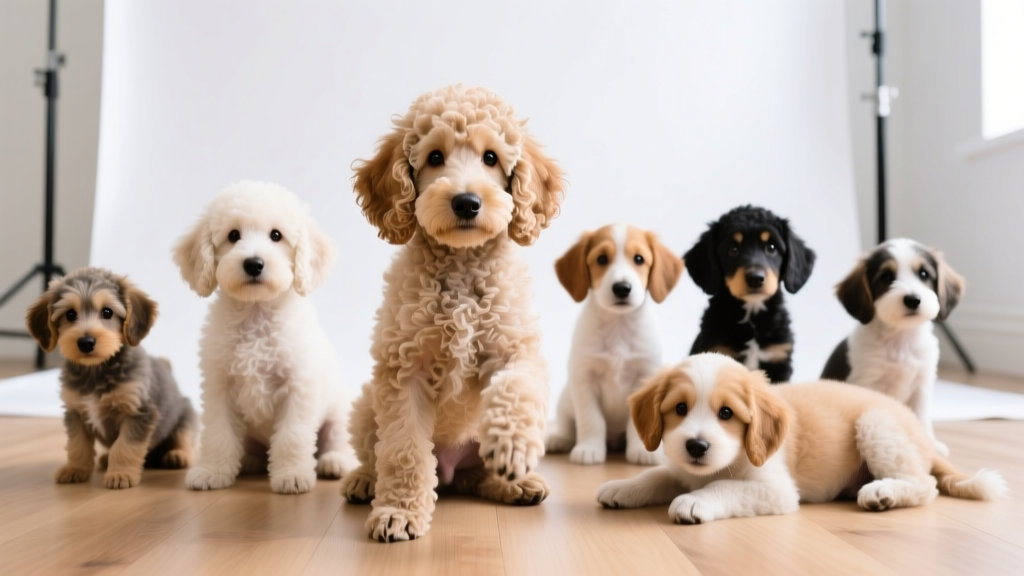
Bernadoodle Puppies: Complete Guide to the Bernese
Everything about Bernadoodle puppies: parent breeds, generations (F1/F1B), size, coat types, temperament, health risks, grooming needs, and 2026 pricing.

What Is a Bernadoodle? Understanding the Parent Breeds
A Bernadoodle (also spelled Bernedoodle) is a deliberate cross between a Bernese Mountain Dog and a Poodle (usually Standard, though Miniature Poodles are sometimes used to produce smaller versions). First developed in the early 2000s—Canadian breeder Sherry Rupke is widely credited with intentionally producing the first litter in 2003—this mix was designed to combine the gentle, loyal temperament of the Bernese with the lower-shedding coat and longer lifespan of the Poodle.
Before you commit to Bernadoodle puppies, it's essential to understand what each parent breed brings to the table. Because this is a crossbreed, individual puppies can inherit traits from either parent in unpredictable combinations.
| Trait | Bernese Mountain Dog | Standard Poodle |
|---|---|---|
| AKC Weight Range | 70–115 lb (32–52 kg) | 40–70 lb (18–32 kg) |
| AKC Height | 23–27.5 in (58–70 cm) | 15+ in (38+ cm) |
| Lifespan | 7–10 years | 12–15 years |
| Coat Type | Double coat, heavy shedding | Single curly coat, minimal shedding |
| Energy Level | Moderate; enjoys purposeful work | High; athletic and mentally active |
| Trainability | Eager but can be stubborn | Exceptionally trainable (ranked #2 by AKC) |
| Primary Health Concerns | Hip/elbow dysplasia, cancer (histiocytic sarcoma), bloat | Addison's disease, sebaceous adenitis, bloat |
| Original Purpose | Farm draught dog in Swiss Alps | Water retriever in Germany/France |
The wide gap in lifespan between these two breeds (7–10 years vs. 12–15 years) is one of the most important factors prospective Bernadoodle owners should consider. While some Bernadoodles may inherit the Poodle's longevity, others may face the Bernese Mountain Dog's shorter lifespan and cancer predisposition. There is no guarantee which parent's health profile a given puppy will follow.
Bernadoodle Generations Explained: F1, F1B, F2, and Multigen
Unlike purebred dogs, designer mixes come in different generations, which directly affect coat type, shedding level, and trait predictability. Understanding these terms is critical before you start contacting breeders about Bernadoodle puppies.
- F1 (First Generation): Bernese Mountain Dog × Poodle. 50/50 genetic split. Most variable coat types—some puppies shed heavily, others barely at all. Least predictable overall.
- F1B (First Generation Backcross): F1 Bernadoodle × Poodle. ~75% Poodle, ~25% Bernese. Higher likelihood of low-shedding, curly coats. More predictable for allergy-sensitive households.
- F1BB (Double Backcross): F1B Bernadoodle × Poodle. ~87.5% Poodle. Closest to a Poodle in coat and sometimes build, with some Bernese coloring.
- F2 (Second Generation): F1 Bernadoodle × F1 Bernadoodle. Widest genetic variation—puppies in the same litter can look and behave very differently. Least recommended for allergy sufferers.
- F3 / Multigen: F2 or later generations bred together. More stabilized traits over time, but reputable multigen breeders are rare for this particular mix.
For families with mild dog allergies, an F1B Bernadoodle generally offers the best chance of a low-shedding coat. However, no dog is truly hypoallergenic—allergens are found in dander, saliva, and urine, not just shed hair. The Mayo Clinic notes that individual reactions vary significantly regardless of breed or mix.
Size, Weight, and Growth: How Big Will Bernadoodle Puppies Get?
Because the parent breeds differ substantially in size, Bernadoodle puppies can grow into a wide range of adult sizes. The variation depends on the generation, the size of the Poodle parent (Standard vs. Miniature), and which parent's growth genes dominate.
| Type | Adult Weight | Adult Height (at shoulder) | Poodle Parent Used |
|---|---|---|---|
| Standard Bernadoodle | 70–90 lb (32–41 kg) | 23–29 in (58–74 cm) | Standard Poodle |
| Medium Bernadoodle | 45–65 lb (20–29 kg) | 18–22 in (46–56 cm) | Moyen/Klein Poodle |
| Mini Bernadoodle | 25–45 lb (11–20 kg) | 14–18 in (36–46 cm) | Miniature Poodle |
Important caveat: F1 litters are notoriously unpredictable in size. Even within a single Standard Bernadoodle litter, you might see puppies that mature to 55 lb and siblings that reach 95 lb. Reputable breeders can provide estimated ranges based on parent weights and previous litters, but guarantees are impossible. Mini Bernadoodles (using a Miniature Poodle parent) introduce additional health considerations—the size disparity between a 90 lb Bernese and a 15 lb Mini Poodle requires careful breeding practices, typically using the Bernese as the dam and artificial insemination.
Most Bernadoodle puppies reach roughly 75% of their adult weight by 6 months of age and are close to full height by 12–14 months, though they may continue filling out through 18–24 months.
Coat Types, Colors, and the Shedding Question
Coat inheritance is one of the most variable aspects of Bernadoodle puppies, and it has direct implications for your daily grooming commitment.
Three Coat Possibilities
- Curly (Poodle-dominant): Tight curls, single coat, lowest shedding. Requires professional grooming every 6–8 weeks. Most common in F1B and later generations.
- Wavy/Fleece: Loose waves, often with some undercoat. Moderate shedding. The most common F1 coat type. Requires brushing 3–4 times per week and professional grooming every 8–10 weeks.
- Straight/Flat (Bernese-dominant): Straighter hair with a double coat. Heaviest shedding, especially during seasonal coat blows in spring and fall. Least desirable for allergy sufferers but easiest to maintain at home with regular brushing.
Color Variations
Bernadoodles can inherit the classic Bernese tricolor (black, white, and rust), but you'll also see:
- Solid black
- Black and white (parti)
- Sable (tipped hairs over a lighter base)
- Phantom (dark base with lighter markings on eyebrows, chest, legs—similar to a Doberman pattern)
- Merle (only if merle genes are introduced from another breed, which is controversial and not standard for this mix)
- Apricot or cream (Poodle-dominant)
Is a Bernadoodle hypoallergenic? Not definitively. An F1B Bernadoodle with a curly coat is more likely to be low-shedding and better tolerated by allergy sufferers, but individual dogs—even within the same litter—can produce different levels of the Can f 1 protein that triggers most dog allergies. If allergies are a concern, spend time with the specific puppy before committing, and consider requesting a fur/hair sample to test against.
Temperament: What to Expect (and What Might Surprise You)
Bernadoodle temperament sits on a spectrum between the two parent breeds. Here's what experienced owners and trainers consistently report:
Best-Case Scenario
You get a dog with the Bernese Mountain Dog's calm, affectionate nature combined with the Poodle's intelligence and trainability. The result is a gentle, people-oriented companion who is eager to learn, good with children, and adaptable to various living situations. Many Bernadoodles excel as therapy dogs due to their steady demeanor.
Challenging Scenario
You may get a dog with the Poodle's high mental stimulation needs paired with the Bernese's stubborn streak—creating a dog who is smart enough to figure out what you want but unmotivated to comply. Some Bernadoodles inherit the Poodle's tendency toward anxiety when left alone (separation distress is common in Poodles) combined with the Bernese's strong bond with their primary person. Adolescent Bernadoodles (8–18 months) can be particularly mouthy and energetic, catching first-time owners off guard given their large size.
Key Temperament Traits to Prepare For
- Strong attachment: Bernadoodles tend to bond closely and follow their people room to room. This makes them poor candidates for owners who work 10+ hour days without dog care arrangements.
- Vocalization: Poodles are notably vocal dogs. Some Bernadoodles inherit this trait and will alert-bark at doorbells, passersby, and unusual sounds.
- Slow maturity: Large-breed dogs take longer to mentally mature. Expect puppy-like behavior through 2–3 years of age.
- Social needs: Early and ongoing socialization (exposure to varied people, surfaces, sounds, and other animals between 8–16 weeks) is critical. The AVMA recommends structured socialization during this sensitive period to prevent fear-based reactivity later.
Health Considerations: Hybrid Vigor vs. Reality
One of the most persistent myths about designer mixes is that "hybrid vigor" eliminates all health problems. The reality is more nuanced. While crossbreeding can reduce the risk of certain recessive genetic conditions (because the two parent breeds carry different recessive genes), Bernadoodle puppies can inherit health conditions from either parent breed.
Conditions Inherited from the Bernese Mountain Dog Side
- Hip and elbow dysplasia: Malformation of the ball-and-socket joints. The Orthopedic Foundation for Animals (OFA) reports approximately 24% of Bernese Mountain Dogs show hip dysplasia on radiographs.
- Histiocytic sarcoma: An aggressive cancer that disproportionately affects Bernese Mountain Dogs. Research published in the Journal of Veterinary Internal Medicine estimates that roughly 25% of Bernese Mountain Dogs die from this cancer. Bernadoodles may inherit this predisposition.
- Degenerative myelopathy (DM): A progressive spinal cord disease leading to hind-limb paralysis. A DNA test is available to identify carriers.
- Gastric dilatation-volvulus (GDV/bloat): A life-threatening stomach twisting condition common in large, deep-chested breeds. Preventive gastropexy surgery (stomach tacking) is worth discussing with your veterinarian, especially if spaying/neutering.
Conditions Inherited from the Poodle Side
- Sebaceous adenitis: An autoimmune skin condition that destroys oil glands, causing hair loss and skin infections.
- Addison's disease (hypoadrenocorticism): An autoimmune destruction of the adrenal glands. Requires lifelong hormone replacement but is manageable with medication.
- Progressive retinal atrophy (PRA): A degenerative eye disease leading to blindness. DNA tests are available.
- Epilepsy: Idiopathic (cause unknown) seizures. Standard Poodles have a higher-than-average incidence.
What Responsible Breeders Should Test For
Before purchasing Bernadoodle puppies, request documentation that both parent dogs have been health-tested. For a reputable Bernadoodle breeder, this should include:
- OFA or PennHIP hip and elbow evaluations (not just "vet checked")
- OFA cardiac evaluation
- OFA thyroid panel
- DNA tests for degenerative myelopathy, von Willebrand's disease, and PRA
- CERF (Canine Eye Registration Foundation) eye clearance
Large-breed puppies like Bernadoodles are at higher risk for GDV (bloat). Seek emergency veterinary care if you observe: a distended/hard abdomen, unproductive retching (trying to vomit but nothing comes up), restlessness with pacing, excessive drooling, or collapse. GDV is fatal within hours without surgical intervention. Always consult your veterinarian about breed-specific preventive care for your Bernadoodle.
Grooming, Exercise, and Daily Care Requirements
Grooming by Coat Type
| Coat Type | Home Brushing | Professional Grooming | Estimated Annual Cost |
|---|---|---|---|
| Curly (Poodle-dominant) | Daily to every other day (slicker brush + metal comb) | Every 6–8 weeks (full clip or teddy cut) | $720–$1,200 |
| Wavy/Fleece | 3–4 times per week | Every 8–10 weeks | $480–$800 |
| Straight (Bernese-dominant) | 2–3 times per week; daily during shedding season | Optional (bath and tidy every 10–12 weeks) | $200–$400 |
Matting is a genuine welfare concern for curly and wavy-coated Bernadoodles. Mats pull on the skin, restrict movement, and trap moisture—leading to hot spots and skin infections. If you cannot commit to regular brushing, budget for professional grooming or choose a different mix. A quality slicker brush (such as the Chris Christensen Big G or Big K series, $55–$85) and a stainless steel greyhound comb ($15–$25) are essential tools.
Exercise Needs
Adult Standard Bernadoodles typically need 60–90 minutes of daily exercise, split into at least two sessions. This should include:
- Leashed walks (30–45 minutes total)
- Off-leash play in a secure area (fetch, swimming—many inherit the Poodle's love of water)
- Mental enrichment: puzzle feeders (Outward Hound Nina Ottosson toys, $15–$30), scent work, or short training sessions
Critical for puppies: Large-breed puppies should NOT engage in forced exercise (long runs, repetitive jumping, agility) until their growth plates close—typically between 14–18 months. The Merck Veterinary Manual notes that growth plate injuries in large-breed puppies can cause permanent deformity. Follow the "5 minutes per month of age" rule for structured walks: a 4-month-old Bernadoodle puppy should have roughly 20 minutes of structured walking per day.
Cost Breakdown: Buying, Adopting, and Ongoing Expenses
Purchase Price for Bernadoodle Puppies (2026 Estimates)
| Source | Price Range | What's Typically Included |
|---|---|---|
| Reputable breeder (health-tested parents, OFA certs) | $2,500–$5,000 | Health guarantee, first vaccines, microchip, dewclaw removal, early socialization program |
| High-demand breeder (champion lines, rare colors) | $5,000–$8,000+ | Same as above plus extended health guarantees, puppy culture programs |
| Backyard breeder / online marketplace | $800–$2,000 | Often nothing; no health testing, no guarantees |
| Bernedoodle-specific rescue or large-breed rescue | $300–$700 | Spay/neuter, vaccines, microchip, behavioral assessment |
A warning about low-cost puppies: Bernadoodle puppies advertised for under $1,500 from online sellers or pet stores are frequently sourced from puppy mills where neither parent has been health-tested. Given the Bernese Mountain Dog's cancer predisposition and the Poodle's autoimmune conditions, skipping health testing can result in thousands of dollars in veterinary bills and heartbreak. Adopting from a rescue is a legitimate, ethical alternative—check organizations like IDOG Rescue or breed-specific Bernese Mountain Dog rescues that occasionally take in mixes.
First-Year Cost Estimate
Beyond the purchase price, budget for:
- Veterinary care (initial exam, vaccine series, spay/neuter, heartworm prevention): $800–$1,500
- Food (large-breed puppy formula, ~4–6 cups/day at maturity): $600–$1,000/year
- Grooming: $480–$1,200/year depending on coat type
- Supplies (crate, bed, leash, harness, toys, puzzle feeders): $300–$600
- Training (group puppy class + basic obedience): $200–$500
- Pet insurance (recommended for this mix): $600–$1,200/year
Total realistic first-year cost: $5,500–$10,000+ including puppy purchase. Annual costs after the first year typically range from $2,500–$4,500.
Who Is the Bernadoodle Best Suited For?
Based on the temperament range, size, grooming demands, and health considerations of this mix, here's a practical fit assessment:
Good Fit If You:
- Have experience with large-breed dogs or have completed training classes before
- Can dedicate 60–90 minutes daily to exercise and mental enrichment
- Are home often or have dog daycare/walker arrangements (Bernadoodles struggle with prolonged isolation)
- Have a fenced yard (a minimum 5-foot fence for Standard Bernadoodles—they can be athletic jumpers)
- Are prepared for the grooming commitment or the budget for professional grooming
- Understand the lifespan may be as short as 8–10 years and have an emergency veterinary fund or pet insurance
Poor Fit If You:
- Are a first-time dog owner without access to a qualified positive-reinforcement trainer
- Work long hours away from home without pet care support
- Live in a small apartment without nearby green space (Mini Bernadoodles may adapt better to apartment life)
- Have severe dog allergies and haven't tested your reaction to the specific dog
- Cannot budget for potential cancer screening or orthopedic surgery ($3,000–$7,000 for TPLO surgery if a knee ligament tears)
Frequently Asked Questions About Bernadoodle Puppies
What two breeds make up a Bernadoodle?
A Bernadoodle is a cross between a Bernese Mountain Dog and a Poodle (Standard, Moyen, or Miniature depending on the desired size of the offspring).
How big will my Bernadoodle puppy get?
Standard Bernadoodles typically reach 70–90 lb (32–41 kg) and 23–29 inches tall. Mini Bernadoodles (from a Miniature Poodle parent) reach 25–45 lb (11–20 kg). F1 litters are highly variable—even breeders cannot guarantee adult size.
What is the temperament of a Bernadoodle?
Most Bernadoodles are affectionate, people-oriented, and moderately playful. They tend to bond closely with their families and can be reserved with strangers initially. Intelligence is high (inherited from the Poodle), but motivation varies—some are eager workers while others inherit the Bernese's more relaxed approach to training.
Is a Bernadoodle hypoallergenic or low-shedding?
No dog is truly hypoallergenic. F1B Bernadoodles (backcrossed to a Poodle) are most likely to have low-shedding curly coats, but F1 Bernadoodles can have straight, shedding coats. If allergies are a concern, spend time with the specific puppy before purchasing and consider an F1B generation.
What health issues might Bernadoodle puppies inherit?
Key risks include hip and elbow dysplasia, histiocytic sarcoma (cancer), degenerative myelopathy, bloat (GDV), sebaceous adenitis, Addison's disease, and progressive retinal atrophy. Reputable breeders test parent dogs for these conditions through OFA evaluations and DNA panels.
How much do Bernadoodle puppies cost?
From a reputable breeder with health-tested parents, expect to pay $2,500–$5,000. Rescue adoption fees range from $300–$700. First-year total costs including the puppy, veterinary care, food, grooming, and supplies typically fall between $5,500 and $10,000.
Are Bernadoodles good with children?
Generally yes—both parent breeds are known for being good with children. However, a large, clumsy adolescent Bernadoodle (50–80 lb at 8 months) can accidentally knock over toddlers. Always supervise interactions between young children and dogs, and teach children to respect the dog's space during eating and sleeping.
What training methods work best for Bernadoodles?
Positive reinforcement methods (treat rewards, clicker training, play rewards) work best. Bernadoodles are sensitive dogs who shut down under harsh corrections. Use force-free, reward-based training from puppyhood. Avoid shock collars, prong collars, and alpha rolls—these methods damage trust and can create fear-based behavioral problems. Enroll in a puppy kindergarten class by 12–16 weeks of age for foundational socialization and basic cues.
Marcus Aldridge
All our authors care for dogs every day — read more of their work on the authors page.