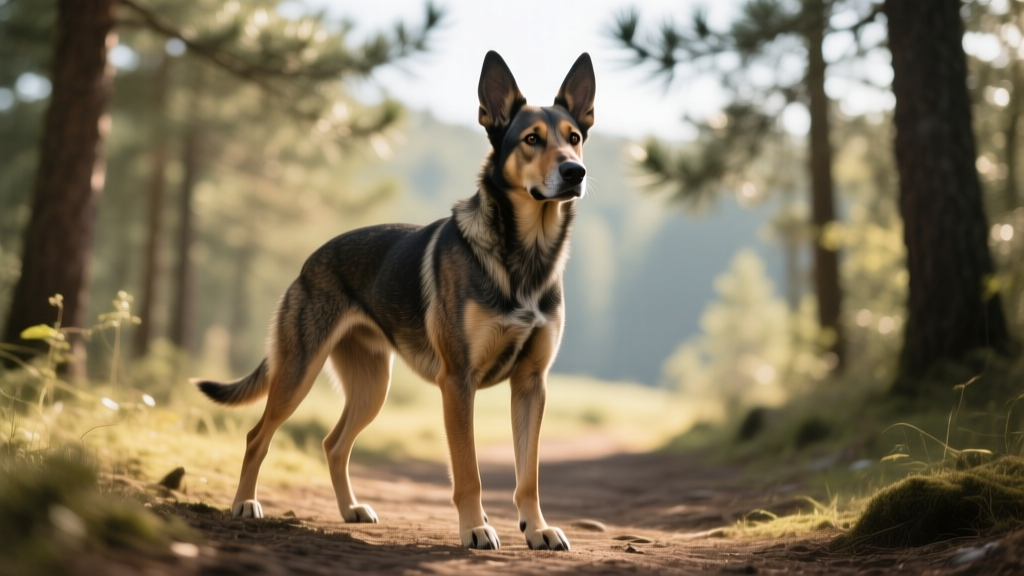
Australian Cattle Dog Mix: Traits, Size, Health & Care Guide
the Australian Cattle Dog mix: parent breed traits, size range, temperament variability, health risks, grooming, and cost.

What Is an Australian Cattle Dog Mix?
An Australian Cattle Dog mix is any cross between a purebred Australian Cattle Dog (also called a Blue Heeler or Queensland Heeler) and another breed. Unlike standardized purebreds registered with the AKC, these mixed-breed dogs inherit a variable combination of traits from both parent lines. The result can range from a compact, high-drive herding dog to a larger, more relaxed companion — depending entirely on which genes dominate.
The most common Australian Cattle Dog crosses seen in shelters and through intentional breeders include mixes with Labrador Retrievers, German Shepherds, Border Collies, Boxers, Pit Bull-type breeds, and Australian Shepherds. Each pairing shifts the size, coat, energy level, and temperament in different directions.
Parent Breed Breakdown: What Each Side Contributes
Understanding the parent breeds is the single best tool for predicting what an Australian Cattle Dog mix might be like. Here's a side-by-side comparison of the Australian Cattle Dog and the most common breeds it's crossed with.
| Trait | Australian Cattle Dog | Labrador Retriever | German Shepherd | Border Collie |
|---|---|---|---|---|
| Weight | 35–50 lb (16–23 kg) | 55–80 lb (25–36 kg) | 50–90 lb (23–41 kg) | 30–55 lb (14–25 kg) |
| Height | 17–20 in (43–51 cm) | 21.5–24.5 in (55–62 cm) | 22–26 in (56–66 cm) | 18–22 in (46–56 cm) |
| Energy Level | Very high (2+ hrs/day) | High (1–2 hrs/day) | High (1.5–2 hrs/day) | Very high (2–3 hrs/day) |
| Coat | Short, dense double coat | Short, dense double coat | Medium-long double coat | Medium, rough or smooth |
| Herding Drive | Very strong (heel-nipping) | Low (retrieving instinct) | Moderate (guardian instinct) | Very strong (eye/herd) |
| Stranger Wariness | High — aloof, watchful | Low — typically friendly | High — protective | Moderate — reserved |
| Lifespan | 12–16 years | 11–13 years | 7–10 years | 12–15 years |
The Australian Cattle Dog side brings intensity, intelligence, a strong herding instinct (including nipping at heels), and a compact, athletic build. According to the AKC breed standard, these dogs were developed in 19th-century Australia to drive cattle across rough terrain — and that working heritage shows up in every mix they contribute to.
How Big Will an Australian Cattle Dog Mix Get?
Size is one of the most variable traits in any mixed-breed dog. The final adult weight and height depend on the other parent breed's size, the sex of the dog, and which growth-influencing genes dominate.
| Mix Type | Expected Weight Range | Expected Height Range | Size Category |
|---|---|---|---|
| ACD × Border Collie | 30–50 lb (14–23 kg) | 17–21 in (43–53 cm) | Medium |
| ACD × Labrador | 45–70 lb (20–32 kg) | 19–23 in (48–58 cm) | Medium-Large |
| ACD × German Shepherd | 50–80 lb (23–36 kg) | 20–25 in (51–64 cm) | Large |
| ACD × Boxer | 45–70 lb (20–32 kg) | 19–23 in (48–58 cm) | Medium-Large |
| ACD × Pit Bull-type | 40–65 lb (18–29 kg) | 18–22 in (46–56 cm) | Medium-Large |
| ACD × Australian Shepherd | 40–60 lb (18–27 kg) | 18–22 in (46–56 cm) | Medium |
Growth timeline: Most Australian Cattle Dog mixes reach close to their full height by 10–12 months and fill out to their adult weight by 14–18 months. Larger mixes (ACD × GSD) may continue gaining muscle mass until 24 months.
Temperament: Best-Case and Challenging Scenarios
Temperament is where mixed-breed unpredictability matters most. An Australian Cattle Dog mix can inherit any combination of the following traits, and the expression varies even within a single litter.
Best-Case Temperament Profile
The ideal Australian Cattle Dog mix is alert, loyal, highly trainable, and bonds deeply with its family. It channels the ACD's intelligence into cooperative work — excelling at agility, nose work, obedience, or structured hiking — without the obsessive herding or suspicion of strangers. The other parent breed softens the ACD's intensity: a Lab cross might be more outgoing with visitors; a GSD cross might be more biddable and less prone to nipping.
Challenging Temperament Scenarios
The harder end of the spectrum includes:
- Heel-nipping and herding children or other pets — the ACD's cattle-driving instinct can manifest as biting at running kids' ankles. This is not aggression; it's hardwired herding behavior that requires redirection through positive reinforcement training.
- Hyper-vigilance and reactivity — some mixes inherit high stranger wariness from the ACD side combined with protective instinct from a GSD parent, creating a dog that barks, lunges, or shows fear-aggression toward unfamiliar people or dogs.
- Destructive behavior from under-stimulation — an ACD mix that receives less than 90 minutes of physical exercise plus mental enrichment daily will often chew furniture, dig, bark persistently, or attempt to escape yards.
- Same-sex dog aggression — this trait appears more frequently in intact ACD males and can carry into mixes, particularly with other strong-willed breeds.
Coat Types, Shedding, and Grooming Requirements
Coat inheritance in Australian Cattle Dog mixes depends heavily on the other parent breed. Here's what to expect:
| Mix | Likely Coat Type | Shedding Level | Grooming Frequency |
|---|---|---|---|
| ACD × Lab | Short, dense double coat | Heavy (year-round + seasonal blow) | Brush 2–3×/week; de-shedding tool during blow |
| ACD × GSD | Medium to long double coat | Very heavy | Daily brushing; professional grooming optional |
| ACD × Border Collie | Medium, rough or smooth | Moderate to heavy | Brush 3–4×/week |
| ACD × Boxer | Short, single coat possible | Low to moderate | Brush 1–2×/week; wipe with grooming mitt |
| ACD × Pit Bull-type | Short, stiff single coat | Low to moderate | Brush 1–2×/week; rubber curry comb |
Is an Australian Cattle Dog Mix Hypoallergenic or Low-Shedding?
No. The Australian Cattle Dog has a dense double coat that sheds year-round with heavier seasonal shedding (typically spring and fall). None of the most common ACD cross breeds — Lab, GSD, Border Collie, Boxer, Pit Bull-type — carry the low-shedding genes found in Poodles or Bichon Frises. If you encounter an "ACD × Poodle" mix (sometimes called an Australian Heeler Doodle), that cross could be lower-shedding, but it's extremely rare and not a standard pairing.
For allergy-sensitive households, an Australian Cattle Dog mix is generally not a suitable choice. Even short-coated ACD mixes produce dander and saliva proteins (Can f 1 and Can f 2) that trigger allergic reactions.
Health Considerations: Hybrid Vigor vs. Reality
A common claim about mixed-breed dogs is that they benefit from "hybrid vigor" — the idea that crossing two breeds eliminates genetic health problems. The reality, supported by veterinary research, is more nuanced.
Conditions Inherited from the Australian Cattle Dog Side
- Hip dysplasia — Estimated prevalence of 15–20% in ACDs based on Orthopedic Foundation for Animals (OFA) data. Causes progressive joint degeneration and arthritis.
- Progressive retinal atrophy (PRA) — A group of genetic diseases causing gradual blindness. The prcd-PRA form is documented in ACDs. DNA testing is available.
- Deafness — Congenital sensorineural deafness is linked to the piebald/merle genes common in blue and red heelers. The Merck Veterinary Manual notes that dogs with predominantly white coat coloration have higher deafness rates.
- Osteochondritis dissecans (OCD) — A joint cartilage defect that can affect shoulders, elbows, or hocks, particularly in rapidly growing puppies.
Conditions Potentially Inherited from Common Cross Breeds
- Labrador cross: Elbow dysplasia, exercise-induced collapse (EIC), obesity predisposition
- German Shepherd cross: Degenerative myelopathy (DM), hemangiosarcoma, bloat (gastric dilatation-volvulus)
- Border Collie cross: Collie eye anomaly (CEA), epilepsy, MDR1 drug sensitivity gene
- Boxer cross: Cardiomyopathy, brachycephalic airway issues (if shorter muzzle inherited), mast cell tumors
- Pit Bull-type cross: Demodectic mange susceptibility, cruciate ligament tears, skin allergies
Recommended Health Screenings
If you're working with a breeder, ask for proof of the following tests on both parent dogs:
- OFA or PennHIP hip evaluation — Cost: $200–$400 per dog for radiograph + evaluation
- CERF/OFA ophthalmologist exam — Cost: $80–$150 annually
- BAER hearing test — Cost: $75–$125 (especially important if the ACD parent has white markings)
- DNA panel (PRA, DM, MDR1) — Cost: $100–$200 through Embark or Wisdom Panel
Generation Types: F1, F1B, F2, and Multigen Explained
- F1 (First Generation): One purebred ACD parent × one purebred parent of the other breed. Maximum genetic diversity. Traits are most variable — puppies in the same litter may look and behave very differently.
- F1B (First Generation Backcross): An F1 mix bred back to one of the original purebred parents. This produces puppies that are 75% one breed and 25% the other. Used when a breeder wants to emphasize traits of one parent (e.g., more Lab-like temperament with some ACD athleticism).
- F2 (Second Generation): Two F1 Australian Cattle Dog mixes bred together. Genetic recombination increases variability — this generation is the least predictable in terms of size, coat, and temperament.
- Multigen (F3+): Multiple generations of the same cross bred together. After 3–4 generations with consistent selection, some traits begin to stabilize, but these are still not recognized as a standardized breed by the AKC or UKC.
Most Australian Cattle Dog mixes found in shelters and rescues are F1 or unknown-generation crosses. Intentional multigen breeding programs for ACD mixes are uncommon — unlike the well-established "designer breed" market for Poodle crosses (Labradoodles, Goldendoodles), the ACD mix market is largely informal.
Cost, Availability, and Where to Find an Australian Cattle Dog Mix
Price Ranges by Source
| Source | Typical Cost | What's Included |
|---|---|---|
| Shelter / Rescue | $50–$400 | Spay/neuter, initial vaccines, microchip, sometimes heartworm test |
| Informal / Backyard breeder | $200–$600 | Usually no health testing, no take-back guarantee |
| Responsible breeder (health-tested parents) | $600–$1,500 | OFA/DNA testing, early socialization, health guarantee, take-back clause |
| Breed-specific rescue (ACD rescue networks) | $200–$500 | Foster evaluation, veterinary care, behavioral assessment, transport |
First-year cost estimate beyond the purchase price: budget $1,800–$3,200 for veterinary care (initial exam, vaccines, spay/neuter if not included, flea/tick/heartworm prevention), high-quality food (look for AAFCO complete-and-balanced statement, minimum 22% protein for adult maintenance), crate, leash gear, training classes, and pet insurance or an emergency fund.
Australian Cattle Dog mixes are abundant in shelters, particularly in the southern and western United States where ACDs and their crosses are common working dogs. Breed-specific rescues like the ASPCA's partner shelters and regional ACD rescue groups frequently have mixes available. Adopting an adult mix (1–3 years old) gives you the advantage of seeing the dog's established personality, energy level, and size — eliminating much of the puppy-stage guesswork.
Who Is the Australian Cattle Dog Mix Best Suited For?
Ideal Owner Profile
- Experience level: Intermediate to advanced dog owner. First-time owners can succeed with this mix but should commit to professional positive-reinforcement training classes within the first 8 weeks.
- Activity level: Active — you hike, run, trail-walk, or participate in dog sports at least 5 days per week. Minimum 90–120 minutes of structured exercise daily.
- Living situation: House with a securely fenced yard (minimum 6-foot fence; ACDs are accomplished jumpers and diggers). Apartment living is possible only with a rigorous daily exercise and enrichment schedule.
- Family composition: Best with older children (10+) who understand how to interact calmly with dogs. The herding-nipping instinct makes ACD mixes risky around toddlers and crawling infants.
- Time at home: This mix does poorly when left alone for 8+ hours daily. Separation anxiety and boredom-driven destruction are common in under-stimulated ACD crosses.
Who Should Consider a Different Dog
- First-time owners who want a low-maintenance, couch-friendly companion
- Households with children under age 8 (unless the specific dog has been foster-evaluated with kids)
- Owners who work long hours away from home without a dog walker or daycare plan
- Anyone seeking a hypoallergenic or low-shedding dog
- Multi-dog households with existing same-sex, strong-willed dogs (introductions and management are critical)
Frequently Asked Questions
What two breeds make up an Australian Cattle Dog mix?
One parent is always a purebred Australian Cattle Dog (Blue Heeler / Queensland Heeler). The other parent can be any breed, but the most common crosses are with Labrador Retrievers, German Shepherds, Border Collies, Boxers, Pit Bull-type breeds, and Australian Shepherds.
How big will my Australian Cattle Dog mix get?
It depends on the other parent breed. Most ACD mixes fall between 30–80 lb (14–36 kg) and 17–25 inches (43–64 cm) at the shoulder. An ACD × Border Collie will be on the smaller end; an ACD × German Shepherd will be on the larger end. Check the specific parents' sizes for the best estimate.
What will the temperament be like?
Expect high intelligence, loyalty, and energy. The ACD side contributes herding drive, alertness, and potential wariness of strangers. The other parent breed can soften or intensify these traits. Early socialization (exposure to 100+ people, environments, and positive experiences before 16 weeks) is critical regardless of the mix.
Is this mix hypoallergenic or low-shedding?
No. The Australian Cattle Dog has a shedding double coat, and the most common cross breeds also shed. If low-shedding is a priority, look at Poodle-based mixes instead.
What health issues might this mix inherit?
Hip dysplasia, progressive retinal atrophy, congenital deafness (especially in blue/white coats), and breed-specific conditions from the other parent. Ask for OFA hip and CERF eye clearances from breeders, and schedule a baseline veterinary exam within 2 weeks of bringing your dog home.
How much does an Australian Cattle Dog mix cost?
Shelter adoptions run $50–$400. Responsible breeders charge $600–$1,500 for health-tested puppies. First-year care costs add $1,800–$3,200 on top of the initial purchase or adoption fee.
Are Australian Cattle Dog mixes good with cats?
It depends on the individual dog's prey drive and socialization history. ACDs have a strong instinct to chase moving animals. Some mixes coexist peacefully with cats if raised together from puppyhood; others will persistently chase. A foster evaluation with cats is the most reliable predictor.
Do Australian Cattle Dog mixes calm down with age?
Most ACD mixes begin to mellow between ages 3–5, but they remain active dogs throughout their lives. Expect a senior ACD mix (8+ years) to still want daily walks and mental stimulation. Dogs that don't receive adequate exercise in their first 3 years often develop entrenched behavioral patterns (barking, chewing, reactivity) that persist even as physical energy declines.
Priya Sutaria
All our authors care for dogs every day — read more of their work on the authors page.