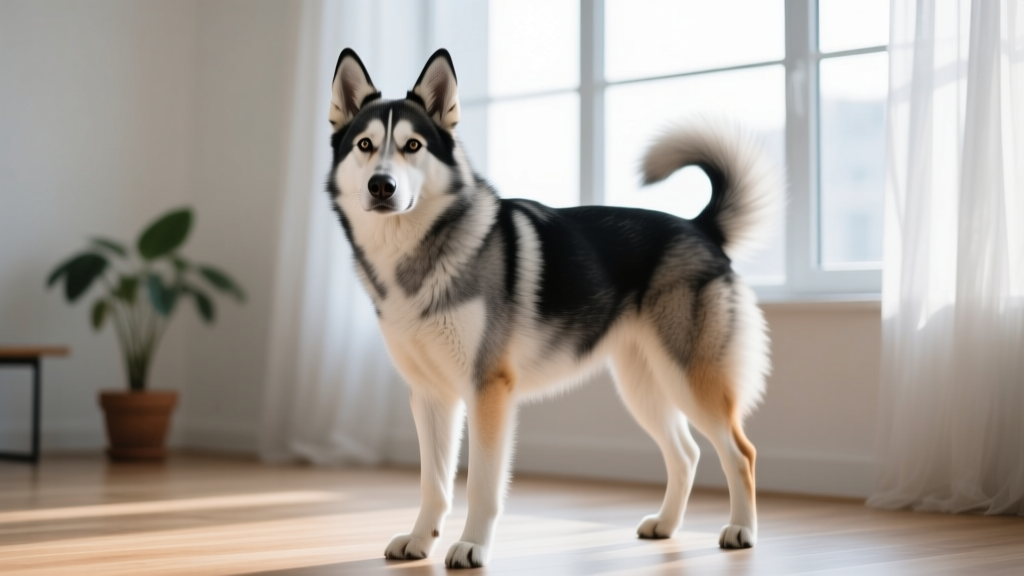
Is the Akk Dog Breed Right for You? The Alaskan Klee Kai Guide
Everything about the AKK dog breed (Alaskan Klee Kai): temperament, health, cost, training, and how this rare spitz compares to similar breeds.

What Exactly Is the AKK Dog Breed?
If you've been searching for the AKK dog breed, you've found your way to one of the most striking — and frequently misunderstood — companion dogs in the spitz family. AKK stands for Alaskan Klee Kai, a relatively new breed developed in the 1970s in Wasilla, Alaska, by Linda Spurlin. Her goal was to create a companion-sized version of the Alaskan Husky, retaining the wolf-like mask, curled tail, and alert expression, but in a dog small enough for apartment living.
The Alaskan Klee Kai was recognized by the United Kennel Club (UKC) in 1997 and entered the American Kennel Club's Foundation Stock Service (FSS) program, with full AKC recognition anticipated as the breed population grows. As of 2026, the AKK remains a rare breed — the estimated global population is under 5,000 registered dogs — which affects everything from puppy availability to pricing.
Alaskan Klee Kai Breed Profile at a Glance
| Weight | Toy: under 13 lb (under 6 kg) · Miniature: 13–15 lb (6–7 kg) · Standard: 16–22 lb (7–10 kg) |
| Height | Toy: up to 13 in (33 cm) · Miniature: 13–15 in (33–38 cm) · Standard: 15–17 in (38–43 cm) |
| Lifespan | 12–16 years |
| Coat | Double coat, short or full; colors: black & white, gray & white, red & white, all white |
| Energy Level | Moderate-to-high; 45–60 minutes structured exercise daily |
| Grooming | Brush 2–3× per week; heavy shedding during biannual coat blows |
| Family Fit | Best with adults or families with older children (8+); reserved with strangers |
| Trainability | High intelligence but independent; responds to positive reinforcement only |
Temperament: What Living With an AKK Is Really Like
The Alaskan Klee Kai temperament is the breed's defining feature — and its biggest filter for prospective owners. Unlike the gregarious, everyone-is-a-friend Siberian Husky, the AKK is notably reserved and cautious with strangers. The UKC breed standard actually describes this wariness as a breed trait, not a fault. An AKK who hides behind your legs when guests arrive is behaving normally, not displaying poor socialization.
Within their family, however, AKKs are intensely loyal. They tend to bond most closely with one person and follow that person from room to room — earning them the nickname "shadow dogs." They are vocal, communicating with a range of howls, grumbles, and "talking" sounds that owners find endearing and neighbors sometimes find challenging.
Key temperament traits to expect:
- High prey drive: Squirrels, cats, and small dogs may trigger chase instinct. Off-leash time should only happen in fully secured areas.
- Escape artistry: AKKs can climb, dig, and squeeze through surprisingly small gaps. A 6-foot fence with a dig-proof base is the minimum recommendation.
- Sensitivity to routine changes: These dogs thrive on predictability. Households with chaotic schedules may see stress-related behaviors like excessive vocalization or appetite changes.
- Intelligence with independence: They learn commands quickly but may choose not to comply if they don't see a reason to. Force-free, reward-based training with high-value treats (freeze-dried liver, chicken) works best.
Health Concerns in the AKK Dog Breed
The Alaskan Klee Kai benefits from a relatively small gene pool that was carefully managed during the breed's development, but several hereditary conditions have been documented. Responsible breeders screen for these using OFA (Orthopedic Foundation for Animals) or equivalent testing.
| Condition | Prevalence | Screening Method | Management |
|---|---|---|---|
| Patellar Luxation | Moderate — estimated 8–12% of breed | OFA knee evaluation | Grade I–II: conservative; Grade III–IV: surgical ($1,500–$3,500) |
| Thyroid Disease (Autoimmune) | Low-to-moderate | Full thyroid panel (OFA) | Lifelong levothyroxine (~$15–$30/month) |
| Factor VII Deficiency | Low — documented in specific lines | DNA test (available via UC Davis or Animal Genetics) | Avoid trauma; inform vet before surgery |
| Juvenile Cataracts | Rare but documented | Annual CERF/OFA eye exam | Surgical removal ($2,000–$4,000 per eye) |
| Dental Disease | High — common in small breeds | Annual veterinary dental exam | Daily brushing; professional cleaning ($300–$800) |
Always consult your veterinarian to establish a breed-appropriate health screening schedule. For AKK puppies, the recommended veterinary visit schedule starts at 6–8 weeks with booster vaccinations every 3–4 weeks until 16 weeks of age.
Cost of Owning an Alaskan Klee Kai in 2026
The rarity of the AKK dog breed directly impacts cost. Expect the following ranges:
- Puppy purchase price: $1,800–$4,500 from a health-tested breeder. Show-quality puppies from champion lines may exceed $5,000. Waitlists of 6–18 months are common.
- Adoption/rescue: $300–$600 through breed-specific rescues like the Alaskan Klee Kai National Rescue. Availability is extremely limited.
- First-year total cost: $3,500–$6,500 (includes purchase price, initial veterinary exams, spay/neuter, crate, supplies, and training classes).
- Ongoing annual cost: $1,200–$2,200 (food, routine veterinary care, insurance, grooming supplies, enrichment).
Pet insurance for an AKK typically runs $35–$65/month depending on the provider, deductible, and your location. Given the breed's predisposition to patellar luxation and thyroid issues, a policy with no payout caps is worth considering.
Training and Exercise: What the AKK Needs Daily
The Alaskan Klee Kai is a working-dog mind in a companion-dog body. Without adequate mental and physical stimulation, they will create their own entertainment — usually in ways that involve dismantling furniture, vocalizing for extended periods, or attempting escape.
- 30–40 minutes structured leash walking or hiking (they are excellent trail companions)
- 15–20 minutes mental enrichment: puzzle feeders, snuffle mats, or scent work games
- 10–15 minutes training practice: trick training, recall reinforcement, or agility foundations
Socialization is the single most important investment you can make in an AKK puppy. The critical socialization window closes around 14–16 weeks of age. During this period, aim for positive exposure to at least 100 novel stimuli: different surfaces, sounds, people wearing hats or uniforms, children at a distance, other vaccinated dogs, car rides, and handling exercises. Puppy kindergarten classes using positive reinforcement methods are strongly recommended.
Never use aversive training tools — shock collars, prong collars, or alpha rolls — on an Alaskan Klee Kai. Their sensitivity means these methods will damage your bond and can trigger fear-based reactivity or shutdown behaviors.
How Does the AKK Compare to Similar Breeds?
The most common question from prospective AKK owners is how the breed stacks up against look-alikes. Here's a direct comparison:
| Trait | Alaskan Klee Kai | Siberian Husky | Pomsky | Shiba Inu |
|---|---|---|---|---|
| Size | 13–22 lb / 6–10 kg | 35–60 lb / 16–27 kg | 10–30 lb / 5–14 kg (variable) | 17–23 lb / 8–10 kg |
| Stranger Friendliness | Reserved/wary | Outgoing/friendly | Variable (depends on parent mix) | Reserved/aloof |
| Vocalization | High (howling, talking) | High (howling) | Moderate-to-high | Moderate ("Shiba scream") |
| Apartment Suitability | Good with exercise (watch vocalization) | Poor (size + energy + noise) | Good | Moderate |
| Prey Drive | High | High | Moderate | High |
| Breed Standard Consistency | High (UKC-recognized) | High (AKC-recognized) | Low (designer mix, no standard) | High (AKC-recognized) |
| Puppy Cost Range | $1,800–$4,500 | $800–$2,500 | $1,000–$5,000 | $1,500–$3,500 |
Is the AKK Dog Breed Right for Your Lifestyle?
Use this decision framework to determine if the Alaskan Klee Kai fits your situation:
- If this is your first dog → Consider a Shiba Inu or Miniature American Shepherd instead. The AKK's wariness and sensitivity require experienced handling.
- If you've owned spitz breeds before → You're well-positioned for an AKK.
Step 2: Evaluate Your Living Situation
- Apartment with thin walls → The AKK's vocalization may cause neighbor complaints. Invest in sound-mitigation strategies or consider a quieter breed.
- House with fenced yard → Ideal, but verify fence height (minimum 6 feet) and check for gaps under gates.
Step 3: Check Your Time Commitment
- Work from home or home 6+ hours daily → AKKs do well; they bond closely and can develop separation anxiety if left alone 8+ hours.
- Away from home 8+ hours regularly → Arrange a midday dog walker or consider a more independent breed like a Shiba Inu.
Step 4: Consider Your Household
- Children under 8 → Wait. AKKs are small and sensitive; young children may inadvertently frighten or injure them.
- Other pets → Introduce carefully. Same-species socialization is possible with early exposure, but high prey drive makes cats and small mammals risky.
Finding a Responsible AKK Breeder
Because the Alaskan Klee Kai is rare, you'll likely need to search nationally and may face waitlists of a year or more. Use the Alaskan Klee Kai Association of America (AKKAOA) breeder directory as your starting point. A responsible AKK breeder will:
- Provide OFA or PennHIP results for both parents (patellar, thyroid, and eye clearances)
- Share Factor VII DNA test results
- Allow you to meet the dam (mother) and see the whelping environment
- Require a spay/neuter contract for pet-quality puppies
- Include a take-back clause guaranteeing they'll accept the dog back at any point in its life
- Ask you detailed questions about your experience, home environment, and expectations
Red flags: breeders who always have puppies available, who won't share health test documentation, who sell through third-party websites or pet stores, or who offer "rare colors" at premium prices (the AKK standard recognizes only specific color patterns).
Frequently Asked Questions About the AKK Dog Breed
Is the Alaskan Klee Kai a good family dog?
AKKs can be wonderful family dogs for households with older children (8+) and experienced dog owners. They are deeply loyal to their family but reserved with strangers and sensitive to loud noises and chaotic environments. They are not the "go play with the kids in the yard" breed — they're more of a "curl up next to you on the couch" companion.
Do Alaskan Klee Kai shed a lot?
Yes. AKKs have a double coat and shed moderately year-round with intense "coat blow" periods twice a year (typically spring and fall) lasting 2–4 weeks. During coat blows, daily brushing with an undercoat rake is necessary. Never shave an AKK — the double coat provides insulation against both heat and cold.
Can an AKK be left alone during the workday?
Adult AKKs can typically handle 4–6 hours alone if properly exercised beforehand and provided with enrichment (frozen Kongs, puzzle toys). Beyond 6 hours, separation anxiety behaviors may emerge: howling, destructive chewing, or escape attempts. A midday visit from a dog walker significantly helps.
Are Alaskan Klee Kai hypoallergenic?
No. Despite their relatively clean coat and lack of "doggy odor," AKKs shed and produce dander like any other double-coated breed. They are not suitable for allergy sufferers.
How long do Alaskan Klee Kai live?
The typical AKK lifespan is 12–16 years, with some individuals living to 17 or 18 with excellent care. Regular veterinary checkups, weight management (keeping them at a lean body condition score of 4–5 out of 9), and dental care are the three biggest factors in longevity.
Jonas Cole
All our authors care for dogs every day — read more of their work on the authors page.