Winter Off-Leash Recall Training: Keeping Dogs Safe in Snow
Master winter off-leash recall training with our expert guide. Learn snow-specific commands, essential cold-weather gear, and safety tips for your dog.
The Unique Challenges of Winter Recall Training
When the first snow falls, the world transforms into a magical wonderland for our canine companions. However, for dog owners, winter introduces a complex set of environmental variables that can severely compromise off-leash reliability. Training a reliable recall is already one of the most challenging obedience skills, but doing so in snowy conditions requires a deep understanding of how winter weather alters your dog's senses and the physics of the environment.
Before stepping out into the snow, it is crucial to understand the three primary challenges that winter introduces to recall training:
- Acoustic Dampening: Fresh snow is highly porous and acts as a natural sound absorber. High-frequency sounds, such as training whistles or sharp verbal cues, do not carry as far in snowy conditions. Your dog may literally not hear your recall command from the same distance they would in the summer.
- Scent Cone Disruption: Cold, dry air causes scent molecules to drop closer to the ground, while snow cover masks ground-level odors. Conversely, the scent of wildlife (like deer or rabbits) crossing a snowfield can become highly concentrated in specific wind tunnels, making environmental distractions much more potent.
- Visual Glare and Contrast: Snow blindness is a real phenomenon for dogs, especially those with light-colored eyes. The glare from the sun reflecting off white snow can cause visual fatigue, making it harder for your dog to track your hand signals or locate you in a landscape devoid of contrasting colors.
According to the American Kennel Club (AKC), a reliable recall requires proofing against heavy distractions. In winter, the environment itself becomes the distraction. To overcome these hurdles, we must adapt our gear, our timing, and our training protocols.
Essential Cold-Weather Training Gear
Standard nylon leashes and cotton harnesses are unsuitable for winter training. Nylon absorbs moisture, freezes, and becomes stiff, while cotton retains snow and ice, leading to discomfort and potential frostbite. Upgrading to winter-specific gear is a non-negotiable step for safe off-leash conditioning.
| Equipment | Purpose | Recommended Specifications | Estimated Cost |
|---|---|---|---|
| Biothane Long Line | Waterproof, freeze-proof recall practice | 1/2 inch width, 30 to 50 ft length, brass hardware | $35 - $55 |
| GPS Tracking Collar | Emergency location in whiteout conditions | Cellular + Radio frequency, 10+ mile range | $150 - $350 |
| High-Visibility Vest | Visual tracking against white snow | Neon orange or pink with reflective 3M striping | $25 - $45 |
| Paw Protection Wax | Barrier against ice buildup and toxic salts | Beeswax, Vitamin E, and Shea Butter base | $15 - $25 |
Investing in a Biothane long line is arguably the most critical gear upgrade. Because Biothane is essentially a polyester webbing coated in TPU/PVC, it remains entirely flexible even at -20°F (-29°C). This allows you to apply gentle leash pressure for recall guidance without the line snapping or stiffening like a frozen nylon rope.
Step-by-Step Winter Recall Protocol
Transitioning your dog's recall from a sunny summer park to a snowy winter field requires a systematic approach. Follow this three-phase protocol to build reliability.
Phase 1: Indoor Foundation and High-Value Rewards
Winter training demands higher motivation. The cold is uncomfortable, and the urge to run and generate body heat is strong. Upgrade your treat pouch with high-value, aromatic rewards. Freeze-dried beef liver or warm, boiled chicken breast works best. The warmth and strong aroma of the chicken will cut through the cold air, drawing your dog's attention back to you.
Phase 2: The 15-Foot Biothane Line Transition
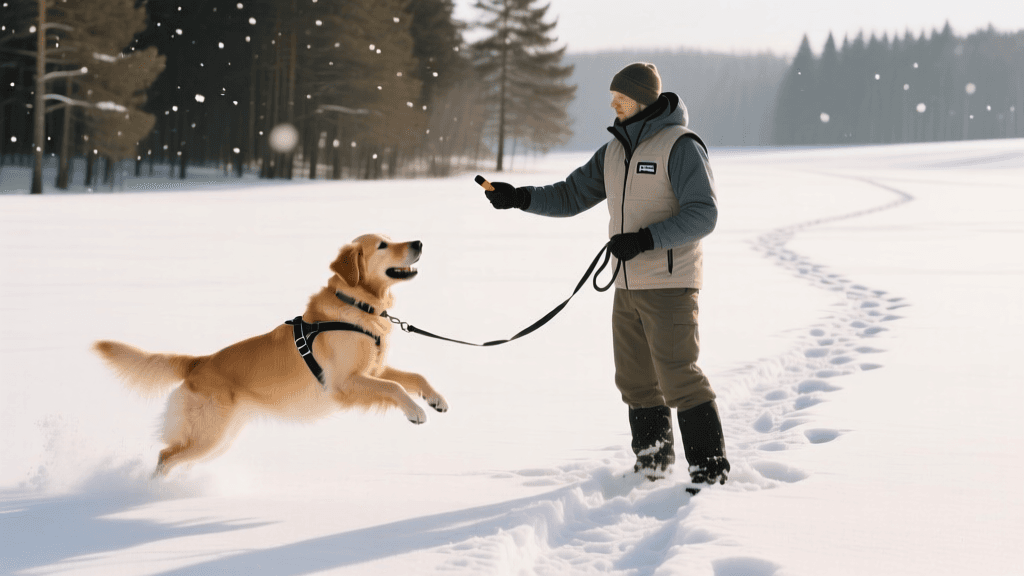
Begin your outdoor winter sessions in a familiar, fenced area or a low-distraction open field. Attach the 30-foot Biothane line to a well-fitted back-clip harness.
- Let them explore: Allow your dog to reach the end of the line and engage with the snow.
- The Cue: Call their name followed by your recall word (e.g., 'Rover, Come!'). Use a bright, enthusiastic tone to counteract the acoustic dampening of the snow.
- The Reel: If they do not immediately turn, gently apply pressure to the Biothane line. The moment they turn toward you, release the pressure and praise heavily.
- The Reward: Deliver the high-value treat directly to their mouth while they are in front of you, followed by a release cue ('Go Play!') so they learn that coming to you does not end the fun.
Phase 3: Proofing Against Winter Wildlife Distractions
Once your dog is reliably returning on the long line, it is time to introduce controlled distractions. Snow makes animal tracks highly visible. If you spot a deer or rabbit trail, use it as a training opportunity. Allow your dog to sniff the edge of the track, then issue your recall command. If they break away to follow the scent, use the long line to prevent them from rehearsing the chasing behavior. According to the Humane Society of the United States, keeping dogs under control in winter is also vital to protect local wildlife, which is already struggling to survive the harsh conditions.
Managing Paw Care and Cold-Weather Fatigue
A dog in pain will not recall. Ice balls forming between the paw pads, micro-abrasions from sharp ice crusts, and chemical burns from municipal de-icing salts will destroy your dog's focus and willingness to train.
Before every training session, apply a generous layer of paw wax, such as Musher's Secret. Use approximately 1/4 teaspoon per paw, massaging it deeply into the pads and the fur between the toes. This creates a semi-permeable barrier that prevents snow from sticking and forming painful ice balls.
Pro Tip: If temperatures drop below 20°F (-6°C), or if you are training on heavily salted urban trails, abandon wax and opt for insulated dog booties like the Ruffwear Polar Trex. Booties provide both thermal insulation and physical grip on icy surfaces.
Furthermore, you must strictly manage your session timing. Cold-weather training sessions should be capped at 15 to 20 minutes. Prolonged exposure leads to core temperature drops and paw pad numbness. The ASPCA strongly recommends wiping down your dog's paws, legs, and belly immediately after returning indoors to remove any residual ice-melting chemicals that could be toxic if ingested during grooming.
Emergency Commands: The 'Stop' and 'Leave It'
In deep snow, a standard recall might fail if the dog is physically bogged down or entirely consumed by a fresh scent trail. This is where the emergency 'Stop' (or 'Down at a Distance') command becomes a lifesaver.
To train the winter 'Stop', utilize your Biothane long line. While your dog is trotting away from you in the snow, give your 'Stop' cue. If they do not immediately drop into a down position, step firmly on the long line to restrict their forward momentum. Repeat the cue, reward heavily when they comply, and practice until they drop instantly upon hearing the word, regardless of the snow depth.
Pair this with a robust 'Leave It' command. When your dog approaches a frozen pond edge or a dangerous snowbank overhang, a sharp 'Leave It' can halt their momentum before they step onto unsafe ice. Always reward compliance with a 'jackpot' of treats to reinforce that turning away from danger is highly profitable.
Conclusion
Winter off-leash recall training is not merely about obedience; it is a critical safety measure that protects your dog from hidden hazards like thin ice, steep snow-covered ravines, and toxic antifreeze spills. By understanding the acoustic and visual challenges of the snow, upgrading to freeze-proof gear like Biothane, and prioritizing paw care, you can maintain a reliable, joyful off-leash partnership with your dog all season long. Stay warm, keep your sessions short, and always prioritize safety over distance.
aaron-whyte
All our authors care for dogs every day — read more of their work on the authors page.