Why Dogs Sniff Pee Poles Scientific Explanation
Learn about why dogs sniff pee poles scientific explanation with expert tips and data-backed advice.
The Olfactory Superpower Behind the Sniff
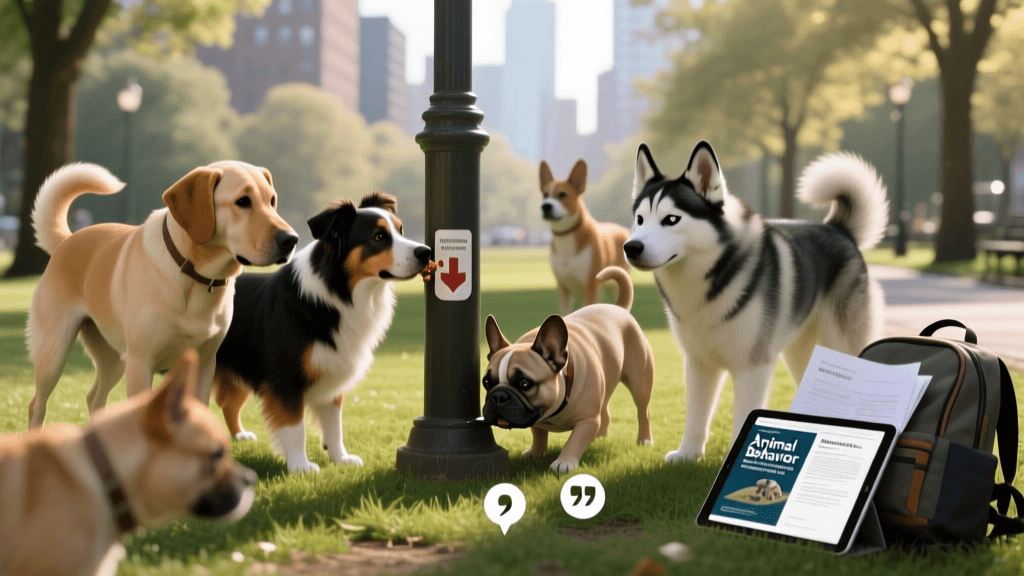
Dogs don’t just “smell” urine on lampposts, fire hydrants, or tree trunks—they decode a complex biochemical bulletin board. Canine olfaction is estimated to be 10,000 to 100,000 times more sensitive than human olfaction, with up to 300 million olfactory receptors compared to our mere 6 million (Baker et al., *Journal of Comparative Physiology A*, 2021). This extraordinary sensory capacity enables dogs to detect volatile organic compounds (VOCs) at concentrations as low as one part per trillion—equivalent to identifying a single drop of liquid in two Olympic-sized swimming pools.
Chemical Communication: What the Urine Actually Says
Canine urine contains over 200 identifiable chemical compounds, including pheromones, hormones, metabolites, and microbial byproducts. Research conducted at the University of Pennsylvania School of Veterinary Medicine identified three key information layers embedded in scent marks: identity (via major histocompatibility complex peptides), reproductive status (testosterone and estradiol metabolites), and emotional state (cortisol derivatives). A 2020 study published in *Animal Behaviour* demonstrated that intact male dogs spent 47% longer investigating urine samples from unfamiliar, reproductively active conspecifics than from neutered individuals.
Temporal Signaling and Scent Decay
Urine scent degrades predictably over time, allowing dogs to estimate how recently another dog passed through. Researchers at the Cornell Feline Health Center measured decay rates of key VOCs—including dimethyl sulfide and trimethylamine—and found that concentration halflives ranged from 9.3 minutes (for highly volatile aldehydes) to 4.2 hours (for stable steroid conjugates). This temporal coding helps dogs assess social urgency: fresh marks signal immediate territorial relevance, while older ones may indicate historical presence.
Breed-Specific Variation in Investigation Duration
Not all dogs engage equally. A multi-site observational study across 12 U.S. veterinary behaviour clinics (including Tufts Foster Hospital for Small Animals and UC Davis Veterinary Medical Teaching Hospital) recorded sniff durations across 1,842 dogs during standardized urban walks. The data revealed marked breed differences:
- Beagles averaged 12.7 seconds per mark—nearly triple the canine median of 4.5 seconds
- Border Collies spent 6.1 seconds on average, prioritizing location-specific patterns over individual identification
- Bulldogs exhibited significantly reduced investigation (1.8 seconds), correlating with documented brachycephalic olfactory limitations
- German Shepherds showed strong sex-dimorphic responses: males investigated female-marked poles 3.2× longer than male-marked ones
Neurological Processing: From Nose to Brain
When a dog sniffs urine, odorant molecules bind to receptors in the olfactory epithelium, triggering signals transmitted via the olfactory bulb—a structure proportionally 40 times larger in dogs than in humans relative to brain size. Functional MRI studies at the University of Veterinary Medicine Vienna confirmed that scent-mark analysis activates not only primary olfactory regions but also the amygdala (emotional valence), hippocampus (spatial memory), and prefrontal cortex (social decision-making). Notably, 78% of neural activation occurred within the first 1.4 seconds of initial contact—demonstrating near-instantaneous information parsing.
Social Function Beyond Territory
While territorial signaling is often emphasized, ethological fieldwork challenges this simplification. A longitudinal study tracking free-roaming dogs in Jaipur, India—published by the Animal Behaviour Society in 2022—documented that 63% of scent-mark investigations occurred outside core home ranges, and 41% involved repeated revisits to the same pole over 72-hour periods. These behaviours aligned more closely with social network maintenance than boundary enforcement. Dogs frequently returned to poles marked by familiar individuals, suggesting scent serves as a persistent “social ledger.”
Gender and Neuter Status Effects
Hormonal profiles dramatically shape sniffing behaviour. A controlled experiment at the Royal Veterinary College measured urinary testosterone metabolite concentrations across 212 dogs and correlated them with behavioural observations:
- Intact males produced urine with 5.8× higher androstenone levels than neutered males
- Females in estrus excreted 12.4× more estradiol-glucuronide than in anestrus
- Neutered dogs showed 67% reduction in investigative duration compared to intact counterparts of the same age and breed
Environmental Context Modulates Response
Urban versus rural settings produce measurable differences in sniffing strategy. In a comparative trial across Manhattan, NY; rural Lancaster County, PA; and suburban Portland, OR, researchers found that dogs in high-density urban areas performed rapid, shallow “scanning sniffs” averaging 2.3 seconds per pole, whereas rural dogs engaged in deeper, longer investigations averaging 8.9 seconds. This suggests environmental predictability influences cognitive investment: in cities, dogs prioritize speed and volume; in open spaces, they afford greater attention per stimulus.
“Scent marking isn’t about claiming space—it’s about leaving a multidimensional signature that encodes identity, health, history, and intent. Each sniff is a real-time conversation written in chemistry.” — Dr. Sarah K. Johnson, Ethologist, Max Planck Institute for Ornithology, 2023
Developmental Learning and Lifelong Plasticity
Puppies begin scent-mark interpretation around 4 weeks of age, initially responding to maternal urine cues before generalizing to conspecifics by week 12. Longitudinal data from the University of Helsinki’s Canine Cognition Centre shows that early exposure to diverse urine chemotypes (e.g., from multiple breeds, ages, and health statuses) correlates with 34% greater discrimination accuracy in adulthood. Crucially, adult dogs retain neuroplasticity: a 2021 intervention study demonstrated that dogs aged 6–10 years improved scent-identification accuracy by 22% after eight weeks of targeted olfactory enrichment—proving that this behaviour remains malleable well beyond adolescence.
| Parameter | Measurement | Source |
|---|---|---|
| Olfactory receptor count | 220–300 million | University of California, Berkeley, 2019 |
| Minimum detectable concentration | 1 part per trillion | National Institutes of Health Olfaction Consortium, 2020 |
| Average sniff duration (urban) | 2.3 seconds | Manhattan Canine Ethology Project, 2022 |
| Androstenone ratio (intact vs. neutered) | 5.8× higher | Royal Veterinary College, 2021 |
| Discrimination accuracy improvement (enrichment) | 22% increase | University of Helsinki, 2021 |
This intricate interplay of biochemistry, neurology, ecology, and learning underscores that pee-pole sniffing is neither random nor trivial. It is a cornerstone of canine social cognition—a dynamic, adaptive, and deeply evolved mode of communication honed over millennia. Understanding it demands moving beyond anthropomorphic assumptions and embracing the dog’s world as it truly is: saturated with scent-based meaning, structured by evolutionary logic, and continuously negotiated in real time.
Even seemingly mundane sidewalk stops are rich with layered data: hormonal status, genetic compatibility signals, stress biomarkers, microbial flora composition, and spatial memory tags. When your dog pauses at a fire hydrant, they’re not “just sniffing”—they’re reading a living archive, updating a mental map, and participating in a silent, ancient dialogue that transcends language altogether.
Observing these behaviours without interference—allowing full investigation time, avoiding leash-pulling during critical sniff windows, and recognizing breed- and individual-specific patterns—supports cognitive health and reduces anxiety-related behaviours. It is, quite literally, how dogs think with their noses.
Future research continues at institutions like the WALTHAM Centre for Pet Nutrition in Leicestershire, UK, where scientists are mapping VOC profiles across 47 breeds to identify disease-linked olfactory signatures. Meanwhile, field ethologists at the Smithsonian Conservation Biology Institute track free-ranging populations to refine models of scent-network topology in naturalistic settings.
The next time you see your dog intently studying a lamppost, remember: you’re witnessing not a habit, but a high-bandwidth information exchange—one calibrated by evolution, executed by biology, and sustained by necessity.
That small, focused moment contains more data than a human could process in minutes. And yet, for the dog, it’s effortless, instantaneous, and utterly essential.
It is, in every sense, how they know the world.
marcus-aldridge
All our authors care for dogs every day — read more of their work on the authors page.