Can Dogs Talk? The Science Behind Viral Sound Buttons
Discover the science behind viral dog sound buttons. Learn how AAC training works, which kits to buy, and step-by-step methods to teach your dog to talk.
The Viral Phenomenon: Dogs "Talking" on Social Media
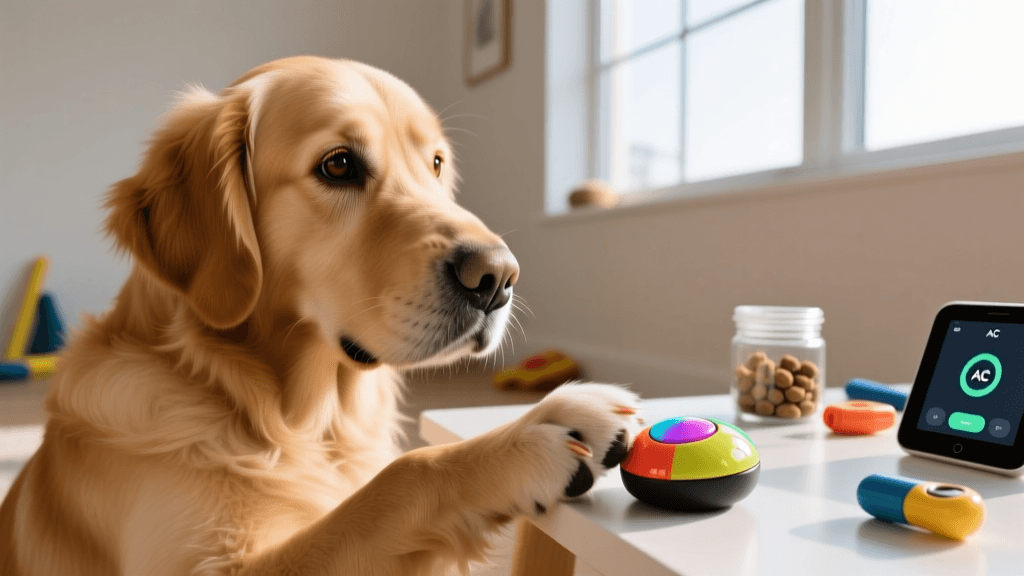
If you have spent any time on TikTok or Instagram lately, you have likely seen videos of dogs like Bunny the Sheepadoodle or Stella the Goldendoodle pressing sound buttons to "speak" to their owners. These viral videos show dogs pressing buttons that say "outside," "play," or even stringing together complex phrases like "stranger danger" or "ouch paw." But beyond the viral entertainment value, what is actually happening in your dog's brain? Is this just a clever trick, or are we unlocking a new frontier in canine cognition and interspecies communication?
This trend is rooted in Augmentative and Alternative Communication (AAC), a method traditionally used to help non-verbal humans communicate. When applied to dogs, AAC involves using recordable sound buttons paired with spatial memory mats. As a senior behavior writer for Paws-Tales, I am here to separate the internet hype from the hard science, giving you a comprehensive, actionable guide to understanding and training your dog with sound buttons.
The Science: Operant Conditioning or True Language?
To understand why dogs press buttons, we must look at canine psychology. At the most basic level, button training relies on operant conditioning. The dog learns that a specific action (pressing a button with their paw or nose) results in a specific outcome (going outside, getting a treat, or initiating play). However, researchers are investigating whether dogs are simply performing a trick for a reward, or if they are developing a genuine semantic understanding of the words.
The most prominent research in this field is being conducted by the TheyCanTalk project, an ongoing study led by cognitive scientist Dr. Federico Rossano at the University of California, San Diego. The study tracks thousands of pets using AAC buttons to observe how they combine words, express emotions, and even ask questions. Early findings suggest that dogs are not just memorizing cause-and-effect; they are demonstrating the ability to use buttons to communicate internal states, such as pain or frustration, and to reference things that are not immediately present in the room.
Understanding your dog through this lens requires a shift in how we view their intelligence. Dogs are highly attuned to human routines and vocal tones. By giving them a tool to initiate interactions rather than just reacting to our commands, we empower them to express their natural instincts and desires.
Choosing the Right Equipment: Button Kits Compared
Before you start training, you need the right gear. Not all buttons are created equal, and the physical setup plays a massive role in your dog's spatial memory. Dogs have excellent episodic and spatial memory, meaning they remember where a button is located just as much as what it sounds like. Below is a comparison of the most popular button training systems on the market.
| Brand / System | Estimated Cost | Mat / Base System | Best For |
|---|---|---|---|
| FluentPet | $30 - $60 | Hexagonal interlocking tiles | Spatial memory mapping and multi-dog homes |
| Mighty Paw Smart Dog Buttons | $25 - $45 | None included (requires DIY mounting) | Budget-friendly beginners |
| Generic Amazon Recordable Buttons | $15 - $25 (Pack of 4) | None included | Testing your dog's interest before investing |
Pro Tip: The hexagonal mats used by FluentPet are highly recommended by behaviorists because they allow you to build a consistent, non-slip vocabulary board. As your dog's vocabulary grows, the mat provides a stable, recognizable surface that prevents the buttons from sliding across hardwood floors when your dog steps on them.
Step-by-Step Guide to Button Training
Training your dog to use AAC buttons requires patience, consistency, and an understanding of canine timing. Do not expect your dog to press a button on day one. Here is the proven methodology for introducing sound buttons.
Step 1: Select High-Value, Action-Oriented Words
Start with only one or two buttons. The best starter words are highly motivating and result in an immediate, tangible action.
- Outside: Press the button, then immediately open the door and go outside.
- Play: Press the button, then immediately bring out a favorite tug toy.
- All Done: Press the button to signal the end of a play session or petting session (great for teaching boundaries).
Step 2: The Modeling Technique
Modeling is the core of AAC training. You must press the button before the action occurs, without physically forcing your dog's paw onto the button.
- Say the word out loud (e.g., "Outside").
- Press the button yourself so it plays the recorded voice.
- Immediately perform the action (open the door).
Step 3: Strategic Placement
Place the buttons in a low-traffic area where your dog spends time, but not in a place where they will be accidentally bumped by humans. If a button is accidentally triggered, your dog may experience an "extinction burst"—a psychological phenomenon where a behavior temporarily increases in frequency when the expected reward is not delivered. If they press "outside" and you ignore it, they will eventually stop using the button altogether.
Step 4: Wait and Observe
Once you have modeled the behavior consistently for a week or two, pause. Stand near the button, look at it, and wait. If your dog sniffs it, paws at it, or looks at you, offer verbal praise. If they press it, immediately deliver the corresponding action. Never use their paw to press it for them; this creates physical resistance and can make them fearful of the device.
Understanding Canine Frustration and Button Mashing
As your dog learns that buttons yield results, you may encounter behavioral hurdles. According to the ASPCA's guidelines on canine behavior, dogs experience frustration when their expectations are not met, which can manifest as barking, pawing, or aggression. In the context of sound buttons, this often looks like "button mashing," where a dog rapidly presses multiple buttons in a row.
Why does this happen? Often, it is because the dog has learned that pressing buttons gets human attention, even if the specific action isn't granted. If your dog mashes "play," "outside," and "treat" all at once, they are likely feeling overstimulated or frustrated by a lack of clear communication.
To manage this, ensure you are providing adequate physical exercise and mental enrichment outside of button training. A tired dog is a more focused communicator."When a dog mashes buttons, it is crucial not to scold them. Instead, calmly model the correct button for the current context, fulfill the request if appropriate, and then remove the board for a brief cool-down period to lower their arousal levels."
Common Mistakes to Avoid
To ensure your success, avoid these frequent pitfalls made by well-meaning pet owners:
- Moving the buttons around: Remember, dogs rely heavily on spatial memory. If you move the "outside" button from the living room to the kitchen, you are essentially resetting their learning process.
- Using negative words: Never create a button for "No" or "Bad." AAC should be an empowering tool for your dog to express needs, not a tool for you to scold them.
- Recording your voice with high emotion: Record the words in a calm, clear, and neutral tone. High-pitched, overly excited recordings can overstimulate your dog and make it harder for them to focus on the meaning of the word.
- Ignoring the button: If your dog presses "water" and their bowl is empty, you must respond. If you ignore their attempts to communicate basic needs, they will abandon the system and revert to barking or whining.
Conclusion: Expanding Your Bond
The viral trend of talking dogs is much more than a fleeting internet fad; it is a gateway to a deeper understanding of canine psychology. While our dogs may not be forming complex grammatical sentences, they are absolutely capable of associative learning, expressing preferences, and communicating their internal states when given the right tools. As noted by the American Kennel Club's resources on dog communication, dogs are constantly trying to bridge the gap between human and canine worlds through body language, eye contact, and vocalizations. Sound buttons simply give them a voice that we can easily understand.
Whether you are looking to tap into the latest viral trend or simply want to give your dog more autonomy over their daily life, AAC button training is a rewarding journey. Start small, be patient, and prepare to be amazed by what your dog has been trying to tell you all along.
marcus-aldridge
All our authors care for dogs every day — read more of their work on the authors page.