Why Does My Dog Stare at Me? 5 Science-Backed Reasons
Discover why your dog stares at you. We answer Google's most-asked questions about canine eye contact, staring while eating, and the oxytocin bond.
Every dog owner has experienced the intense, unblinking gaze of their furry companion. Whether you are eating a sandwich, working at your desk, or simply reading a book, you might suddenly feel eyes burning into you. You turn around, and there your dog is, staring. If you have ever found yourself typing 'why does my dog stare at me' into a search engine, you are not alone. It is consistently one of Google's most-asked questions regarding canine behavior. In this comprehensive guide, we answer the most common search queries about dog eye contact, exploring the psychology, biology, and evolutionary history behind the canine stare.
The Science of the Stare: The Oxytocin Loop
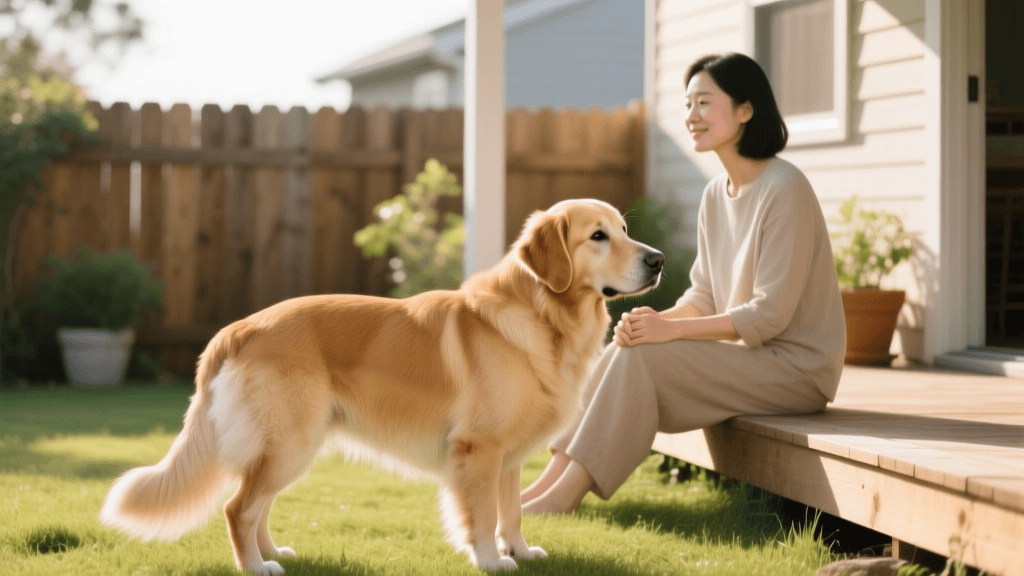
To understand why dogs stare at us, we must look at their evolutionary history. Unlike wolves, who view direct eye contact from humans as a threat or a challenge, domestic dogs have evolved to use eye contact as a social bonding tool. According to a landmark 2015 study published in Science, mutual gaze between dogs and their owners triggers a significant release of oxytocin—the 'love hormone'—in both species. This is the exact same neurohormonal loop that bonds human mothers to their infants. When your dog stares at you softly, they are quite literally expressing affection and strengthening their social bond with you.
Google Asks: Why Does My Dog Stare at Me While I Eat?
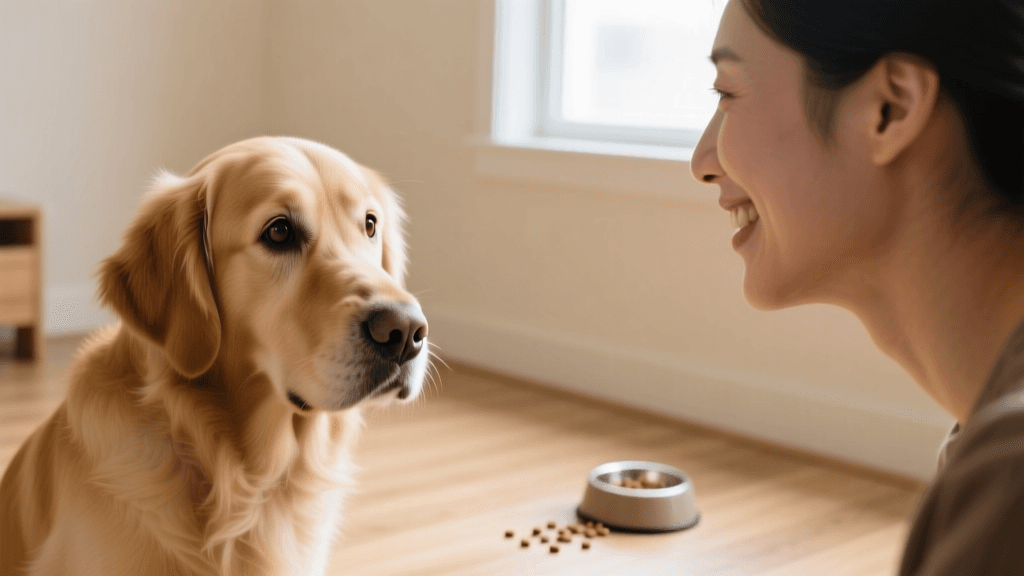
This is perhaps the most common variation of the staring question. The answer boils down to a mix of evolutionary scavenging instincts and operant conditioning. In the wild, canines survive by paying close attention to the eating habits of their pack leaders. In your home, you are the provider of resources. If you have ever accidentally dropped a piece of cheese, or purposely slipped your dog a piece of chicken from your plate, you have reinforced the staring behavior. Your dog has learned that staring at you while you eat has a chance of resulting in a high-value reward.
Actionable Advice: How to Stop Mealtime Begging
- Pre-Meal Enrichment: 20 minutes before you sit down to eat, give your dog a KONG Classic (retailing for $15-$25 depending on size) stuffed with frozen plain pumpkin and kibble. This redirects their focus and satisfies their foraging instinct.
- The 'Place' Command: Train your dog to go to a specific mat or raised cot bed (like the Coolaroo Elevated Pet Bed, approx. $40) located at least 10 feet away from the dining table. Reward them with high-value treats (like freeze-dried beef liver, $12 for 8oz) for staying on the mat while you eat.
- Extinction Burst: When you first stop giving them table scraps, their staring and begging will temporarily increase in intensity. This is called an 'extinction burst.' You must remain 100% consistent and ignore the behavior until it fades.
Google Asks: Why Does My Dog Stare at Me While I Sleep?
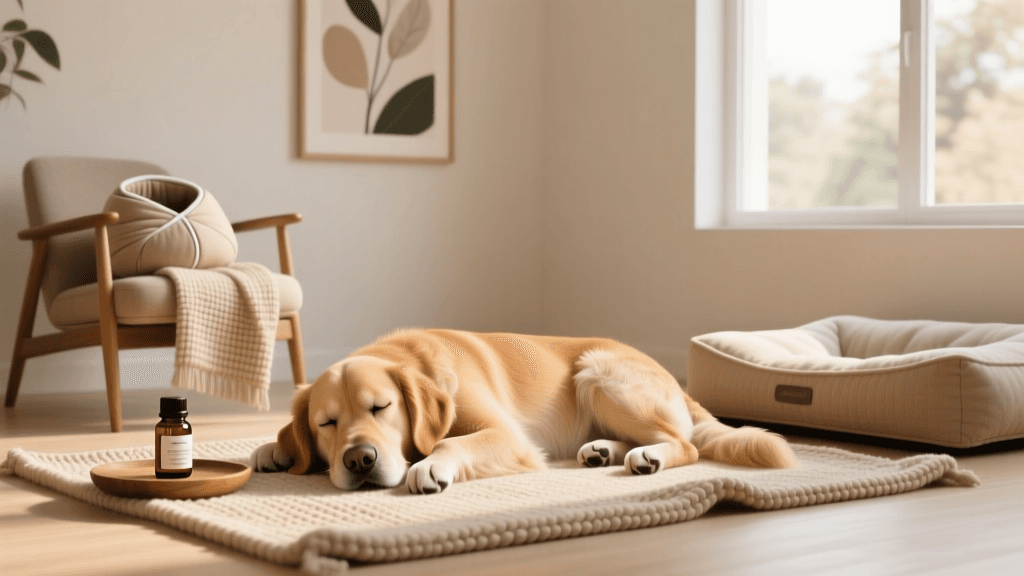
Waking up to find your dog sitting inches from your face, watching you breathe, can be unsettling. However, this behavior is deeply rooted in pack mentality and protection. Dogs are vulnerable when they sleep, and they rely on their pack members to keep watch. By staring at you while you sleep, your dog may be standing guard, ensuring that the environment remains safe. Additionally, dogs are highly attuned to our circadian rhythms. They often stare at us in the early morning, waiting for the subtle shifts in our breathing and movement that indicate we are about to wake up and start the day's routine, which usually involves breakfast and a walk.
Google Asks: Why Does My Dog Stare at Me When I Cry?
Dogs possess a remarkable ability known as 'emotional contagion,' which allows them to catch and respond to the emotions of others. When you cry, your facial expressions, vocal pitch, and even your scent change (due to the release of stress hormones like cortisol). Your dog stares at you to gather information and assess the situation. Are you in danger? Do you need help? Many dogs will follow up this intense stare with physical contact, such as leaning against your leg, licking your hands, or resting their head on your lap, as a way to offer comfort and soothe both you and themselves.
When Is Staring a Sign of Aggression or Fear?
Not all stares are created equal. While a soft, relaxed gaze is a sign of love or curiosity, a 'hard stare' can be a warning sign of aggression, resource guarding, or fear. The ASPCA emphasizes that you must read a dog's entire body language, not just their eyes, to understand their intent. A hard stare is often accompanied by a stiff, frozen body, a closed mouth, pinned-back ears, or 'whale eye' (where the whites of the eyes are highly visible). If your dog gives you a hard stare while you approach their food bowl or a favorite toy, they are communicating that you are too close to a valued resource. In these cases, do not stare back, as this will escalate the confrontation. Instead, calmly back away and consult a certified professional dog trainer or a veterinary behaviorist.
Comparison Chart: Decoding Your Dog's Stare
Use this quick-reference table to determine what your dog is trying to communicate based on their eye contact and accompanying body language.
| Type of Stare | Eye Shape & Expression | Accompanying Body Language | Meaning & Action Required |
|---|---|---|---|
| The Soft Gaze | Relaxed, slightly squinty eyes; soft blinking. | Loose, wiggly body; relaxed open mouth; gentle tail wag. | Affection and bonding. Enjoy the moment and pet them gently. |
| The Begging Stare | Wide, alert eyes; focused intently on your hands or food. | Sitting politely or pawing; ears perked forward. | Seeking resources. Redirect to a puzzle toy or enforce a 'place' command. |
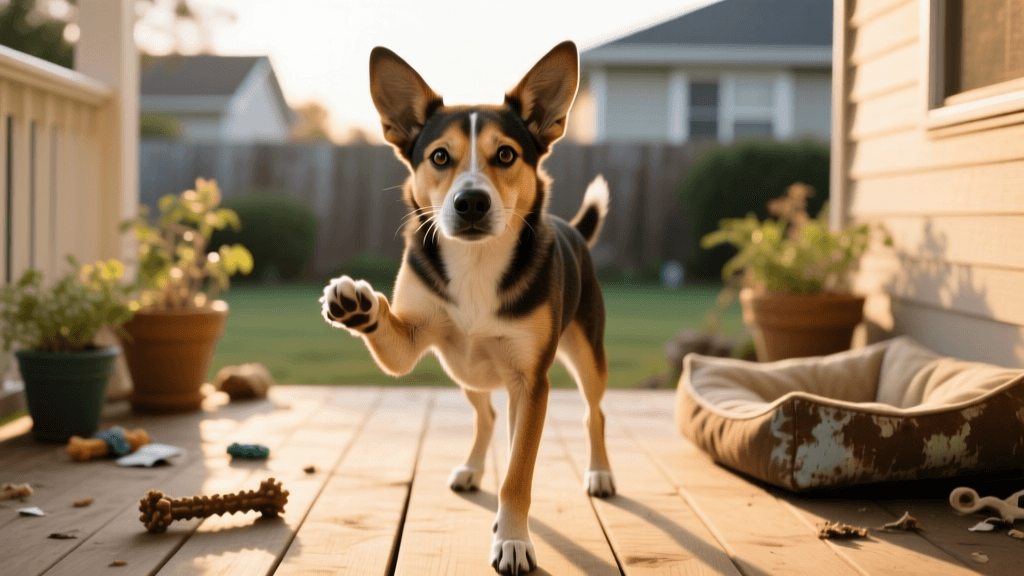
| The Confused Stare | Head tilted; ears slightly asymmetrical or perked. | Shifting weight; lifting one front paw. | Trying to understand a cue. Clarify your command and reward success. |
| The Hard Stare | Unblinking, fixed pupils; intense focus. | Stiff, frozen posture; closed mouth; low or tucked tail. | Warning or resource guarding. Back away immediately and seek professional training. |
Medical Red Flags: Staring at Walls or into Space
If your dog is staring blankly into corners, at walls, or into empty space, this is not a behavioral quirk—it is a medical red flag. In senior dogs (typically over the age of 8), this can be a primary symptom of Canine Cognitive Dysfunction (CCD), which is similar to Alzheimer's disease in humans. The American Kennel Club (AKC) notes that dogs with CCD may also exhibit disrupted sleep-wake cycles, house soiling, and a general disorientation in familiar environments. If you notice this type of vacant staring, schedule a veterinary examination immediately. A senior wellness blood panel and neurological assessment typically cost between $150 and $300, but early intervention with prescription diets or medications can significantly improve your dog's quality of life.
Final Thoughts on Canine Eye Contact
Your dog's stare is a complex window into their mind, shaped by thousands of years of co-evolution with humans. Whether they are gazing at you to trigger a mutual release of oxytocin, begging for a piece of your dinner, or standing guard while you sleep, their eye contact is a profound form of communication. By paying attention to the context, their body language, and the situation, you can decode exactly what your dog is trying to tell you. The next time you catch your dog staring, take a moment to read the room, check their body language, and appreciate the incredible, silent bond you share.
hannah-wickes
All our authors care for dogs every day — read more of their work on the authors page.