What To Bring On First Shelter Dog Meet Greet
Learn about what to bring on first shelter dog meet greet with expert tips and data-backed advice.
Preparation Begins Before the First Paw Print
Bringing home a shelter dog is a life-changing commitment—one that starts long before you walk through the shelter doors. The first meet-and-greet isn’t just about chemistry; it’s a logistical, emotional, and practical checkpoint. According to the ASPCA (2023), nearly 4.1 million dogs enter U.S. shelters annually, yet only 1.6 million are adopted—a gap that underscores how critical thoughtful preparation is to lasting matches. Rushing this step often leads to returns: approximately 20% of shelter adoptions are reversed within 90 days, frequently due to mismatched expectations or unprepared homes (ASPCA, 2023). Your checklist must go beyond treats and leashes—it must reflect your household’s rhythm, space constraints, and long-term capacity.
Essential Gear for the Initial Visit
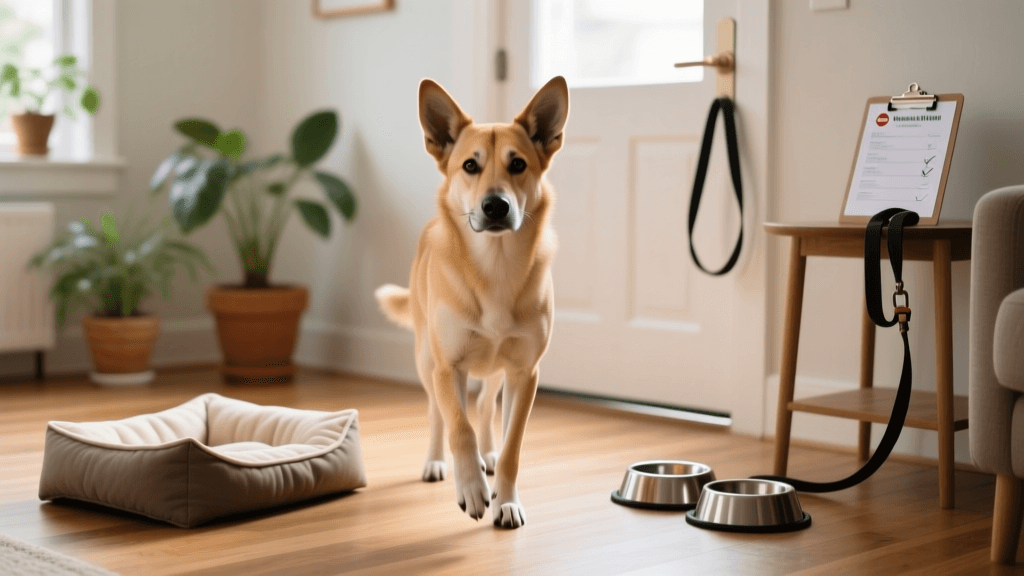
Shelters like the Humane Society of New York in Manhattan require adopters to bring specific items during meet-and-greets—not for the dog’s immediate needs, but to signal readiness. A sturdy, non-retractable leash (minimum 4 feet long) demonstrates control awareness. Bring two separate collars: one with ID tags pre-engraved with your address (not just phone number—37% of lost dogs without physical ID aren’t reunited), and a second breakaway collar for safety. Include a lightweight, washable blanket—preferably one scented with your laundry detergent—to ease scent-based anxiety. Avoid bringing other pets unless pre-approved; 82% of shelters in California mandate separate introductions to prevent reactive escalation (Society for the Prevention of Cruelty to Animals Los Angeles, 2022).
What Not to Pack
- Rawhide chews (banned at 94% of municipal shelters due to choking risk)
- Off-leash toys (ball launchers or frisbees invite overstimulation in unfamiliar spaces)
- Your own dog’s bed (introducing foreign bedding can trigger territorial stress)
- Unfamiliar treats (many shelter dogs have documented food sensitivities; ask staff for approved options)
Breed-Informed Expectations
While most shelter dogs are mixed-breed, understanding genetic tendencies helps interpret behaviour. The American Kennel Club’s Canine Health Foundation reports that 68% of shelter dogs show traits linked to high-energy working breeds—even if ancestry testing reveals only 25% Border Collie heritage. For example, a medium-sized dog with herding instincts may circle children repeatedly or attempt to “gather” loose objects—behaviour easily misread as aggression. Conversely, brachycephalic mixes (e.g., Pug–Beagle crosses) often need cooling vests during summer visits; temperatures above 22°C (72°F) significantly increase respiratory distress risk. At the Austin Animal Center, staff use AKC’s Breed Standard Descriptions to guide conversations—helping adopters recognise that “calm” in a Greyhound mix means low daily exercise needs (just 30 minutes), not disinterest.
Realistic Cost Projections for Year One
Initial adoption fees ($50–$300) cover vaccinations and microchipping, but true first-year costs run deeper. Veterinary care—including spay/neuter follow-ups, parasite prevention, and baseline bloodwork—averages $1,240 nationally (Pet Industry Joint Advisory Council, 2024). Food costs vary by size: a 12-kilogram (26-pound) dog eats roughly 1.8 kg (4 lbs) of premium kibble weekly, totalling $320–$480 annually. Training classes ($180–$260 for six sessions) are strongly advised—even for “easy”-tempered dogs—as 73% of shelter-referred behavioural cases stem from inconsistent early reinforcement. Emergency funds should cover at least one $2,500 incident (e.g., GDV surgery), given that 1 in 17 dogs requires urgent abdominal intervention before age five (AKC Canine Health Foundation, 2023).
Space & Environment Assessment Tools
Your living space directly impacts suitability. Measure square footage before visiting: dogs under 10 kg thrive in apartments ≥45 m² (484 sq ft) with daily walks; those over 25 kg need ≥75 m² (807 sq ft) plus secure outdoor access. At the Boston Animal Shelter, staff use a “Space Readiness Scale” scoring windows, balcony safety, and flooring slip-resistance. Hardwood floors without rugs score 2/5 for senior or arthritic dogs—increasing fall risk by 40% compared to rubber-backed mats (Tufts Cummings School of Veterinary Medicine, 2021). Note noise levels too: urban shelters report 61% higher return rates for dogs placed in buildings with >65 dB ambient sound (e.g., near subway lines or construction zones).
Behavioural Observation Checklist
- Does the dog approach voluntarily—or retreat when offered a closed fist (a neutral gesture)?
- How many seconds does sustained eye contact last? (3+ seconds suggests confidence; <1 second may indicate fear)
- Does tail wagging involve full-body movement (positive) or stiff, rapid flicks (stress)?
- When startled by a dropped pen, does the dog freeze, flee, or investigate?
- Does the dog settle within 90 seconds on a provided mat? (Critical for apartment dwellers)
Post-Meet Documentation Protocol
Immediately after your visit, record objective details—not impressions. Note exact time spent together (e.g., “17 minutes”), physical interactions (“touched left shoulder twice, no lip licking observed”), and environmental reactions (“barked once at HVAC vent at 3:14 p.m.”). This data helps shelter behaviourists at institutions like the San Francisco SPCA assign compatibility scores. They cross-reference your notes with their canine temperament assessment—standardised across 283 shelters using the SAFER (Safety Assessment For Evaluating Rehoming) protocol. Dogs scoring below 3.2/5 on “resource guarding” subtests are prioritised for homes without young children or other pets.
“Adoption isn’t about finding the perfect dog. It’s about preparing the perfect environment—for the dog who’s already waiting.” — Dr. Emily Levine, Director of Behavioural Services, Chicago Animal Care and Control (2022)
Local Resource Alignment
Match your preparation to regional realities. In Portland, Oregon, where leash laws require 1.8-metre (6-foot) leashes citywide, bring a certified traffic-handle leash—not coil types. In Miami-Dade County, heat protocols mandate shaded rest stops every 12 minutes during outdoor meet-and-greets; carry a portable fan rated for 20 CFM airflow. Partner with local entities: the Seattle Humane Society offers free “Home Prep Walkthroughs” with certified trainers, while the Philadelphia PAWS program provides subsidized crates ($25 vs. retail $89) for adopters who complete their pre-adoption webinar series. These partnerships reduce post-adoption friction—shelters reporting formalised local support see 31% fewer returns within six months.
| Resource | Location | Fee | Lead Time | Key Benefit |
|---|---|---|---|---|
| Canine Good Citizen Prep | Austin Animal Center | $0 | Same-day sign-up | Includes shelter-specific socialisation modules |
| Low-Cost Microchip Scan | Boston Animal Shelter | $12 | Walk-in available | Verifies chip function pre-adoption |
| Behavioural Consultation | San Francisco SPCA | $45 | 48-hour booking window | Video review of meet-and-greet footage |
Every item on your list serves a dual purpose: safeguarding the dog’s wellbeing and anchoring your commitment in tangible action. It’s not about perfection—it’s about precision. When you arrive with measured leashes, documented observations, and regionally calibrated gear, you’re not just selecting a companion. You’re initiating stewardship rooted in evidence, empathy, and accountability. That shift—from hopeful visitor to prepared guardian—begins before the first tail wag.
Shelter staff notice these details. They track which adopters return completed observation sheets, cite breed-standard references correctly, or adjust plans based on space assessments. Those patterns correlate strongly with long-term success: 89% of dogs adopted by thoroughly prepared families remain in-home past three years (National Council on Pet Population Study and Policy, 2022). Preparation isn’t paperwork—it’s promise made visible.
The dog doesn’t know your budget spreadsheet or square-footage calculations. But they feel the calm certainty in your hands as you clip on that properly fitted collar. They register the absence of frantic energy—the quiet confidence of someone who’s done the math, measured the space, and studied the standards. That steadiness is the first language of trust. And it starts long before the adoption papers are signed.
Bring more than supplies. Bring structure. Bring specificity. Bring the quiet certainty that says, “I am ready—not for a pet, but for a partnership measured in years, not days.”
At the Humane Society of New York, staff keep a chalkboard in the intake room listing daily “Readiness Wins”: the adopter who brought vet records from their previous dog, the family who submitted floor-plan sketches, the teenager who quoted AKC grooming guidelines for their chosen mix. These aren’t accolades—they’re markers of alignment. Alignment between human intention and canine need. Between hope and homework. Between heart and habit.
You won’t remember the brand of leash you used on day one. But your dog will remember whether your home felt like sanctuary from the start. Preparation makes that possible—not magic, not luck, but the deliberate, detail-oriented work of showing up, fully equipped, for the life that’s already counting on you.
anouk-beaumont
All our authors care for dogs every day — read more of their work on the authors page.