Top 5 Puppy Breeds for Remote Workers in 2026: WFH Guide
Discover the best puppy breeds for remote workers in 2026. Learn WFH potty training, socialization, and teething tips for Cavaliers and Frenchies.
The 2026 WFH Puppy Boom: Choosing the Right Co-Worker
As we navigate the stabilized remote and hybrid work landscapes of 2026, the home office has permanently evolved into a shared space for professionals and their pets. While working from home offers the incredible opportunity to raise a puppy without relying on doggy daycare, it also presents unique challenges. You need a companion that can handle the ebb and flow of your schedule, respect the boundaries of your Zoom calls, and thrive in an indoor-centric environment during their crucial first year of development.
Raising a puppy during your first year of remote work requires strategic planning, especially regarding potty training, teething, and early socialization. Not all breeds are suited for the quiet confines of a home office. High-energy herding dogs or vocal hounds might struggle with the sedentary nature of your workday, leading to disruptive barking or destructive chewing. Below, we explore the top five puppy breeds perfectly suited for remote workers in 2026, followed by a comprehensive guide to managing their first-year milestones alongside your professional responsibilities.
Top 5 Low-Maintenance Puppy Breeds for Home Offices
1. Cavalier King Charles Spaniel
The Cavalier King Charles Spaniel is the ultimate lap warmer. Bred specifically for companionship, these puppies are incredibly attuned to their owners’ emotions and energy levels. During your first year together, a Cavalier puppy will happily nap in a plush bed beneath your desk while you tackle deep-work sessions. They are relatively quiet, which is a massive advantage when you are hosting virtual meetings. However, because they bond so deeply, you must practice gradual crate training to prevent separation anxiety on the days you do need to leave the house.
2. French Bulldog
French Bulldogs have remained a top choice for urban professionals and remote workers well into 2026. Their low exercise requirements mean a quick 15-minute morning walk and an indoor play session are usually sufficient to tire them out. Frenchie puppies are known for their comedic, stubborn, yet deeply affectionate personalities. They are heavy sleepers, often snoozing through your afternoon conference calls. Be prepared for puppy teething, as Frenchies love to chew; keeping a stash of frozen Kongs near your desk is essential.
3. Basset Hound
If your home office is on the ground floor or you have a fenced yard, the Basset Hound is a phenomenal, low-energy companion. While they are scent hounds and can be vocal if they catch an interesting smell outside, indoors they are notoriously lazy and calm. A Basset Hound puppy will require patience during potty training due to their stubborn streak, but their relaxed demeanor makes them excellent co-workers. They are content to lounge on a rug by your feet for hours at a time.
4. Shih Tzu
The Shih Tzu was literally bred to sit in the laps of royalty, making them perfectly suited for the modern remote worker. They have low exercise needs and are generally quiet dogs. One major benefit for the home office is their hair-like coat, which sheds very little compared to fur, keeping your workspace and electronics relatively dander-free. Shih Tzu puppies require consistent, gentle socialization to ensure they don’t become overly protective or yappy when the doorbell rings during your workday.
5. Pug
Pugs are the comedians of the canine world. A Pug puppy will provide endless entertainment during your screen breaks. They are highly adaptable, thrive on human interaction, and do not require rigorous outdoor exercise, making them ideal for busy professionals. Pugs are prone to obesity, so managing their treat intake while you work from home is crucial. They are also eager to please, which makes early obedience training and bell-training for potty breaks a relatively smooth process.
Setting Up Your 2026 Home Office for a Puppy
Before bringing your new puppy home, your workspace must be puppy-proofed. In 2026, cable management is more critical than ever with the proliferation of standing desks, multiple monitors, and smart home hubs. Use heavy-duty cord concealers to hide power strips and ethernet cables. Invest in a smart pet camera, such as the latest Furbo 360 or Petcube Bites, which allows you to monitor your puppy’s crate behavior and toss treats remotely when you are in a different room taking a private call.
The Remote Worker’s Puppy Care Schedule
Integrating a puppy’s biological needs with your work calendar is the key to a harmonious household. Puppies under 16 weeks need frequent potty breaks and socialization. Here is a sample daily schedule designed for a remote worker:
| Time | Activity | WFH Integration Tip |
|---|---|---|
| 7:30 AM | Wake up, immediate potty break, and breakfast. | Do this before checking morning emails to establish a routine. |
| 8:30 AM | Morning play session and training (15 mins). | Use this time to wake up your brain before your first meeting. |
| 9:00 AM | Crate time or pen time with a safe chew toy. | Schedule your deep-work or silent tasks during this nap window. |
| 11:00 AM | Potty break and 10-minute outdoor sniffari. | Take your laptop outside if the weather permits, or use a standing desk. |
| 1:00 PM | Lunch break, puppy feeding, and interactive play. | Step away from the screen completely to bond with your puppy. |
| 3:00 PM | Afternoon potty break and training review. | Practice ‘place’ command on their dog bed while you take a casual call. |
| 5:30 PM | Evening walk, dinner, and wind-down. | Log off work and transition to evening family time. |
Potty Training Between Zoom Calls
Potty training a puppy while working from home requires immense consistency. According to the AKC house training guidelines, establishing a strict schedule and rewarding outdoor elimination immediately is the most effective method. For remote workers, the challenge is stepping away from the keyboard every 90 to 120 minutes.
To manage this, utilize a hands-free leash attached to your waist while you work at a standing desk, allowing you to feel when the puppy wakes up and starts sniffing. Alternatively, many remote workers in 2026 are utilizing indoor real-grass subscription patches (like Fresh Patch or DoggieLawn) placed on a balcony or near a back door for emergency mid-meeting potty breaks. While outdoor training is always the primary goal, having an indoor backup prevents accidents on your home office rug when you are trapped on an urgent client call.
Managing Teething and Quiet Time During Meetings
Between the ages of 3 and 6 months, your puppy will go through a painful teething phase. This is when expensive desk chair legs and computer mice become prime targets. To keep your puppy quiet and occupied during important virtual meetings, you must provide appropriate, long-lasting chew alternatives.
- Freezable Toys: Soak a Kong Classic in low-sodium chicken broth mixed with plain yogurt and freeze it overnight. The cold soothes inflamed gums and keeps them busy for up to 45 minutes.
- Edible Chews: Bully sticks or yak cheese chews are excellent for heavy chewers, but always supervise your puppy to prevent choking hazards.
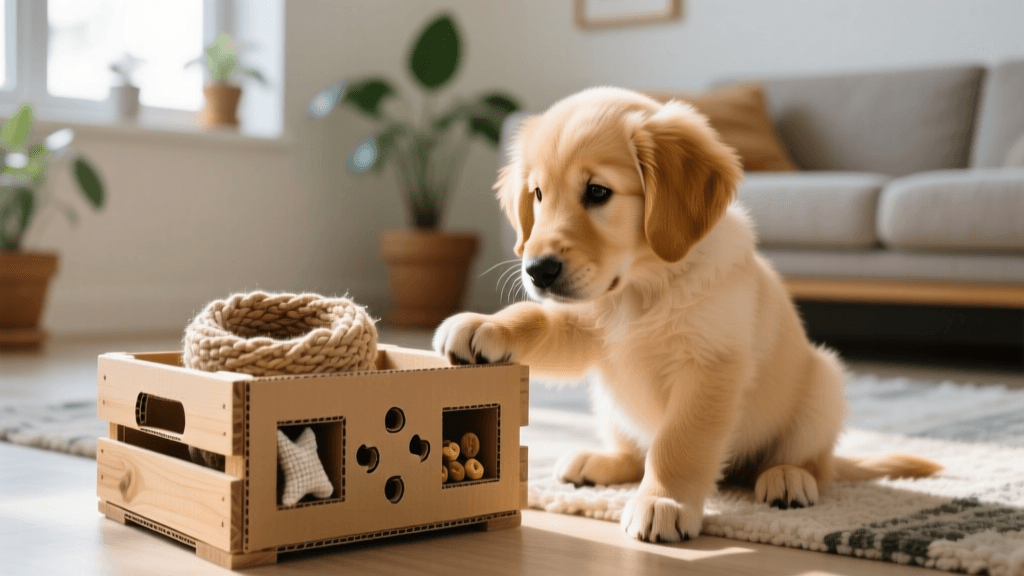
- Scent Work: Snuffle mats are a fantastic way to tire out a puppy’s brain without physical exertion. Hiding their kibble in a snuffle mat on their bed can keep them quietly engaged while you present on a video call.
Early Socialization for the Homebound Professional
One of the biggest risks for WFH puppies is under-socialization. Because you are home all day, the puppy may not learn how to cope with being alone, nor will they be exposed to the diverse sights and sounds of the outside world. The Centers for Disease Control and Prevention notes that well-socialized pets contribute significantly to reduced human stress levels, but achieving that requires deliberate effort during the puppy’s critical socialization window (8 to 16 weeks).
As a remote worker, you must schedule ‘field trips.’ Dedicate your lunch breaks twice a week to taking your puppy to a busy outdoor cafe, a park bench, or a pet-friendly hardware store. Invite colleagues or friends over to your home office during the week so your puppy learns to accept strangers in their territory without barking. Practice ‘virtual socialization’ by playing recordings of city sounds, vacuums, and doorbells at low volumes while feeding them high-value treats to build positive associations with household noises that might otherwise trigger anxiety.
Conclusion
Raising a puppy as a remote worker in 2026 is a deeply rewarding experience that blends the joy of companionship with the flexibility of modern work. By selecting a breed that matches your sedentary lifestyle, such as a Cavalier King Charles Spaniel or a French Bulldog, and by strictly adhering to a schedule that balances your professional duties with their developmental needs, you can raise a well-adjusted, quiet, and happy canine co-worker. Remember that the first year sets the foundation for the next decade; invest the time now in crate training, potty routines, and socialization to ensure your home office remains a productive and peaceful sanctuary.
marcus-aldridge
All our authors care for dogs every day — read more of their work on the authors page.