Top 5 Puppy Breeds for Remote Workers in 2026: WFH Guide
Discover the best puppy breeds for remote workers in 2026. Learn about WFH dog psychology, Velcro breed instincts, and low-bark companions for home offices.
The Psychology of the Work-From-Home Dog
As we navigate the hybrid and fully remote work landscape of 2026, the home office has become a shared space for millions of professionals and their canine companions. However, not every dog is psychologically wired to thrive in a work-from-home (WFH) environment. Understanding your dog means looking beyond their cute puppy faces and examining the breed-specific instincts, energy thresholds, and behavioral triggers that dictate how they act while you are on Zoom calls or deep in concentration.
The ideal WFH dog possesses what canine behaviorists call a low-bark threshold and a high-proximity drive. Often referred to as Velcro dogs, these breeds were historically developed to sit quietly by their handlers' sides rather than herd livestock, guard perimeters, or hunt prey over vast distances. When you understand the psychology behind these instincts, you can select a puppy that will sleep peacefully under your desk rather than interrupting your quarterly review with a frantic alert bark at the delivery driver.
Top 5 Puppy Breeds for Remote Workers in 2026
Based on current behavioral data and breed temperament profiles, here are the top five puppy breeds that perfectly align with the psychological demands of a remote worker.
1. Cavalier King Charles Spaniel: The Empathetic Shadow
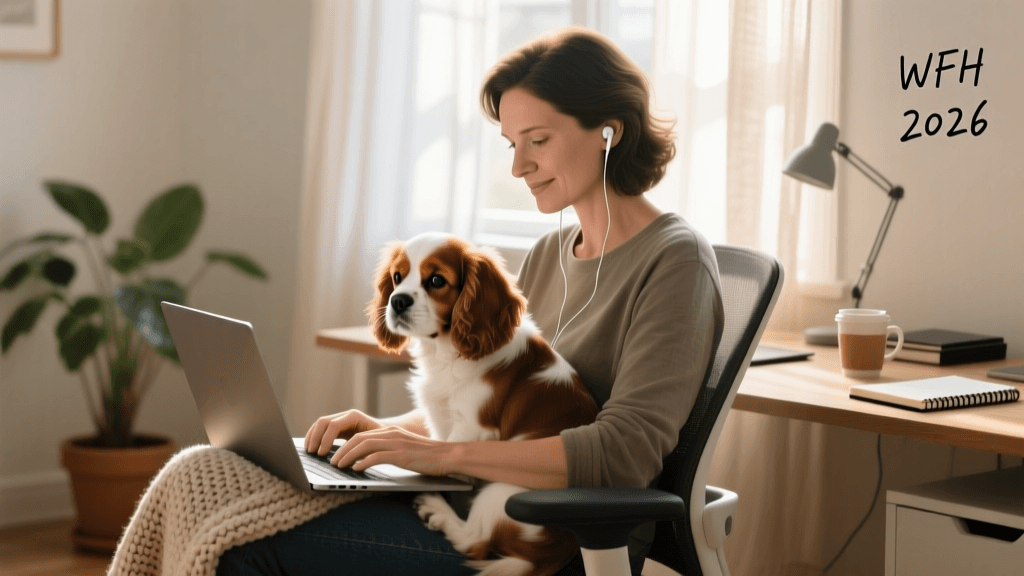
Bred exclusively for centuries to be companion animals to royalty, the Cavalier King Charles Spaniel is the quintessential home office dog. Their psychology is deeply rooted in human attunement. Cavaliers are highly sensitive to human micro-expressions and emotional states. If you are stressed during a tough virtual meeting, your Cavalier is likely to exhibit calming signals, such as soft eye contact or resting their chin on your foot, rather than demanding active play. Their low prey drive means they are rarely triggered by birds or squirrels outside your window, keeping your workday peaceful.
2. Greyhound: The Couch Potato Sprinter
It may seem counterintuitive to recommend a racing breed for a desk job, but understanding sighthound psychology reveals why Greyhounds are exceptional WFH companions. Greyhounds are sprinters, not endurance athletes. Once their brief daily exercise needs are met, their instinct is to conserve energy through prolonged resting. Furthermore, as sighthounds, their primary trigger is visual movement rather than auditory stimuli. While a hound might bark at a distant siren, a Greyhound is far more likely to sleep through the sound of a passing garbage truck, making them ideal for noisy urban home offices.
3. Basset Hound: The Low-Decibel Scent Processor
Basset Hounds process the world primarily through olfaction. Their heavy bone structure and low-slung bodies were bred for slow, methodical tracking, not high-speed chases. In a home office setting, you can easily satisfy their psychological need to work by providing a snuffle mat or a frozen enrichment toy under your desk. This allows them to engage their scent-processing instincts quietly while you work. They are famously stubborn but deeply affectionate, preferring to snore softly at your feet rather than patrol the house.
4. Shih Tzu: The Bred-for-Lap Companion
Unlike terriers that were bred to hunt vermin, the Shih Tzu was developed in Chinese palaces solely to provide companionship and warmth. Their psychological baseline is proximity to their handler. They do not possess the guarding instincts that cause many small breeds to become reactive at doorbell rings. A Shih Tzu's primary goal in life is to be in the same room as you, making them a silent, supportive presence during long hours of remote work.
5. Pug: The Comedic Stress-Reliever
Pugs are shadow dogs that thrive on continuous social interaction. Their expressive facial wrinkles and body language, such as the classic pug curl tail and dramatic head tilts, serve as excellent stress relievers for remote workers experiencing screen fatigue. Pugs are highly adaptable and generally lack the territorial aggression that leads to excessive barking at neighbors. They are content to nap in a nearby dog bed, waking only to offer a comedic sigh or a gentle nudge for affection between your tasks.
Comparison Chart: WFH Puppy Breeds at a Glance
| Breed | Energy Level | Bark Frequency | Primary WFH Instinct | Best For |
|---|---|---|---|---|
| Cavalier King Charles Spaniel | Low to Moderate | Very Low | Emotional Attunement | High-stress remote professionals |
| Greyhound | Low (Indoors) | Low | Energy Conservation | Noisy urban apartment dwellers |
| Basset Hound | Very Low | Low to Moderate | Olfactory Processing | Workers who can provide scent games |
| Shih Tzu | Low | Low | Proximity Seeking | Small home office spaces |
| Pug | Low to Moderate | Moderate | Social Bonding | Workers needing screen-break companions |
Reading Your Dog's Calming Signals in the Home Office
Understanding your dog also means learning to read their subtle body language, especially the calming signals they use to diffuse stress in the home office environment. When you are tense during a difficult virtual negotiation, your dog picks up on your altered breathing patterns and micro-muscle tensions. Breeds like the Cavalier and the Pug are particularly adept at responding to these shifts. You might notice your dog performing a play bow toward you, licking their lips, or letting out a long, shuddering sigh. These are not signs of boredom; they are canine communication tools designed to lower the emotional temperature of the room. Recognizing and rewarding these gentle interventions strengthens the human-animal bond and reinforces their role as your supportive WFH companion.
Managing the Velcro Instinct During Zoom Calls
Even the most well-bred companion dogs require psychological boundaries to prevent them from developing demanding behaviors. A common mistake remote workers make in 2026 is allowing their Velcro dogs to sit directly on their laps during video calls, which reinforces attention-seeking behavior. Instead, utilize the Place command. Train your puppy to go to a specific mat or elevated dog bed located just out of the camera's frame. By rewarding them with high-value treats for remaining on their mat while you speak, you satisfy their need for proximity while teaching them that your active talking time is their cue for quiet observation.
According to the American Kennel Club, establishing clear routines and safe spaces is critical for preventing anxiety-based behaviors in dogs that are constantly near their owners. When your puppy learns that the mat is a rewarding, safe zone, they will naturally gravitate toward it when you sit at your desk.
Preventing WFH Separation Anxiety
The paradox of the work-from-home dog is that while they are excellent companions during the day, they are at a significantly higher risk for separation anxiety when you eventually leave the house to run errands or attend in-person meetings. Because their psychological baseline becomes accustomed to your constant presence, the sudden absence can trigger destructive behaviors or vocalization.
To mitigate this, the Humane Society of the United States recommends practicing deliberate, short absences even when you are working from home. Use baby gates to separate yourself from your puppy for 30-minute intervals while you work in a different room. Provide them with a long-lasting enrichment activity, such as a hollow chew toy stuffed with frozen peanut butter, to build positive associations with your temporary absence. This ensures your puppy remains emotionally balanced and resilient, preserving the harmony of your home office environment for years to come.
hannah-wickes
All our authors care for dogs every day — read more of their work on the authors page.