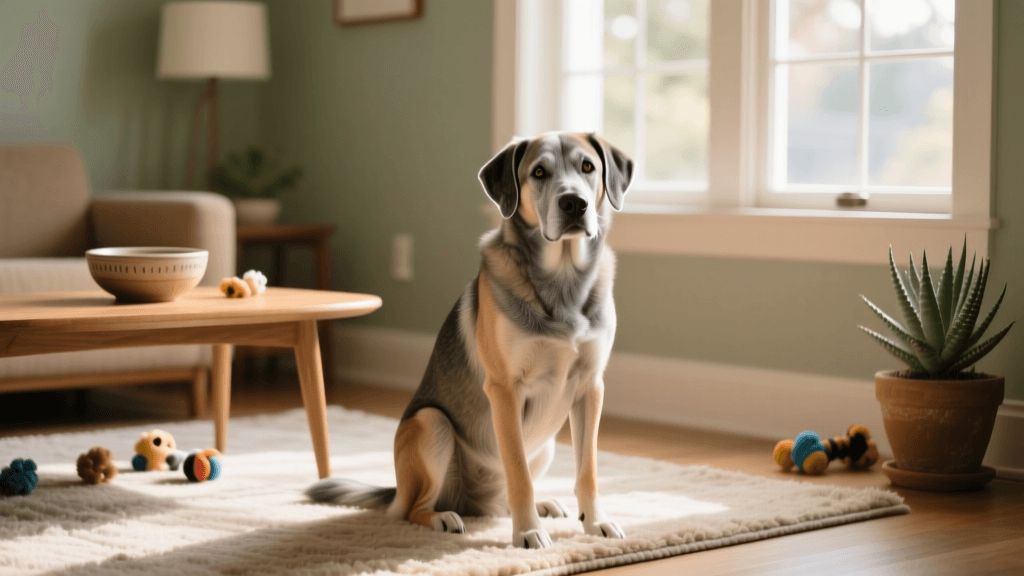
Understanding Dog Instincts For Effective Home Proofing
Discover how canine psychology drives chewing and scavenging. Learn actionable dog-proofing strategies, barrier heights, and enrichment tips for a safe home.

The Psychology of the Canine Home Environment
When we bring a dog into our homes, we often view dog-proofing as a simple checklist of tasks: hiding shoes, moving plants, and shutting doors. However, true dog-proofing requires a fundamental shift in perspective. To effectively protect your home and your pet, you must first understand how your dog perceives their environment. Dogs do not see a living room as a place for quiet relaxation; they see a complex landscape of scents, textures, and potential resources driven by millennia of evolutionary instincts.
According to the American Kennel Club, puppy-proofing and ongoing home management are critical not just for the safety of your belongings, but for the psychological well-being and physical safety of your dog. By understanding the 'why' behind scavenging, chewing, and territorial exploration, we can implement dog-proofing strategies that work with a dog's natural instincts rather than constantly fighting against them.
The Olfactory Drive: Why Scavenging Happens
A dog's primary way of interpreting the world is through their nose. While humans have about 5 million olfactory receptors, dogs possess up to 300 million, depending on the breed. This means your kitchen counter, even after being wiped down, smells like a rich tapestry of food residues. When a dog jumps on the counter or raids the trash, they are not being 'naughty'; they are responding to a powerful biological imperative to forage and scavenge.
Actionable Scavenging Solutions
To manage the olfactory drive, you must eliminate the scent cues that trigger foraging behavior. Standard trash cans with swinging lids are entirely ineffective against a determined scavenger.
- Upgrade Your Trash Receptacles: Invest in a heavy-duty, step-on trash can with a secure locking mechanism. The simplehuman 13-Gallon Step Trash Can (approximately $75) features a fingerprint-proof steel exterior and a lock that prevents dogs from nosing the lid open.
- Scent-Sealed Storage: Store all dry dog food, treats, and human snacks in airtight glass or thick metal containers. Plastic bins, even those with snap-on lids, can trap odors that a dog's nose will easily detect, encouraging them to chew through the plastic.
- Counter Surfing Deterrents: Never leave food unattended on counters. If your dog is an avid counter-surfer, use environmental deterrents like the PetSafe SSSCAT Spray Deterrent (around $40), which uses a motion sensor to release a harmless burst of unscented air, startling the dog and breaking the behavioral loop without damaging your bond.
The Psychology of Chewing and Teething
Chewing is a natural, necessary behavior for dogs. For puppies between the ages of 3 and 6 months, chewing relieves the intense pain of teething as their adult teeth push through the gums. For adult dogs, chewing is a mechanism for stress relief, jaw exercise, and environmental exploration. When a dog chews on a baseboard or a pair of leather shoes, they are seeking a specific texture and resistance that satisfies this psychological need.
Managing Destructive Chewing
Dog-proofing against chewing involves two steps: making inappropriate items unappealing and providing highly appealing alternatives.
- Bitter Deterrents: Apply a taste deterrent like Grannick's Bitter Apple Spray (approximately $12 per 8oz bottle) to furniture legs, baseboards, and cords. Reapply daily for two weeks to build a strong negative association with the taste.
- Cord Concealment: Electrical cords are incredibly dangerous and mimic the texture of natural vines or tendons. Use split loom tubing or cable management sleeves, such as the J-Chord Cable Management Sleeves (around $15 for 10 feet), to bundle and hide cords behind furniture or along baseboards.
- Texture Matching: If your dog prefers chewing soft leather (like shoes), provide a soft, pliable chew toy like a Nylabone FlexiChew. If they prefer hard wood (like table legs), offer a Benebone Maplestick made from durable nylon infused with real wood flavor.
Expert Insight: Never punish a dog for chewing an inappropriate item after the fact. Dogs live in the present moment and will not connect your anger to the chewed shoe they destroyed three hours ago. Instead, manage the environment to prevent the mistake from happening in the first place.
Spatial Boundaries: Gates and Safe Zones
Dogs are den animals by nature and thrive when they understand the boundaries of their territory. An open-concept home with zero boundaries can actually cause anxiety in some dogs, as they feel responsible for monitoring a massive, unmanageable space. Using physical barriers helps shrink their world to a manageable size, reducing stress and preventing access to hazardous areas like staircases or laundry rooms where toxic cleaning supplies are kept. For comprehensive lists of household toxins, the ASPCA Animal Poison Control center provides invaluable resources on common domestic hazards.
Choosing the Right Barrier
Selecting the correct baby gate or pet barrier requires understanding your dog's size, athleticism, and psychological response to confinement. A gate that is too low will invite jumping, while a gate that is too visually restrictive might trigger barrier frustration in highly social dogs.
| Dog Size / Breed Type | Recommended Gate Height | Best Gate Material & Style | Estimated Cost |
|---|---|---|---|
| Small Breeds (e.g., Chihuahua, Pug) | 24 to 28 inches | Pressure-mounted mesh or wood; walk-through door. | $30 - $50 |
| Medium Breeds (e.g., Beagle, Cocker Spaniel) | 30 to 32 inches | Hardware-mounted metal; vertical bars to prevent climbing. | $50 - $80 |
| Large / Athletic Breeds (e.g., Retriever, Shepherd) | 36 to 42 inches | Hardware-mounted heavy-duty steel; auto-close feature. | $70 - $120 |
| Escape Artists / High Jumpers | 48+ inches or X-Pen | Freestanding exercise pens (X-Pens) or custom tall gates. | $60 - $150 |
Installation Tip: Always use hardware-mounted gates (screwed into the wall studs) at the top of staircases. Pressure-mounted gates can slip if a large dog leans against them, leading to severe falls and injuries.
Environmental Enrichment as Proofing
The most overlooked aspect of dog-proofing is environmental enrichment. A bored dog is a destructive dog. If a dog's psychological need for mental stimulation and foraging is not met through structured activities, they will create their own 'enrichment' by shredding the mail, digging into the sofa cushions, or unrolling the toilet paper.
Implementing Proactive Enrichment
By providing appropriate outlets for their energy, you make the rest of your home inherently less interesting to them.
- Food Puzzles: Ditch the standard food bowl. Feed your dog their daily kibble out of puzzle toys like the Outward Hound Dog Brick Puzzle ($15) or a KONG Classic Red ($15) stuffed with wet food and frozen. This turns a 2-minute meal into a 20-minute mental workout, satisfying their foraging instincts and leaving them too tired to chew on your furniture.
- Scent Work and Snuffle Mats: Capitalize on their olfactory drive by hiding treats around a designated safe room or using a Snuffle Mat ($25). This encourages natural sniffing behaviors, which has been scientifically shown to lower a dog's heart rate and reduce anxiety.
- Rotation of Toys: Dogs experience habituation; they get bored of the same toys left on the floor. Keep a 'toy library' in a closet and only leave 3 or 4 toys out at a time, rotating them weekly to maintain novelty and interest.
Creating a 'Den' for Decompression
Finally, understanding your dog's need for a safe retreat is crucial. The home environment can be overstimulating, especially with children, guests, or loud appliances. Crate training, when done positively, provides a dog with a personal sanctuary. Place the crate in a quiet, low-traffic area of the home, outfitted with an orthopedic bed and a breathable cover to mimic a den-like atmosphere. When a dog knows they have a guaranteed safe space to retreat to, they are less likely to exhibit stress-based destructive behaviors like scratching at doors or chewing on window sills.
Conclusion
Dog-proofing your home is not a one-time event; it is an ongoing practice of environmental management rooted in canine psychology. By respecting your dog's powerful sense of smell, providing appropriate outlets for their chewing instincts, establishing clear spatial boundaries, and offering deep mental enrichment, you create a harmonious living space. Ultimately, understanding why your dog does what they do is the most effective tool you have in keeping both your home intact and your beloved pet safe.
jonas-cole
All our authors care for dogs every day — read more of their work on the authors page.