Understanding Canine Thresholds: A Progressive Training Plan
Learn to read your dog's stress signals and build a progressive training plan that respects their learning thresholds for lasting behavior change.

The Psychology of the Canine Learning Threshold
Understanding your dog's behavior requires more than just teaching commands; it requires a deep dive into canine psychology and neurobiology. At the core of any successful behavior modification is the concept of the "learning threshold." A threshold is the invisible line at which a dog transitions from a state of calm observation to emotional reactivity. When a dog is under their threshold, their prefrontal cortex—the part of the brain responsible for logical thought and learning—is fully engaged. However, once a dog crosses over their threshold, the amygdala hijacks the brain, triggering a fight, flight, or freeze response. According to the ASPCA Virtual Pet Behaviorist, once this sympathetic nervous system response is activated, true learning becomes biologically impossible. Your dog is no longer being stubborn; they are in a state of neurological survival. Therefore, any training progression plan that ignores these thresholds is destined to fail, often resulting in heightened reactivity and eroded trust.
Identifying Your Dog's Threshold Zones
To build an effective progression plan, you must first become fluent in your dog's body language. Canine stress signals are subtle and escalate rapidly if ignored. We can categorize these signals into three distinct threshold zones:
The Green Zone (Sub-Threshold)
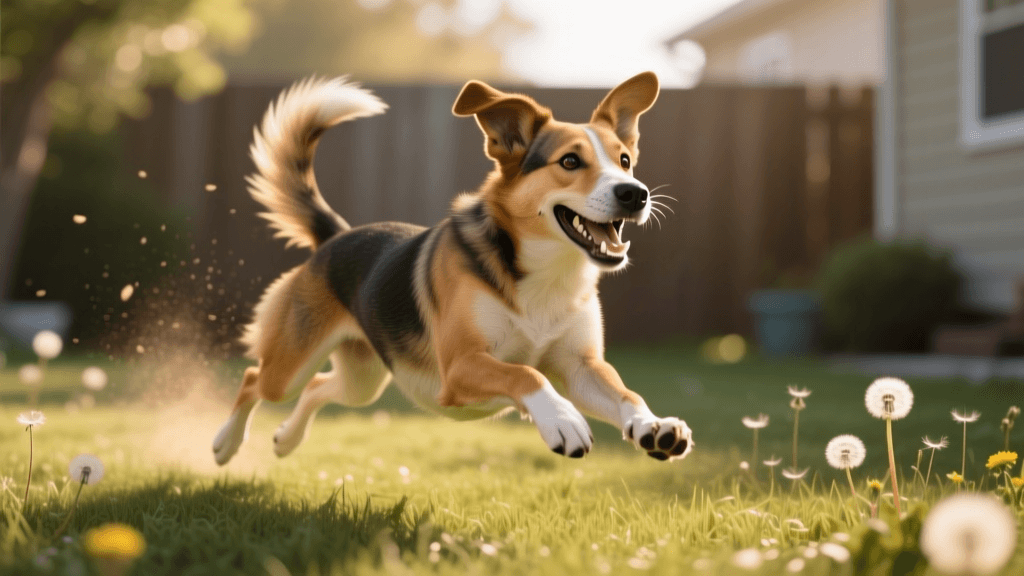
In the Green Zone, your dog is under threshold and capable of learning. Their body is loose and wiggly, their mouth may be slightly open in a "soft smile," and their ears are in a neutral position. They will readily take treats with a soft mouth and can easily disengage from a trigger to make eye contact with you. This is the only zone where active training and conditioning should occur.
The Yellow Zone (At Threshold)
The Yellow Zone is the warning area. Your dog has noticed the trigger and is beginning to feel uncomfortable, but they have not yet reacted explosively. Signs include sudden sniffing of the ground (displacement behavior), excessive lip licking, yawning when not tired, "whale eye" (showing the whites of the eyes), and a stiff, slowly wagging tail. If you see these signs, you are at the edge of the threshold. You must immediately increase distance or decrease the intensity of the trigger to prevent a blow-up.
The Red Zone (Over Threshold)
In the Red Zone, the dog has crossed the threshold. The thinking brain is offline. Signs include hard staring, lunging, barking, growling, snapping, or complete freezing. Do not attempt to train, command, or punish a dog in the Red Zone. Your only goal is to safely retreat to a distance where the dog returns to the Green Zone.
Designing Your Progressive Training Plan
Now that you understand the zones, you can implement a systematic desensitization and counter-conditioning (DS/CC) progression plan. This plan uses the "Engage-Disengage" game to change your dog's emotional response to triggers.
Step 1: Establish the Baseline (Week 1)
Your first task is to find your dog's starting threshold distance. Using a measuring wheel or counting your steps (one average stride is roughly 2.5 feet), find the exact distance where your dog notices the trigger but remains in the Green Zone. For many reactive dogs, this starting distance may be 80 to 100 feet away from the trigger. Spend Week 1 simply observing and rewarding calm behavior at this baseline distance. Do not attempt to move closer.
Step 2: The Desensitization Progression (Weeks 2-3)
Once your dog is consistently relaxed at the baseline, begin the Engage-Disengage protocol. The moment your dog looks at the trigger, mark the behavior within 0.5 seconds using a clicker or a verbal marker like "Yes!" Then, deliver a high-value treat within 1.5 seconds. The treat should be something extraordinary, such as Ziwi Peak Air-Dried Venison (approximately $45 per pound) or freeze-dried beef liver ($25 for 8 ounces). The goal is to create a positive neurological association: Trigger predicts chicken. Only decrease the distance by 5 to 10 feet when your dog successfully completes 8 out of 10 repetitions without showing Yellow Zone signals.
Step 3: Adding Criteria and Proofing (Week 4+)
As you close the distance, the environmental difficulty increases. If your dog shows Yellow Zone signals at a new, closer distance, immediately retreat 10 feet and return to Step 2. Progression is not a straight line; it is a dance of advancing and retreating based entirely on the dog's real-time emotional state.
The Role of Handler Emotional Regulation
Dogs are incredibly perceptive of human emotional states. If you are anxious about a potential reaction, your heart rate increases, your breathing becomes shallow, and you may inadvertently tighten the leash. Your dog will read these physiological changes and assume there is a legitimate reason to be on high alert, artificially lowering their threshold. Before beginning any training session, take three deep breaths, keep your shoulders relaxed, and maintain a loose grip on the long line. Your calm energy is the foundation of your dog's confidence.
4-Week Threshold Training Progression Chart
Use this structured chart to track your progression. Remember that timelines are estimates; let your dog's body language dictate the actual pace.
| Week | Focus | Distance to Trigger | Success Metric to Progress |
|---|---|---|---|
| Week 1 | Baseline & Observation | 80 - 100 feet | Dog remains in Green Zone for 15-minute sessions |
| Week 2 | Engage-Disengage Game | 60 - 80 feet | 8/10 successful markers before dog looks away |
| Week 3 | Closing the Gap | 40 - 60 feet | Dog voluntarily disengages from trigger to look at handler |
| Week 4 | Adding Mild Distractions | 30 - 40 feet | Maintains soft body language with lateral trigger movement |
Essential Gear for Threshold Training
To execute this progression plan safely, you need the right equipment. Standard 6-foot leashes do not provide enough buffer space to manage sudden threshold breaches.
- 30-Foot Biothane Long Line ($35 - $55): Biothane is waterproof, easy to clean, and won't burn your hands if the dog pulls. Brands like Mighty Paw or High Tail Tails offer excellent durability for outdoor tracking.
- Front-Clip No-Pull Harness ($40 - $70): The Ruffwear Front Range or the 2 Hounds Design Freedom Harness provides steering control without putting pressure on the dog's trachea, which is vital if they lunge when accidentally pushed over threshold.
- High-Value Treat Pouch ($15 - $25): A magnetic-closure pouch like the Dog Gone Smart or Ruffwear Treat Trader allows for sub-second treat delivery, which is critical for counter-conditioning timing.
Final Thoughts on Progressive Training
Progress in canine behavior modification is rarely linear. As highlighted by the American Kennel Club's expert training resources, patience and consistency are the bedrocks of successful dog ownership. By respecting your dog's learning thresholds and following a structured, progressive plan, you are not just suppressing unwanted behaviors—you are fundamentally changing how your dog feels about the world around them. Track your data, celebrate the micro-victories, and always prioritize your dog's emotional welfare over the speed of progression.
beth-carrasco
All our authors care for dogs every day — read more of their work on the authors page.