The Ultimate Puppy Teething Timeline and Survival Guide
Navigate your puppy's teething stage with our comprehensive timeline, pain relief tips, and safe chew toy recommendations to save your furniture.

Welcome to the 'Land Shark' Phase: Understanding Puppy Teething
Bringing a new puppy home is an exhilarating experience, but around the three-month mark, many new pet parents feel like they have adopted a tiny, furry land shark. If your puppy is suddenly chewing on your baseboards, nipping at your ankles, and leaving tiny spots of blood on their favorite rope toys, congratulations: your puppy is teething. As a critical life stage in your dog's first year, the teething phase requires patience, proactive management, and the right tools to ensure your puppy develops healthy adult teeth and proper bite inhibition.
Teething is not just a behavioral quirk; it is a physiological necessity. Just like human babies, puppies must shed their deciduous (baby) teeth to make room for their permanent adult dentition. This process can cause significant gum inflammation, soreness, and an overwhelming urge to chew. In this comprehensive life stage care guide, we will walk you through the exact puppy teething timeline, how to soothe your pup's aching gums, and actionable training steps to save your hands and your furniture.
The Puppy Teething Timeline: What to Expect
Understanding the developmental milestones of your puppy's dental growth will help you anticipate their needs and adjust your training accordingly. Below is a structured breakdown of the teething life stage.
| Age Range | Dental Milestone | Behavioral Signs & Symptoms |
|---|---|---|
| 2-4 Weeks | Baby teeth (incisors and canines) begin to erupt. | Nursing becomes more vigorous; mother may start weaning. |
| 5-8 Weeks | All 28 baby teeth are typically fully erupted. | Puppies explore the world with their mouths; sharp 'needle' teeth. |
| 12-16 Weeks | Baby teeth begin to fall out; adult incisors emerge. | Increased chewing, mild drooling, finding tiny teeth on the floor. |
| 4-6 Months | Adult canines and premolars push through the gums. | Peak chewing phase, swollen gums, occasional whining, bite inhibition testing. |
| 6-8 Months | All 42 adult teeth should be fully in place. | Chewing transitions from pain-relief to behavioral exploration. |
According to VCA Animal Hospitals, the most intense period of discomfort occurs when the adult canines and premolars are erupting between four and six months of age. During this window, your puppy's urge to chew will be at its absolute peak.
Top Signs Your Puppy is Teething
While chewing is the most obvious indicator, teething manifests in several other ways. Keep an eye out for the following symptoms during the 3-to-6-month life stage:
- Excessive Drooling: You may notice damp spots on your puppy's chest or bedding due to increased salivation.
- Spots of Blood: It is entirely normal to see small smears of blood on chew toys or in their water bowl as baby teeth become loose and fall out.
- Changes in Eating Habits: A teething puppy might eat more slowly, drop kibble, or hesitate to eat hard dry food due to gum tenderness.
- Whining or Irritability: Just like toddlers, puppies can become fussy and vocal when they are in physical discomfort.
- Finding Lost Teeth: You might occasionally find tiny, rice-grain-sized teeth on the carpet, though many puppies simply swallow them while eating, which is harmless.
Best Teething Toys and Soothing Remedies
To protect your belongings and soothe your puppy's inflamed gums, you must provide appropriate, safe outlets for their chewing. Cold temperatures act as a natural anesthetic for swollen gums. Here are the most effective, vet-approved remedies:
1. The Frozen KONG Puppy Toy
The KONG Puppy Toy (priced around $10-$15) is made from a softer rubber formula specifically designed for developing teeth. Pro Tip: Plug the small hole with a dab of dog-safe peanut butter, fill the cavity with plain, unsweetened Greek yogurt or low-sodium chicken broth, and freeze it for 4 to 6 hours. This provides a long-lasting, soothing treat that can keep a puppy occupied for up to 45 minutes.
2. Frozen Whole Carrots
For a budget-friendly, all-natural alternative, peel and freeze whole carrots. The hard, cold texture massages the gums and scrapes away plaque. Always supervise your puppy to ensure they do not choke on large broken chunks, and discard the carrot once it becomes small enough to swallow whole.
3. Nylabone Puppy Chew
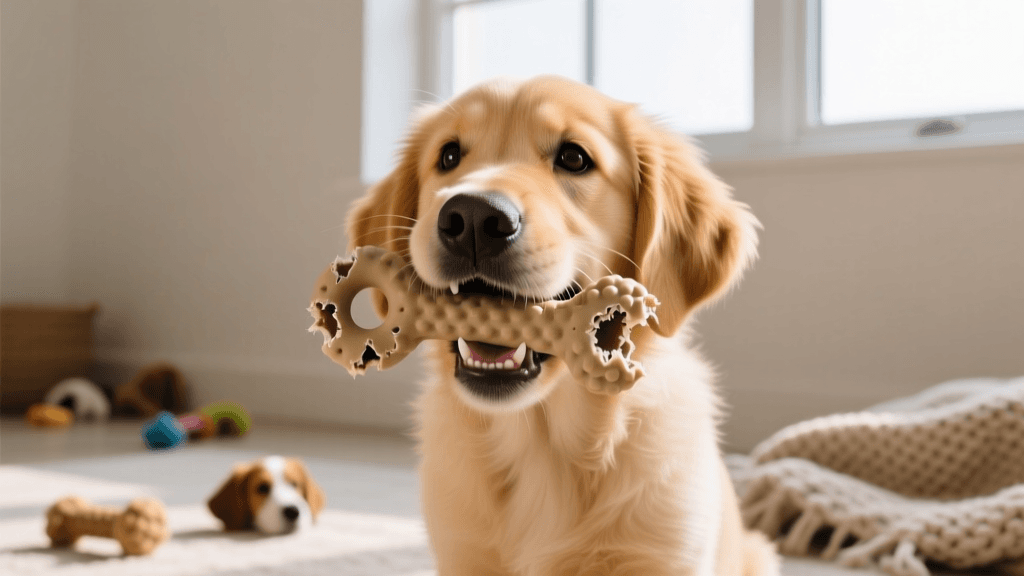
Nylabone offers specific 'Puppy' lines that are softer than their adult counterparts. These are infused with flavors like chicken or bacon to encourage appropriate chewing. Avoid giving adult-level hard bones or antlers to a teething puppy, as their baby teeth and emerging adult teeth are susceptible to fracturing under extreme pressure.
4. Chamomile Ice Cubes
Brew a weak, caffeine-free chamomile tea (known for its calming and anti-inflammatory properties), let it cool completely, and freeze it in an ice cube tray. Toss these into your puppy's water bowl or let them crunch on them directly on a towel-covered floor.
Bite Inhibition: Teaching Your Puppy Not to Bite
Teething is a primary reason puppies mouth and nip, but it is also the critical life stage for teaching bite inhibition—the ability to control the force of their bite. The American Kennel Club (AKC) emphasizes that puppies learn bite inhibition best through social feedback, mimicking how they play with their littermates.
Step 1: The 'Ouch' Method
When your puppy's teeth graze your skin, immediately let out a high-pitched 'Ouch!' or yelp, and let your hand go limp. This mimics a sibling's cry and startles the puppy into releasing their grip.
Step 2: Redirection
The moment they let go, praise them calmly and immediately offer an appropriate chew toy, like a frozen KONG or a rope toy. This teaches them what is acceptable to bite.
Step 3: The Reverse Time-Out
If the puppy continues to nip aggressively after the yelp, do not put the puppy in a crate (which should be a safe, positive space). Instead, use a reverse time-out: stand up, cross your arms, and leave the room for 30 seconds. This teaches the puppy that biting humans results in the end of playtime and social interaction.
Puppy-Proofing Your Home for the Chewing Stage
A teething puppy will chew on anything that fits in their mouth. Puppy-proofing is a non-negotiable safety requirement during this life stage. The ASPCA recommends a thorough environmental audit to prevent destructive and dangerous chewing incidents.
- Electrical Cords: Use PVC cord concealers or apply a bitter-tasting deterrent spray (like Grannick's Bitter Apple) to wires. Chewing a live wire can result in fatal electrocution or severe oral burns.
- Footwear and Clothing: Keep all shoes, socks, and laundry behind closed closet doors. Swallowed fabric and rubber can cause life-threatening intestinal blockages requiring emergency surgery.
- Toxic Houseplants: Relocate plants like lilies, sago palms, and pothos to high shelves or hanging planters where the puppy cannot reach them.
- Household Chemicals: Ensure all cleaning supplies, medications, and xylitol-containing products (like sugar-free gum or certain peanut butters) are locked in high cabinets.
When to See a Veterinarian
While teething is a normal developmental stage, certain complications require professional veterinary intervention. Schedule an appointment if you notice any of the following:
- Retained Deciduous Teeth: Sometimes, the baby tooth does not fall out when the adult tooth erupts, resulting in a 'double row' of teeth. This can cause severe crowding, misalignment, and trap food, leading to periodontal disease. A vet may need to extract the retained baby tooth.
- Excessive Bleeding: While small spots of blood are normal, profuse bleeding from the gums or mouth is a medical emergency.
- Refusal to Eat or Drink: If your puppy is entirely skipping meals or seems lethargic, the pain may be too severe, or they may have developed an oral infection or fractured a tooth.
- Facial Swelling: Swelling around the muzzle or under the eyes can indicate an abscess or severe infection requiring antibiotics.
Conclusion: Patience Pays Off
The puppy teething stage is undoubtedly one of the most challenging phases of your dog's first year. Your baseboards may suffer, and your fingers will likely endure a few nicks, but with consistent redirection, high-quality soothing toys, and a solid understanding of their developmental timeline, you will both survive. By guiding your puppy through this life stage with empathy and structure, you are laying the foundation for a well-mannered adult dog with a healthy, pain-free smile.
aaron-whyte
All our authors care for dogs every day — read more of their work on the authors page.