Separation Anxiety in Dogs: 2026 Graduated Absence Guide
Discover the 2026 Graduated Absence Protocol to cure your dog's separation anxiety. Learn step-by-step desensitization routines and smart tech aids.
Understanding Canine Separation Anxiety in 2026
As we navigate the hybrid work landscapes of 2026, many dogs are still struggling to adapt to periods of solitude. Separation anxiety is one of the most pervasive and emotionally taxing behavioral issues a pet parent can face. It is not merely a case of a dog being 'naughty' or 'vengeful' when left alone; it is a profound panic disorder. When a dog with separation anxiety is isolated, their brain's amygdala triggers a massive fight-or-flight response, flooding their system with cortisol and adrenaline. Understanding this neurobiological reality is the first step toward effective treatment.
According to the ASPCA, separation anxiety affects a significant percentage of the canine population, manifesting in destructive behavior, excessive vocalization, inappropriate elimination, and even self-mutilation. In 2026, veterinary behaviorists and Certified Separation Anxiety Trainers (CSATs) rely heavily on the Graduated Absence Protocol—a systematic desensitization and counter-conditioning framework designed to rewire the dog's emotional response to being alone.
Distinguishing Isolation Distress from True Separation Anxiety
Before diving into the protocol, it is crucial to differentiate between isolation distress and true separation anxiety. Isolation distress occurs when a dog simply does not want to be left alone, but will happily settle down if left with any other human or even a familiar canine companion. True separation anxiety, however, is a hyper-attachment to one specific individual. A dog with true separation anxiety will panic even if other people or pets are present in the home, solely because their primary attachment figure is missing.
Identifying which condition your dog has will dictate your training approach. The VCA Animal Hospitals behavior team notes that true separation anxiety often requires a more intensive, multi-modal approach, frequently combining behavioral modification with psychopharmacology to lower the dog's baseline anxiety enough for learning to occur.
Phase 1: Desensitizing Pre-Departure Cues
Dogs are masters of pattern recognition. Long before you actually walk out the door, your dog has already predicted your departure based on a sequence of micro-behaviors. Picking up your keys, putting on your shoes, grabbing your coat, or even the specific sound of your laptop closing can trigger an immediate spike in your dog's heart rate. If your dog is already in a state of panic before you leave, the actual absence will only reinforce that terror.
The first phase of the Graduated Absence Protocol involves stripping these triggers of their predictive power. You must perform these actions repeatedly without actually leaving.
Pre-Departure Cue Desensitization Table
| Cue Action | Desensitization Technique | Success Metric |
|---|---|---|
| Picking up car keys | Jingle keys, then sit down and read a book for 10 minutes. | Dog remains lying down, no panting or pacing. |
| Putting on work shoes | Lace up shoes, then immediately take them off and make tea. | Dog shows zero interest in the footwear. |
| Grabbing coat/bag | Put coat on, walk to the kitchen, take coat off, and sit. | Dog does not follow you or whine. |
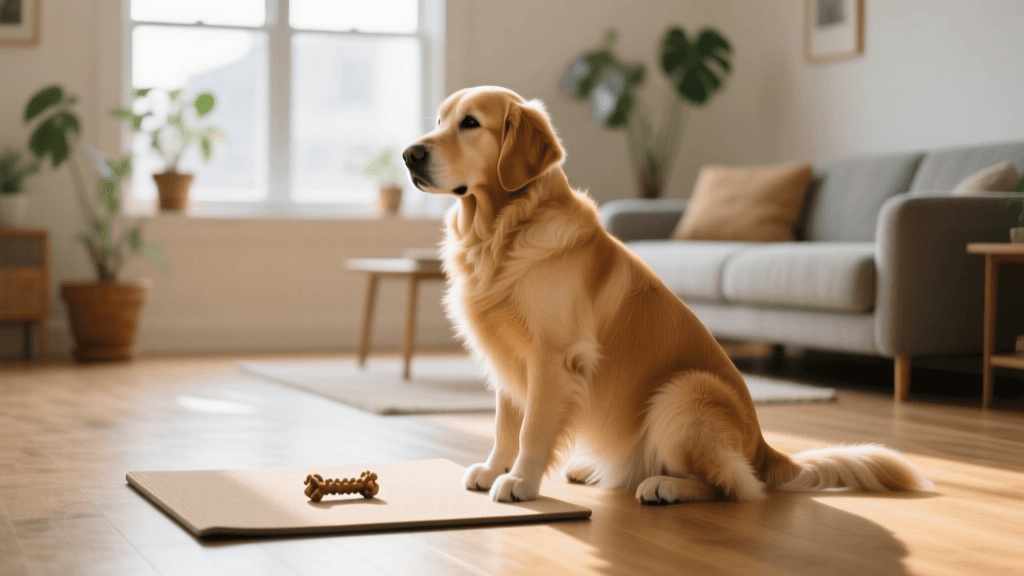
| Touching doorknob | Touch the handle, release it, and walk away to another room. | Dog remains relaxed on their mat or bed. |
You must repeat these randomized sequences daily until your dog exhibits complete apathy toward them. Only when the cues no longer trigger anxiety can you move to the actual absence training.
Phase 2: The Step-by-Step Absence Progression
The core of the 2026 Graduated Absence Protocol is systematic desensitization to the actual departure. The golden rule of this protocol is that the dog must never reach their threshold of panic during a training session. If your dog panics at minute three, and you push to minute four, you are flooding the dog and reinforcing the trauma. You must always return before the anxiety begins.
According to the American Kennel Club, keeping departures and returns incredibly low-key is vital. Do not say emotional goodbyes or offer enthusiastic greetings upon returning. Your return must be as boring as possible to normalize the concept of coming and going.
The Absence Duration Progression Chart
| Step | Duration | Action |
|---|---|---|
| 1 | 1 Second | Step out, close door, immediately re-enter. |
| 2 | 3 Seconds | Step out, pause, re-enter. |
| 3 | 5 Seconds | Step out, lock door, unlock, re-enter. |
| 4 | 10 Seconds | Step out, walk down hall, return. |
| 5 | 30 Seconds | Step out, go to car, return. |
| 6 | 1 Minute | Leave, start car, turn off, return. |
| 7 | 3 Minutes | Drive around the block, return. |
| 8 | 5 Minutes | Run a quick errand (e.g., mail drop). |
| 9 | 15 Minutes | Short walk or coffee run. |
| 10 | 30+ Minutes | Gradual increase to full workday absences. |
Pro Tip for 2026: Progression is rarely linear. You may have three great days at the 3-minute mark, followed by a regression. If your dog shows stress, drop back down to a duration where they were completely comfortable and build back up more slowly.
Integrating 2026 Smart Tech for Alone Time Training
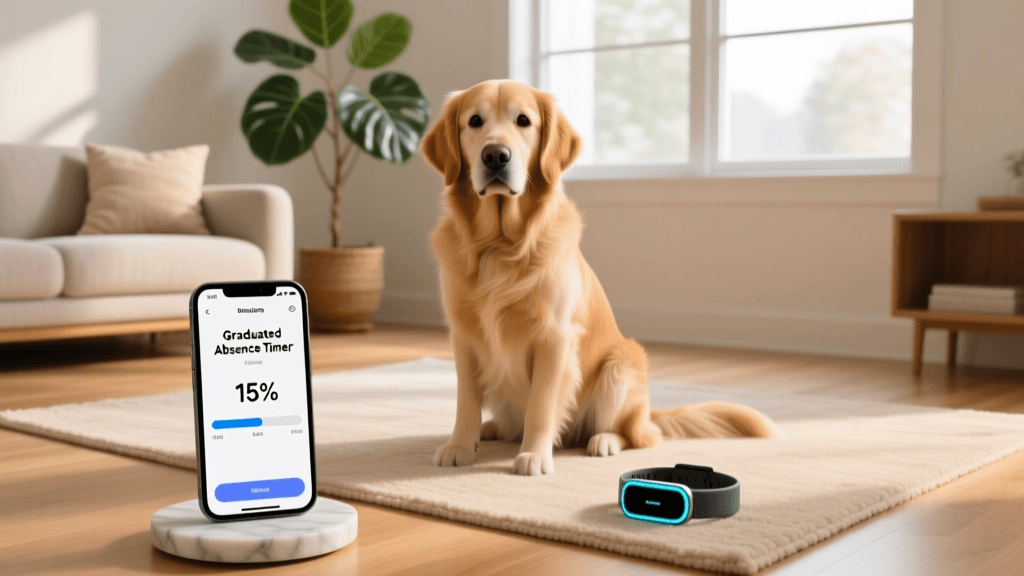
Modern technology has revolutionized how we monitor and manage canine separation anxiety. In 2026, relying on guesswork is no longer necessary. Smart home integrations allow trainers to observe micro-expressions of stress that the naked eye might miss from another room.
- AI Pet Cameras: Devices like the Wyze Cam v4 or Furbo 360 now feature advanced AI that tracks pet movement and vocalizations. This allows you to monitor your dog from your smartphone while you sit in your car down the street. You can watch for early stress signals like lip-licking, yawning, or 'whale eye' before they escalate into barking or destruction.
- Automated Treat Dispensers: For dogs suffering from mild isolation distress, automated dispensers can be programmed to drop high-value treats at randomized intervals, creating a positive association with your absence through classical conditioning.
- Smart Plugs and White Noise: Environmental triggers (like the sound of a delivery truck or a neighbor's dog) can easily push an anxious dog over threshold. Using smart plugs connected to white noise machines or speakers playing bio-acoustic music (specifically designed to lower canine heart rates) creates a predictable, soothing auditory blanket.
Reading Your Dog's Body Language on Camera
One of the most critical skills in the Graduated Absence Protocol is learning to read your dog's stress signals via your camera feed. Many owners mistakenly believe that if their dog is not barking or destroying furniture, they are 'fine.' This is a dangerous misconception. Dogs often exhibit 'shut down' behaviors or subtle displacement signals that indicate immense internal distress.
Canine Stress Threshold Chart
| Zone | Behavioral Signals | Protocol Action |
|---|---|---|
| Green (Relaxed) | Sleeping, chewing a toy, resting head on paws, slow blinking, soft ears. | Continue the planned absence duration. |
| Yellow (Early Stress) | Lip licking, yawning, pacing, panting, shaking off, staring at the door. | Return immediately. End the session on a positive note. Reduce next duration. |
| Red (Panic) | Frantic scratching, howling, drooling, inappropriate elimination, self-harm. | Return immediately. Consult a veterinary behaviorist. Do not push forward. |
The Role of Psychopharmacology and Veterinary Support
It is vital to understand that behavioral modification alone is sometimes insufficient for severe cases of separation anxiety. When a dog's brain is flooded with panic hormones, the cognitive centers required for learning are essentially offline. In 2026, the gold standard for severe separation anxiety involves a combination of the Graduated Absence Protocol and targeted psychopharmacology prescribed by a veterinarian.
Medications such as Fluoxetine (a daily SSRI to lower baseline anxiety) or Trazodone and Gabapentin (situational medications given 90 minutes before departure) can provide the chemical scaffolding your dog needs to successfully process the desensitization training. Never feel guilty about utilizing medication; it is a compassionate, science-backed tool that prevents your dog from suffering daily panic attacks while you work through the training steps.
Conclusion: Patience and Consistency
Treating separation anxiety is a marathon, not a sprint. The Graduated Absence Protocol requires immense patience, consistency, and a willingness to move at your dog's pace, not your own. By leveraging modern smart tech to monitor stress signals, systematically desensitizing pre-departure cues, and working closely with veterinary professionals, you can help your dog build the confidence they need to feel safe, secure, and relaxed when home alone in 2026 and beyond.
jonas-cole
All our authors care for dogs every day — read more of their work on the authors page.