Before and After: Transforming Your Home for a Rescue Dog
Discover the before and after transformations of adopting a rescue dog. Learn how to dog-proof your home, establish routines, and create a safe haven.

The Transformation of Home and Heart: Adopting a Rescue Dog
Bringing a rescue dog into your life is a profound decision that alters the very fabric of your daily existence. The journey of adopting a shelter dog is not just an emotional shift; it requires a tangible, physical transformation of your living space and daily routines. Whether you are adopting a timid senior hound or an energetic adolescent terrier mix, the environment you prepare will dictate how smoothly they transition into their new life. In this guide, we explore the 'before and after' of home preparation, detailing the actionable steps, specific products, and timeline expectations that turn a chaotic house into a canine sanctuary.
The 'Before' Phase: Assessing and Preparing Your Space
Before your rescue dog crosses the threshold, your home must undergo a rigorous safety audit. Rescue dogs often arrive with unknown histories, meaning they may exhibit unexpected behaviors like counter-surfing, resource guarding, or anxiety-induced chewing. Preparing your home is about mitigating risks before they become emergencies.
Room-by-Room Dog-Proofing
The kitchen is ground zero for household hazards. According to the ASPCA Animal Poison Control, common foods like xylitol (found in sugar-free gum), grapes, onions, and macadamia nuts are highly toxic to dogs. Before adoption day, install childproof latches on lower cabinets housing cleaning supplies and invest in a locking trash can, such as the Simplehuman 13-Gallon Locking Trash Can, to prevent dumpster-diving disasters.
In the living room, electrical cords and small electronics must be secured. Use split-loom tubing or Gorilla Tape to secure loose wires to baseboards. Remote controls, shoes, and decorative pillows should be relocated to high shelves. If you have houseplants, cross-reference them with the ASPCA's Toxic and Non-Toxic Plants list to ensure species like Sago Palms or Lilies are removed or placed in completely inaccessible rooms.
Creating the Decompression Zone
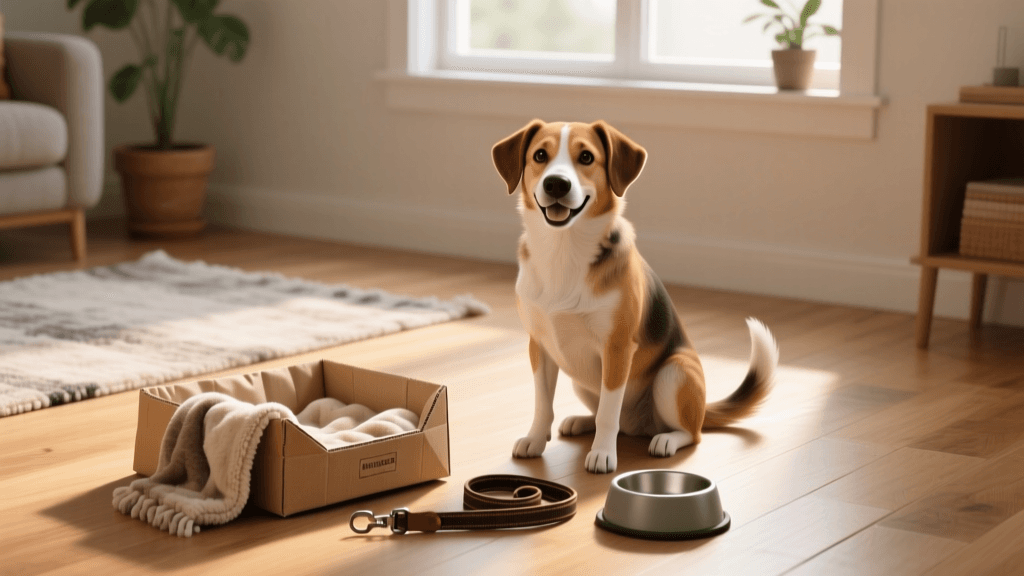
Every rescue dog needs a 'safe haven'—a designated area where they can retreat when overwhelmed. Before the dog arrives, set up a 42-inch Midwest iCrate (suitable for medium-to-large breeds) in a quiet, low-traffic corner of your home. Outfit it with a K9 Ballistics chew-resistant bed, a snuffle mat for mental enrichment, and a classic red Kong toy stuffed with frozen peanut butter. This zone is not for punishment; it is a predictable, secure basecamp that smells like safety.
The 'After' Phase: Life 90 Days Post-Adoption
The 'after' transformation is less about physical renovations and more about the evolution of your household's rhythm. The sterile, hyper-vigilant environment you created on day one slowly softens into a lived-in, harmonious shared space as your dog learns the rules.
The 3-3-3 Rule of Rescue Adjustment
Understanding the timeline of a rescue dog's transformation is critical for managing your expectations. The widely accepted 3-3-3 rule outlines the psychological journey of a shelter dog:
- 3 Days to Decompress: In the first few days, your dog may hide, refuse to eat, or sleep excessively. The home feels vast and intimidating. Your routine should be quiet, with minimal visitors and short, low-stakes potty breaks.
- 3 Weeks to Learn the Routine: By week three, your dog's true personality begins to surface. They learn when meals happen, where the treats are kept, and how to signal that they need to go outside. This is when minor behavioral quirks may appear, requiring patient, positive reinforcement training.
- 3 Months to Feel at Home: At the 90-day mark, a profound transformation occurs. The dog realizes this is their permanent home. Trust is established, and the bond solidifies. Your home has officially transformed from a 'foster space' to a shared sanctuary.
Routine Transformations: The 30-Foot Long Line
Post-adoption, your walking routine will transform. Shelter dogs are often overstimulated by the outdoors. Instead of standard 6-foot leash walks, utilize a 30-foot biothane long line in an open field. This 'decompression walk' allows the dog to sniff, explore, and process their environment at their own pace, which is proven to lower canine cortisol levels far more effectively than a rigid, heel-focused neighborhood stroll.
Before and After: Home & Routine Transformation Chart
| Category | Before (Day 1 Prep) | After (Day 90 Reality) |
|---|---|---|
| Living Space | Hyper-dog-proofed; cords taped, counters entirely bare, doors gated. | Relaxed boundaries; dog respects 'leave it' commands, gates removed from main living areas. |
| The Crate | Door tied open, filled with high-value treats and heartbeat toys. | Dog voluntarily enters to nap; door closed at night for safe sleeping. |
| Walking Gear | Escape-proof harness and 30-foot long line for decompression. | Standard 6-foot leash and front-clip harness for structured neighborhood walks. |
| Feeding Area | Elevated bowls in a quiet, isolated room to prevent resource guarding. | Bowls moved to the kitchen; dog waits patiently while food is prepared. |
The Financial Transformation: Budgeting for the Journey
The financial landscape of your household also undergoes a before-and-after shift. The 'before' phase is characterized by high upfront capital expenditures. You will spend approximately $300 to $500 on the adoption fee, which typically covers spay/neuter surgery, microchipping, and initial vaccinations. Additionally, expect to spend $150 to $250 on initial gear: the crate, harness, long line, enzymatic cleaners (like Nature's Miracle), and puzzle toys.
The 'after' phase transitions into predictable, ongoing maintenance costs. According to the Humane Society of the United States, new owners must budget for annual veterinary care, high-quality nutrition, and preventative medications. You will shift to spending roughly $80 to $150 per month on essentials like heartworm prevention (e.g., Heartgard Plus), flea and tick treatments (e.g., NexGard), and premium kibble or fresh food diets. Setting up an automated pet savings account before adoption day ensures that the 'after' phase remains financially stress-free.
Embracing the New Normal
The transformation from a dog-free home to a rescue-dog household is a journey of patience, preparation, and profound reward. By meticulously preparing your physical space before arrival and honoring the psychological 3-3-3 timeline after adoption, you provide the ultimate foundation for a shelter dog to thrive. The before-and-after photos of your home may simply show a dog bed in the corner and a leash by the door, but the true transformation is the invisible, unbreakable bond of trust you have built within those walls.
aaron-whyte
All our authors care for dogs every day — read more of their work on the authors page.