Training Herding vs Sporting Breeds: A Complete Guide
Discover key differences in training herding and sporting breeds. Learn actionable tips, gear recommendations, and breed-specific conditioning techniques.
Understanding Genetic Drives: Herding vs. Sporting
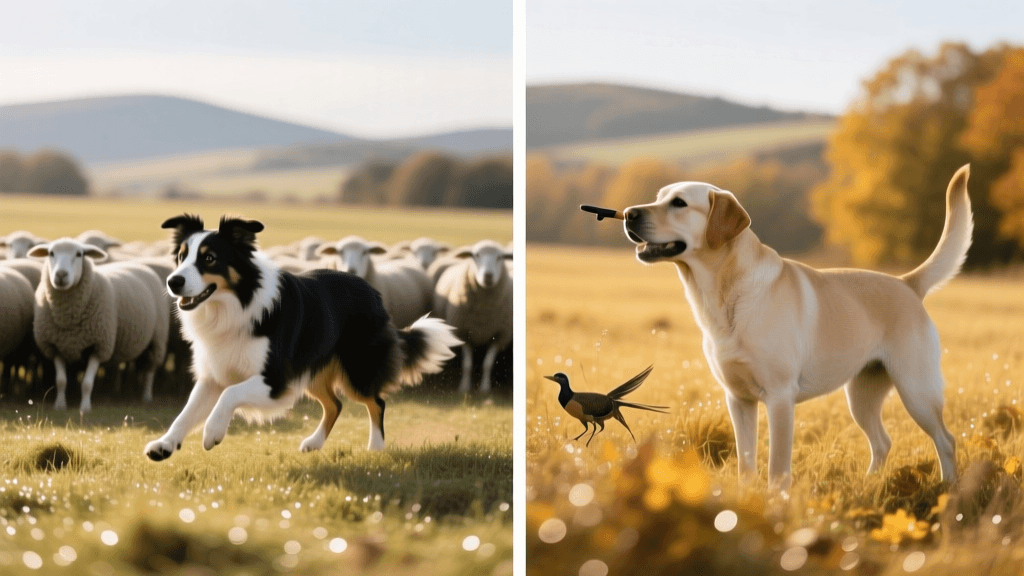
When selecting a dog breed, prospective owners often focus on appearance, size, or grooming needs. However, from a professional dog training perspective, the most critical factor is the breed's genetic drive. The training curriculum you will follow for the next decade is entirely dictated by the historical job your dog was bred to perform. In the realm of canine behavioral conditioning, no two groups present more distinct training paradigms than Herding breeds and Sporting breeds.
Herding dogs—such as the Border Collie, Australian Shepherd, and Belgian Malinois—were selectively bred to control the movement of livestock. This requires a high degree of visual acuity, intense focus, and a modified predatory sequence characterized by the "eye, stalk, and chase." Conversely, Sporting breeds—including the Labrador Retriever, Golden Retriever, and English Springer Spaniel—were developed to work in tandem with human hunters. Their genetic blueprint emphasizes pointing, flushing, and retrieving, relying heavily on olfactory senses and a "soft mouth" for carrying game.
According to the American Kennel Club breed standards, these instincts are deeply hardwired. Attempting to train a herding dog using the exact same repetitive retrieving drills meant for a sporting breed will quickly lead to frustration, neurotic behaviors, and a breakdown in communication. To succeed, handlers must tailor their obedience training, socialization techniques, and trick teaching to the specific cognitive profile of their chosen breed group.
Breed Comparison Chart: Trainability and Instincts
Before diving into specific conditioning techniques, it is vital to understand how these two groups process information, respond to pressure, and learn new behaviors. The following comparison chart highlights the core differences that dictate your training approach.
| Trait | Herding Breeds (e.g., Border Collie, Malinois) | Sporting Breeds (e.g., Labrador, Golden Retriever) |
|---|---|---|
| Primary Drive | Movement, visual stimuli, controlling space | Scent, retrieving, carrying objects, swimming |
| Response to Pressure | Highly sensitive; can shut down or become reactive | Resilient; generally bounces back quickly from corrections |
| Learning Style | Anticipatory; learns patterns quickly but can invent unwanted behaviors | Repetitive; thrives on structured routines and clear markers |
| Ideal Training Reward | Access to movement (tug, flirt pole, chasing a ball) | Food rewards, praise, and the opportunity to retrieve |
| Common Pitfall | Herding children/cars, shadow staring, reactivity | Mouthing, counter-surfing, wandering off-scent |
Training Herding Breeds: Channeling the Chase and Control
Herding breeds are the sports cars of the dog world: incredibly fast, highly responsive, but prone to crashing if not handled with precision. Because they are so sensitive to their environment, training must focus heavily on impulse control and emotional regulation. The Association of Professional Dog Trainers emphasizes that high-drive breeds require clear boundaries and positive reinforcement to prevent anxiety-based reactivity.
Step 1: The Engage-Disengage Game
Herding dogs are visually triggered by fast-moving objects like bicycles, skateboards, and running children. To counter this, use the Engage-Disengage game. Equip your dog with a 15-foot biothane long line (approximately $25 for a 5/8-inch width) and a front-clip harness like the Ruffwear Front Range ($39.95). When your dog looks at a trigger (a jogger passing by at a distance of 30 feet), mark the behavior with a clicker or a verbal "Yes!" and reward with high-value treats like Zuke's Mini Naturals ($6 per bag). The goal is to teach the dog that seeing a trigger means turning back to you for a reward, effectively rewiring their instinct to chase.
Step 2: The "Place" Command for Impulse Control
Because herding dogs struggle to "switch off," teaching a solid "Place" command is non-negotiable. Use an elevated cot, such as the Coolaroo Elevated Pet Bed ($35). Start in a low-distraction environment. Lure the dog onto the bed, mark, and reward. Gradually increase the duration from 5 seconds to 5 minutes before releasing. This provides the dog with a designated "off-duty" zone, preventing them from pacing or shadow-staring around the house.
Timing and Session Structure
Herding breeds overheat mentally much faster than physically. Keep training sessions strictly between 10 to 15 minutes, twice a day. If the dog begins to offer frantic, unprompted behaviors (like spinning or barking), the session has gone on too long, and they need a mental reset.
Training Sporting Breeds: Harnessing the Retrieve and Scent
Sporting breeds are generally more forgiving of handler mistakes and possess a "biddable" nature, meaning they actively seek to work in partnership with humans. Their training should lean heavily into their natural desires to use their nose and carry objects in their mouths.
Step 1: The Two-Toy Retrieve Method
To build a reliable recall and a structured fetch game, avoid throwing a single tennis ball, which can lead to the dog running off with the prize. Instead, use the Two-Toy Method. Purchase two identical canvas training dummies (such as the 2-inch Dokken Dead Fowl Trainer, $15 each). Throw Dummy A. When the dog picks it up, reveal Dummy B and call them back enthusiastically. When they return, they will drop Dummy A to get Dummy B. Throw Dummy B, pick up Dummy A, and repeat. This builds a rapid, reliable recall while satisfying their retrieving drive.
Step 2: Introduction to Scent Work
Sporting breeds excel at nose work, which is an excellent way to tire them out on rainy days. Purchase a basic scent kit containing birch, anise, and clove essential oils (around $30). Put a single drop of birch oil on a cotton swab and place it inside a vented metal tin. Hide the tin in an easy location, like the corner of a room, and tell your dog to "Find it." When they locate the tin, reward them with a piece of freeze-dried liver. This taps into their pointing and flushing genetics in a controlled, indoor environment.
Timing and Session Structure
Sporting breeds have excellent mental stamina for repetitive tasks. You can safely conduct 20 to 30-minute training sessions, focusing on heelwork, recall, and retrieving mechanics. However, ensure you incorporate "sniffaris"—unstructured walks where the dog is allowed to sniff freely on a long line—to prevent them from becoming overly robotic or stressed by constant obedience demands.
Essential Gear and Budgeting for Breed-Specific Training
Equipping yourself with the right tools is a critical component of behavioral conditioning. Using the wrong gear can inadvertently reinforce unwanted behaviors or cause physical discomfort. Here is a breakdown of the essential training investments for both breed groups.
Herding Breed Gear Checklist
- Flirt Pole ($25 - $35): A wand with a bungee cord and lure. Essential for teaching "drop it" and "wait" while satisfying the chase drive in a controlled manner. Look for a 36-inch fiberglass pole for optimal leverage.
- Treat Pouch ($15 - $20): Herding dogs require rapid-fire marking and rewarding. A magnetic-closure pouch like the Doggone Good Rapid Rewards pouch ensures you can deliver treats in under 1 second.
- Agility Tunnel ($40 - $60): Great for building confidence and teaching directional cues ("go through," "come here") in the backyard.
Sporting Breed Gear Checklist
- Bumper Launcher ($150 - $250): Devices like the Chuckit! Pro Launcher or a manual dummy launcher allow you to throw retrieves 100+ yards, exhausting a high-energy retriever without tiring out your own arm.
- GPS Tracking Collar ($300 - $700): For off-leash hiking and field work, a Garmin Astro or Alpha system is a necessary safety investment for sporting breeds prone to following a scent trail miles into the woods.
- Check-Cord ($15 - $20): A 30-foot floating cotton or biothane rope used to gently guide a dog back during recall training in open water or fields without applying harsh corrections.
Socialization and Environmental Conditioning
While both groups require extensive socialization during the critical 8 to 14-week developmental window, the focus areas differ drastically. As outlined by the ASPCA puppy care guidelines, early exposure to novel stimuli is vital for preventing lifelong behavioral issues.
- For Herding Breeds: Focus on desensitization to chaotic environments. Take your puppy to the outside of a hardware store or a children's park. Reward them for remaining calm while loud noises, erratic movements, and strange surfaces occur around them. The goal is to teach them that movement does not equal a cue to herd or chase.
- For Sporting Breeds: Focus on environmental neutrality regarding food and wildlife. Practice "leave it" with dropped food items on walks, and expose them to the sounds of birds and waterfowl without allowing them to break a sit-stay. The goal is to ensure their prey drive remains under the handler's verbal control.
Conclusion: Matching Your Lifestyle to the Breed
Ultimately, successful dog training begins long before the puppy enters your home; it begins with informed breed selection. If you lead an active lifestyle, enjoy structured routines, and want a dog that thrives on repetitive obedience and outdoor retrieving, a Sporting breed will be a highly rewarding companion. If you are dedicated to canine sports like agility or sheepdog trials, possess a deep understanding of canine body language, and have the time for rigorous daily impulse-control exercises, a Herding breed will offer an unparalleled level of partnership. By respecting the genetic blueprint of your chosen breed and utilizing the correct gear, timing, and conditioning techniques, you can transform innate drives into polished, reliable obedience.
aaron-whyte
All our authors care for dogs every day — read more of their work on the authors page.