Training Giant Breed Puppies: Joint Health and Genetics
Learn how to train giant breed puppies safely. Discover obedience techniques that protect developing joints and respect genetic health profiles.

The Unique Challenge of Giant Breed Genetics
Bringing home a giant breed puppy is an exhilarating experience. Breeds such as the Great Dane, English Mastiff, Saint Bernard, Newfoundland, and Leonberger are known for their gentle temperaments, immense loyalty, and staggering adult sizes. However, training a giant breed puppy requires a fundamentally different approach than training a small or medium-sized dog. The primary difference lies in their genetic health profiles, specifically regarding their rapid growth rates and skeletal development. While a medium-sized dog might reach physical maturity by twelve to fourteen months, giant breeds continue to grow and develop until they are eighteen to twenty-four months old, and sometimes even longer. This prolonged growth phase means that their bones, joints, and growth plates remain highly vulnerable to injury for an extended period. Consequently, traditional training methods that involve repetitive fetching, high-impact agility, or long-distance running can cause irreversible orthopedic damage. As a responsible owner and trainer, you must adapt your obedience and behavioral conditioning programs to prioritize joint health while still ensuring your puppy develops into a well-mannered adult.
Understanding Joint Vulnerabilities and Dysplasia Risks
Giant breeds are genetically predisposed to several orthopedic conditions, the most notorious being hip and elbow dysplasia. Dysplasia occurs when the ball and socket of the joint do not fit or develop properly, leading to friction, cartilage wear, and eventual osteoarthritis. According to the Orthopedic Foundation for Animals, certain giant breeds consistently rank among the highest for hip dysplasia prevalence. While genetics play a foundational role in whether a dog develops dysplasia, environmental factors during puppyhood—such as obesity, rapid growth, and high-impact exercise on hard surfaces—can trigger or exacerbate the condition. The American College of Veterinary Surgeons emphasizes that managing a giant breed puppy's environment and physical activity during the first year of life is critical to minimizing joint laxity and preventing long-term mobility issues. Therefore, your training regimen must focus heavily on impulse control, mental enrichment, and low-impact physical engagement rather than physical exhaustion.
The Golden Rules of Giant Breed Puppy Exercise
Before diving into specific commands, it is vital to establish the physical boundaries of your training sessions. The general veterinary consensus for puppy exercise is five minutes of structured, leash-guided walking per month of age, up to twice a day. This means a four-month-old Great Dane should only engage in about twenty minutes of dedicated walking at a time. Furthermore, you must strictly avoid activities that place sudden, jarring forces on developing growth plates. This includes jumping in and out of vehicles, leaping over obstacles, catching frisbees, and running on slippery surfaces like hardwood or tile floors. Instead of using physical exertion to tire out your puppy, you must pivot toward cognitive training and low-impact obedience exercises.
Age-Appropriate Training Timelines
To help you structure your training safely, refer to the following timeline tailored for giant breed development. This chart ensures you are meeting behavioral milestones without compromising skeletal integrity.
| Age Range | Primary Training Focus | Physical Limitations | Recommended Activities |
|---|---|---|---|
| 8 to 12 Weeks | Socialization, handling, basic name recognition | No forced walking; carry puppy up and down stairs | Mat training, gentle handling, short 3-minute sessions |
| 3 to 6 Months | Leash manners, impulse control, basic cues | Limit walking to 15-30 minutes; avoid slippery floors | Target training, scent work, food puzzles, 'Wait' command |
| 6 to 12 Months | Advanced obedience, proofing commands in public | Strictly no jumping or agility; monitor for joint fatigue | Low-impact swimming, long-line sniffaris, 'Place' command |
| 12 to 24 Months | Reliability off-leash (in safe areas), endurance building | Wait for vet clearance of growth plates via X-ray | Gradual introduction to hiking, structured trotting |
Essential Obedience Commands for Joint Protection
When physical exercise is restricted, obedience training becomes your primary tool for managing your puppy's behavior and energy. Certain commands are not just about good manners; they are essential safety mechanisms that protect your dog's joints from sudden, uncoordinated movements.
1. The 'Wait' and 'Leave It' Commands
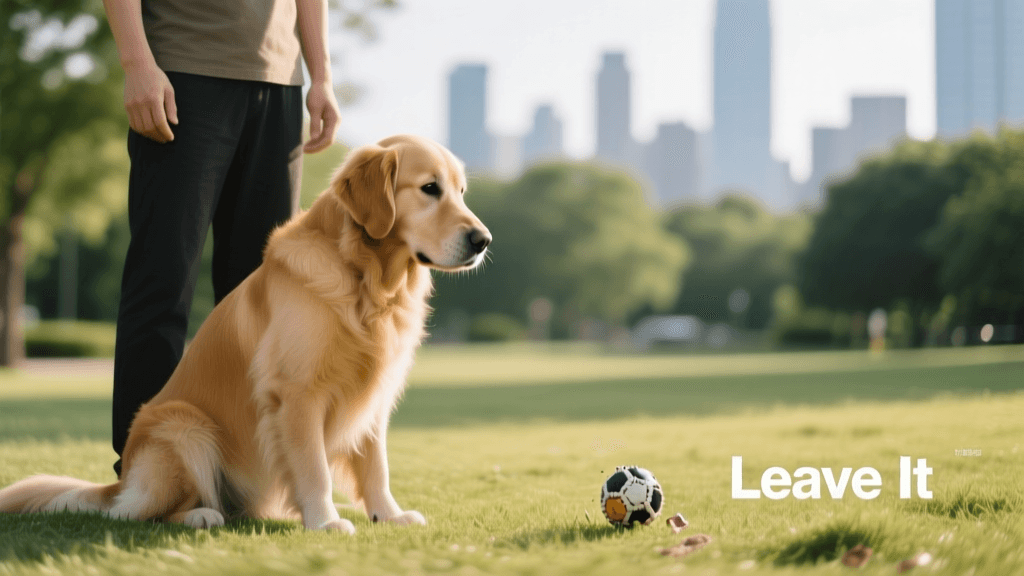
Giant breed puppies are notoriously clumsy and can easily pull you down a flight of stairs or bolt out a front door, leading to sudden slips and joint trauma. Teaching a solid 'Wait' at all thresholds (doors, gates, car doors) ensures your dog does not launch themselves into unsafe environments. Similarly, a reliable 'Leave It' command prevents your puppy from chasing after squirrels, other dogs, or dropped food, thereby eliminating the need for sudden, high-speed pivots and stops that can tear ligaments or stress developing hips.
2. The 'Place' or 'Settle' Command
Mat training is arguably the most valuable skill you can teach a giant breed puppy. By directing your dog to go to a specific bed or mat and remain there until released, you provide them with a default 'off-switch.' This is particularly useful when guests enter the home, preventing the puppy from jumping up on people—a behavior that is not only annoying but dangerous given the dog's eventual adult weight. To train this, use a high-value, low-calorie treat to lure the puppy onto a textured mat (which provides better grip than a slick bed). Reward heavily for all four paws on the mat, gradually increasing the duration before offering the release cue.
3. 'Slow' and Loose-Leash Walking
Because you cannot rely on running to burn off energy, your daily walks must be deliberate and engaging. Teach your puppy to walk on a loose leash at a slow, controlled pace. If the puppy begins to pull or rush, stop immediately and wait for them to look back at you before proceeding. This mental engagement—constantly checking in with the handler—tires the puppy out cognitively without placing excessive mechanical load on their elbows and hips.
Mental Enrichment: Tiring Them Out Safely
Since physical exhaustion is off the table for the first year, mental stimulation must take its place. A mentally fatigued puppy is a calm, compliant puppy. The American Kennel Club frequently highlights the importance of managing a giant breed's weight and activity levels, and mental enrichment perfectly bridges the gap between activity and safety.
- Scent Work and Sniffaris: Dedicate your daily walks to 'sniffaris.' Allow your puppy to stop and sniff every tree, bush, and blade of grass. Sniffing lowers a dog's heart rate and engages the olfactory lobe, which consumes a massive amount of mental energy. You can also hide low-calorie treats around your living room or yard and encourage your dog to 'find it.'
- Food Puzzles and Slow Feeders: Ditch the traditional food bowl. Feed your puppy's daily kibble ration through interactive puzzle toys like the Outward Hound Nina Ottosson line or stuffable rubber toys like the KONG Classic. This forces the dog to problem-solve and work for their food, providing up to thirty minutes of quiet, stationary mental engagement.
- Low-Impact Trick Training: Teach tricks that do not require the hind legs to bear excessive weight or leave the ground. Tricks like 'spin,' 'touch' (targeting your hand with their nose), 'weave' through your legs, and 'speak' are excellent ways to build coordination and bond with your dog without risking orthopedic injury.
Choosing the Right Training Equipment
The equipment you use during training directly impacts your giant breed's physical health. Traditional collar-and-leash setups can cause severe tracheal damage if a massive puppy decides to pull, and they offer very little leverage for the handler. Furthermore, slip leads and prong collars are generally discouraged for young giant breeds due to the risk of neck and spinal strain. Instead, invest in a high-quality, front-clip no-pull harness. Brands like the Ruffwear Front Range or the Rabbitgoo No-Pull Harness feature a D-ring on the chest. When the puppy pulls, the front clip gently redirects their momentum back toward you, naturally discouraging pulling without applying dangerous pressure to their throat or developing cervical spine. Ensure the harness fits snugly but allows for two fingers to slide under the straps to prevent chafing on their rapidly changing frame.
Managing Training Treats and Weight Control
Genetic predispositions to joint issues are severely compounded by excess body weight. Every extra pound on a giant breed puppy exerts exponential force on their hips and elbows. Because training requires frequent repetition and reward, it is incredibly easy to accidentally overfeed your puppy. To combat this, use your dog's daily kibble allowance as training rewards rather than adding extra calories. If you need higher-value treats for difficult environments, opt for single-ingredient, low-calorie options like Zuke's Mini Naturals, freeze-dried liver bits, or small pieces of boiled chicken breast. Avoid fatty, calorie-dense treats like cheese or peanut butter during repetitive obedience drills. Regularly assess your puppy's body condition score; you should be able to easily feel their ribs without pressing hard, and they should have a visible abdominal tuck when viewed from the side.
Creating a Joint-Friendly Home Environment
Training does not stop when the leash comes off; it extends to how your dog navigates your home. Hardwood, laminate, and tile floors are the enemies of giant breed puppies. When a puppy attempts to stand up or change direction quickly on a slick surface, their legs can splay outward, placing immense torque on the hip joints and potentially causing micro-tears in the joint capsule. To mitigate this, lay down interlocking foam mats, yoga mats, or secure area rugs with non-slip pads in the rooms where your puppy spends the most time. Additionally, provide orthopedic bedding that supports their heavy frame, and use pet-safe ramps to help them access elevated surfaces like couches or beds if they are permitted on them, completely eliminating the need to jump.
Conclusion
Training a giant breed puppy is an exercise in patience, foresight, and restraint. By understanding the genetic vulnerabilities of their skeletal system and adapting your training methods to prioritize mental stimulation and low-impact obedience, you lay the groundwork for a lifetime of mobility and health. The effort you put into impulse control, mat training, and environmental management during their first two years will pay dividends, resulting in a calm, well-behaved giant who can comfortably accompany you on adventures for years to come.
beth-carrasco
All our authors care for dogs every day — read more of their work on the authors page.