How to Train Your Dog to Use Sound Buttons: A Viral Guide
Learn how to teach your dog to use talking sound buttons. Discover step-by-step FluentPet training tips, costs, and viral button training secrets.
The Viral Phenomenon of Talking Dogs
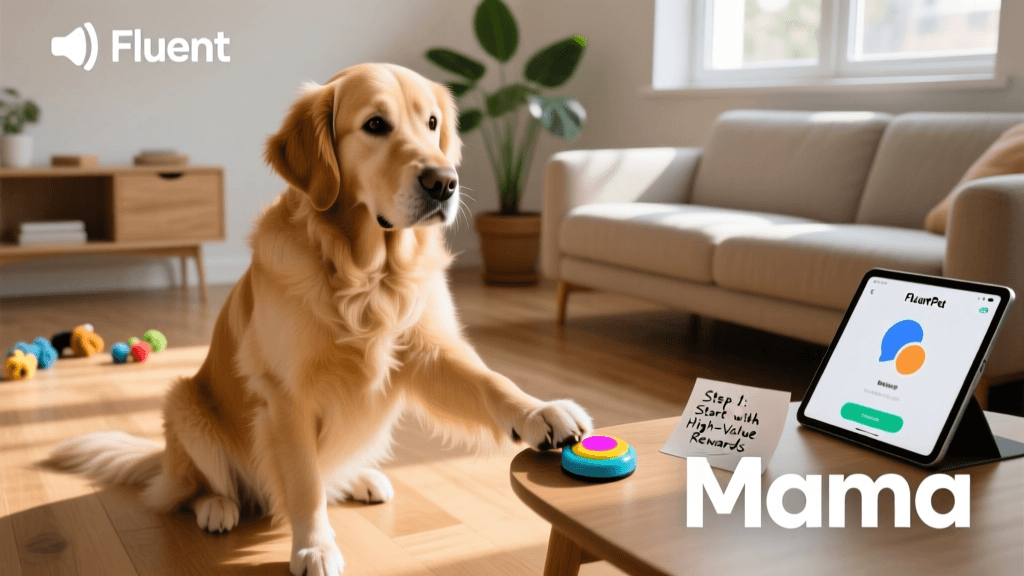
If you have spent any time on TikTok, Instagram, or YouTube Shorts recently, you have likely encountered a dog pressing a soundboard to ask for a walk, complain about a stranger, or even declare their love. Viral canine stars like Bunny the Sheepadoodle and Stella the Catahoula mix have captivated millions by using Augmentative and Alternative Communication (AAC) devices. While it looks like magic, teaching your dog to use sound buttons is rooted in behavioral conditioning, cognitive science, and consistent positive reinforcement. As a trending training method, button training bridges the communication gap between species, offering profound mental enrichment for your dog. In this comprehensive guide, we will break down the exact steps, costs, and scientific principles behind training your dog to use talking buttons.
What is Canine AAC?
Augmentative and Alternative Communication (AAC) is traditionally used to help humans with speech impairments communicate using symbols, pictures, or sound-generating devices. In recent years, cognitive scientists and veterinary behaviorists have adapted AAC for canine use. The premise is simple: dogs possess the cognitive ability to associate arbitrary symbols or sounds with specific outcomes, environments, or feelings. By pressing a button that plays a pre-recorded word, the dog learns that this specific action triggers a predictable result. According to the TheyCanTalk research initiative led by cognitive scientists at UC San Diego, dogs are not merely mimicking behaviors for treats; many are demonstrating a genuine understanding of syntax, combining words to express novel thoughts or report on their environment.
Choosing Your Sound Buttons: Brands and Costs
Before you begin training, you need the right equipment. The market has exploded with options ranging from budget-friendly recordable buzzers to specialized, interlocking tile systems designed specifically for canine paws. Investing in a high-quality system prevents frustration caused by slipping buttons or inaudible speakers. Below is a comparison of the most popular options on the market.
| Brand / Type | Average Cost | Pros | Cons |
|---|---|---|---|
| FluentPet Starter Kit | $29.95 (6 buttons) | Hexagonal tiles prevent sliding; high-quality speakers; compact design. | Proprietary system; replacement tiles can be pricey. |
| Recordable Answer Buzzers | $15.00 (Pack of 4) | Budget-friendly; widely available online; simple one-button recording. | Slippery on hard floors; lower audio clarity; takes up more space. |
| Custom RFID Soundboards | $150.00+ | One single board with multiple digital triggers; highly customizable. | Very expensive; lacks tactile feedback; steep learning curve. |
For most pet owners, the FluentPet system is the gold standard due to its interlocking hexagonal mats, which provide excellent traction and allow you to build a customized vocabulary board over time.
Step-by-Step Button Training Guide
Step 1: Selecting the First Words
Do not start with abstract concepts like "love" or "mad." Begin with highly motivating, functional words that your dog already understands and anticipates. The best starter words are "Outside," "Play," "Food," or "Walk." Record the words on the buttons using a clear, enthusiastic, and high-pitched voice. Dogs respond exceptionally well to higher frequencies and animated tones. Keep your initial setup limited to just two or three buttons to avoid overwhelming your dog. Place the "Outside" button near the door you use for potty breaks, and the "Play" button near their toy bin.
Step 2: The Power of Modeling
Modeling is the most critical phase of AAC training. You must show your dog exactly what the button does and what the outcome is. Every time you take your dog outside, say the word "Outside" aloud, press the button yourself, and immediately open the door. Repeat this consistently for at least two to three weeks before expecting your dog to press it. You are building a neurological association between the physical action of pressing the button, the auditory feedback of the recorded word, and the environmental result of going outside. Keep these modeling sessions brief, around 3 to 5 minutes, to maintain your dog's focus and prevent cognitive fatigue.
Step 3: Capturing and Reinforcing
Once you have modeled the behavior consistently, it is time to wait for your dog to initiate. When you are preparing to go outside, pause and look at the button. Wait 5 to 10 seconds. If your dog sniffs, paws, or accidentally steps on the button, immediately celebrate! Use a marker word like "Yes!" or a clicker, and instantly provide the requested outcome (e.g., open the door). According to Fear Free Pets, immediate positive reinforcement is crucial for solidifying new behavioral chains. If your dog presses the "Play" button, you must drop everything and engage in a 60-second play session, even if you are busy. Consistency in your follow-through is what teaches the dog that their voice has power.
Optimizing the Environment for Success
Where you place the soundboard is just as important as how you train it. The American Kennel Club (AKC) emphasizes that mental enrichment tools should be integrated into the dog's daily living space to be effective. Do not hide the buttons in a spare bedroom or a quiet corner. Place the mat in a high-traffic, central area of your home, such as the living room or kitchen, where your dog naturally spends time with you. Ensure the mat is on a non-slip surface. If you have hardwood floors, use a rug gripper underneath the FluentPet base tiles to prevent the board from sliding when your dog steps on it, which can startle them and create a negative association with the device.
Common Mistakes to Avoid
As button training goes viral, many owners rush the process and inadvertently create behavioral issues. Avoid these common pitfalls:
- Pushing the Dog's Paw: Never physically force your dog's paw onto the button. This creates physical resistance and fear, completely undermining the voluntary nature of AAC communication.
- Ignoring the Request: If your dog presses "Outside" at an inconvenient time, you must still honor the request, even if it just means stepping onto the back porch for 30 seconds. Ignoring the button teaches the dog that the system is broken.
- Button Spamming: If your dog repeatedly mashes the "Food" button, do not add more food. Instead, teach a "Finished" or "All Done" button so you can communicate that the resource is depleted, reducing their frustration.
- Overloading the Board: Adding ten new buttons in a single week will confuse your dog. Introduce new vocabulary at a rate of one new button every two to four weeks, ensuring mastery of the current words first.
The Science and Patience Behind the Trend
While viral videos often show dogs stringing together complex sentences like "Stranger outside come," these dogs have been training for years. The reality of canine AAC is that it requires immense patience, consistency, and a deep understanding of operant conditioning. Your dog may never become a viral internet sensation, and that is perfectly okay. The true value of sound button training lies in the profound mental enrichment it provides and the unique bond it builds between you and your pet. By giving your dog a voice, you are inviting them to participate more fully in your shared world. Start small, celebrate the minor victories, and enjoy the fascinating journey of cross-species communication.
marcus-aldridge
All our authors care for dogs every day — read more of their work on the authors page.