How to Safely Train Your Dog to Be Calm Around Toddlers
Learn how to train your dog to be calm and gentle around toddlers using safe boundaries, desensitization, and positive reinforcement techniques.

Why Dog and Toddler Safety Training is Essential
Bringing a toddler and a dog together in one household is a beautiful experience, but it requires proactive management and dedicated training. According to the Centers for Disease Control and Prevention (CDC), children are the most common victims of dog bites, and these incidents frequently occur in the home with a familiar family pet. The American Veterinary Medical Association (AVMA) notes that most bites to children happen during everyday, seemingly benign activities. This highlights a crucial reality: dogs and toddlers speak entirely different languages. A toddler's erratic movements, high-pitched squeals, and lack of spatial awareness can easily trigger a dog's prey drive or cause severe anxiety.
As highlighted by the Humane Society of the United States, active supervision and targeted training are the twin pillars of a safe multi-species household. This guide will walk you through the exact commands, desensitization protocols, and management tools you need to foster a peaceful, safe environment for both your child and your dog.
The Core Commands Every Family Dog Needs
Before your toddler becomes fully mobile, your dog must have a reliable grasp of specific obedience cues. These are not just tricks; they are vital safety mechanisms.
1. The "Place" Command (Creating a Safe Zone)
The "Place" command instructs your dog to go to a specific mat or bed and stay there until released. This is invaluable when your toddler is eating, playing with small toys, or having a meltdown.
- The Setup: Invest in a raised, durable cot like the Coolaroo Elevated Pet Bed (approx. $35). Raised beds provide a clear physical boundary that dogs easily understand.
- The Lure: Use high-value, pea-sized treats such as Zuke's Mini Naturals (approx. $7 per 6oz bag). Cut them into 1/4-inch pieces to keep your dog's daily caloric intake in check.
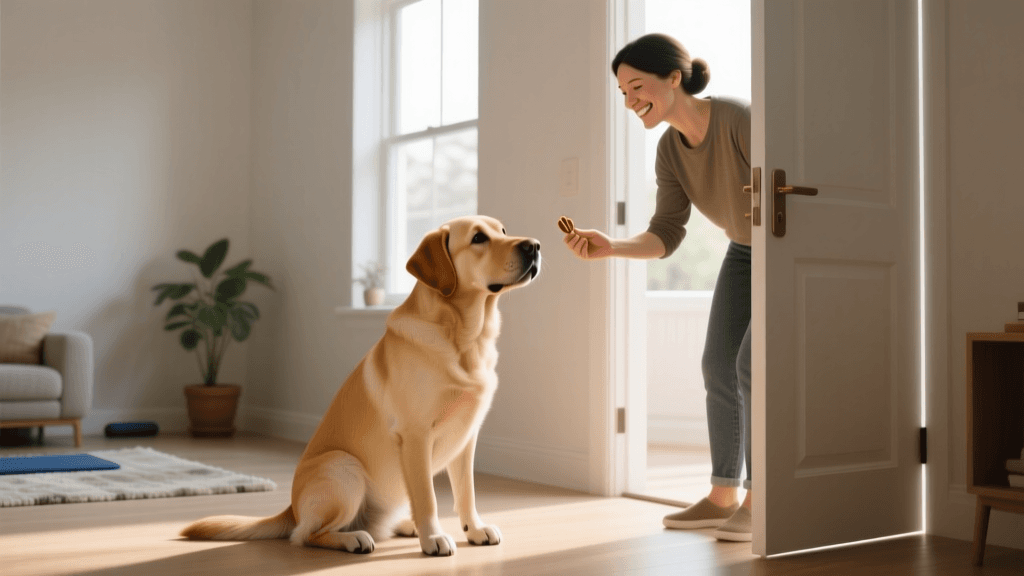
- The Execution: Toss a treat onto the bed. The moment all four paws are on the cot, mark the behavior with a clicker or a verbal "Yes!" and deliver a second treat. Gradually increase the duration from 3 seconds to 5 minutes before releasing with a cheerful "Okay!"
- Proofing: Practice while dropping toddler toys near the bed. If the dog breaks the "Place" command, calmly guide them back without a treat. Reward heavily when they choose to stay on the bed despite the distraction.
2. The "Leave It" Command (Protecting Both Child and Dog)
Toddlers drop food, toys, and occasionally grab at dog tails. "Leave It" teaches impulse control.
- Step 1: Place a low-value treat on the floor and cover it with your hand. Wait for your dog to stop sniffing and pull their nose back. Mark and reward with a different, higher-value treat from your other hand.
- Step 2: Uncover the treat. If the dog dives for it, cover it again. Reward only when they look up at you instead of the floor treat.
- Step 3: Add the verbal cue "Leave It" right before you present the item. Practice with baby items like pacifiers or teething rings (ensure they are clean and sanitized afterward).
3. The "Drop It" Command (Emergency Retrieval)
While "Leave It" prevents the dog from picking something up, "Drop It" is the emergency release for when they already have a forbidden item in their mouth, such as a choking hazard or a dropped pill.
- The Trade-Up Method: Never chase your dog or pry their jaws open, as this can trigger resource guarding. Instead, present a high-value treat (like a small piece of boiled chicken or string cheese) directly to their nose.
- The Exchange: The moment they open their mouth to take the treat, say "Drop It" and toss the treat on the floor. Pick up the forbidden item while they are eating.
- Practice: Play tug-of-war with a designated toy. Pause the game, present the treat, mark "Drop It" when they release, and then immediately reward by initiating the game again. This teaches the dog that giving up an item doesn't mean the fun ends.
Desensitizing Your Dog to Toddler Behaviors
Dogs are highly sensitive to sound and sudden movement. You must systematically desensitize your dog to the sensory overload a toddler provides.
- Audio Desensitization: Find YouTube compilations of babies crying and toddlers screaming. Play the audio at 10% volume while feeding your dog their favorite meal or a long-lasting chew like a Yak Chew (approx. $12 for a 3-pack). Over two weeks, incrementally raise the volume by 10% each day, provided the dog remains relaxed.
- Visual Desensitization: Toddlers wobble and move unpredictably. Practice "erratic walking" in your living room. Walk with a limp, suddenly stop, wave your arms, and drop to the floor. Reward your dog with treats for remaining seated and calm during these bizarre movements.
Recognizing Canine Stress Signals
Training is a two-way street. You must learn to read your dog's subtle stress signals before they escalate to a growl or a snap. Never wait for a growl to intervene; a growl is a late-stage warning.
- Whale Eye: When the dog turns its head away but keeps its eyes fixed on the toddler, showing the whites of the eyes.
- Lip Licking and Yawning: When done out of context (e.g., not around food or when not tired), these are classic calming signals indicating discomfort.
- Stiffening: A sudden freeze in the dog's body posture when a child approaches or touches them.
- Action Plan: If you see any of these signs, immediately call your dog to their "Place" or gently guide the toddler away. Do not punish the dog for showing stress; instead, manage the environment to prevent the trigger.
Management Tools for Family Harmony
Even the best-trained dogs need breaks. Physical management tools ensure safety when your active supervision lapses, such as when you are cooking or answering the door.
| Management Tool | Best Use Case | Estimated Cost | Key Specifications |
|---|---|---|---|
| Hardware-Mounted Baby Gate | Separating dog's resting area from toddler's playroom. | $45 - $70 | Must be hardware-mounted for stairs. Look for widths of 29-39 inches with a pet door if the dog needs independent access. |
| Freestanding Playpen | Containing the toddler while the dog roams freely. | $60 - $90 | Minimum height of 26 inches. Ensure panels have no footholds that a climbing toddler could use. |
| Hands-Free Tether/Leash | Keeping the dog nearby but out of the toddler's crawling path. | $15 - $25 | 4 to 6-foot nylon or leather leash attached to a sturdy waist belt. Never leave a tethered dog unattended. |
Teaching Kids How to Interact with the Dog
Once your toddler is old enough to follow simple instructions (usually around 18 to
The "Pet, Pet, Stop" Rule
Teach your child to pet the dog gently on the back or shoulders for three strokes, then stop and wait. If the dog leans in or nudges the child, they can resume. If the dog moves away, the child must respect the boundary. This prevents the dog from feeling trapped or overwhelmed by continuous, clumsy petting.
Respecting the Safe Zones
Establish absolute rules: the dog is never to be bothered while eating, sleeping, or resting on their "Place" bed. Use visual cues, like a small red mat under the dog's water bowl, and teach the toddler that the red mat means "stop and give space."
Conclusion
Training a dog to be calm around toddlers is not a one-time event; it is an ongoing process of management, positive reinforcement, and environmental awareness. By mastering the "Place" and "Leave It" commands, desensitizing your dog to erratic movements, and utilizing physical barriers like baby gates, you set both your child and your dog up for a lifetime of safe, loving companionship. Remember, the goal is not just to prevent accidents, but to actively build a bond based on mutual respect and trust.
anouk-beaumont
All our authors care for dogs every day — read more of their work on the authors page.